A Brazilian court has ordered federal and local government officials to take steps toward restoring Fordlandia, the abandoned industrial settlement created by Henry Ford in the Amazon nearly a century ago. The ruling shines a spotlight on one of the automotive industry’s most ambitious and ultimately unsuccessful overseas ventures, while raising hopes that the deteriorating site can be preserved as an important historical landmark.
The decision comes as interest in Fordlandia continues to grow among historians, researchers, and travelers fascinated by the intersection of industry, culture, and environmental challenges in the Amazon.
How Fordlandia became one of Ford’s most ambitious projects
Fordlandia was established in 1928 by Henry Ford as part of an effort to secure a reliable supply of natural rubber for the Ford Motor Company.
At the time, rubber was essential for tire production and numerous automotive components. Rather than relying on suppliers in Southeast Asia, Ford sought to create a self-sustaining rubber plantation deep within the Brazilian Amazon.
The project went far beyond agriculture. Fordlandia was designed as a company town, complete with housing, schools, hospitals, recreational facilities, and infrastructure modeled after American communities of the era.
However, the venture faced numerous difficulties. Tropical diseases, agricultural challenges, cultural conflicts, and management issues prevented the rubber operation from achieving its goals. By the mid-20th century, the project had largely been abandoned, leaving behind a collection of aging buildings and industrial structures.
Why the court intervened
The court’s order reportedly stems from concerns about the deterioration of historic structures and the lack of adequate preservation efforts at the site.
Over decades, many buildings have suffered from weather exposure, vegetation growth, and limited maintenance. Preservation advocates have argued that Fordlandia represents a unique chapter in both Brazilian and automotive history and deserves formal restoration measures.
The ruling directs government authorities to take a more active role in protecting and preserving the settlement, which contains important remnants of the original project, including administrative buildings, worker housing, industrial facilities, and community spaces.
Supporters of preservation efforts believe restoring the site could help safeguard a significant historical resource while supporting educational and tourism opportunities.
Why Fordlandia remains historically important
Few industrial projects capture the ambitions and limitations of early global expansion as clearly as Fordlandia. The settlement represents an era when major corporations sought to control entire supply chains by creating operations far from their home markets.
The project has become a case study in the challenges of exporting business models and social systems into unfamiliar environments. Historians often point to Fordlandia as an example of how economic ambition, cultural differences, and environmental realities can collide in unexpected ways.
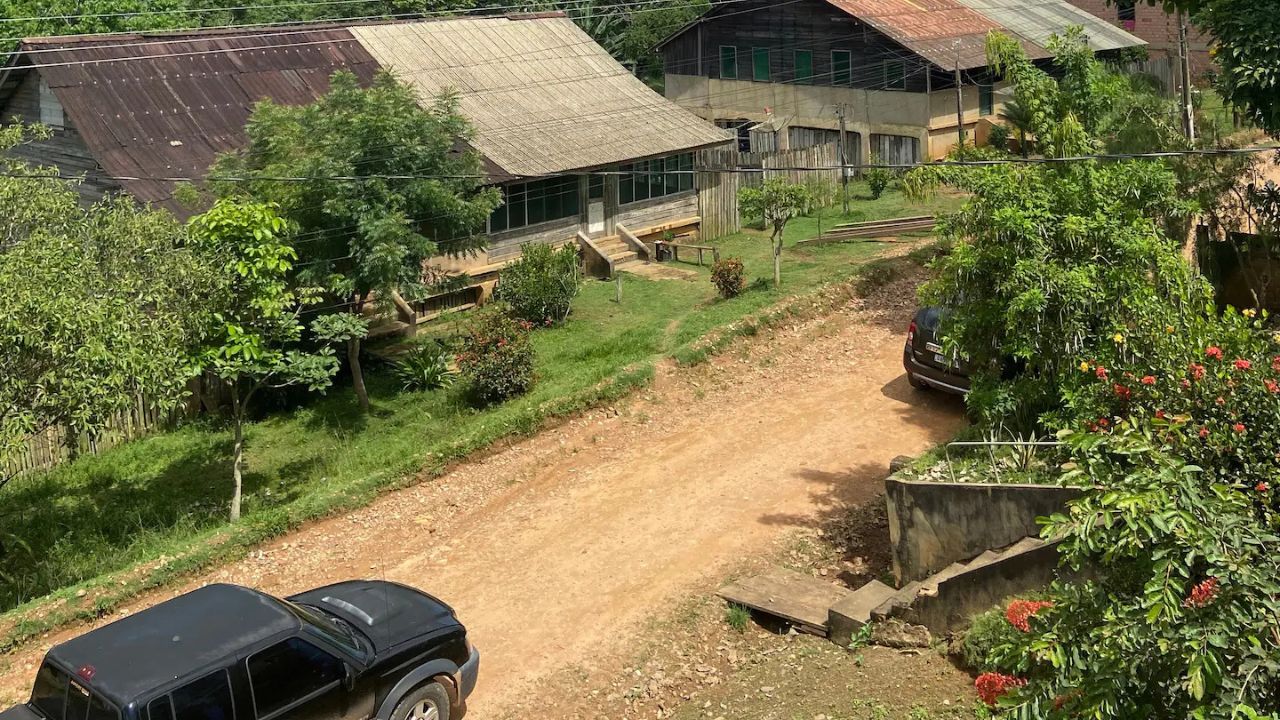
Today, the abandoned town serves as a physical reminder of those lessons. Rusting infrastructure, vacant buildings, and remnants of industrial activity continue to attract researchers interested in economic history, industrial archaeology, and environmental studies.
What restoration could mean
Preservation efforts could help stabilize structures that have deteriorated over decades and create greater access for visitors and researchers. Restoration may also encourage broader recognition of Fordlandia’s historical significance within Brazil and internationally.
Local communities could benefit from increased tourism and cultural interest if the site becomes a more prominent heritage destination. Similar restoration projects elsewhere have demonstrated how historic industrial locations can become educational and economic assets when properly maintained.
At the same time, restoration presents challenges. Fordlandia’s remote location, tropical climate, and aging infrastructure mean preservation work is likely to require significant planning, expertise, and funding.
The bigger picture
The court’s order reflects a growing recognition that Fordlandia is more than an abandoned industrial experiment. It stands as a rare historical landmark connecting the automotive industry, the Amazon, and one of the most famous industrialists of the 20th century.
While the settlement was originally conceived as a solution to a business problem, its legacy has evolved into something far broader—a symbol of ambition, globalization, and the complex relationship between industry and environment.
If restoration efforts move forward successfully, Fordlandia could gain a new future as a preserved historical site, ensuring that one of the most remarkable chapters in automotive history is not lost to time.
More from Fast Lane Only
- Unboxing the WWII Jeep in a Crate
- 15 rare Chevys collectors are quietly buying
- 10 underrated V8s still worth hunting down
- Police notice this before you even roll window down
*Research for this article included AI assistance, with all final content reviewed by human editors