Modern engines leave the factory far tighter and cleaner than they did a generation ago, but the first few hundred miles you put on a new car still shape how that powertrain feels years later. The challenge for drivers is sorting out which break-in rituals still matter and which belong to the era of carburetors and ashtrays.
I want to cut through the folklore and focus on what current engineering and service guidance actually say about early miles, from how hard to accelerate to whether you really need special oil, so you can treat a new engine carefully without babying it unnecessarily.
Why break-in still matters on modern engines
The basic idea behind break-in has not changed: new engines have mating surfaces that need a short period of controlled use so they can wear together cleanly instead of scuffing or glazing. Even with precise machining and computer-controlled assembly, parts like piston rings, cylinder walls and cam lobes still experience their steepest wear in the first stretch of operation, which is why several guides describe those early miles as a distinct break in period for new cars. If that wear happens under high load or extreme heat, you can end up with higher oil consumption, more blow-by and a slightly lazier engine than the same model treated with a bit more care.
At the same time, I have to acknowledge how much the landscape has shifted. Factory honing processes, tighter tolerances and sophisticated engine management mean a 2025 Toyota RAV4 or Ford F-150 can tolerate real-world driving right away without the elaborate rituals older enthusiasts remember. One overview notes that computers and material advancements have reduced the risk of catastrophic early failure, but they have not eliminated the benefits of a thoughtful break-in. The result is a more nuanced picture: you do not need to obsess over every rpm, yet you still have a window where smart habits can pay off in smoother performance and longevity.
Old-school myths that no longer hold up
One of the most persistent myths is that a new car must be driven extremely gently for thousands of miles, as if any brisk acceleration will doom the engine. That advice made more sense when machining was rougher and oil quality was inconsistent, but current guidance is far more moderate. Several manuals and service explainers suggest a few hundred to roughly 600 miles of sensible driving, not years of babying, with the emphasis on avoiding abuse rather than avoiding power entirely. A detailed consumer guide on whether modern engines still need break-in points out that engineering is robust enough that the main concern is how you treat the car in that early band, not a strict mileage countdown.
Another outdated idea is that you must idle a new engine for long stretches to “warm it up” before driving. In reality, extended idling is now flagged as something to avoid during break-in because it can lead to poor ring seating and fuel dilution in the oil. A widely shared owner discussion of real world break-in practices notes that no extended idling is one of the key habits that actually helps the process, and that the better approach is to start the engine and be on your way once oil pressure is up. That aligns with modern manuals that treat long idling as unnecessary at best and counterproductive at worst, especially on engines with tight emissions controls and direct injection.
The core habits that still matter in the first 600 miles
What has survived from the old advice is a simpler set of habits that most manufacturers still endorse in some form. The first is to vary your speed and engine load instead of locking into one rpm on cruise control for hours. Letting the engine see a range of light to moderate loads helps the rings and bearings wear in evenly, which is why some owner manuals and service explainers explicitly recommend avoiding constant speed for long periods early on. On a highway trip in a new Honda CR-V, that might mean occasionally changing lanes and adjusting speed by 5 to 10 mph, or using gentle accelerations and decelerations instead of setting cruise and forgetting it.
The second habit is to keep revs and throttle input within a reasonable band without treating the engine like glass. Several break-in guides advise staying below a certain rpm ceiling and avoiding full throttle launches or towing during the first stretch, but they also stress that normal, casual driving is not harmful. One quick reference on the engine break in period suggests driving casually and steering clear of heavy loads that could cause excessive wear on the new engine. In practice, that means you can merge briskly onto a freeway in a new Hyundai Tucson, but you should think twice before hitching up a heavy trailer or running repeated top speed pulls in the first few hundred miles.
What your owner’s manual gets right (and what it leaves out)
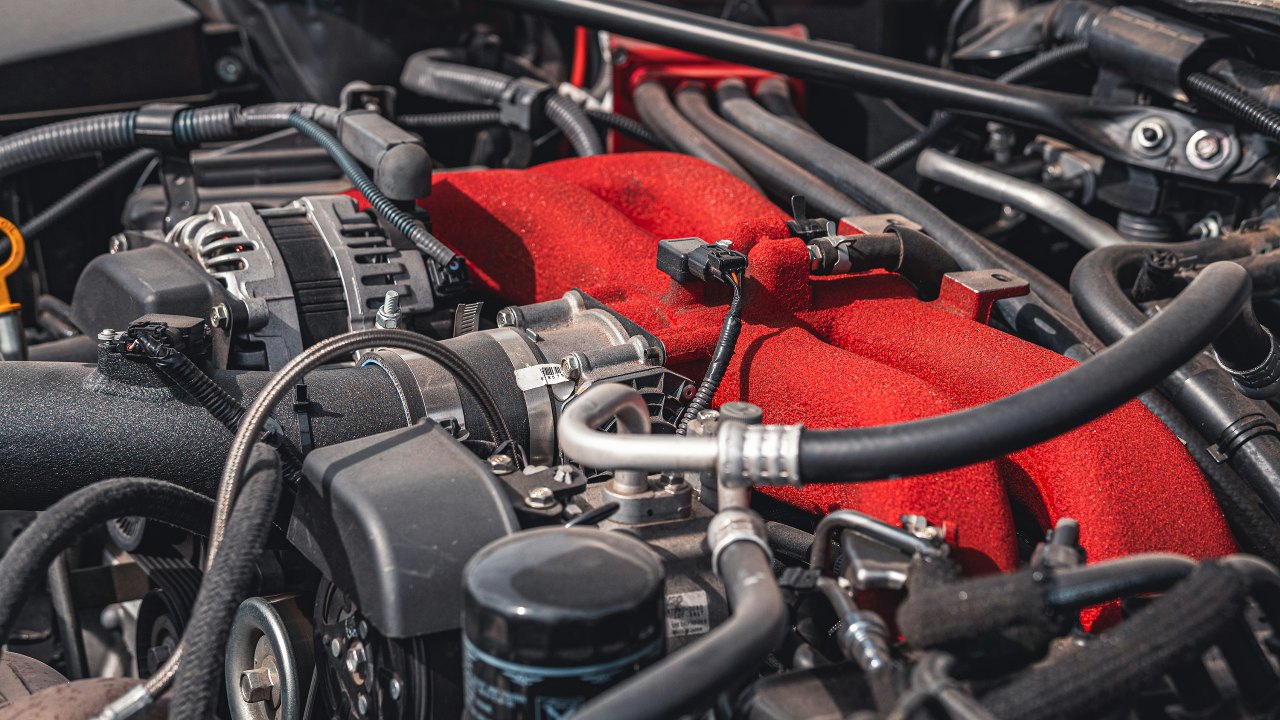
For all the folklore around break-in, the most relevant instructions for your specific car are still in the glovebox. Automakers tune engines, transmissions and cooling systems differently, so a turbocharged 2.0 liter in a Volkswagen Golf GTI may have different early load limits than a naturally aspirated V6 in a Toyota Camry. That is why several service experts emphasize that the first step in any break-in strategy is to check the owner’s manual for specific rpm caps, towing restrictions and speed recommendations. Those pages often spell out how long to avoid full throttle, what speeds to stay under, and whether the transmission should be kept out of its highest gear for a short period.
Where manuals tend to be quieter is on the finer points that enthusiasts obsess over, such as whether to use engine braking aggressively or how soon to perform the first oil change. Some technical guides suggest using lower gears to let engine braking help seat components, but they stop short of prescribing a specific pattern. On oil, mainstream automakers usually do not require an early change, while performance builders sometimes recommend one after the first few hours of operation. A detailed FAQ on break in oil notes that special procedures are more relevant after rebuilding an engine than on a factory fresh commuter car, which helps explain why your manual may not mention them at all. I read that silence as a sign that for most daily drivers, following the printed break-in section and the normal maintenance schedule is enough.
Special cases: rebuilt engines and break-in oil
The story changes when you are dealing with a rebuilt or high performance engine rather than a brand new factory unit. In that world, break-in is more intensive and often involves dedicated lubricants designed to help parts wear in quickly and safely. Technical explainers describe break in oil as a lubricant formulated specifically for the first hours after assembly, with additive packages that promote proper ring seating and protect flat tappet cams. Another overview of what break in oil does explains that it is a critical tool for engine builders who want controlled wear and extra protection during that vulnerable initial run in.
Those products are not typically required, or even recommended, for a stock new car like a Subaru Outback or Chevrolet Equinox that already left the factory with the correct fill. In fact, dropping in a high zinc break-in blend on a modern engine with catalytic converters and tight emissions controls can be counterproductive. The more relevant takeaway for everyday drivers is that if a shop has just rebuilt your engine, you should ask explicitly whether they want a specific break-in oil and schedule, because those instructions can differ sharply from what the original owner’s manual says. One detailed guide on the when to use it side of break-in oil makes clear that application matters, and that the right approach for a freshly built track engine is not the right approach for a showroom fresh crossover.
Real-world driving vs. perfect break-in theory
Even the most careful owner eventually has to reconcile ideal break-in theory with the realities of traffic, long commutes and family road trips. The good news is that modern guidance leaves room for imperfection. Enthusiast discussions about real world break in often admit that people end up on long highway drives or occasional hard merges in the first few days, and that engines generally tolerate those moments as long as they are not repeated abuse. The pattern that emerges is that consistency matters more than a single stray event: if most of your early miles are varied, moderate and free of heavy towing or track use, you are doing the important work even if a few stretches are less than ideal.
There is also a growing recognition that being “easy” on a new car does not mean treating it like a fragile antique. One widely shared comment on whether new cars still have a break-in period notes that just generally being easy on the car early on is likely tied to manufacturer data on long term durability, and that it is better to follow that guidance and perform an extra oil change than to ignore it. I read that as a pragmatic middle ground: respect the early miles, follow the manual, avoid obvious abuse, and accept that a modern engine is robust enough to handle the occasional imperfect moment without carrying that mistake for the rest of its life.