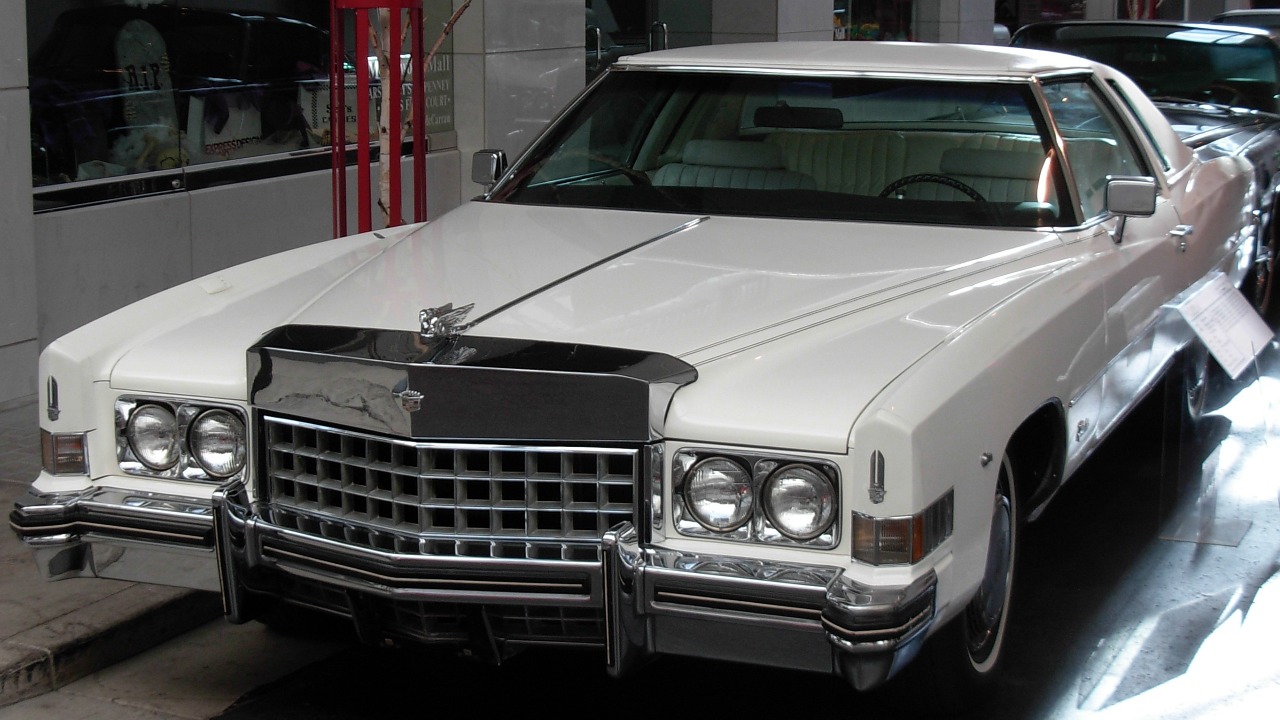
On paper, Cadillac’s 500 cubic inch V8 looked like a caricature of Detroit excess, a giant lump of iron tuned for quiet comfort rather than quarter-mile glory. In reality, it was a deeply engineered, improbably refined big block that delivered effortless thrust and near-silent cruising at a time when rivals were shouting about high compression and redline heroics. I see the 500 as the moment Cadillac proved that “ridiculous” displacement could be a tool for subtlety as much as for spectacle.
That tension between spec-sheet bravado and real-world brilliance is why the 500 still fascinates enthusiasts decades after it left showrooms. It was born into the same era that celebrated Chrysler’s 446 and Chevy’s LS6454, yet it followed a very different brief, prioritizing low-rpm torque, smoothness and durability over dyno numbers that would impress a drag strip announcer.
Biggest of the big blocks, built for quiet authority
The 500 arrived at the height of the muscle era, but Cadillac’s engineers were not chasing stoplight races. They were building an engine that could move a massive luxury coupe with the kind of unruffled authority that matched the brand’s image. Instead of squeezing every last horsepower out of the design, they focused on a broad torque curve and low mechanical stress, which is why the 500 felt so relaxed even when it was working hard.
Technically, the engine was a masterpiece of scale and restraint. Coupled to a bore of 4.30 inches, the total displacement came out to precisely 500.02 cubic inches, or 8.2 liters, making it the largest mass-produced American V8 of its time. Reporting on the engine’s development notes that it was optimized for silence and smoothness, with careful attention to internal balance and valvetrain stability, so the car felt like it was gliding even when the driver buried the throttle.
Launched into a muscle-car world that misunderstood it
When the 500 debuted, the broader American performance conversation was dominated by high-strung big blocks and catchy marketing names. Contemporary coverage recalls how, in 1970, Chrysler was bragging about its 446 and Chevy was pushing its LS6454, while Cadilla engineers were quietly finalizing a very different kind of giant V8. The contrast was stark: where those engines were sold as street-legal race hardware, Cadillac’s new motor was presented as an invisible servant, delivering speed without drama.
That disconnect shaped how enthusiasts perceived the engine. Video retrospectives on the period point out that when people thought of Cadillac, they usually pictured luxury, big cars, plush leather seats and the feeling of gliding on a cloud, not burnouts and drag strips. The 500 was introduced into that mindset, so its performance potential was largely ignored by buyers who saw it as just another smooth Cadillac powerplant rather than a torque monster hiding under a conservative tune.

Strong beginning, humble ending on the spec sheet
The 500’s early years showed what the architecture could really do. In its original form, the engine was installed in the Eldorado coupe, where it delivered the kind of effortless acceleration that made a car as large as the Eldorado feel surprisingly light on its feet. Reporting on this period describes a “Strong Beginning, Humble Ending The Cadillac” story, with the 500 initially tuned to take full advantage of its displacement before external pressures forced a retreat.
Those pressures arrived quickly. As emissions rules tightened and fuel economy concerns grew, the 500’s output was dialed back. By 1972, the move to net power ratings, which measured engines with full accessories and exhaust systems, made things look substantially worse on paper, with the 500 putting out a quoted 235 horsepower. Analysts of the era note that this shift from gross to net ratings made many big blocks look suddenly weak, even though the underlying hardware had not changed nearly as much as the numbers suggested.
Why critics called it “weak” and why that misses the point
As the 1970s wore on, the 500 became a target for enthusiasts who equated performance with peak horsepower. Commentators have argued that the engine was one of the weakest big blocks, pointing to its later, heavily detuned versions as evidence that there really was a replacement for displacement after all. I see that criticism as a product of looking at a single number in isolation rather than at how the engine was meant to be used.
Detailed breakdowns of the 500’s evolution show that its apparent decline was driven by emissions equipment, lower compression and conservative timing, not by any fundamental flaw in the design. One analysis notes that the actual demise started not long after its debut, with output trimmed in 1971 and beyond as regulations tightened. But the same reporting emphasizes that the engine still delivered strong low-end torque and smooth operation, which mattered far more to Cadillac buyers than a headline horsepower figure that might impress on a spec sheet but go unused in daily driving.
From forgotten luxury workhorse to cult performance swap
Over time, the 500 slipped into obscurity as smaller, more efficient engines took over and Cadillac itself moved away from giant displacement. Yet enthusiasts have quietly rediscovered the engine as a foundation for modern builds. I find it telling that a powerplant once dismissed as a soft luxury motor is now being pulled from junkyards and turned into serious performance hardware, precisely because its oversized internals and under-stressed design give tuners so much headroom.
Modern engine builders have documented how they can take a junkyard Cadillac 500 big block and transform it into a contemporary high output setup, using updated cam profiles, improved induction and modern ignition control. Video coverage of these projects shows the 500 responding well to upgrades, with its massive displacement delivering the kind of torque curve that smaller engines struggle to match. That resurgence underscores the original brilliance of the design: by prioritizing strength and smoothness over peak numbers, Cadillac’s engineers created an engine that could be detuned for comfort in period and then retuned decades later for serious performance.
More from Fast Lane Only: