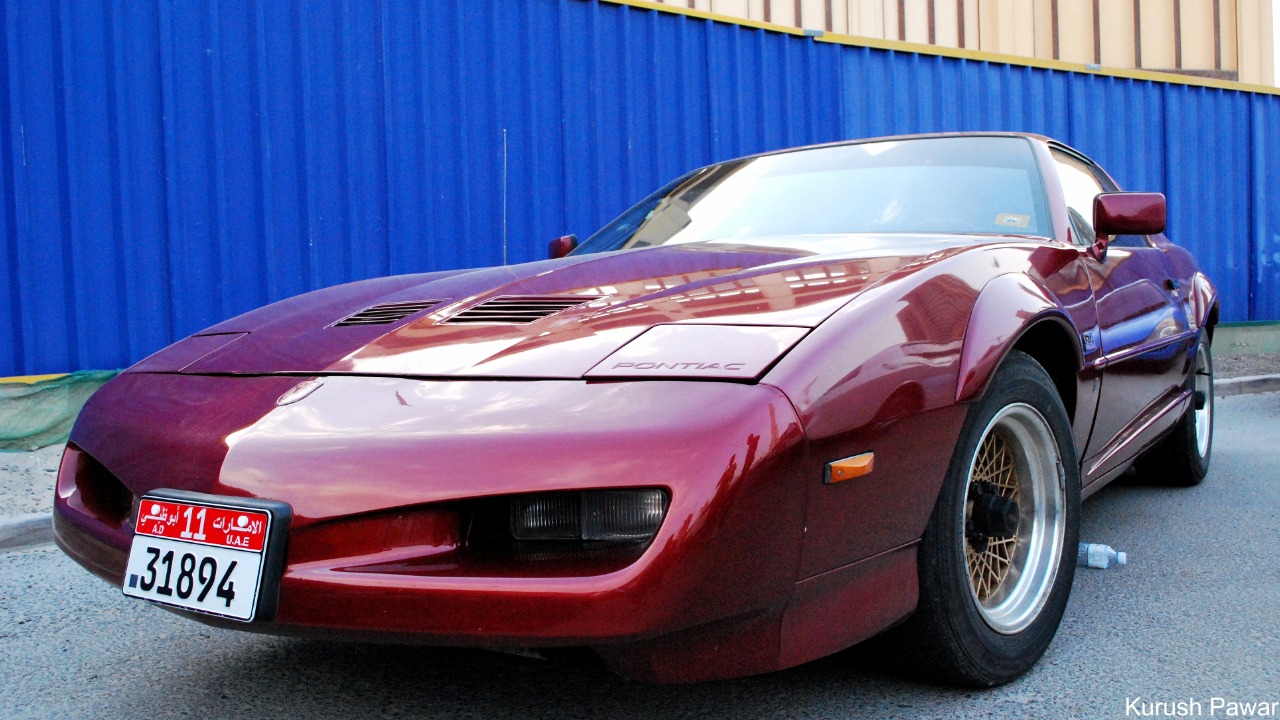
The 1991 Pontiac Firebird Trans Am arrived at a turning point for American performance cars, when power was finally starting to creep back after a decade of downsizing and emissions compromises. Rather than chasing a radical reinvention, Pontiac used this late third-generation update to sharpen the formula that had carried the Firebird through the 1980s. The result was a car that previewed the more focused, track-capable F-bodies of the 1990s while still wearing the familiar wedge-shaped body that enthusiasts already knew.
Viewed from today, the 1991 Trans Am looks like the bridge between the early, sometimes fragile third-gen cars and the harder-edged machines that followed. Its revised aero, chassis tuning, and powertrain choices quietly reset expectations for how a mass-market American coupe could handle and feel.
What happened
By 1991, the third-generation Firebird was in its ninth model year, yet Pontiac did not simply let it ride out its final seasons. The division gave the Trans Am a significant facelift that introduced a new front fascia with smoother aero, integrated fog lamps, and a more cohesive nose that visually tied the car to contemporary Pontiac design. The rear received a reshaped bumper and updated graphics, and the body kit was refined so the car looked lower and more planted without resorting to the exaggerated add-ons of some earlier special editions.
Under the skin, Pontiac rationalized the engine lineup and leaned on General Motors’ corporate small-block V8 to keep the Trans Am competitive. The 5.0-liter and 5.7-liter Tuned Port Injection V8s emphasized torque and drivability rather than peaky top-end power, an approach that made sense for a car that had to serve as both commuter and weekend toy. While the raw output figures did not match the wild numbers of the late 1960s, the combination of fuel injection, overdrive gearing, and improved aerodynamics delivered real-world performance that felt stronger than the spec sheet suggested.
Chassis development was where the late third-gen cars made their biggest gains. Engineers continued to refine spring and damper rates, bushings, and steering tuning, turning a platform that had started the decade as a relatively crude pony car into something that could credibly tackle a winding road. The 1991 Trans Am benefited from these incremental changes with tighter body control and more predictable breakaway characteristics, especially when equipped with performance suspension packages and wider tires.
Those factory upgrades set the stage for more serious performance collaborations. Pontiac’s work with Street Legal Performance (SLP) would soon produce the Firehawk, a car that took the basic third-gen architecture and transformed it with track-oriented suspension, brakes, and power enhancements. The later SLP versions, described as a “street fighter cleverly disguised as a track car,” grew directly out of the groundwork that Pontiac laid with its late third-generation refinements, including the 1991 Trans Am that provided the template for a more serious, homologation-flavored Firebird.
By the time the Firehawk reached production in the early 1990s, the idea of a Firebird that could run endurance events and autocrosses without embarrassment was no longer far-fetched. The 1991 Trans Am’s updated aero, cooling, and chassis tuning helped prove that the F-body could support that kind of mission without a clean-sheet redesign.
Why it matters
The 1991 Trans Am matters because it turned the third-generation Firebird from a style icon into a more rounded performance car. Earlier third-gens had the looks, with their low hood lines and pop-up headlights, but they often felt compromised by soft suspensions and inconsistent build quality. By the early 1990s, Pontiac had chipped away at those flaws, and the updated Trans Am showed how far the platform could be pushed when engineers focused on balance instead of gimmicks.
That evolution is easy to see in the way SLP treated the Firebird Formula for its Firehawk program. The company took a stock car and added serious hardware, including upgraded brakes, revised suspension geometry, and more aggressive engine tuning, turning it into a machine that could legitimately mix it with purpose-built track cars. Contemporary testers noted that the Firehawk felt like a car engineered from the outset for road course work, not just a straight-line special. That transformation relied on the underlying competence of the late third-gen chassis, which had been significantly improved by the time the 1991 Trans Am rolled out.
Period testing of the early 1990s Firehawk versions, including the 1992 Formula-based cars, highlighted how the F-body’s basic structure could support higher lateral grip and repeated hard braking without falling apart. Reviews of the 1992 Pontiac Formula Firehawk, which recorded strong acceleration and cornering numbers, underscored that the platform no longer belonged only in the drag-racing lane. The 1991 Trans Am shared much of that DNA, and its factory updates gave SLP a solid foundation rather than a fixer-upper.
The 1991 refresh also mattered for what it signaled inside General Motors. As Pontiac refined the Trans Am, Chevrolet was preparing the fourth-generation Camaro, a car that would debut with a more modern interpretation of muscle-car performance. Later analysis of that fourth-gen Camaro has described it as America’s first truly modern muscle car, with a stiffer structure, improved aerodynamics, and powertrains that finally matched contemporary import rivals. The leap that the Camaro made did not occur in isolation. It built on lessons learned from the late third-gen Firebird and Camaro, including the 1991 Trans Am’s improved aero efficiency, cooling management, and suspension tuning.
From a design perspective, the 1991 Trans Am also marked the point where Pontiac’s 1980s futurism matured into something cleaner and more timeless. The earlier cars leaned heavily on graphics, vents, and body add-ons. The facelifted Trans Am still looked aggressive but relied more on sculpted surfaces and integrated detailing. That shift anticipated the smoother, more organic shapes of the fourth-generation F-bodies and helped keep the Firebird visually relevant at a time when Japanese coupes and European sports cars were setting new standards for aerodynamics.
For enthusiasts today, the 1991 Trans Am represents an appealing middle ground. It retains the analog feel and relatively light weight of the early third-gen cars, without the worst of their compromises. The improved brakes, better cooling, and more sorted suspensions make these late cars easier to enjoy on modern roads and track days. At the same time, they remain mechanically straightforward, with small-block V8s that share parts with countless other GM vehicles and a chassis that responds well to incremental upgrades.
What to watch next
The legacy of the 1991 Trans Am continues to shape how collectors and drivers look at third-generation F-bodies. As values for earlier, low-mileage examples rise, attention is shifting toward the late cars that offer better driving dynamics at more accessible prices. The 1991 and 1992 model years, with their updated styling and refined hardware, are increasingly seen as the sweet spot for enthusiasts who want to drive their cars rather than park them.
That trend is reinforced by the growing appreciation for SLP-tuned variants. The Firehawk story, which began with the Formula-based cars that followed closely on the heels of the 1991 Trans Am, has become a key chapter in Firebird history. Detailed looks at the Firehawk’s development highlight how SLP exploited the late third-gen platform’s strengths and addressed its weaknesses, turning a mass-produced coupe into a limited-production performance benchmark. As more of these cars enter collections, the underlying 1991 Trans Am configuration gains historical weight as the starting point for that evolution.
Interest in the broader F-body family is also rising as enthusiasts reassess the 1990s performance revival. The fourth-generation Camaro, often cited as a turning point for American muscle, draws a direct line back to the incremental improvements made on the third-gen cars. As historians and fans revisit that period, the 1991 Trans Am stands out as evidence that GM’s engineers were already thinking about balance, aero efficiency, and track capability before the more radical redesign arrived.
More From Fast Lane Only: