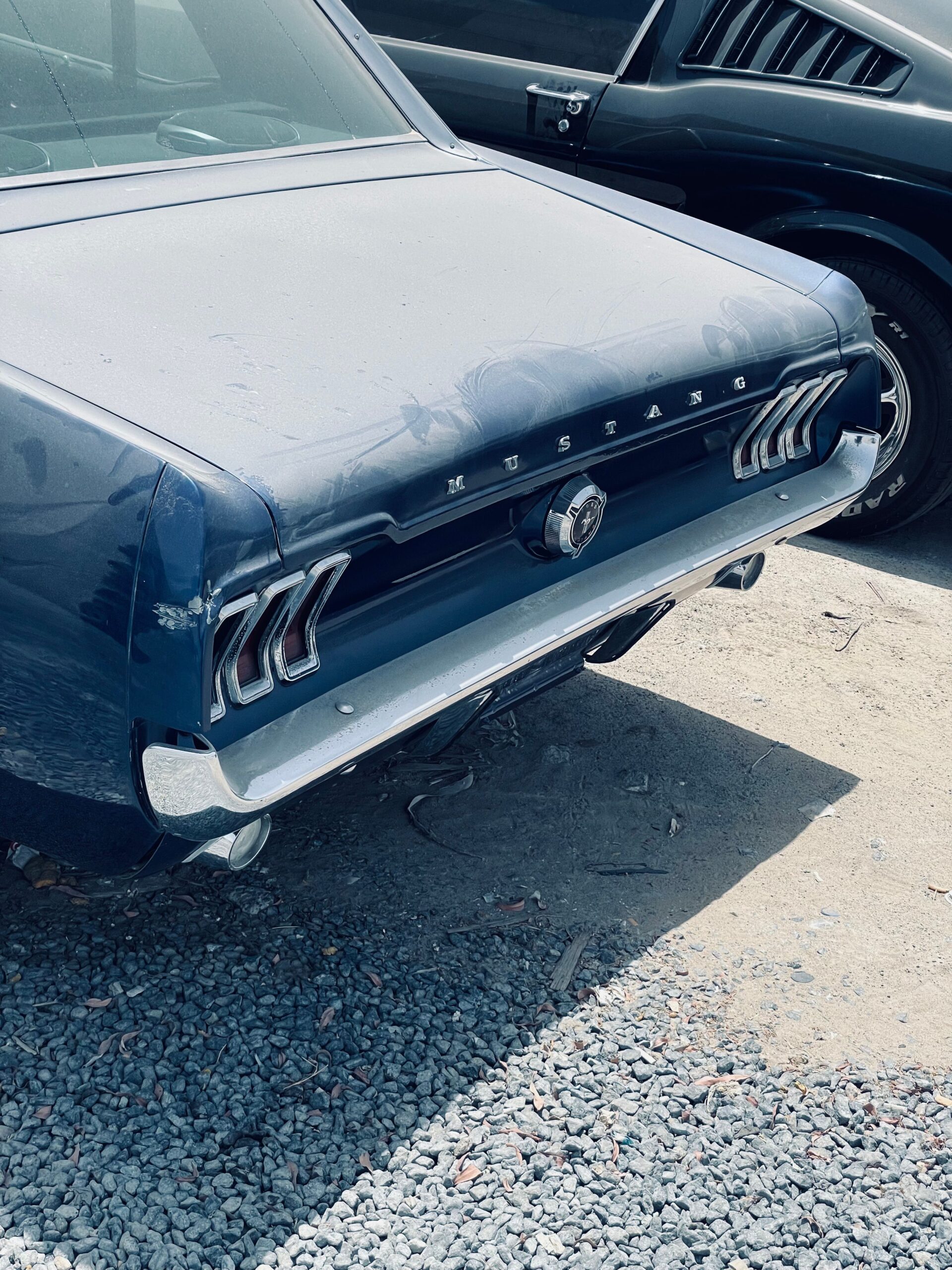
It started like a lot of classic-car stories do: a late-night listing, a handful of glossy photos, and that tempting phrase—“fresh paint.” The car was billed as a tidy classic Mustang that “just needed a few finishing touches,” the kind of promise that makes a long drive feel like an investment instead of a gamble. So they loaded up, cleared an afternoon, and drove three hours to finally see it in person.
From the curb, it almost delivered on the dream. The paint looked shiny, the stance was right, and at a quick glance it had that unmistakable Mustang silhouette that makes people slow down even in modern traffic. But within minutes of walking around it, the shine started to feel more like a spotlight on problems than proof of care.
“Fresh Paint” Looked Great—Until the Panels Didn’t
The first red flag wasn’t even rust. It was the way the body lines seemed a little… vague, like the panels had been sculpted rather than stamped. In certain angles the reflections warped oddly, and the surface didn’t have that crisp, flat feel you expect from steel, even on an older car.
They ran a hand along the lower quarter panel and felt a subtle wave, then a hard ridge that didn’t match any factory seam. A gentle tap with knuckles didn’t give the familiar metallic ring either. It sounded dull, more like knocking on a thick plastic cooler than a car body.
The Magnet Test (and the Moment the Trip Changed)
Most classic-car shoppers know a few quick checks, and one of the simplest is the magnet test. A small magnet wrapped in a cloth can tell you a lot: it should stick to steel, but it won’t cling well to thick body filler or fiberglass. When the magnet barely held on—or slid right off in spots—the whole vibe shifted.
At first, it’s easy to rationalize. Maybe it’s just a skim coat of filler, the kind of thing lots of old cars have after decades of door dings and minor repairs. But as they moved the magnet around, the dead zones got larger, and the “maybe” started to sound like “nope.”
Fiberglass Where Steel Should’ve Been
Once the questions started, the seller offered a closer look in a way that suggested this wasn’t new information. A peek inside a wheel well and under an edge of trim revealed fiberglass matting in places where there should’ve been solid metal. It wasn’t a small patch, either—more like a home renovation approach to automotive bodywork.
Fiberglass can have a legitimate role in certain builds, especially race cars or custom projects where it’s used intentionally and engineered properly. But on a classic Mustang being sold as a straightforward driver, surprise fiberglass often means the original metal was too far gone to save—or someone didn’t want to spend the money to save it.
And Then Came the Expanding Foam
The real jaw-dropper showed up when they found expanding foam in the lower sections, apparently used to fill cavities before being shaped over and painted. If you’ve ever used that stuff around a window frame at home, you know it’s great for stopping drafts. What it’s not great for is living inside a car body that sees heat, vibration, moisture, and road grime.
Foam can trap water against metal, which accelerates rust—the exact enemy you’re trying to defeat on a vintage car. It can also crumble, shrink, or swell over time, meaning today’s smooth quarter panel can become tomorrow’s cracked paint and bubbling mess. It’s the automotive equivalent of putting a bandage on a broken pipe and calling it “recent plumbing work.”
How This Happens More Often Than People Think
Classic Mustangs are popular for a reason: parts availability is good, the community is huge, and the cars are simple enough that a lot of repairs feel approachable. That popularity also means there’s a steady market for cars that look decent in photos, even if they’re rough underneath. A shiny respray can hide a lot, especially when the listing photos are taken at golden hour from ten feet away.
And to be fair, not every seller is trying to run a scam. Some inherit projects, some buy cars already “fixed,” and some honestly don’t know what’s under the paint because they never looked. But when words like “fresh paint” show up without receipts, build photos, or detailed descriptions, it’s smart to treat it as a question—not a feature.
What the Buyer Looked For Next
After the fiberglass and foam discovery, the focus shifted from “Should I buy this?” to “What else is hiding?” They checked typical Mustang rust areas: floor pans, torque boxes, frame rails, trunk drop-offs, and the bottoms of fenders. They also looked at the door gaps and how the doors closed, because structural rust and poor repairs can make the whole body flex.
They also paid attention to little tells: overspray on weatherstripping, paint on bolts that should’ve been removed, and trim that didn’t sit quite right. Fresh paint isn’t automatically bad, but sloppy masking and rushed prep usually means shortcuts everywhere else, too. If the outside was done fast, the underside is rarely better.
What “Solid” Should Mean on a Classic Mustang
In the classic world, “solid” should mean the structure is genuinely sound: real metal, properly welded repairs if needed, and no creative materials doing the job of steel. Cosmetic flaws are one thing—faded paint, worn seats, cracked dash pads. Structural rot disguised with fiberglass and foam is another category entirely.
If you’re shopping, ask for underside photos on a lift, close-ups of known rust areas, and documentation of any panel replacement. A reputable seller usually has nothing to hide and will happily send more photos, video walkarounds, or receipts. If they get defensive or keep repeating “it’s a classic, what do you expect,” that’s often your cue to expect the worst.
The Takeaway: A Long Drive, but a Cheap Lesson
They didn’t buy the car. It was disappointing, sure, especially after a three-hour drive and that initial hit of excitement when the Mustang first came into view. But in the grand scheme, the cost of the trip was tiny compared to the cost of undoing a bad body shell disguised by shiny paint.
For anyone hunting a classic Mustang—or any vintage car—the story is a reminder that “fresh paint” can mean fresh problems. Bring a magnet, bring a flashlight, and if possible bring someone who’s seen a few projects up close. The best deals don’t just look good; they make sense when you start tapping, peeking, and asking the annoying questions.
More from Fast Lane Only
- Unboxing the WWII Jeep in a Crate
- 15 rare Chevys collectors are quietly buying
- 10 underrated V8s still worth hunting down
- Police notice this before you even roll window down
*Research for this article included AI assistance, with all final content reviewed by human editors.