Cleetus McFarland built a career by turning grassroots horsepower into a digital spectacle, and his long-stated dream of racing in the Daytona 500 has become part of that storyline. Recently, he admitted he briefly questioned whether that goal still made sense, yet he remains intent on finding a way onto NASCAR’s biggest stage. That moment of hesitation, and his decision to push ahead anyway, says as much about modern motorsports as it does about one YouTuber’s ambitions.
How Cleetus McFarland’s Daytona 500 push evolved
Garrett Mitchell, better known as Cleetus McFarland, has spent years blurring the line between content creator and racer. He owns the Freedom Factory short track in Florida, runs packed grassroots events, and has turned cars like the “Dale Truck” and “Mullet” into recurring characters in his videos. That trajectory eventually pointed toward stock car racing’s biggest race, the Daytona 500, which he has framed as the ultimate test of whether a fan-built operation can hang with established teams.
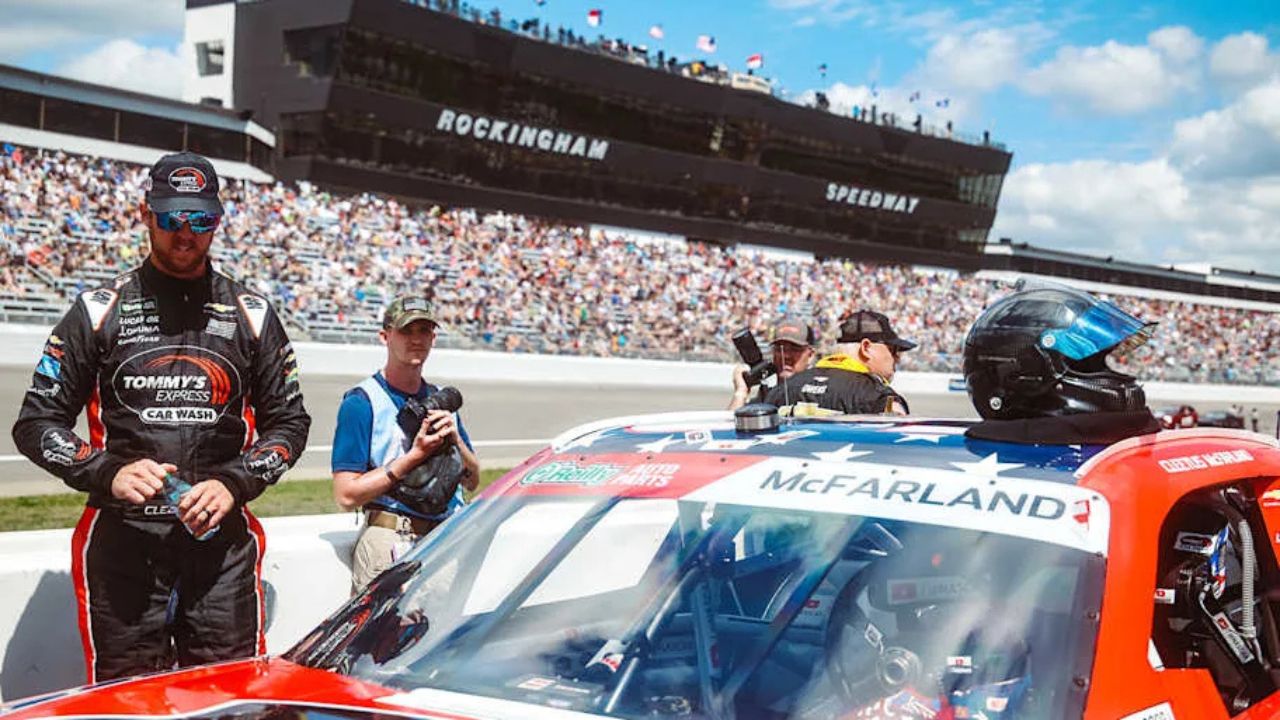
His path into NASCAR’s orbit has not been theoretical. McFarland has already been invited into official race-day roles, including giving the command to start engines for a Cup Series event at Michigan International Speedway. That appearance, where he served as the guest who told the field to fire up at the Michigan NASCAR race, signaled that the sanctioning body sees value in his audience and persona. It also showed that his brand can sit comfortably inside a traditional NASCAR broadcast.
Even with that momentum, McFarland recently acknowledged that his Daytona 500 plan hit a wobble. In comments described in a detailed NASCAR-focused report, he said he had “wavered briefly” on whether to keep chasing the 500, citing the scale of the commitment and the reality of competing against full-time operations. The same report made clear that after that short bout of doubt, he reaffirmed his intention to keep working toward a Daytona 500 entry and is still looking for the right path into the race through an existing team or technical alliance.
Coverage of his remarks emphasized that the hesitation came from practical concerns rather than a loss of interest. The Daytona 500 is not a one-off exhibition; it is a high-stakes, restrictor-plate race that demands top-tier equipment, experienced crew members, and extensive preparation. McFarland’s brief pause reflected the gap between his current program and the infrastructure needed to field a competitive Cup Series car, especially in an event where several open teams often fail to qualify.
Further aggregation of his comments highlighted that he has not set a public deadline for when the Daytona attempt must happen, only that it remains a live objective. One summary of the interview framed his stance as a recalibration rather than a retreat, explaining that he is still “aiming to race” the 500 while acknowledging that the timeline might shift as he evaluates partnerships and budgets. That framing aligns with his broader pattern of setting big goals, then adjusting the route as sponsor interest and technical support develop.
Why his lingering Daytona 500 dream matters right now
McFarland’s continued push toward the Daytona 500 matters because it reflects how motorsports is changing under the influence of digital-native personalities. He is not a traditional ladder-system driver who climbed through late models, ARCA, and Xfinity. Instead, he is a content creator who built an audience first, then used that leverage to fund racing programs and track ownership. His presence at events like the Michigan Cup race, where he was chosen to deliver the start command, shows that NASCAR is actively courting that audience to keep grandstands and television numbers healthy.
His near decision to back off the Daytona goal, followed by a recommitment, also underscores the financial and competitive barriers that still define top-level stock car racing. Even a creator with millions of followers and a profitable event business faces a steep climb to assemble the sponsorship, technical support, and driver coaching required for a 500-mile debut at Daytona International Speedway. His hesitation is a reminder that viral reach does not automatically translate into Cup Series readiness.
At the same time, his ongoing interest offers NASCAR a test case for how to integrate influencer-backed entries without undermining sporting credibility. Reports on his plans note that he is looking for serious partners rather than treating the 500 as a stunt. That approach matters for fans who worry that celebrity entries might dilute the field. If McFarland aligns with an experienced team and invests in proper preparation, his attempt could look less like a novelty and more like an unconventional but legitimate effort to qualify.
The story also resonates with younger fans who see McFarland as proof that the path into big-league racing no longer runs only through family money or early karting programs. His Freedom Factory events, from burnout competitions to grassroots circle track races, are designed for spectators who discovered cars through YouTube rather than cable broadcasts. A credible Daytona 500 attempt by someone from that world could help bridge the gap between online car culture and NASCAR’s traditional fan base.
Media coverage of his wavering, especially the detailed breakdown of his comments in a dedicated NASCAR report, has amplified this tension. That piece explained how he weighed the risk of stretching his operation too far against the once-in-a-lifetime chance to race in the 500, then chose to keep the dream alive while tempering expectations. A separate aggregation of those remarks, carried by a motorsports news feed that highlighted he “still aims to race” the event, pushed the story beyond hardcore NASCAR circles and into broader car-enthusiast channels.
All of this is happening at a time when NASCAR is experimenting with new markets, from street races to international exhibition events, and is open to unconventional partnerships. McFarland’s brand, which mixes patriotic showmanship with genuine mechanical know-how, fits neatly into that push. His wavering, and subsequent recommitment, give NASCAR a narrative about a fan-turned-entrepreneur still chasing the sport’s crown jewel, which is valuable content in its own right.
What to watch as McFarland keeps chasing Daytona
With his intention reaffirmed, the next phase of McFarland’s Daytona 500 project will hinge on logistics. The reporting that captured his wavering also noted that he is exploring options that include partnering with an existing Cup Series organization. That could mean leasing a chartered car, collaborating with a part-time team, or striking a technical alliance that supplies cars and engines while his group brings sponsorship and promotion.
Any of those paths would require serious funding. A modern Cup Series entry involves costs that range from chassis and engine leases to crew salaries, travel, and crash damage. McFarland’s advantage lies in his ability to turn sponsor exposure into measurable engagement, since his videos routinely draw large view counts and his events sell out. Brands that already advertise in his content might be persuaded that a Daytona 500 campaign, amplified across his channels, offers a compelling return.
On the competitive side, his team will need to address the learning curve that comes with superspeedway racing. The Daytona 500 is contested in the Next Gen car, which has unique handling traits and relies heavily on drafting. Even experienced drivers have struggled to adapt. McFarland has seat time in various race cars, but not at that level, so any serious attempt would likely include extensive simulator work, private testing where allowed, and possibly starts in lower series to build comfort in pack racing.
Fan reaction will also shape how his attempt is perceived. Many of his followers are eager to see him take on the 500, viewing it as the natural extension of his “do it for Dale” ethos and his stewardship of the Freedom Factory. Traditionalists may be more skeptical, questioning whether a YouTuber has earned a place in NASCAR’s biggest race. How he communicates his preparation, and how transparent he is about the risks, will influence whether skeptics see the effort as a respectful challenge or a marketing exercise.
More from Fast Lane Only
- Unboxing the WWII Jeep in a Crate
- 15 rare Chevys collectors are quietly buying
- 10 underrated V8s still worth hunting down
- Police notice this before you even roll window down
*Research for this article included AI assistance, with all final content reviewed by human editors.