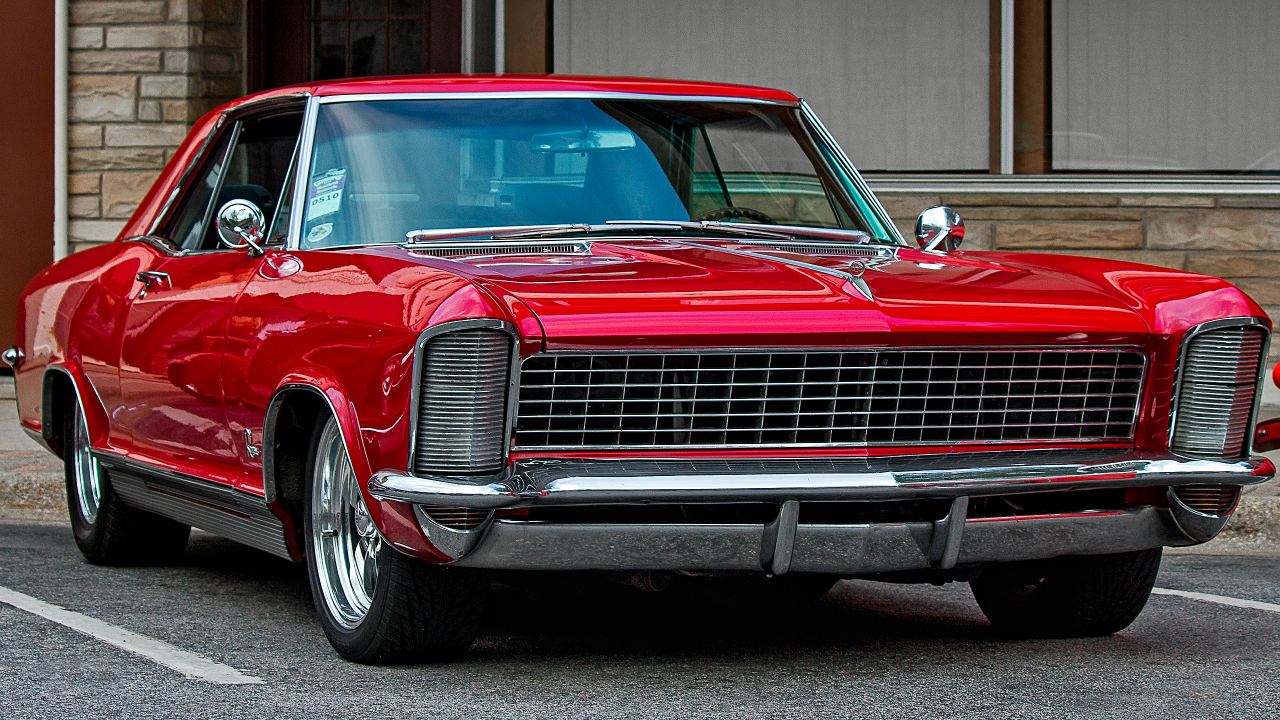
Ultra-rare cars have roared into a new financial league, with seven-figure machines now generating more than $1 billion in annual sales and resetting expectations for what a “collector car” can be worth. At the very top of the market, headline auctions and private deals are pairing record prices with a new wave of global buyers who treat these vehicles as both cultural trophies and hard assets. Yet beneath the fireworks, the rest of the hobby is shifting in more complicated ways.
Record-breaking sales redefine the top of the market
The clearest signal that the high end has broken away from the pack is the surge in transactions above $1 million, which collectively pushed seven-figure sales past the $1 billion mark in 2025. That milestone reflects several years of steady appreciation for ultra-rare models, as well as a growing comfort among wealthy buyers with treating cars as part of a diversified portfolio. Reporting on the 2025 results for specialty vehicles valued at more than $1 million describes it as the strongest environment yet for this slice of the market, with demand outpacing the supply of truly blue-chip cars and driving intense competition at auction and in private sales.
Individual results show how far the ceiling has moved. A 1954 Mercedes Benz ( Daimler-Benz AG ) W 196 R Sells for $53.9M, a figure that would have seemed unthinkable for a racing car not long ago and that underscores how “One of the” most historically significant competition machines can now command fine-art money. At Monterey Car Week, RM Sotheby’s topped $165 million in total sales in MONTEREY, Calif, led by a $26 million Ferrari Daytona SP3 that set multiple world records and became one of the most valuable new cars ever sold at auction. These kinds of results help explain how the seven-figure segment alone could cross the $1 billion threshold.
Demographics and geography: who is buying the $1M cars
Behind the headline numbers, the buyer base for ultra-expensive cars is changing in ways that matter for the market’s durability. Sales of ultra-high-end specialty and collector cars in 2025 were driven not only by long-time enthusiasts in North America and Europe but also by a rising cohort of younger, globally mobile collectors. Reporting on these Sales of seven-figure cars highlights growing participation from buyers in the Middle East and Asia, particularly in markets such as the United Arab Emirates, where high-net-worth individuals are increasingly comfortable bidding aggressively for rare European exotics and modern hypercars.
Age is shifting as well. Instead of being dominated by retirees chasing the cars of their youth, the top tier now includes more buyers in their 30s and 40s who built fortunes in technology, finance, and other fast-growth sectors. These collectors are often less tied to nostalgia and more focused on rarity, design, and perceived investment potential, which helps explain the appetite for limited-run modern models like the Ferrari Daytona SP3 alongside icons from the 1960s. The demographic broadening described in the seven-figure market analysis suggests that demand is not solely dependent on one generation’s memories, but is being refreshed by new money and new tastes entering the arena.
Auction houses and landmark lots drive the surge
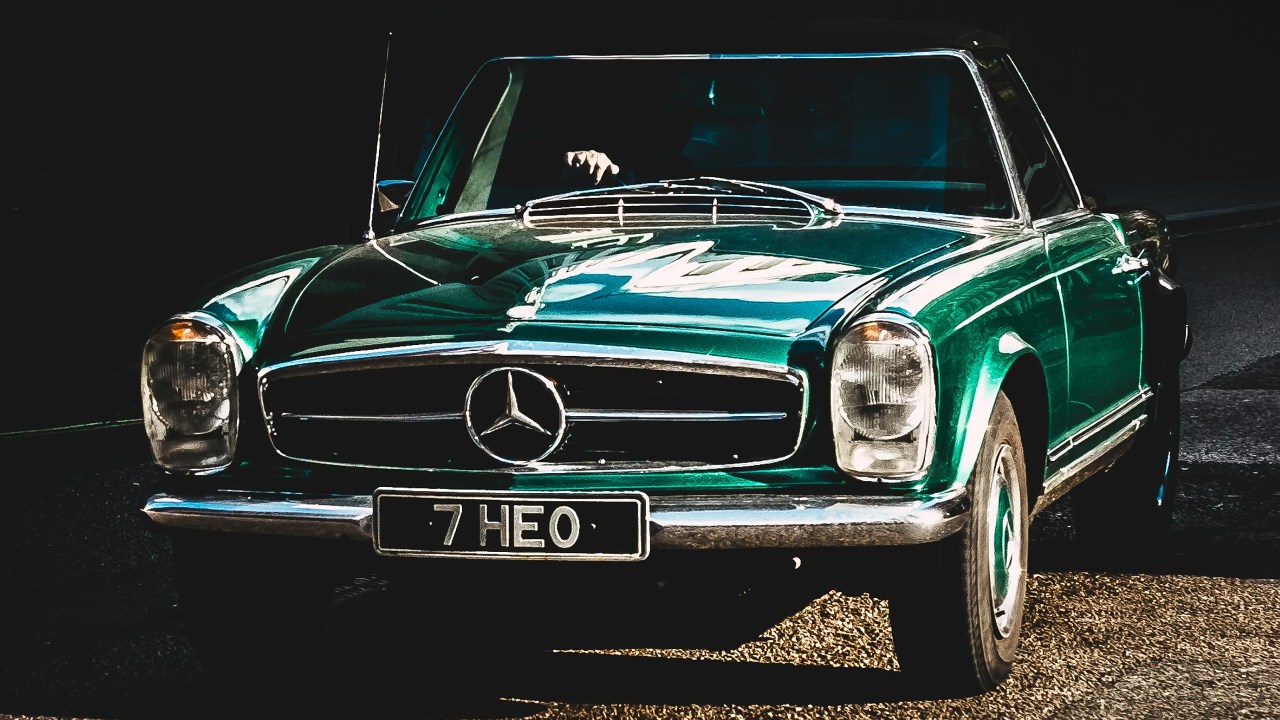
Major auction houses have been central to the explosion in high-end values, both by curating the right cars and by marketing them as cultural events. Gooding & Co. illustrates how strong the business has become, with a report on its 2024 operations noting that Gooding & Co. $205m Result from 2024 Operations. That figure, highlighted in Linkage Mag under the banner “Gooding & Co. Posts $205m Result from 2024 Operations,” underscores how a single firm can now generate hundreds of millions of dollars in annual hammer prices by focusing on the most desirable consignments.
Other auction groups have followed a similar playbook, concentrating their efforts on a handful of high-profile events where seven- and eight-figure cars can be showcased to a global audience. At Monterey Car Week, RM Sotheby’s not only achieved more than $165 million in sales, it also used the $26 million Ferrari Daytona SP3 as a halo lot that drew attention to the entire catalog. In the classic segment, landmark offerings such as a 1963 Ferrari 250 GT SWB California Spid have been cited as emblematic of how high-end auctions still flourished even as other parts of the collector landscape cooled. These marquee cars do more than set records, they anchor expectations for what similar models might be worth in private transactions.
Under the surface, a split market and looming risks
While the seven-figure tier is booming, the broader collector car world is not moving in lockstep, and that divergence is one of the most important dynamics right now. A detailed review of the classic and collectible sector notes that high-end auctions continued to thrive, with cars like the Ferrari 250 G T SWB California Spid achieving standout prices, even as more ordinary classics and mid-tier collectibles saw softer demand. A separate market update that tracks the Annual Percent Change from January 2024 to January 2025 describes the overall collectible vehicle market as mixed, with some segments holding value or rising modestly while others declined.
Commentary from market watchers has gone further, warning that parts of the collectible car space may already be in retreat. One widely viewed analysis bluntly argues that the collectible car market is collapsing and that exotics could be next, pointing to examples where once-hot models have slipped in price as speculative buyers exit. That video, published in Jul, frames certain modern exotics as vulnerable if they were bought purely as investments rather than as long-term passion purchases. Taken together with the more data-driven reports, it suggests a split reality: the rarest and most historically significant cars are still attracting fierce bidding, while more common or fashion-driven models face a tougher environment if economic conditions tighten or tastes shift.
What 2025’s trends mean for 2026 and beyond
Looking across the latest data, I see a market that is both exuberant and fragile. On one hand, the surge past $1 billion in seven-figure sales, the $205m Result from 2024 Operations at Gooding & Co., and record-setters like the Mercedes Benz W 196 R at $53.9M and the $26 million Ferrari Daytona SP3 all point to a deep pool of capital still eager to chase the rarest machines. On the other hand, the mixed readings in the Annual Percent Change analysis and the warnings about a collapsing mid-tier suggest that not every car with a limited build number will be insulated from broader economic pressures. The Dec overview of 2025 collector car market trends, presented as a Story by Bobby Clark, reinforces that point by emphasizing that buyers are increasingly relying on data rather than nostalgia when deciding what to pay.
For collectors and investors heading into 2026, the lesson is to respect that split. The evidence from Dec and Jan reporting shows that truly exceptional cars, whether a Ferrari 250 G T SWB California Spid or a historically important Mercedes Benz racer, continue to behave like scarce cultural assets with global demand. In contrast, more ordinary classics and speculative modern exotics are behaving like cyclical consumer goods, vulnerable to changing tastes and tighter money. Unverified based on available sources is any claim that the entire market is either in a bubble or in free fall; what is clear is that the top has never been stronger, even as the middle and lower tiers are forced to reset. For anyone participating, from first-time bidders to seasoned dealers, the smartest move now is to treat each segment on its own terms rather than assuming that a $1 billion year at the top guarantees smooth sailing for everything with a collector plate.
More from Fast Lane Only: