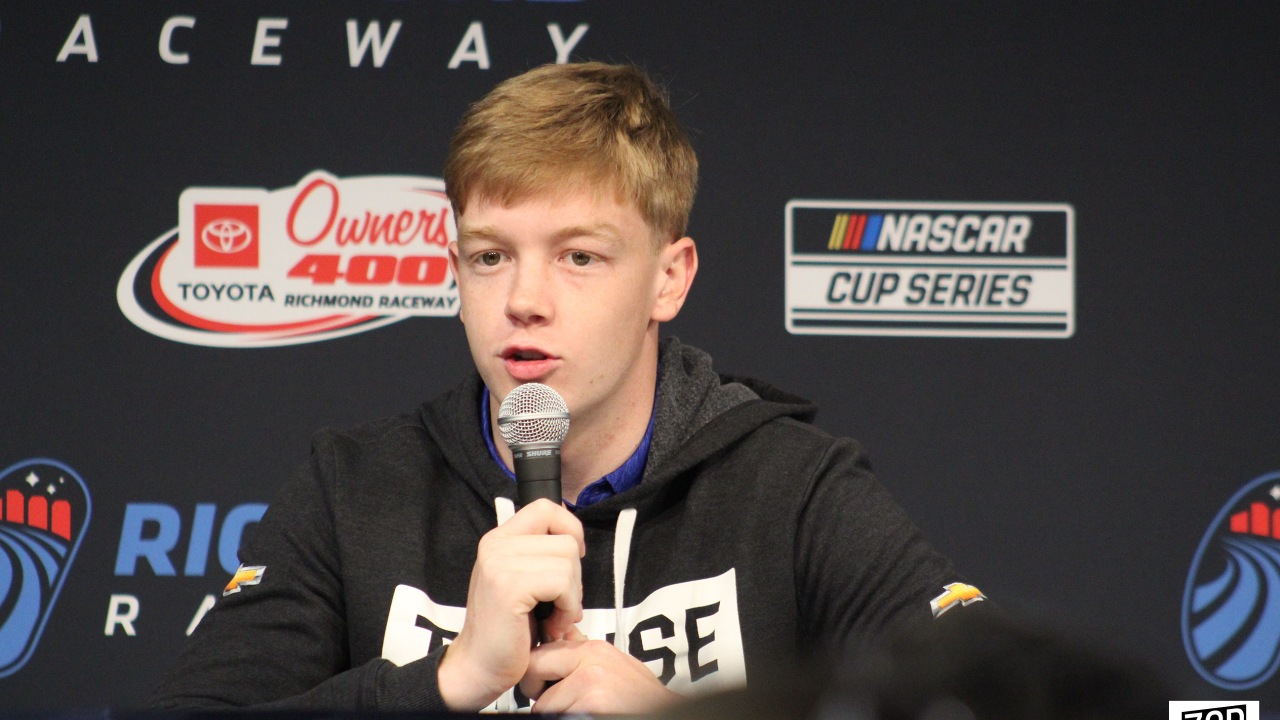
Connor Zilisch is stepping into his first full NASCAR Cup Series season with a level of conviction that belies his age, and nowhere is that clearer than in his choice of crew chief. Rather than shy away from a veteran whose recent stint with Kyle Busch drew criticism, the 19‑year‑old Trackhouse Racing rookie has embraced the partnership and spoken candidly about why he believes it will work. His comments offer a revealing look at how a rising star views risk, reputation, and the kind of leadership he wants on the pit box.
A rookie who already knows what he wants
I see Zilisch’s stance as the product of a driver who has already had to grow up quickly in the sport. Coming off a dominant 10‑win Xfinity season in 2025 with Trackhouse Racing, he is not arriving in the Cup garage as an untested prospect who must simply accept whatever support group is handed to him. That success has given him both leverage and clarity about the type of voice he wants in his ear, and he has made it clear that he views this crew chief pairing as a deliberate choice rather than a compromise. The fact that he is willing to attach his rookie campaign to a figure some label as “failed” underscores how much he trusts his own evaluation of people and performance.
When Zilisch addressed the move, he did not hedge or hide behind team language. He framed the relationship as a partnership that would demand accountability from both sides, stressing that he expects honest feedback and intends to give it in return. That is a striking posture for a teenager stepping into one of the most scrutinized roles in American motorsport, and it reflects the confidence that comes from his rapid rise through the ranks with Trackhouse Racing and his 10 wins in the Xfinity Series. Rather than treat his rookie year as a grace period, he is signaling that he wants to contend immediately and believes this crew chief is central to that plan.
Why a “failed” Kyle Busch crew chief still holds appeal
The most controversial element of this partnership is the crew chief’s recent history with Kyle Busch at Richard Childress Racing. Busch opened the 2023 season with three early wins, then slid into inconsistency that fueled criticism of the man on the pit box and eventually led to their split. That track record has followed the crew chief to Trackhouse Racing, where some observers have been quick to attach the “failed” label to his name. Zilisch has not only heard that narrative, he has confronted it directly, insisting that a single turbulent chapter with a star driver does not define the total value of an experienced engineer and race strategist.
In explaining his comfort with the hire, Zilisch has pointed to the broader arc of the crew chief’s career rather than the most recent headlines. The veteran has worked with a range of drivers and car configurations, and Zilisch believes that depth of experience will matter more than one high‑profile slump. He has effectively argued that the same person who struggled to sustain Busch’s early 2023 form can still be the right fit for a different organization, with different cars and a different communication style. That willingness to separate context from capability is rare in a sport that often reduces reputations to win columns and playoff exits.
The five-word declaration that set the tone
What truly crystallized Zilisch’s mindset was a concise, five‑word declaration that circulated widely among NASCAR fans: a simple, emphatic statement that he is “all in on this guy.” Those words, delivered as he discussed the new partnership, cut through the noise around Kyle Busch’s former crew chief and reframed the conversation around trust. In a garage where drivers often default to guarded corporate phrasing, Zilisch’s blunt endorsement signaled that he is not hedging his bets or treating this as a short‑term experiment. He is staking his rookie season on the belief that this is the right leader for his team.
That declaration also served a practical purpose inside the Trackhouse Racing shop. By publicly backing his crew chief in such direct terms, Zilisch removed any ambiguity about where he stands and helped neutralize the “failed” narrative before it could seep into day‑to‑day operations. Mechanics, engineers, and road crew members now know that their driver is aligned with the person calling strategy, which is essential when split‑second decisions on pit road can swing a race. In effect, those five words functioned as an internal memo as much as a public sound bite, reinforcing that the driver and crew chief intend to present a united front.
Learning curves, first-year drivers, and mutual benefit
For all his confidence, Zilisch has not pretended that the transition will be seamless. He has acknowledged that he faces a steep learning curve as a first‑year Cup driver, moving from Xfinity machinery to the demands of the top series. That honesty is paired with a belief that his crew chief’s history with first‑year drivers will be an asset rather than a liability. The veteran has previously guided rookies through the same adjustment, and Zilisch has argued that this background will help both of them manage expectations, refine communication, and avoid overreacting to the inevitable rough weekends that come with a debut season.
From the crew chief’s perspective, the move to Trackhouse Racing and the chance to work with a 19‑year‑old phenom offers a form of professional reset. After the split with Busch at Richard Childress Racing, he now has an opportunity to apply the lessons from that experience in a new environment, with a driver who is openly eager to build a relationship from the ground up. Zilisch has framed the pairing as a scenario that “could benefit both” sides, suggesting that his own raw speed and adaptability, combined with the crew chief’s strategic acumen and hard‑earned scars, might produce a combination that is greater than the sum of its parts. In that sense, the learning curve runs in both directions, with driver and crew chief each trying to prove something to the rest of the garage.
What this partnership signals about Trackhouse’s philosophy
To me, the decision to align Zilisch with Kyle Busch’s former crew chief says as much about Trackhouse Racing as it does about the individuals involved. The organization is betting that unconventional choices, grounded in data and internal evaluation rather than public perception, can yield an edge against more established powerhouses. By pairing a 19‑year‑old rookie who just dominated the Xfinity Series with a crew chief some critics have written off, Trackhouse is effectively rejecting the idea that recent headlines should dictate long‑term strategy. It is a calculated risk that fits with the team’s broader reputation for aggressive driver development and willingness to challenge traditional hierarchies.
For Zilisch, embracing that philosophy is both an opportunity and a test. If the partnership delivers, he will not only validate his own judgment but also strengthen the case for giving second chances to experienced leaders whose résumés include both peaks and valleys. If it falters, he will have to live with the reality that he publicly tied himself to a controversial figure. Either way, his openness about the decision, his five‑word show of faith, and his insistence on a relationship built on mutual accountability have already distinguished him from many rookies who prefer to stay in the background. In a sport where chemistry between driver and crew chief often decides who contends for championships, Connor Zilisch has made it clear that he would rather choose boldly than play it safe.
More from Fast Lane Only: