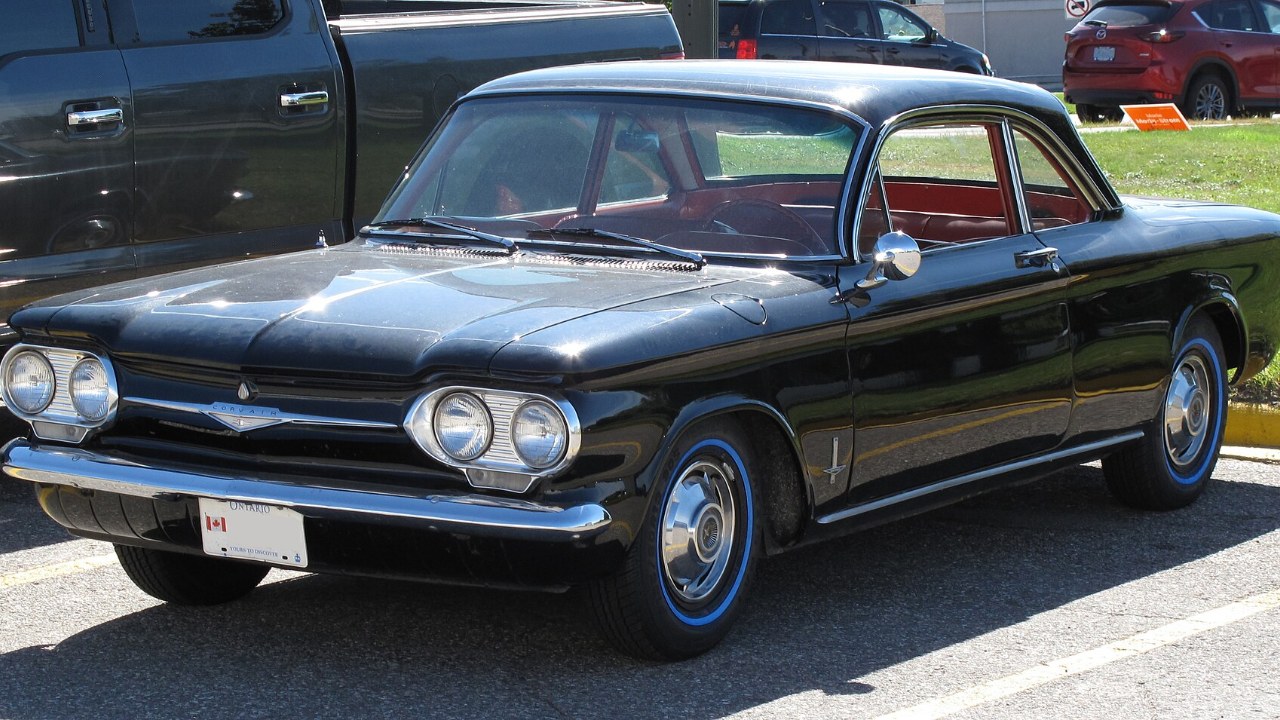
The Corvair flat-six sat at the very back of the car, behind the rear axle, and it had no radiator at all. Chevrolet launched the compact in October 1959 for the 1960 model year. Its engine was an air-cooled, horizontally opposed six of 140 cubic inches. Sports Illustrated, reporting on the new car in 1959, called it a “pancake” engine.
However, Chevrolet didn’t stumble into the layout. Ed Cole’s team compared several ways to arrange a small car before settling on it. Here’s why they chose it, how the engine was built, and what hanging it out back did to the rest of the car.
Why Chevrolet put the engine in the back
The decision started in mid-1955. According to Ate Up With Motor’s Corvair history, Ed Cole ordered research director Maurice Olley to compare layouts. Olley’s team weighed front engine with rear drive, front engine with front drive, and rear engine with rear drive.
The rear-engine option had clear appeal, since Volkswagen, Renault and Fiat already used it, among others. In fact, Ate Up With Motor says the layout offered packaging, weight and traction advantages. It also promised lighter steering.
That choice then shaped the engine. The team decided that water cooling was impractical with the rear-engine layout. As a result, the Corvair needed an all-new air-cooled engine.
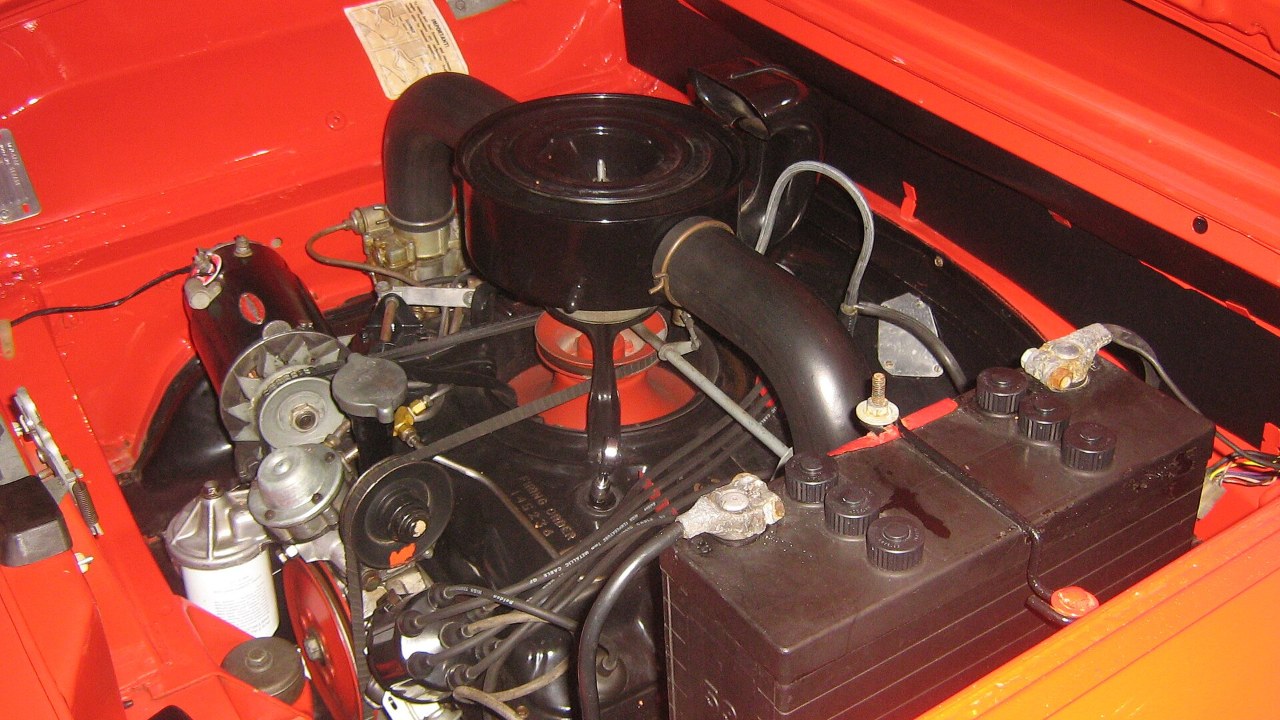
How the Corvair flat-six was built
At heart, the Corvair flat-six was a “boxer,” with its cylinders lying flat in two opposed banks of three. Ate Up With Motor lists a displacement of 140 cubic inches, or 2,287 cc. It made 80 gross horsepower and 125 lb-ft of torque.
Meanwhile, aluminum did much of the work. The final design, Ate Up With Motor explains, used a two-piece aluminum crankcase and detachable aluminum cylinder heads. However, the cylinder barrels were detachable cast-iron pieces.
Weight was also a constant target. The engine’s goal was only 288 pounds, according to Ate Up With Motor. In final form, it came in at 294 pounds with the automatic transmission flex plate.
Contemporary reports gave a different figure, though. A 1959 Sports Illustrated report on the new Chevrolet put the engine at 332 pounds. Even so, the magazine said that was about half of what a conventional six weighed.
Cooling without a radiator
First of all, air cooling removed a whole system from the car. Sports Illustrated pointed out in 1959 that the engine needed no radiator, no water pump and no antifreeze.
Instead, a fan did the job. Ate Up With Motor says an 11-inch, 24-blade fan driven by the engine moved the cooling air. In turn, a belt drove that fan.
The early setup had a flaw. According to Ate Up With Motor, early cars tended to throw their fan belts above 4,000 rpm. Chevrolet then fixed this midway through the 1960 model year with deeper pulleys.
What hanging the engine out back did to the car
Because the engine sat behind the axle, a lot of weight moved rearward. Sports Illustrated reported a split of 40% on the front axle and 60% on the rear. By comparison, Ate Up With Motor says nearly 64% of the car’s static weight sat on the driving wheels.
The two figures differ, but both point the same way. On the plus side, Ate Up With Motor notes that winter traction was excellent.
The weight also changed the suspension. “With the engine behind the rear axle, the rear springs had to be quite stiff to support its weight,” Ate Up With Motor writes. In fact, it says the early Corvair’s rear coils were more than twice as stiff as those on a contemporary full-size Chevrolet.
At the same time, the car broke new ground for GM underneath. Hagerty’s look at Corvair values calls it GM’s first fully independent suspension. Still, Hagerty’s profile of the car’s legacy says the 1960 to 1963 rear suspension was not well matched to carrying the engine located just behind it.
How the engine grew
Chevrolet kept developing the flat-six. Ate Up With Motor reports that a longer stroke for 1964 raised displacement to 164 cubic inches. The stroke went from 2.60 inches to 2.94 inches.
Later, turbocharging arrived as well. Hagerty says the early turbocharged Spyders made 150 horsepower. Later Corsa models, it adds, made 180 horsepower from 164 cubic inches.
The engine even left a mark on GM’s factories. Hagerty notes that GM kept its Tonawanda aluminum foundry, which existed to make Corvair cylinder heads, running until 1983.
How many Corvairs Chevrolet sold
The unusual layout found plenty of buyers early on. Hagerty says the Corvair sold 1.7 million units in its first three years.
Production began on July 7, 1959, according to Hagerty, and ran through 1969. By the end, Chevrolet had sold 1,839,439 Corvairs over 10 years.
More from Fast Lane Only
- Unboxing the WWII Jeep in a Crate
- 15 rare Chevys collectors are quietly buying
- 10 underrated V8s still worth hunting down
- Police notice this before you even roll window down
This article was created with the help of AI and was reviewed and edited by Fast Lane Only editors before publication.