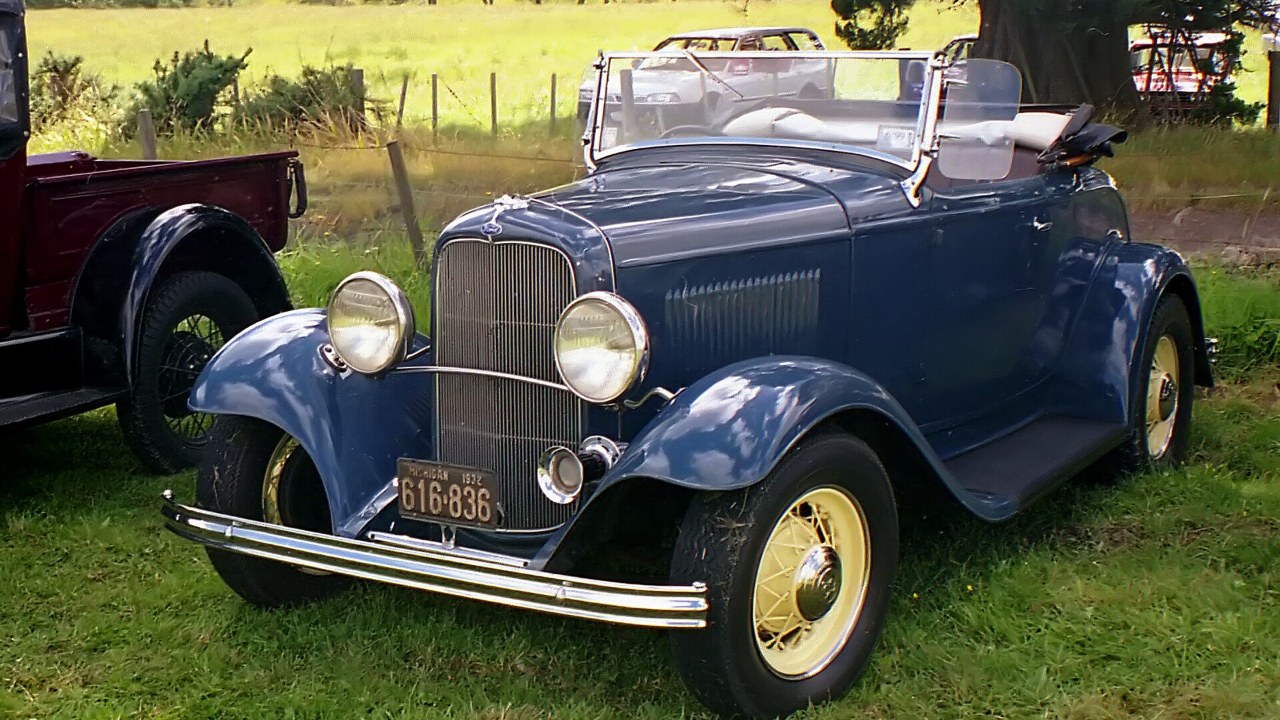
In 1932, the Ford flathead V8 put eight cylinders in a car that cost less than $500 to start. Before that, the closest V8 on the market came in a LaSalle that cost about four times as much. Ford changed that with one big manufacturing bet. That bet came down to how it cast the engine block.
The story isn’t about speed, even though hot rodders later made the flathead famous. Instead, it’s about cost. Ford found a way to build a V8 cheaply enough to sell it at a four-cylinder price. As a result, ordinary buyers could walk into a showroom and drive home with the same layout rich people had.
Here’s how the engine was built, what it cost, and why the price mattered so much in the worst years of the Depression.
What made the Ford flathead V8 cheap to build
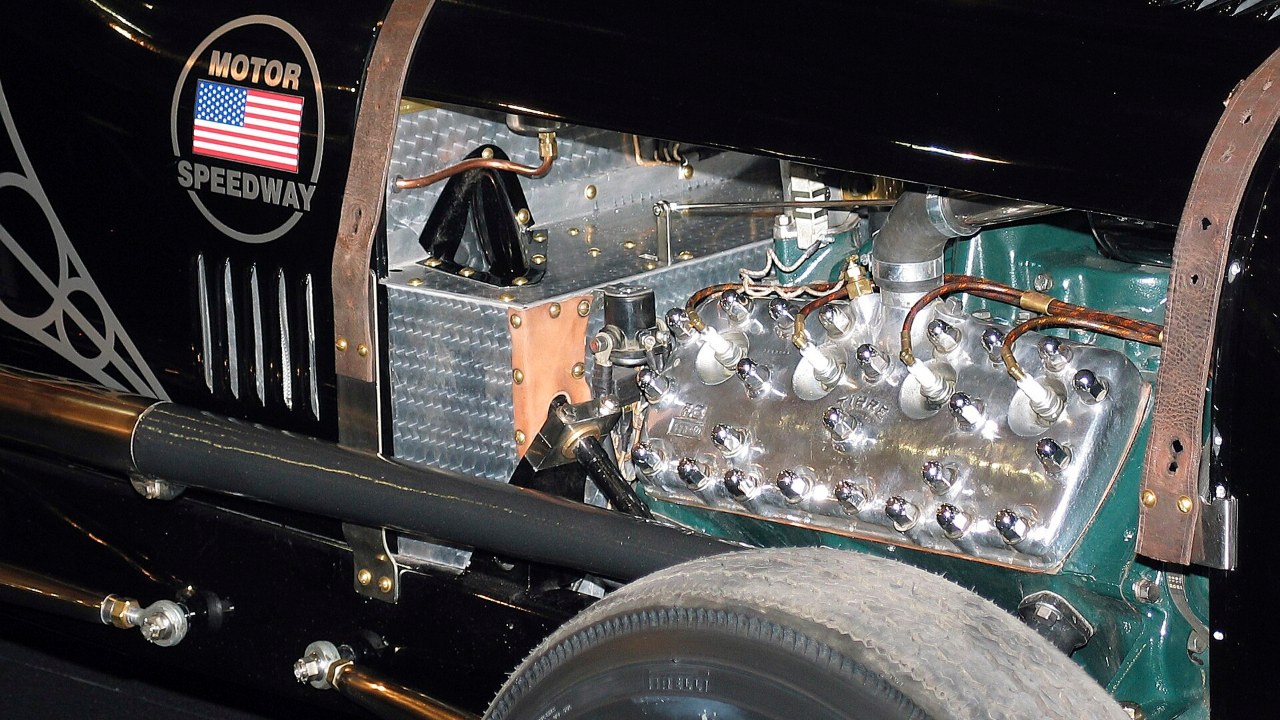
Most V8s of the era were costly because of their blocks. According to Ate Up With Motor’s history of the flathead, most makers built V8 blocks in several pieces and then bolted them together. That approach was time-consuming and expensive. In fact, the history notes that a one-piece V8 block strained the limits of casting technology at the time.
Ford cast its block as a single piece anyway. The Henry Ford museum’s record for 1932 Ford V-8 Engine No. 1 says Ford cut costs by casting the crankcase and cylinder banks as one unit. However, Ford was not the first to do it. Ate Up With Motor points out that GM’s Viking and Oakland V8s, already on sale, also had one-piece blocks.
What set Ford apart was volume. Its foundry had to pour these blocks in huge numbers, and the early going was rough. Ate Up With Motor reports that nearly half of all early castings had to be scrapped because of inaccurate core placement. Charlie Sorensen then developed new casting methods that eased the block-cracking problems.
Why it’s called a flathead
The name comes from where the valves sit. In a flathead, also called an L-head or side-valve engine, the valves live in the block beside the pistons. They point upward, so the cylinder heads above them are simple castings with no valve gear inside.
EngineLabs’ history of the engine describes it as a 90-degree V8 with the valves located next to the pistons. The heads, it adds, aren’t truly flat. Instead, each one carries four spade-shaped combustion chambers. Still, the layout kept the top end simple, and simple parts are cheaper parts.
The numbers behind the first V8
The first version was modest by later standards. The Henry Ford’s engine record lists 221 cubic inches and 65 horsepower at 3,400 rpm. Ate Up With Motor gives the same 221 cubic inches, or 3,622 cc, along with 130 lb-ft of torque.
EngineLabs supplies the internal dimensions. The bore measured 3.0625 inches, and the stroke measured 3.750 inches. EngineLabs also reports that the first flathead V8 left the factory on March 9, 1932.
Ford didn’t leave the output alone for long. According to Ate Up With Motor, power rose to 75 horsepower in 1933 and to 85 horsepower after that. Meanwhile, the whole program moved fast. Ate Up With Motor notes that Ford rushed the new engine into mass production in only 16 months.
What the 1932 Ford V-8 cost
Price was the whole point. The Henry Ford’s “The Ford V-8” collection page says a 1932 Ford with the V8 cost between $460 and $600, depending on options. In other words, buyers could start under $500.
That same page puts the price gap in perspective. The closest V8 competitor, it says, was the 1932 LaSalle. That car cost about four times as much, at $2,395.
Ford’s own lineup tells a similar story. Ate Up With Motor reports that the V8 Model 18 cost $50 more than the equivalent four-cylinder Model B. It also cost only $15 more than a comparable 1932 Chevrolet. At the same time, it undercut Plymouth by almost $100.
For a Depression-era buyer, that math was hard to ignore. A Chevrolet shopper could get two extra cylinders and a V8 badge for the price of a modest option. That’s why the museum calls it the first compact and powerful engine available to the general car-buying public.
How many Ford V8s found buyers
Buyers answered quickly. Ate Up With Motor says it took less than a year to sell a million V8s. By June 1940, the total had reached 7 million.
The engine wasn’t perfect, though. Ate Up With Motor notes that overheating remained a constant issue, especially on the harder-worked commercial models. Even so, Ford kept refining the design rather than replacing it.
How long Ford kept building it
The flathead outlived the Depression, the war and the first postwar boom. The Henry Ford museum says Ford’s original V8 design remained in production, with modifications, until 1953. Ate Up With Motor likewise says American production of the flathead ended in 1953.
Overseas, the engine kept going for decades longer. EngineLabs reports that the flathead stayed in production for world markets until 1973. By its count, that made a 50-year run with well over 10 million units built.
Today, you can see where it began. The Henry Ford museum in Dearborn, Michigan, holds 1932 Ford V-8 Engine No. 1 in its collection, the 221-cubic-inch, 65-horsepower engine that started the run.
More from Fast Lane Only
- Unboxing the WWII Jeep in a Crate
- 15 rare Chevys collectors are quietly buying
- 10 underrated V8s still worth hunting down
- Police notice this before you even roll window down
This article was created with the help of AI and was reviewed and edited by Fast Lane Only editors before publication.