Parallel parking has never really needed reinventing. Turn the wheel, ease backward, adjust as needed, done. It’s a skill most drivers eventually get comfortable with and move on from. Denza apparently looked at that entire process and decided it deserved something closer to a party trick.
The feature in question showed up in a recent demonstration from carwow’s Mat Watson, who called it the best parking feature he’s seen on any car. Rather than relying on the usual self-parking systems that inch a vehicle back and forth into a spot, this one lets the car essentially pivot in place, rotating almost like a compass needle until it drops directly into position.
It’s a strange thing to watch a car do, and an even stranger thing to realize was intentional.
A Feature Built Around Doing Almost Nothing
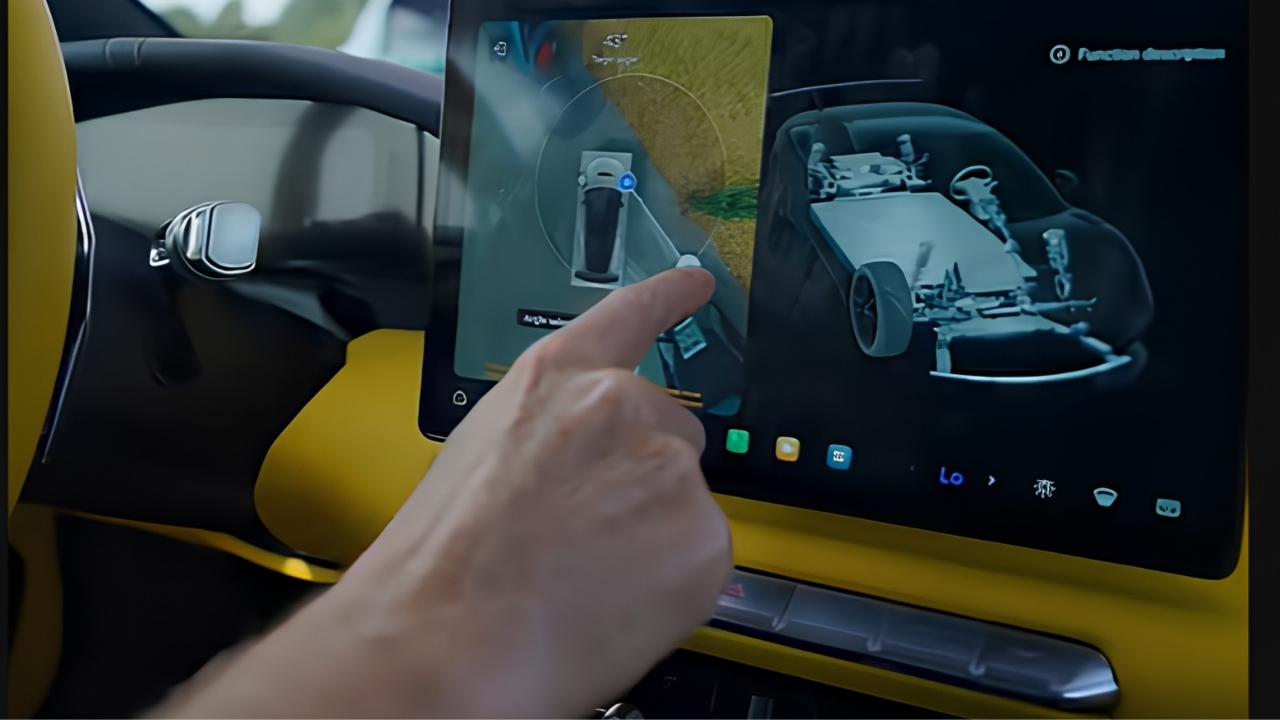
The system is accessed through the car’s central touchscreen, where a menu option leads to what’s referred to on screen as pencil compass turning. From there, the driver can manipulate a 3D rendering of the car to choose exactly where and at what angle they want it to end up. Once that’s set, pressing start and releasing the brake hands the rest of the job over to the car itself.
What follows is the car pivoting into the space using coordinated wheel movement rather than a traditional multi-point turn, tucking itself between two vehicles with a kind of rotational motion that looks more like a tank maneuver than a parking job. Watson noted it’s a feature he’s wanted to see on a production car for years, and credited Denza with being the one to actually build it.
Getting Out Is Just as Effortless
The Comment Section Had Thoughts About the Tires
Not everyone who watched the clip walked away impressed. A large share of the online reaction focused less on the novelty of the maneuver and more on what it’s presumably doing to the car’s tires, since pivoting the wheels in place to rotate the car naturally involves some amount of scrubbing against the pavement. Commenters joked about buying stock in tire manufacturers, pictured Pirelli and Continental executives celebrating the feature, and predicted significantly shorter tire life for anyone who uses it regularly.
Others took issue with the feature on principle rather than mechanics, arguing that a parking space that large barely required assistance in the first place, or that drivers who can’t parallel park manually probably shouldn’t rely on a car to do it for them. A few pushed back on the criticism entirely, pointing out that the feature is optional rather than mandatory, and that having it available doesn’t mean every driver has to use it every time they park.
It’s a fitting split for a feature built almost entirely around spectacle. The people amused by watching a car rotate itself into a parking spot and the people wincing at what that rotation might be doing to a set of tires are, in a sense, both reacting to the exact same trick.
A Small Feature With a Big “Why Doesn’t Everything Do This” Effect
There’s something almost comedic about how much technology went into solving a problem most drivers already manage just fine on their own. But that’s often how the most memorable car features work. Nobody strictly needs a car that can rotate itself into a parking spot like it’s spinning on an axis, and yet once you’ve seen it done, the traditional method starts to look a little old-fashioned by comparison.
Whether this kind of maneuverability becomes more common across other electric vehicles remains to be seen, but for now, it stands out as one of the more inventive, and apparently more divisive, answers to a problem nobody was really asking to have solved.
More from Fast Lane Only: