For nearly two decades, the modern Dodge Charger and Dodge Challenger have given buyers a rare choice: two interpretations of the same muscle-car formula, one with four doors and one with two. Shoppers have long debated which was the wiser purchase, the practical sedan or the classic coupe, and whether the answer changed as the models evolved. Looking across performance, space, pricing, and long term value, a pattern emerges that suggests each car was the “smart” buy for a different kind of driver rather than a single winner for everyone.
Both cars share engines, attitude, and a place in American car culture, yet their ownership realities diverge in meaningful ways. The Charger leans toward daily usability and family duty, while the Challenger leans into style and driver engagement, and that split has shaped which one made more sense at the dealership and years later on the used market.
Two doors versus four: practicality at the core
The most fundamental difference between the Dodge Challenger and Dodge Charger is the body style. The Challenger is a two door coupe, while the Charger is a four door sedan that seats up to five people across two rows. That single design decision dictates how easily passengers climb into the rear seats, how child seats fit, and how the car works for errands or road trips. The Charger, as a sedan, offers more room and comfort, particularly with easier access to the rear seats, which are better suited to regular use than the Challenger’s tighter back bench.
For buyers who needed to carry adults or children often, the Charger’s layout has consistently been the more rational choice. Guidance aimed at undecided shoppers has repeatedly framed the decision as “two door versus four door,” noting that if a buyer needs the space, the Charger is the more convenient option and that its more spacious cabin delivers everyday usability that the coupe cannot match. The Challenger, by contrast, has always asked owners to accept some inconvenience in exchange for its classic long door, short roof profile, which many enthusiasts still consider part of the appeal rather than a drawback.
Cabin space, comfort and daily livability
Beyond the door count, the interiors of both the Challenger and Charger are functional rather than luxurious, but they prioritize space differently. The Charger has been highlighted for its passenger space advantage, with assessments pointing out that the sedan’s layout gives it an edge in overall room, especially for rear occupants. The Charger also seats up to five people, and thanks to the more spacious rear area and easier access, it has been positioned as the better choice for those who regularly carry family or friends.
The Challenger counters with a slightly different comfort story. Reports comparing the Challenger and Charger note that the Challenger has more legroom up front, which benefits the driver and front passenger, and that both cars can be equipped with similar technology and audio upgrades, including systems with up to 18 speakers for the Challenger. For an owner who spends most of the time driving solo or with one passenger, the coupe’s front seat comfort and immersive cabin can feel more special, even if the rear seats are more of an occasional use space than a true second row.
Performance and personality: same engines, different character
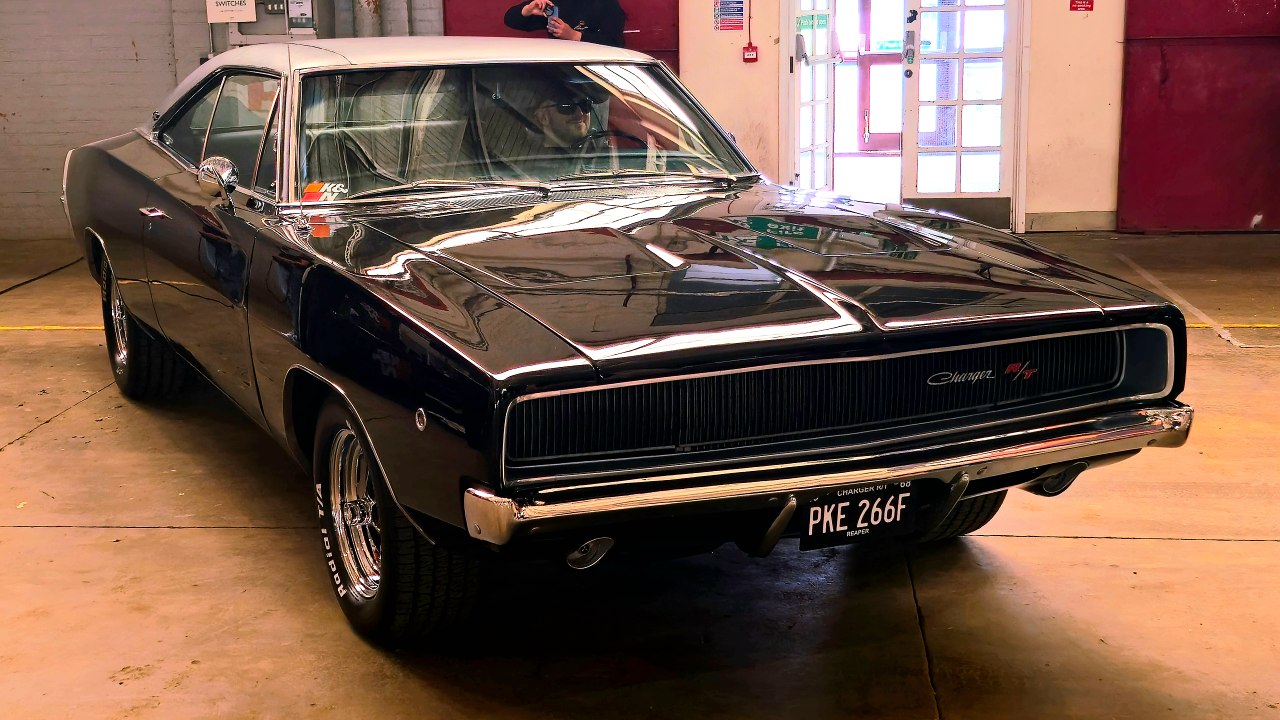
Under the hood, the Challenger and Charger share much of their hardware, from V6 engines to a range of V8s, including the supercharged HEMI units that power the most extreme versions. Both the Challenger and Charger deliver impressive performance, and both have been described as offering old school power reimagined for today. However, the Challenger is often seen as the purer muscle car, with its coupe body and slightly lighter, more focused feel, while the Charger is framed as the muscle sedan that blends speed with everyday practicality.
That shared mechanical base means that, at similar trims, straight line performance is broadly comparable. Yet the way owners use the cars can differ. A detailed comparison of a Charger SRT Hellcat Widebody and a regular Charger illustrates how the platform can swing from sensible to outrageous. The Hellcat Widebody features a 6.2 litre supercharged HEMI V8 engine producing about 707 horsepower and 650 lb ft of torque in many model years, with wider 20×11 inch wheels and 305/35ZR20 tires that help it reach 60 mph in about 3.6 seconds or quicker, depending on the version. By contrast, a base Charger typically has a 3.6 litre V6 that makes around 292 horsepower and 260 lb ft of torque, which is far slower but significantly more manageable and efficient for daily use. That same spectrum exists in the Challenger lineup, but the coupe’s image and slightly sportier stance mean buyers are more likely to prioritize performance over practicality when they choose it.
Pricing, value and the long game
When new, the Charger and Challenger have often been priced close to each other at equivalent trims, which has pushed buyers to weigh convenience against style rather than a large cost gap. Some dealership guidance has framed the decision as “price versus convenience,” noting that while specific trims like a Challenger R/T and a Charger R/T may be separated by only a modest amount, the four door car gives more usable space for the money. For shoppers on a budget who still wanted V8 power, that calculation often made the Charger feel like the more rational purchase, especially if it would replace a family sedan.
Long term value, however, is more nuanced. A detailed comparison of the Dodge Challenger and Dodge Charger that examined specifications and ratings concluded that the Dodge Challenger is a better overall value, particularly when looking at resale and retained value scores. Another buying guide that asked which has better resale value, Challenger or Charger, found that both carry solid resale strength thanks to loyal fan communities and limited production of certain trims, but it did not declare a clear winner. The combined picture suggests that while both cars hold value well compared with many mainstream sedans and coupes, the Challenger’s stronger enthusiast following and collectible variants may give it a slight edge on the used market, especially for well kept performance models.
Which was the smarter buy, and for whom?
Looking back across the modern era of these cars, the idea that one was always the smarter buy oversimplifies a split that has remained remarkably consistent. For buyers who needed to carry more than two people regularly, the Charger’s four door configuration, easier rear seat access, and recognized passenger space advantage made it the sensible choice. Advice aimed at undecided shoppers has repeatedly emphasized that if space and convenience are priorities, the Charger is the car that better balances daily living with the excitement of a muscle car. Even within the Charger range, comparisons between the Hellcat Widebody and a regular Charger have concluded that the base Charger offers a better balance for daily living, making the standard Charger the smarter option for most people who are not chasing track times.
For drivers who valued style, driver focused comfort, and potential collectability over rear seat practicality, the Challenger has often been the more compelling long term proposition. Analyses that rated the Dodge Challenger and Dodge Charger side by side have found the Challenger to be the better overall value when factoring in specifications, ratings, and resale metrics, and dealership comparisons have highlighted that both the Challenger and Charger deliver impressive performance, but the Challenger is often seen as the more iconic muscle car. In that sense, the coupe has been the shrewder choice for enthusiasts willing to live with its compromises, while the sedan has been the rational pick for those who needed their muscle car to double as a family vehicle. Rather than a single permanent winner, the “smart” buy has always depended on whether a buyer’s life looked more like a daily commute with passengers or a solo drive on an open road.
More from Fast Lane Only