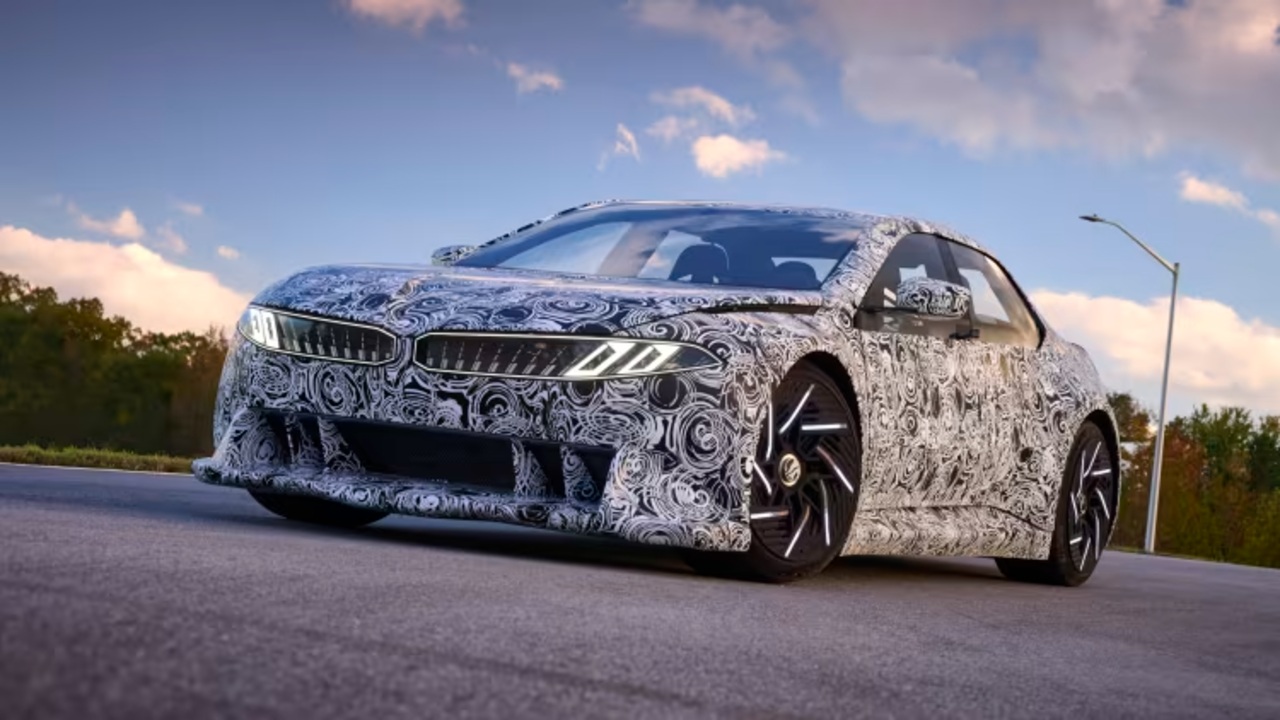
BMW’s first electric M3 is being engineered to silence doubts as much as it silences tailpipes, and sound has become the battleground. Rather than accept the near silence of electric propulsion, the company is building a digital soundtrack that borrows from its greatest combustion engines, right up to a classic V8 rumble. The result is an M3 that runs on electrons yet aims to feel, and crucially to sound, like a proper M car.
The electric M3’s soundtrack is built from BMW’s greatest hits
BMW is not leaving the character of its electric M3 to chance. Engineers are programming the car to use soundtracks derived from some of the brand’s most celebrated performance engines, blending the timbres of V8, inline-six, and V10 powerplants into a single, curated voice. Reporting on the project notes that the electric M3 uses soundtracks from past M performance icons and explicitly blends V8, inline-six, and V10 engine notes, a clear signal that the company sees heritage as a key part of the car’s identity, even without fuel and pistons.
Specific references from BMW’s back catalog underline how seriously it is treating this exercise. The simulated sound menu is set to include the twin-turbo 3.0-liter inline-six from the F82 M4 GTS, the naturally aspirated 4.4-liter V8 from the E92 M3 GTS, and a high-revving V10, with all three forming the basis of the audio pumped through the speakers. By anchoring the electric M3’s voice in these GTS specials and other halo models, BMW is effectively promising that the car will not just be fast, but will also carry the emotional cues that long-time M drivers associate with the badge.
Simulated shifts and “real” reactions aim to fool the senses
Sound alone is not enough to convince a driver that an electric car has the same drama as a combustion sports sedan, so BMW is pairing its audio work with physical cues. The upcoming quad-motor electric M3 will feature simulated gear shifts, using software to momentarily interrupt power and mimic the surge and pause of a traditional transmission. That artificial shift shock is designed to line up with the rising and falling of the synthesized engine note, so the driver’s ears and body feel the same rhythm they would in a gasoline M3.
BMW has already explained that it is not simply playing an MP3 file through the speakers. They are pairing this audio with simulated driveline reactions, so the car’s responses to throttle inputs, load changes, and virtual upshifts all reinforce what the driver hears. In other words, the soundtrack is tied to real-time vehicle dynamics rather than being a canned effect. This approach is meant to create a bridge for purists who might otherwise dismiss an electric M3 as a fast but soulless appliance.
BMW M leadership wants continuity, not a clean break
Inside BMW M, the philosophy behind these choices is explicit. Division leadership has argued that performance cars still need a form of feedback that goes beyond raw numbers, even as the powertrain changes. In an interview about the broader concept of electrified M cars, the brand’s boss explained that future systems do not have to copy exactly what exists today, because the current setup also has disadvantages, but that some kind of emotional connection is still required. That connection, he suggested, can come from sound and other inputs that help the driver sense what the car is doing.
This thinking aligns with the decision to give the electric M3 a synthesized voice that is rooted in BMW’s own history rather than in generic sci‑fi noises. The company has already showcased a video of what the electric M3 will sound like and the iconic M models it sampled, underscoring that the project is about continuity as much as innovation. BMW has also framed the feature as a “Synthesized Engine Sound for Driving Thrill,” positioning it not as a gimmick but as a deliberate tool to preserve the brand’s character in the electric era.
Gas and electric M3s will look alike, but sound sets them apart
BMW is planning to sell gasoline and electric versions of the next M3 side by side, and visually they are expected to be nearly indistinguishable. Company representative Mike Reichelt has commented that the gas and electric M3s will look the same and that the combustion variant will be offered with a new type of six-cylinder engine, paired exclusively with an automatic transmission. That strategy suggests BMW wants buyers to choose their powertrain based on preference rather than being steered by styling cues that mark one as the “real” M3 and the other as an offshoot.
In that context, sound becomes one of the few clear differentiators between the two. The gasoline car will rely on its new six-cylinder to provide a natural soundtrack, while the electric M3 will lean on its curated mix of V8, inline-six, and V10 notes. BMW has already released a dedicated video to demonstrate the simulated engine sounds and the M icons they are drawn from, underlining that the company expects customers to weigh the emotional pull of each experience as much as the spec sheet. The visual parity between the models raises the stakes for the electric car’s audio package, because it must convince drivers that the quieter option can still feel like a full-blooded M.
Purists, gamers, and the strange authenticity of fake noise
The idea of an electric M3 that “misses gas so much” it borrows the voices of old engines has already sparked debate among enthusiasts. Some see the simulated V8 and V10 sounds as a necessary compromise, a way to keep the emotional core of the M3 alive while meeting emissions and performance targets that favor electric power. Others argue that pumping heritage engine notes through speakers is little more than theater, and that a truly modern performance car should embrace the natural quiet and instant torque of its motors instead of imitating the past. The fact that BMW’s electric M3 uses soundtracks from past M performance icons shows that the company is willing to lean into nostalgia, even if it risks accusations of artifice.
BMW itself appears comfortable with that tension. The company has described the upcoming model as an “Upcoming Electric” M3 that “Will Have” “Simulated” V8 and V10 “Sounds,” and social media posts about the car have acknowledged that some observers will see the approach as “gaming” the experience. At the same time, BMW has emphasized that the simulated gear shifts and synchronized audio are meant to feel authentic from behind the wheel, not like a video game overlay. The manufacturer’s decision to invest in a sophisticated, dynamically linked sound system, rather than a simple speaker trick, suggests that it believes authenticity can be engineered, even if the noise itself is no longer coming from a crankshaft and exhaust.
More from Fast Lane Only