You can tell a lot about a mid‑century executive by the car keys in his hand, and in the early 1960s those keys often unlocked a Cadillac Fleetwood Sixty Special. The 1962 version of this long, formal sedan hit a sweet spot between boardroom restraint and driveway spectacle, which is why so many corporate leaders gravitated toward it as their rolling office and status statement. To understand why, you have to look at how Cadillac built its reputation, how American executives thought about size and luxury, and how the Sixty Special’s design quietly reshaped what a top‑tier company car should be.
The executive appetite for big American cars
If you picture yourself in a corner office in the early 1960s, the expectation is that your car is large, powerful, and unmistakably American. Collectors like Rick Payton, introduced by Robert Ferris of CNBC, still talk about how classic American cars defined that era’s sense of success. Executives wanted the same thing you probably look for in a flagship laptop or phone today, something that signals you have arrived before you say a word. A long Cadillac in the parking lot did that job instantly, broadcasting that you were not just employed, you were in charge.
That appetite for size did not appear out of nowhere. By the time you get to 1962, American buyers had already been conditioned to see bigger cars as better cars, with wide bodies, generous rear seats, and trunks that could swallow a week’s worth of luggage. When you watch how enthusiasts still celebrate these classic American machines in short clips and walk‑arounds, including the American cars that collectors preserve today, you are seeing the same values that once guided corporate purchasing departments. For an executive, choosing a Cadillac Fleetwood Sixty Special was less about raw transportation and more about aligning yourself with that national love affair with size and presence.
How Cadillac earned boardroom trust
For you as a mid‑century decision‑maker, the badge on the hood mattered as much as the sheet metal. Cadillac had spent decades selling itself on precision manufacturing and reliability, positioning each car as a better‑made vehicle than its competitors. That reputation was crucial if your company was assigning cars to senior staff, because a breakdown on the way to a client meeting was more than an inconvenience, it was a reputational risk. When you signed off on a Fleetwood Sixty Special, you were buying into a promise that the car would start, glide, and arrive with minimal drama.
At the same time, Cadillac cultivated a very specific aura of comfort and refinement that you can still see in how the brand is marketed. Dealers today emphasize that the attention to detail in every Cadillac exemplifies refined elegance, making your drive as comfortable as it is stylish. That same pitch resonated with executives in 1962, who spent long hours on the road and wanted a cabin that felt like a well‑appointed office rather than a noisy, utilitarian box. The Fleetwood Sixty Special, with its upscale trim and quiet ride, fit that brief perfectly.
From tail fins to formal restraint
By the early 1960s, you were watching Cadillac pivot from flamboyant styling to a more dignified look that suited executive tastes. Designer William Mitchell had famously defended adding tail fins to the 1948 Cadillac, noting that it was the first American car whose rear end really looked like something out of aviation. Those fins grew into the wild peaks of the late 1950s, which were perfect if you wanted to shout for attention but less ideal if you were a conservative executive trying to project stability. By 1962, Cadillac was dialing back the sci‑fi drama and moving toward a more formal, brougham‑inspired profile that still looked expensive without feeling excessive.
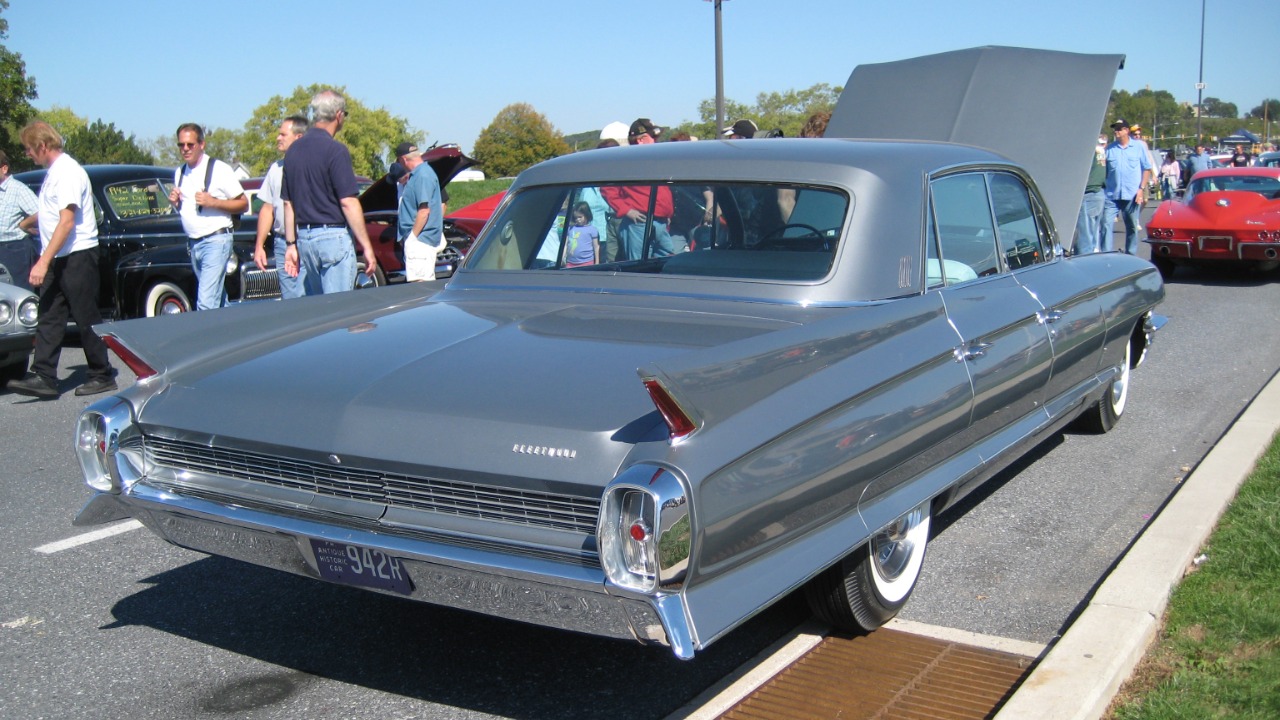
That transition is why the 1962 Cadillac is often described as a bridge between eras. Analysts looking back on the period note that the 1962 Cadillac was a transition design, with rooflines that were more formal and an overall vibe that was less sci‑fi, even though, however, the front and rear still carried some of the earlier decade’s flair. When you slide into a 1962 Fleetwood Sixty Special, you feel that balance. The car still has presence, but the lines are cleaner, the fins are tamed, and the emphasis has shifted from spectacle to authority, which is exactly what you would want if you were pulling up to a shareholders’ meeting.
The Sixty Special’s long shadow
To understand why executives zeroed in on the Sixty Special, you have to look at its lineage. Earlier versions like the 1953 Cadillac Fleetwood Sixty already stood out with an extended wheelbase and an exclusive pedigree that separated it from more common Cadillacs. By 1959, the Fleetwood Series Sixty‑Special had become a showcase for technology and comfort, with power windows and seat, power steering, and power brakes as standard equipment. The Fleetw, as some enthusiasts affectionately call it, reinforced the image of a car built for people who expected every convenience.
By the time you reach 1962, that heritage had hardened into a clear message. The Fleetwood Sixty Special was not just another Cadillac, it was the one that signaled you were at the top of the organizational chart. Owners still recall how a white Fleetwood in 1962 could make a lifelong impression, as one enthusiast named Chick did when he bought a Fleetwood and sparked a six‑year‑old’s love of Cadillacs. When you chose that model, you were stepping into a tradition of long‑wheelbase, chauffeur‑friendly sedans that had been quietly courting executives for more than a decade.
Design details that spoke to executives
What really sold you on the 1962 Sixty Special were the details you noticed every time you walked up to it. That year, the big four‑door hardtop news at General Motors was a new 4‑window version with wide C‑pillars, and Cadillac offered it in regular deck form. That roofline gave the car a more formal, almost limousine‑like silhouette, which was ideal if you were being driven rather than driving yourself. The thick C‑pillars also added a sense of privacy for rear passengers, something any executive taking calls or reviewing documents in the back seat would appreciate.
Inside, the Sixty Special leaned on the same kind of dramatic styling that had defined earlier Cadillacs, but in a more controlled way. Designers had already learned, as one analysis of the 1947 Fleetwood put it, that a new design could make a dramatic styling statement, the kind that defines or breaks a brand, and that you know you are onto something good when the proportions just feel right. In the 1962 car, that meant a dashboard and seating layout that felt substantial without being gaudy, with enough chrome and brightwork to remind you of the price tag but not so much that it distracted from the business at hand.
More from Fast Lane Only