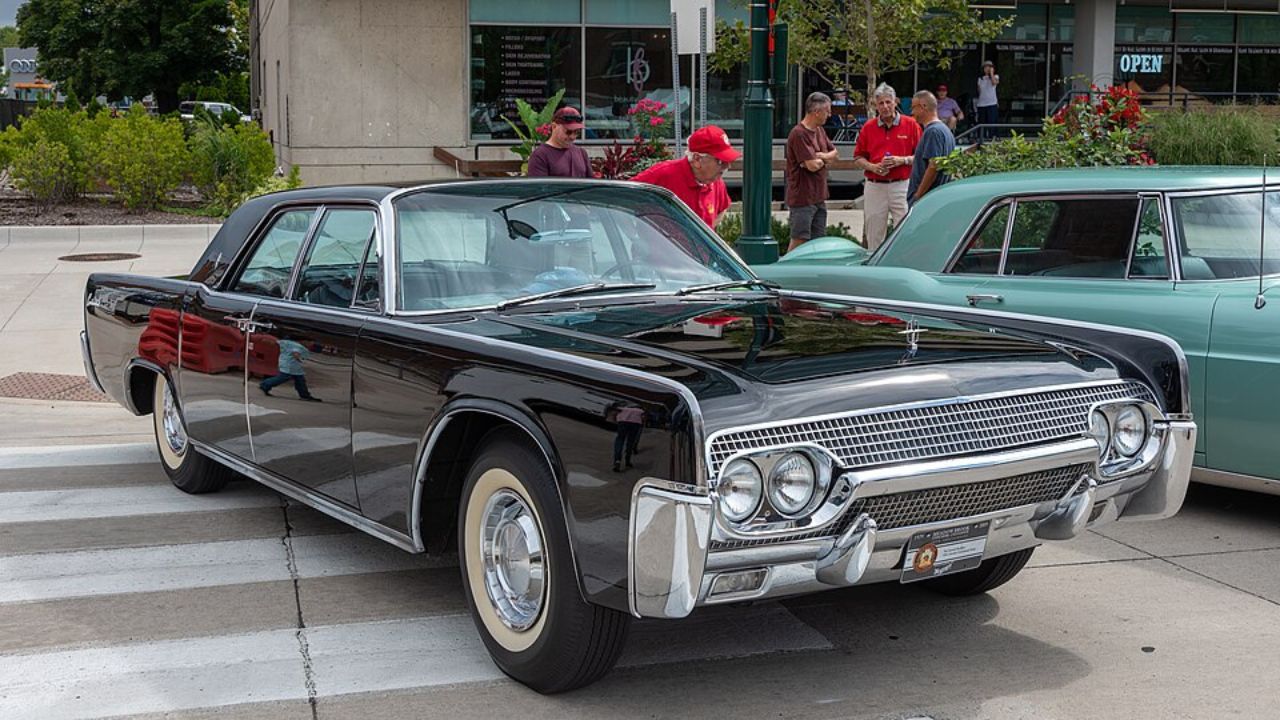
The 1961 Lincoln Continental did something radical in an era of chrome excess: it got quieter, cleaner and smaller, and in the process became one of the most influential American luxury cars ever built. Instead of shouting for attention, it relied on crisp geometry, subtle detailing and a sense of calm that still feels modern. If you care about design, you can trace a straight line from that decision to much of what you see in premium cars today.
When you look past the mythology and the presidential motorcades, what stands out is how deliberately the car used restraint as its main tool. You see it in the sheet metal, in the pared back cabin, even in the way the convertible roof disappears without drama. The 1961 Lincoln Continental shows you that when a luxury brand stops chasing flash and starts editing, the result can be quietly powerful.
The moment Lincoln hit reset
By the end of the 1950s, American luxury cars were locked in an arms race of fins, chrome and sheer size, and Lincoln was losing. The 1961 Lincoln Continental arrived as a reset, shrinking in overall length yet stretching its wheelbase to create a long, low stance that looked disciplined instead of bloated. In the official history of the Lincoln Continental, that pivot is treated as a turning point for the brand, a conscious move away from the excess that had nearly sunk it.
Instead of chasing Cadillac with more ornament, Lincoln leaned into a modernist look that designers later described as architectural. The body sides were almost perfectly flat, the fenders were integrated rather than tacked on, and the brightwork was reduced to thin outlines that framed the shape rather than fighting it. In period training films, the company itself called the ’61 Lincoln a triumph of good taste, a sentiment echoed in a later video that praises the 61 Lincoln for its restraint and calls it an aspirational masterpiece.
Clean lines, dramatic doors
When you first see a 1961 Continental in person, the thing that hits you is how calm it looks. The slab sides, straight shoulders and squared off roof read almost like a piece of midcentury furniture, more in line with a modernist building than a typical Detroit cruiser. Enthusiasts often point to the way the car broke from 1950s excess, and a later profile of a 1963 model notes that the Breaking from those trends was central to the Continental’s appeal at a time when bigger often meant better.
Then the doors open and the quiet design suddenly becomes theatrical. The car is particularly famous for its rear hinged back doors, the so called suicide doors that swing opposite the fronts to create a wide, pillarless opening. A detailed fan description of a 1961 Lincoln Continental custom convertible highlights those rear hinged doors as a defining feature, and another account of the 1961 Lincoln Continental points out that those suicide doors, combined with a clean geometric design, made the car stand out in the luxury field. That mix of minimal surfacing and one bold gesture is exactly how the car turns restraint into presence, giving you drama without clutter.
A cabin that whispers, not shouts
Open those doors and you step into a cabin that continues the same philosophy. Instead of a busy dashboard packed with chrome pods, you get a horizontal layout with large, legible gauges and controls that feel considered rather than scattered. Owners and fans describe the interior as Spacious and comfortable, with seating for up to six passengers, and praise the Simple, elegant dashboard layout with large, easy to read instruments that match the car’s exterior calm.
That sense of quiet luxury carried into the convertible as well. A detailed look at the 1961 Continental Convertible notes that the car was designed as a four door open model from the start, not a coupe with its roof chopped off, which allowed the structure and interior to stay solid and refined. In that account, the The Continental Life story of the Continental Convertible emphasizes how the Lincoln Continental used high quality materials and careful detailing to project understated wealth rather than flash. You feel that when you sit in one: the car does not try to impress you with gadgets, it simply makes every surface and sightline feel deliberate.
Engineering the quiet showpiece
Restraint in the 1961 Continental was not just visual, it was mechanical. The four door convertible in particular required serious engineering to make its disappearing roof look effortless. Accounts from marque specialists explain that the power top mechanism was worked out using existing technology from the Ford Skyliner retractable hardtop, so the complex ballet of decklid, roof and windows could happen with one switch. One enthusiast write up notes that the Ford Skyliner system was adapted so the Continental’s soft top could vanish cleanly, while the Interi structure and finish stayed intact.
That complexity helps explain why the open car is so rare. A detailed sales breakdown notes that Ford sold 21,560 units of the 1961 Continental, and that 21,560 units figure included only a small fraction of convertibles. A separate description of a surviving four door convertible stresses that Only 2,857 were built, just 9 percent of total production, making each 2,857 Lincoln Continental convertibles a rare artifact of that engineering ambition.
How one car shifted luxury design
If you are used to thinking of American luxury as loud, the Continental’s influence can be easy to underestimate. Contemporary and later commentators argue that the 1961 car subtly altered the direction of United States luxury design, with its clean, slab sided styling and suicide doors setting a new template. A detailed enthusiast post on the 1961 Lincoln Continental credits that design with influencing later American sedans and notes that its timeless style and elegance still resonate. Another fan description of the 1961 Lincoln Continental four door convertible calls it an icon of sleek, understated luxury, praising its clean, squared off design and suicide rear doors as hallmarks of chic 1960s taste.
The ripple effect went beyond American brands. A deep dive into the car’s quirks points out that the entire industry moved toward cleaner, more architectural designs after the Continental arrived, and that even European manufacturers took notice. In that video, the narrator singles out how European makers like MercedesBenz began to echo the Continental’s architectural calm. Another commentator, in a separate video on why the 1961 Continental was the coolest car ever, laments that the real tragedy of the 61 Continental is not that we do not build them anymore, but that we do not even try, arguing that the car proved you could be both modern and dignified without resorting to gimmicks.
More from Fast Lane Only