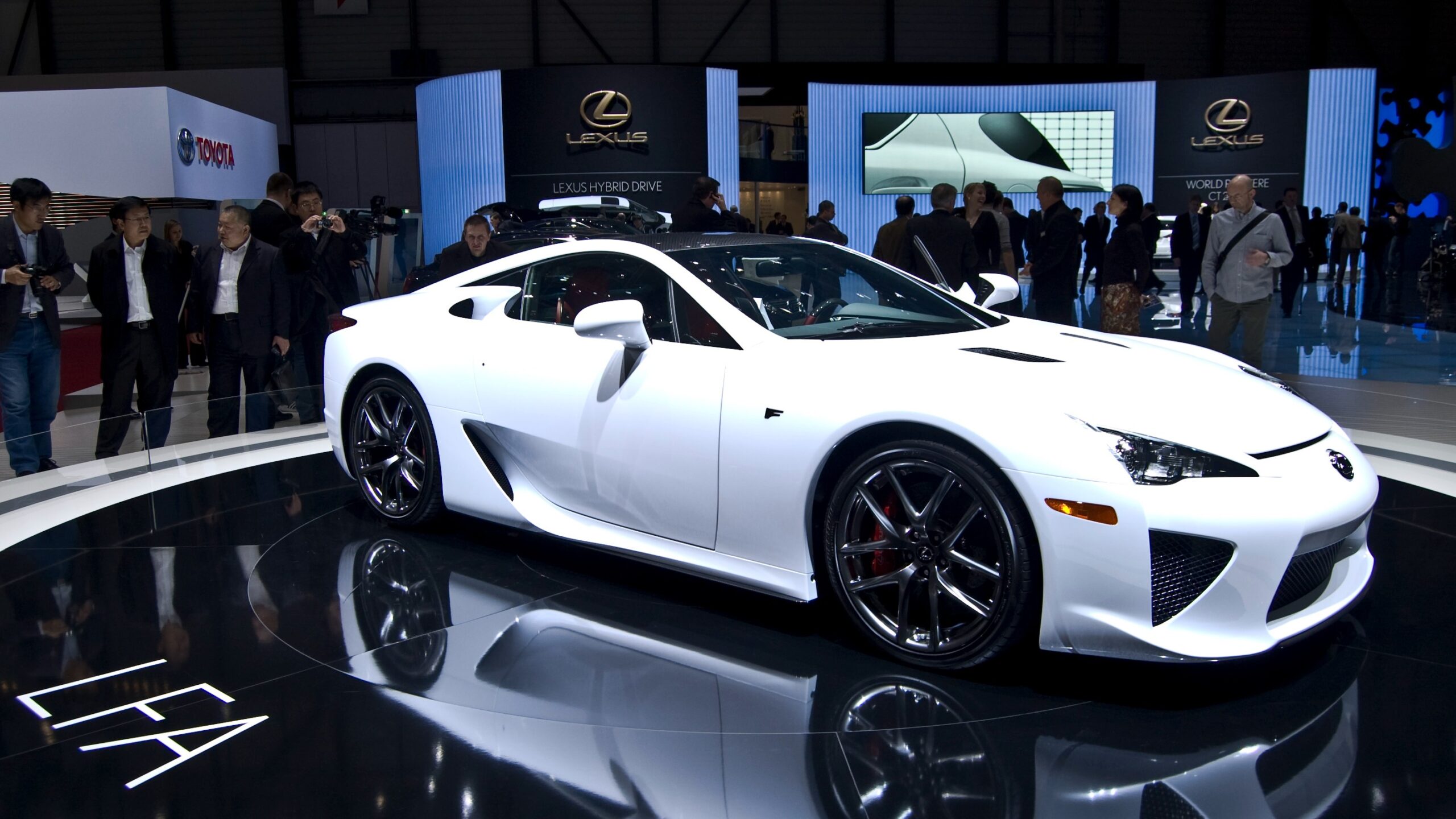
The Lexus LFA arrived in 2010 as a carbon fiber science project from a brand better known for quiet sedans than spine-tingling supercars. Yet the car’s naturally aspirated V10 did something few expected: it sang with a ferocity and clarity that many enthusiasts now rank among the finest engine notes ever recorded. More than a decade later, the LFA’s sound still shapes how drivers judge high-revving engines and what they expect from a flagship performance car.
A supercar that came from nowhere
Lexus spent years developing the LFA in relative secrecy, experimenting with aluminum before committing to a carbon fiber reinforced plastic tub and body. The production car used a 4.8‑liter V10 that revved to a dizzying 9,000 rpm, a figure that placed it among the highest spinning road‑going engines ever built. Only 500 examples were produced, which meant that for most people the LFA existed more as a YouTube clip and a poster than as something they might see on a street.
What made the car stand out was not just the numbers but the way the engine behaved. The V10 was compact and light, with a block and heads designed in partnership with Yamaha’s motorsports division. It could climb from idle to redline in roughly six-tenths of a second, so the tachometer needed a digital display because a traditional analog needle could not keep up. That response gave the exhaust note a sharp, rising character that felt closer to a racing prototype than a road car.
Contemporary coverage highlighted that Lexus, a luxury brand known for comfort and isolation, had created what some called the highest-revving V10 supercar of its era. Reports on the LFA’s V10 emphasized how unusual it was for a company that built the LS sedan to commit to such an extreme engine. The contrast between Lexus’s quiet reputation and the LFA’s shriek is part of why the car’s sound became so famous so quickly.
How Lexus engineered that V10 wail
The LFA’s soundtrack was no accident. Engineers treated the exhaust and intake as musical instruments, tuning lengths and diameters to emphasize certain harmonics as the revs climbed. Yamaha, which builds both engines and pianos, helped shape the acoustic profile so that the car produced a layered tone instead of a flat drone. The result was a sound that blended a deep, metallic growl at low rpm with a piercing, almost F1‑style scream near the limiter.
The key to this character was the engine’s configuration. The 72‑degree V10 layout helped balance smoothness and compact packaging, while lightweight internals let the motor spin freely. Individual throttle bodies sharpened response, and the firing order created overlapping pulses that gave the exhaust note its complex texture. At full throttle, the car did not simply get louder; it changed pitch and color in a way that made drivers want to chase the redline again and again.
The intake system played as big a role as the tailpipes. Lexus routed induction noise into the cabin so that the driver heard the engine’s mechanical song directly, not just the muffled output of the exhaust. This approach turned the cockpit into a kind of concert hall, with the carbon structure acting as a resonant shell. The sound was not artificially enhanced through speakers; it came from the engine’s own breathing, which helped preserve authenticity for enthusiasts who care about mechanical purity.
How the LFA stacks up against other V10 legends
To understand why the LFA’s sound is so revered, it helps to place it among other famous V10 cars. Over the last three decades, manufacturers have used ten‑cylinder engines in everything from supercars to trucks. A survey of the best V10 cars highlights names such as the Lamborghini Gallardo, Audi R8 V10, Porsche Carrera GT, BMW M5 with its S85 engine, Dodge Viper, and even the Ford E‑Series van with its workhorse Triton motor. Each of these engines has a distinct voice and purpose.
The Lamborghini Gallardo and Audi R8 V10 share a 5.0‑ to 5.2‑liter architecture that produces a hard‑edged, exotic rasp. The Porsche Carrera GT uses a 5.7‑liter V10 derived from a racing project, with a feral, motorsport‑grade howl that many purists consider the benchmark for analog supercars. BMW’s E60 M5 carries a 5.0‑liter V10 that revs to 8,250 rpm and delivers a high‑pitched, mechanical snarl, while the Dodge Viper’s 8.0‑ to 8.4‑liter V10 trades revs for displacement, creating a deep, thunderous rumble more akin to a big‑block V8 stretched across two extra cylinders.
Against that backdrop, the LFA’s 4.8‑liter unit stands out for its mix of race‑car urgency and studio‑grade clarity. It revs higher than the German sedan engines and sounds more refined than the Viper’s brute force motor. Compared with the Gallardo and R8, the Lexus note is less raw but more orchestral, with a cleaner top end that many listeners describe as almost musical. Only the Carrera GT comes close in terms of sheer drama, yet the Lexus pairs that intensity with a slightly smoother, more polished tone that suits its luxury badge.
Another distinction is how integrated the sound is with the driving experience. In some V10 cars, the exhaust dominates while the rest of the car feels relatively ordinary. The Lexus wraps its sound around a chassis that is light, rigid, and responsive, so the noise feels like an extension of the steering and brakes. That holistic feel is part of why owners and testers often remember the car as a complete event rather than just an engine with a body attached.
Why the sound changed Lexus’s identity
Before the LFA, Lexus had built a reputation on silence. Flagship models like the LS prioritized low cabin noise and isolation from the outside world. The company’s first major performance effort, the IS F, used a V8 with a strong exhaust note, but it still operated within the boundaries of a sports sedan. The LFA broke that pattern by placing sound at the center of the product’s identity.
The V10’s voice became a calling card. Promotional material leaned heavily on audio clips and track footage, and early reviews often spent as much time describing how the car sounded as how it handled. For a brand that had rarely been associated with emotional appeal, this emphasis on sensory drama marked a strategic shift. The LFA showed that Lexus could compete not only on reliability and comfort but also on passion.
That legacy filtered into later models. High‑performance F variants and F Sport packages began to feature more expressive exhaust tuning and, in some cases, active sound management to give drivers a greater sense of connection. Even as Lexus moved toward turbocharged and electrified powertrains, the memory of the LFA’s V10 reminded engineers and marketers that customers respond strongly to characterful sound. The car effectively gave the brand permission to be loud in a literal and figurative sense.
The LFA’s influence on the V10 era
The LFA arrived during a period when V10 engines were already under pressure from tightening emissions rules and the rise of smaller turbocharged units. Many of its contemporaries have since disappeared or shifted to different configurations. Yet enthusiasts still talk about the LFA in the same breath as the Carrera GT and R8 V10 when ranking the greatest ten‑cylinder cars.
Part of that influence lies in how the car reframed expectations for refinement at high rpm. The LFA proved that an engine could spin to 9,000 rpm, deliver serious performance, and still feel usable on normal roads. It did not idle like a race car or require constant attention to stay in its power band. This balance encouraged other manufacturers to aim for higher rev limits and more expressive soundtracks even as they chased efficiency and emissions compliance.
The car also contributed to a broader appreciation for naturally aspirated engines. As turbocharging spread, some drivers missed the linear response and unfiltered noise of engines without forced induction. The LFA became a reference point for what was being lost. When enthusiasts argue for the emotional value of high‑revving, naturally aspirated powertrains, they often cite the LFA’s V10 as a prime example of why such engines matter.
Why the sound still resonates today
More than a decade after production ended, the LFA’s exhaust clips continue to circulate widely. Trackside videos capture the car screaming down straights, while onboard footage shows the tachometer sweeping to redline as the cabin fills with induction roar. Many viewers who have never seen an LFA in person can identify its sound within a few seconds, which is a rare feat in a world where many performance cars blend acoustically.
The durability of that recognition speaks to how carefully the sound was crafted. Rather than chasing sheer volume, Lexus and Yamaha focused on tonal quality and progression. The engine builds in distinct stages, from a bass‑heavy growl to a mid‑range snarl and finally a high‑frequency shriek. That progression tells a story every time the driver accelerates, which helps lodge the experience in memory. It is not just noise; it is a narrative in mechanical form.
Collectors and auction results reflect this ongoing fascination. LFA values have remained strong, and cars with low mileage or rare color combinations often command significant premiums. While rarity and build quality play major roles, the engine’s reputation adds a layer of desirability that few other Lexus models can match. Buyers are not just paying for a carbon tub and a badge; they are paying for access to one of the most celebrated sounds in modern automotive history.
How the LFA shapes expectations for future performance cars
The industry is moving steadily toward electrification, with battery electric models from performance brands promising instant torque and silent operation. In that context, the LFA’s V10 can feel like a relic from another era. Yet its influence persists in how manufacturers think about emotional engagement. Even electric cars now experiment with synthesized sounds and cabin feedback to replace the drama that internal combustion once provided.
Engineers who worked on the LFA have spoken about treating sound as a core performance metric rather than an afterthought. That mindset is increasingly relevant as companies design soundscapes for hybrid and electric vehicles. The lesson from the LFA is that drivers respond not only to acceleration numbers but also to how a car communicates through their senses. Whether the source is a V10 or an electric motor, that principle remains valid.
For Lexus specifically, any future halo car will inevitably be compared with the LFA. If the company launches a high‑end electric coupe or a new performance flagship, enthusiasts will ask whether it can deliver the same emotional punch that the V10 provided. The benchmark is not just lap times, it is goosebumps. That is a high bar, but it also gives Lexus a clear target for what a modern halo product must achieve.
Why did few see it coming
Looking back, the surprise surrounding the LFA’s sound stems from how far it departed from expectations. Lexus had built its business on quiet cabins, conservative styling, and a focus on long‑term reliability. A limited‑run carbon supercar with a screaming V10 did not fit that template. Many observers assumed that if the company did build a halo car, it would be competent but somewhat restrained.
More from Fast Lane Only
- Unboxing the WWII Jeep in a Crate
- 15 rare Chevys collectors are quietly buying
- 10 underrated V8s still worth hunting down
- Police notice this before you even roll window down
*Research for this article included AI assistance, with all final content reviewed by human editors.