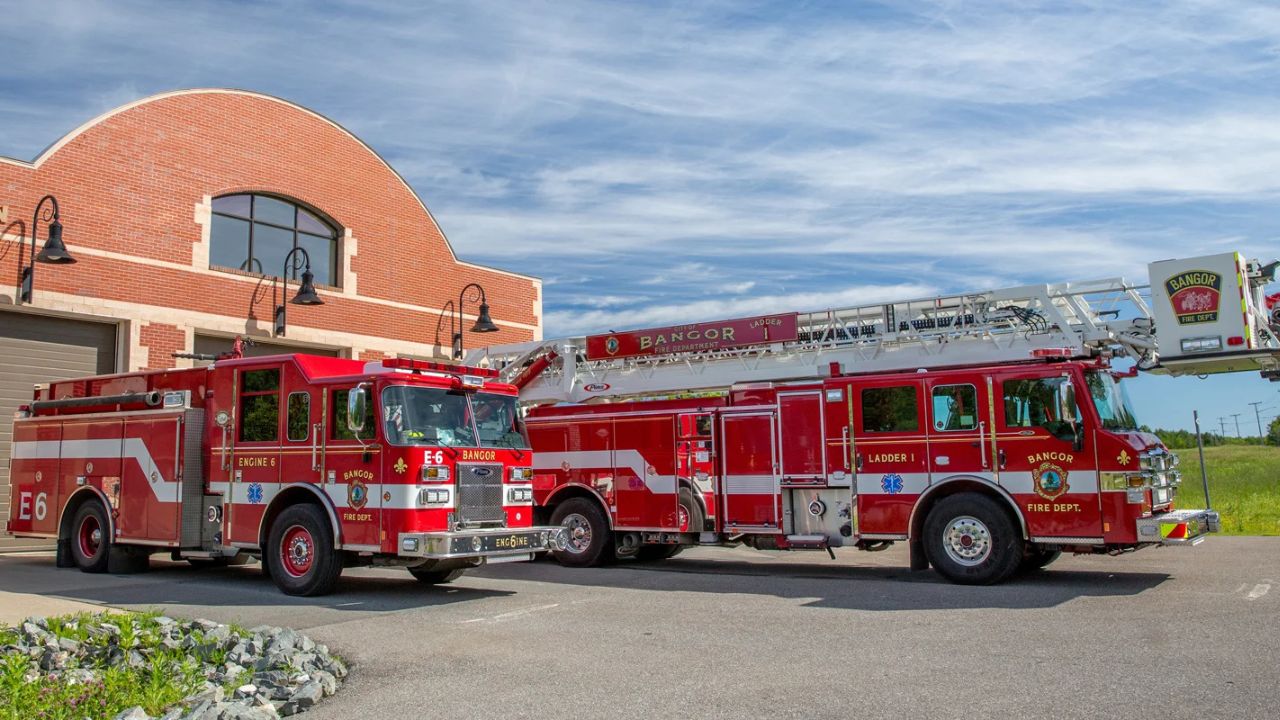
Fire engines and fire trucks often get lumped together in everyday conversation, yet on the fireground they serve very different purposes. That distinction shapes how departments buy equipment, train crews, and design stations, even as recent apparatus trends blur some of those traditional lines.
Understanding how engines and trucks differ in gear, roles, and design helps explain why some departments are struggling with storage space, rethinking protective equipment, and even repainting rigs to match changing missions and community expectations.
How the modern split between engines and trucks has shifted
Classic fire service teaching draws a clean line. The engine is the primary firefighting rig, carrying a pump, water tank, and hose to attack the fire. The truck is the ladder and rescue platform, focused on ventilation, search, and access, often with an aerial device and extensive ground ladders but no large water tank. That neat division still exists on paper, yet modern apparatus design has pushed both vehicle types into more hybrid roles.
Manufacturers describe a steady move toward multi-function rigs, with engines gaining more storage and rescue tools and trucks sometimes carrying limited water or smaller pumps. Industry briefings on fire apparatus trends highlight how departments now ask for engines that can handle traditional suppression, vehicle extrication, and medical calls from a single chassis. Those same reports note that aerial trucks are increasingly specified with enclosed bodywork and compartment layouts that mirror engines, making them more comfortable and versatile but also heavier and more complex.
As roles converge, the terminology has lagged behind. Many departments still label anything with a pump as an engine and anything with a long ladder as a truck, even when the actual build sheet shows overlapping capabilities. That shift complicates training, since crews must master more equipment on each rig, and it complicates purchasing, since chiefs must decide how far to push each apparatus beyond its traditional niche.
Gear loads and storage: why compartments are under pressure
The most immediate difference between engines and trucks shows up in what they carry. Engines are centered on water supply and hose loads, with space dedicated to large-diameter supply lines, preconnected attack lines, and pump controls. Trucks typically trade some of that space for ground ladders, ventilation saws, forcible entry tools, and specialized rescue gear. Both types now shoulder expanding inventories, from battery-powered extrication tools to technical rescue kits, and that has created real-world headaches.
In New Zealand, firefighters have warned that newly purchased rescue-capable trucks do not physically fit all of the equipment they are expected to carry. Crews described “just jamming up all the lockers” because the compact European-style design left too little compartment volume for existing hydraulic cutters, rams, and stabilization gear. The concerns surfaced publicly when a union representative said the new appliances could not accommodate all of the mandated rescue inventory, and that some gear might need to be left behind or stored in awkward positions that slow deployment, according to reporting on the new fire trucks.
That example illustrates a broader tension. Engines and trucks are both expected to carry more tools for more incident types, yet road weight limits and station bay dimensions still cap how big each rig can be. Departments that specify smaller, more maneuverable trucks for urban streets often discover that rescue gear, ventilation equipment, and medical supplies quickly overwhelm the available lockers. The result is a constant trade-off between capability and practicality, which often plays out differently on engines and trucks depending on local risk profiles.
Protective equipment and crew roles on each rig
The distinction between engines and trucks also shapes what firefighters wear and how they work. Engine crews typically arrive prepared for interior fire attack, which means full structural turnout gear, self-contained breathing apparatus, and hose line responsibilities. Truck crews focus more on search, ventilation, and rescue, which can involve roof work, ladder operations, and operating above or adjacent to the fire rather than directly on the hose line.
Recent analysis of changing PPE choices notes that departments are rethinking how and when firefighters wear structural gear, partly because of heat stress and cancer concerns. That discussion intersects with apparatus roles. If a truck company spends a larger share of its time on medical calls and non-fire incidents, departments may issue or emphasize lighter-duty ensembles for those tasks, keeping full turnout gear for confirmed fires and technical rescues. Engine crews, by contrast, may still default to full structural PPE more often, because their primary mission is fast water on the fire.
As engines and trucks both take on more medical and rescue work, the old assumption that every firefighter rides in full structural gear on every call is eroding. Some agencies are experimenting with storing turnout gear in compartments rather than wearing it in the cab, which changes how rigs are laid out and how quickly crews can deploy. The more equipment each apparatus carries, the more critical that layout becomes, whether the vehicle is labeled an engine or a truck.
Design, visibility, and community expectations
Beyond function, engines and trucks are rolling billboards for their departments. Color schemes, graphics, and lighting packages are not just cosmetic. They affect visibility on the road, crew safety, and how the public perceives the local fire service. Apparatus builders report that departments are moving away from a one-size-fits-all look and instead tailoring designs to local history, branding, and operational needs.
In Illinois, one fire department recently introduced a new color scheme on its engines, replacing a long-standing look with a design that leaders said would improve visibility and reflect a modern identity. Coverage of the change showed new rigs with high-contrast striping and updated graphics, part of a broader refresh that also involved updated safety features and interior layouts. The department highlighted that the new fire engines were intended to stand out more clearly on busy roads and better represent the community.
Trucks often follow similar branding decisions, but their larger profiles and aerial devices can complicate paint and striping choices. Some agencies emphasize high-visibility chevrons on rear surfaces, especially on ladder trucks that may block traffic lanes during operations. Others coordinate engine and truck designs so that the fleet presents a unified appearance, which can help with public recognition and recruitment, even if the vehicles perform very different tasks at an incident.
What the next generation of engines and trucks is likely to bring
Looking ahead, the gap between engines and trucks is unlikely to disappear, but the overlap will continue to grow. Apparatus manufacturers anticipate more requests for rigs that can handle multiple core functions, including suppression, rescue, and EMS, from a single platform. Industry observers expect future apparatus designs to place even greater emphasis on modular compartments, lighter materials, and integrated power systems for battery tools.
That evolution will pressure departments to refine their terminology and deployment models. Some agencies already operate “quints,” which combine a pump, water tank, hose, ground ladders, and an aerial device on one chassis. Others field rescue engines that blur the line between a traditional pumper and a heavy rescue. As these hybrids proliferate, the labels “engine” and “truck” may tell the public less about the rig’s true capabilities, even while they remain deeply rooted in fire service culture.
At the same time, ongoing debates over PPE, cancer risk, and heat stress will shape how crews use those rigs. If departments continue to separate structural firefighting from routine medical responses in their protective clothing policies, apparatus interiors and storage will need to adapt, with clearer separation between clean and contaminated spaces and faster access to mission-specific gear.
Finally, the kind of compartment crunch seen with the New Zealand rescue trucks will likely become more common as tools multiply and streets grow more congested. Departments that want smaller, more agile rigs will have to make sharper choices about what each vehicle carries, and that will sharpen the functional distinction between suppression-focused engines and rescue- or access-focused trucks, even when the vehicles share a common chassis or visual style.
More from Fast Lane Only
- Unboxing the WWII Jeep in a Crate
- 15 rare Chevys collectors are quietly buying
- 10 underrated V8s still worth hunting down
- Police notice this before you even roll window down
*Research for this article included AI assistance, with all final content reviewed by human editors.