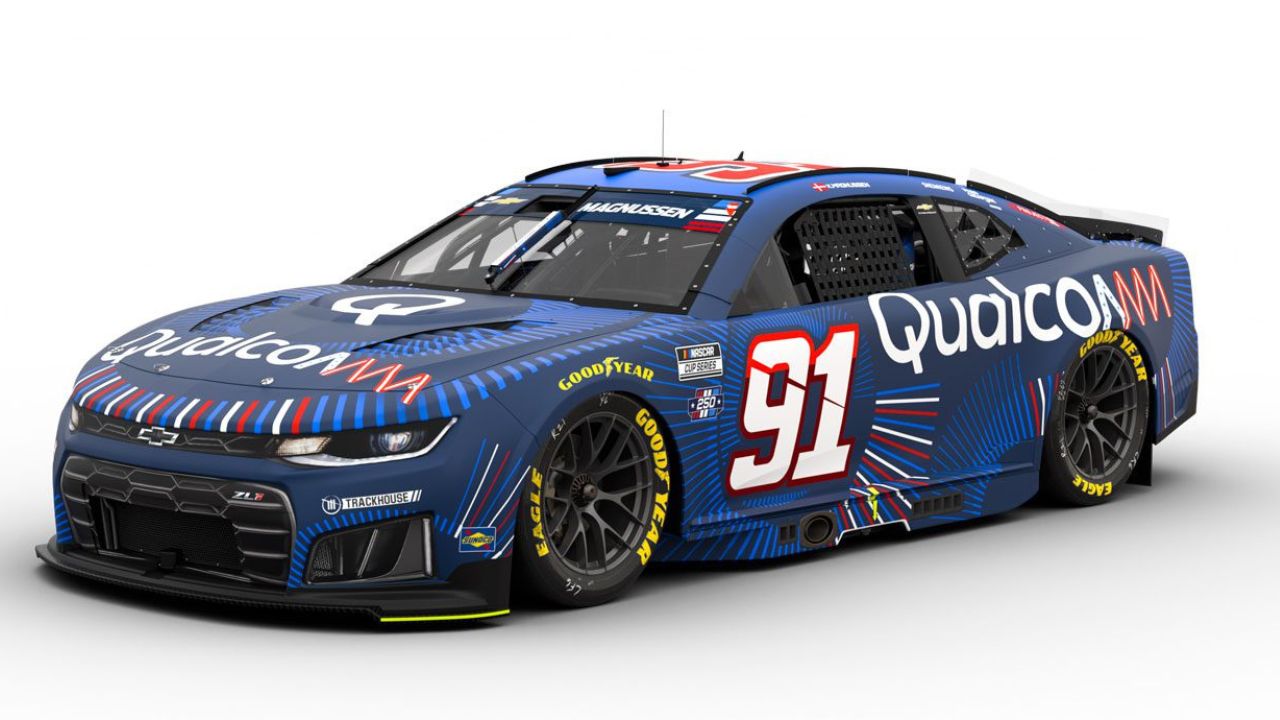
Kevin Magnussen is about to add another chapter to one of modern motorsport’s most varied careers, stepping into the NASCAR Cup Series with Trackhouse Racing’s Project91 entry. The long-time Formula 1 driver will contest the new San Diego street race, trading carbon‑brake open-wheel machinery for a heavy stock car in one of the season’s most anticipated one‑off appearances.
His arrival in the Cup garage is more than a novelty cameo. It underscores how NASCAR, Formula 1 and elite drivers are increasingly intersecting, and it gives Trackhouse another high‑profile test of its international outreach experiment.
How Magnussen’s surprise Cup Series opportunity came together
Magnussen’s deal places him in Trackhouse Racing’s part‑time Project91 car, a program created to give world‑class international drivers a route into select NASCAR Cup events. The Danish driver will race on the streets of San Diego, a new venue on the calendar that fits Project91’s preference for road and street circuits where non‑oval specialists can adapt more quickly. According to reporting on his move, Magnussen has already committed to the San Diego weekend and is integrating with the Trackhouse group that fields full‑time entries for Ross Chastain and Daniel Suárez in the Cup Series Trackhouse Racing.
Project91 has previously hosted high‑profile guests such as Kimi Räikkönen, and the team has been open about wanting to revive the program with more one‑off entries. Coverage of the deal explains that Trackhouse is again using the Project91 banner specifically for this San Diego start, positioning Magnussen as the latest international star to sample NASCAR with the team’s support Project91 entry.
His move comes after a long stint in Formula 1, where he most recently drove for Haas. Reports on his NASCAR switch describe how he weighed several options for the next phase of his career before agreeing to the Trackhouse opportunity, attracted by both the challenge and the chance to race in front of a different fan base Magnussen move.
The San Diego race also suits his background. The event is a street course rather than a high‑banked oval, so it leans more on braking feel, precision and traffic management that are familiar to a driver with extensive Formula 1 and sports car experience. That context helps explain why Trackhouse targeted Magnussen for this particular round instead of a superspeedway or short‑track debut.
Inside Magnussen’s early work with Trackhouse and Project91
Magnussen has not treated the San Diego outing as a casual guest drive. He has already spent time at the Trackhouse shop, working with engineers and getting acquainted with the Chevrolet Cup car that he will race. He described those early days with the team as productive, emphasizing that he wants to be competitive rather than simply making up the numbers already spent time.
Preparation has included simulator sessions that focus on the Next Gen Cup chassis, which is heavier, less aerodynamically sensitive and far more rugged than a Formula 1 car. Reports on his transition highlight the learning curve around the car’s weight, the sequential gearbox and the way the Goodyear tires behave over a fuel run, all of which differ sharply from the Pirelli slicks and hybrid systems that defined his recent F1 work Cup Series debut.
Trackhouse officials have framed Project91 as a two‑way exchange. The team gains fresh feedback from drivers who come from different disciplines, and the guest drivers gain insight into NASCAR’s culture and technical environment. Magnussen’s experience in Formula 1 development programs and endurance racing makes him a valuable reference for the engineers as they continue to refine setups for street circuits.
He is also entering a garage where other Formula 1 names have already tested the waters. Kimi Räikkönen ran Project91 entries at Watkins Glen and at the Circuit of the Americas, while Jenson Button and Kamui Kobayashi appeared with other teams in road‑course Cup races. Those earlier outings provide a rough benchmark for what a one‑off international driver can achieve, and Magnussen has been open about studying those efforts as part of his own preparation.
Why Magnussen’s NASCAR switch resonates across motorsport
Magnussen’s San Diego start matters beyond the novelty of a former Formula 1 driver in a stock car. His move reflects how top‑level drivers now view cross‑series racing as a core part of their careers rather than a retirement hobby. Reporting on his decision situates it alongside a wider trend in which current or recent F1 drivers, including high‑profile names like Max Verstappen, have spoken publicly about trying different categories once their primary commitments allow it Max Verstappen.
For NASCAR, the presence of a driver like Magnussen brings fresh attention from international fans who may not normally follow the Cup Series. Trackhouse, which has marketed itself as a modern, globally minded organization, uses Project91 to tap into that audience. The team’s leadership has repeatedly argued that inviting champions and race winners from other series strengthens NASCAR’s credibility as a destination for elite talent, not just a closed North American ecosystem international drivers.
Magnussen’s presence also speaks to the shifting economics and scheduling of top‑tier racing. With Formula 1 calendars packed and driver contracts tightly controlled, active F1 racers have limited scope to moonlight in other series. Magnussen, now free of those constraints, can pursue opportunities that were previously off the table. His choice of NASCAR, rather than a full‑time return to European single‑seaters, suggests that the Cup Series has gained appeal as a serious professional option for drivers with global résumés.
There is a technical storyline as well. The current NASCAR Next Gen car shares some characteristics with international GT and touring machinery, including independent rear suspension and a center‑lock wheel design. That partial convergence makes it easier for drivers like Magnussen to imagine a realistic adaptation path, particularly on road and street courses where aerodynamic wake and pack drafting are less dominant than on ovals.
Expectations and open questions for Magnussen’s San Diego weekend
Setting realistic expectations for Magnussen’s debut requires a look at how other Project91 and guest drivers have fared. Kimi Räikkönen showed flashes of speed but faced the usual challenges of race‑craft in traffic, pit road procedures and late‑race restarts. Analysts covering Magnussen’s move have pointed out that even world champions need time to internalize NASCAR’s caution rules, restart etiquette and stage‑break strategies, all of which can decide whether a promising run yields a top‑ten finish or a mid‑pack result Cup expectations.
Magnussen’s own goals appear measured. He has spoken about wanting to run all the laps, learn quickly and put himself in position to capitalize if attrition or chaos opens the door to a strong finish. The San Diego layout, with its concrete walls and tight corners, will punish mistakes, so survival and adaptability may matter more than outright one‑lap pace.
Project91’s crew will also face scrutiny. The team must execute clean pit stops for a driver who is still learning NASCAR’s pit entry lines, speed limits and communication rhythms. Any miscue could erase the benefits of Magnussen’s road‑course speed. At the same time, Trackhouse’s established infrastructure gives him a better platform than many one‑off efforts, since the organization already fields competitive cars on similar circuits Trackhouse platform.
Rival teams will watch closely for hints about whether more F1‑experienced drivers might follow. A smooth weekend for Magnussen, even without a headline result, would validate the Project91 concept as a repeatable blueprint. A frustrating outing, particularly if it involves avoidable incidents, could make other teams more cautious about lending seats to outsiders.
What Magnussen’s debut could mean for his future and for Project91
Magnussen has not publicly committed to a full‑season NASCAR program, and there is no confirmed schedule beyond the San Diego race. However, multiple reports describe his openness to further Cup starts if the first outing goes well and if Trackhouse or another team can assemble a suitable package future starts.
More from Fast Lane Only
- Unboxing the WWII Jeep in a Crate
- 15 rare Chevys collectors are quietly buying
- 10 underrated V8s still worth hunting down
- Police notice this before you even roll window down
*Research for this article included AI assistance, with all final content reviewed by human editors.