
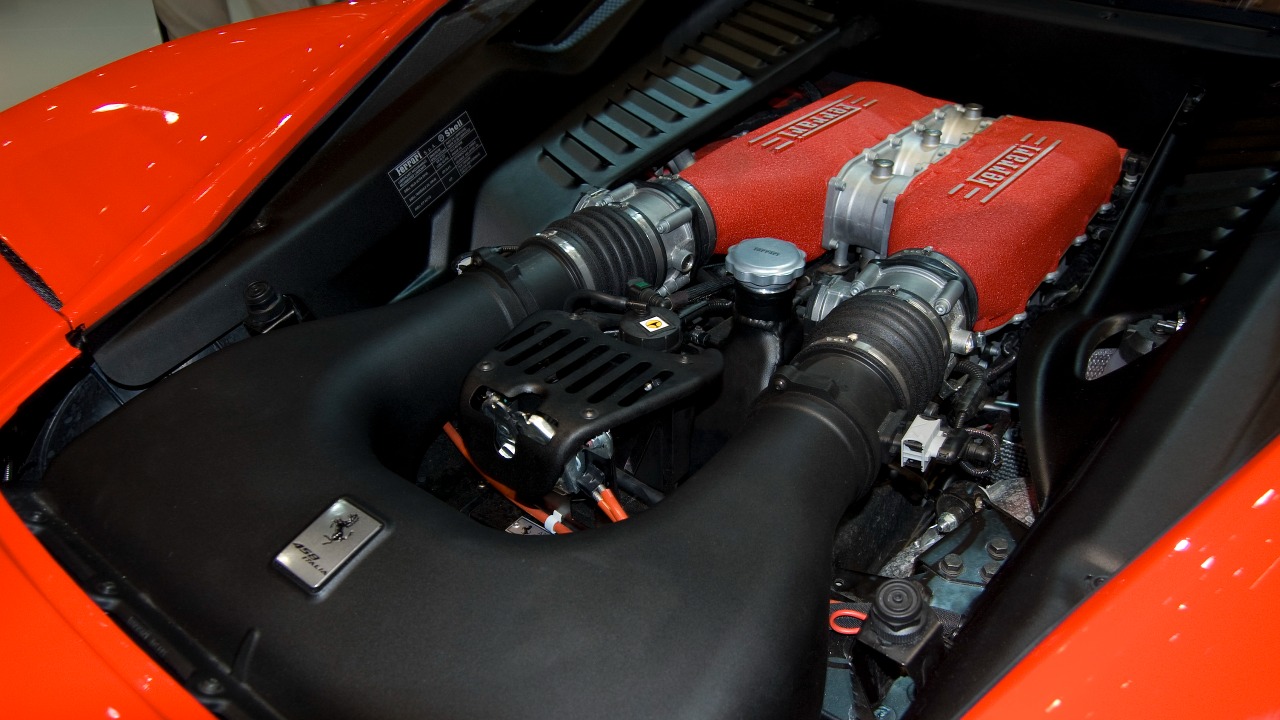
Flat-plane crank V8s have become the cult heroes of modern performance cars, celebrated for a piercing, exotic soundtrack that slices through traffic and track days alike. Behind that drama, though, sits a set of engineering compromises that can leave everyday drivers surprised once the novelty of the noise wears off. The same design choices that unlock that shriek at high RPM also change how the engine feels, vibrates, and even how long it is likely to last.
Instead of a familiar lazy burble, these engines deliver a sharper, more mechanical character that reflects a very different approach to balancing power, weight, and refinement. Understanding why they sound so wild, and what owners trade away to get that experience, starts with the crankshaft itself and the way it reshapes the entire personality of a V8.
How a flat-plane V8 actually works
At the heart of the flat-plane V8 is a crankshaft that looks more like something from a four-cylinder engine, with crank pins arranged in a single plane rather than offset in a cross shape. That simple geometric change alters the firing order, the way forces move through the block, and the mass that has to spin every time you touch the throttle. Engineers describe The Flat, Plane crank layout as more responsive, smaller and lighter for a given displacement, because it does not need the heavy counterweights that a traditional cross-plane V8 relies on to stay smooth.
Less rotating mass means the engine can rev more freely, which is why high-performance applications such as Ford flat-plane crankshaft V8 designs are associated with higher RPM capability and a stronger power-to-weight ratio. With lighter internals, the engine can spin to a higher redline, and that extra RPM window translates directly into more power from the same displacement, as explained in technical breakdowns of flat-plane crank V8s. The tradeoff is that the crankshaft and block have to cope with more vibration and stress, which shapes everything from durability targets to how much sound insulation a carmaker has to add around the firewall.
Why the sound is so different from a cross-plane V8
The signature noise of a flat-plane V8 is not an accident, it is the audible result of that different firing order and lighter rotating assembly. Where a cross-plane crank V8 stacks its firing pulses in a way that creates a low, gravelly rumble, the flat-plane layout spaces them more evenly between the two banks. That more symmetrical exhaust pulse pattern produces a higher pitched, more urgent note that enthusiasts often associate with Ferraris and other European exotics, a link that recent explainers on flat-plane popularity underline by pointing to how the layout was once mostly reserved for Ferraris and a handful of race-bred engines.
Engine sound specialists describe how those evenly spaced pulses interact with exhaust runners and mufflers to create a very musical result, with harmonics that climb as RPM rises instead of just getting louder. Analyses of why flat-plane crank V8 engines sound so distinctive point out that cross-plane cranks create a lot of low-frequency content, while flat-plane designs shift more of the energy into higher frequencies that the human ear perceives as sharper and more aggressive. That is why a flat-plane V8 can sound almost like two high-strung four-cylinders sharing a crank, and why sound designers and mixers, including professionals who dissect V8 recordings for film and social media, often highlight the rasp and mechanical edge that separates these engines from the classic American burble.
The performance upside: revs, response and packaging

From a performance standpoint, the appeal of a flat-plane crank V8 is straightforward: it lets engineers chase revs and response in ways that are harder to achieve with a heavier cross-plane crank. With lighter rotating mass, the crank can spin faster, which means the engine benefits from higher power potential at the top of the rev range. Technical explainers on flat-plane crank V8 engines emphasize that this layout also offers more symmetrical exhaust tuning, which helps scavenging and improves breathing at high RPM, exactly where track-focused cars spend much of their time.
That same compact, lighter crankshaft can make the entire engine smaller and easier to package, which matters in tightly packaged sports cars that need room for suspension, aero ducting, and crash structures. Engineering analyses note that The Flat, Plane crank engine is more responsive, smaller and lighter and has more power for the same displacement, which is why it shows up in high-performance applications where every kilogram and every fraction of a second in throttle response counts. Reports comparing V4 and V8 power-to-weight strategies also highlight how Ford flat-plane crankshaft V8 designs use their higher RPM capability to deliver strong specific output without resorting to extreme boost, a choice that can keep throttle response crisp and predictable on track.
The hidden costs: vibration, refinement and longevity
The same traits that make a flat-plane V8 so lively also introduce compromises that most daily drivers notice quickly. Without the large counterweights of a cross-plane crank, a flat-plane V8 tends to create more vibration within the engine, especially at certain RPM bands. Technical breakdowns of cross-plane versus flat-plane crankshafts explain that this layout inherently produces more secondary imbalance, and without the help of counterweights or balance shafts, those forces travel into the block, mounts and cabin. The result can be a harsher feel through the steering wheel and seats, particularly at cruising speeds where a cross-plane V8 would be loafing along smoothly.
That extra vibration is not just a comfort issue, it also affects durability. Engineering commentary on The Flat, Plane crank engine notes that while it is more responsive and powerful for a given displacement, it can have a shorter life expectancy because of the additional stress on internal components. The higher RPM targets that make these engines so exciting also mean more cycles, more heat and more load on bearings, rods and valvetrain parts over the life of the engine. For a weekend track toy, that may be an acceptable trade, but for a commuter that racks up highway miles, the combination of more vibration and higher revs can translate into more wear and potentially higher maintenance expectations compared with a relaxed cross-plane V8.
Real-world drivability: from track thrills to traffic fatigue
On a circuit or a mountain road, the character of a flat-plane V8 feels perfectly matched to the job. The engine spins up quickly, the throttle feels razor sharp, and the sound hardens into a race-car-like wail as the tachometer sweeps toward its redline. Video clips of modern flat-plane V8s, including short reels that capture their launch-control starts and high-RPM pulls, show how the note climbs in pitch and intensity rather than just getting louder, which adds to the sense of drama from the driver’s seat. For enthusiasts chasing lap times or chasing a particular kind of mechanical theater, that immediacy is the whole point.
In day-to-day use, though, the same traits can become tiring. The higher frequency exhaust note that sounds so intoxicating in a short burst can drone on the highway, and the extra vibration that comes with the layout can make the car feel busier at modest speeds. Sound professionals who analyze V8 recordings for social platforms often point out how flat-plane engines cut through background noise with a sharper timbre, which is great for a 30 second clip but less appealing on a two hour commute. That gap between short-term excitement and long-term comfort is one reason cross-plane V8s remain common in trucks and grand tourers, while flat-plane designs tend to cluster in more focused performance models where owners are willing to accept some fatigue in exchange for that high-strung character.
Why flat-plane V8s are suddenly everywhere
For years, flat-plane V8s were rare, mostly associated with Ferraris and a few race-derived engines that prioritized revs over refinement. That has shifted as carmakers chase lighter, more efficient ways to hit performance targets without simply adding displacement. Recent explainers on why flat-plane V8 engines are so popular now describe how a once rare engine layout mostly reserved to the likes of Ferraris has become more common as manufacturers look for every advantage in power-to-weight ratio and emissions. By spinning smaller engines faster and using more advanced materials and electronics to manage vibration and durability, engineers can deliver headline performance numbers while keeping overall mass in check.
Short-form videos that ask why flat plane V8s are so common now also highlight the role of sound in that shift. In an era where social clips and track-day footage travel quickly, the distinctive shriek of a flat-plane V8 has become part of the marketing story, a way to stand out from turbocharged sixes and muted hybrid drivetrains. Technical reports on power weight strategies note that Ford flat-plane crankshaft V8 designs lean on higher RPM and lighter internals to deliver the kind of response that enthusiasts notice immediately, and that combination of visceral sound and sharp performance helps justify the tradeoffs in refinement and potential longevity. For drivers, the surprise is not that these engines sound wild, but that living with one means accepting a more intense, less relaxed personality every time they turn the key.


Leave a Reply