A Ford convertible in the driveway once told the whole street that a family had arrived. Chevrolet, Dodge, Rambler and Chrysler sold the same feeling. However, none of these cars cost what a Cadillac did. Yet each one let a teacher, a salesman or a factory worker drop the top on a Saturday and feel like a success.
That was the simple genius of the mass-market convertible. It took an ordinary sedan or compact, cut off the roof and added a bit of chrome. Suddenly, the same paycheck bought a car that looked like a reward. Many of them came with modest six-cylinder engines, and nobody minded.
These are our picks, nine convertibles we think did the most to make everyday buyers feel they had made it. Of course, the verdict is our opinion. The years, engines, prices and production figures come from the sources we read for this story.
1. 1958 Edsel Pacer convertible
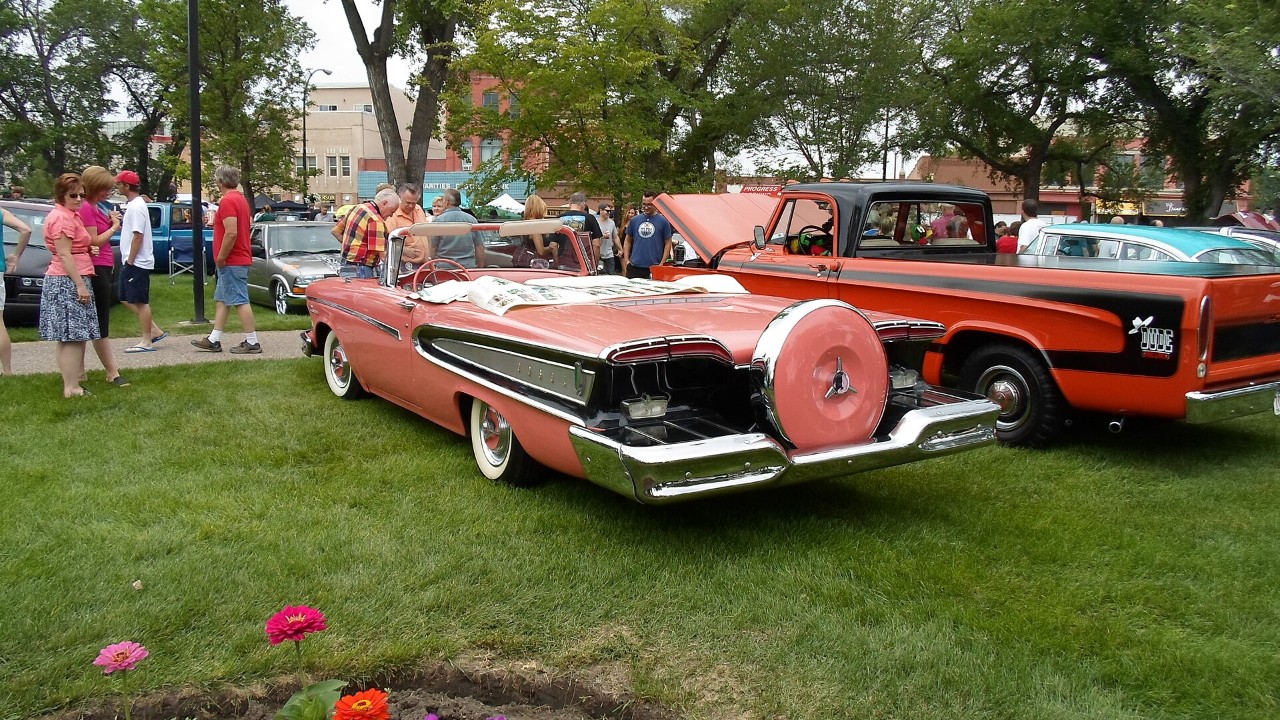
The Edsel arrived for 1958 with four models, and the Pacer sat between the entry-level Ranger and the top Corsair. For a buyer moving up from a Ford convertible, that middle rung mattered. According to RM Sotheby’s catalog for a 1958 Pacer convertible, the car used a 361-cubic-inch V8 rated at 303 hp. In total, Edsel built 1,876 Pacer convertibles for the year.
The Pacer also offered a gadget that felt like the future. Its automatic used a Teletouch push-button selector in the steering wheel hub, a feature we covered in our story on how Edsel put the push buttons where the horn button sat. That kind of technology usually belonged to pricier cars. Here, a middle-class family could show it off at the drive-in.
In our view, the Pacer convertible captures the late-1950s promise better than almost anything. The Edsel brand failed, but the convertible delivered exactly what its buyers wanted: style, power and a little attention. Today, the market also agrees that it was special. RM Sotheby’s sold the Hershey 2021 example for $37,400. If you want one, check that the Teletouch system works, because it is the heart of the car’s personality.
2. 1961 Chevrolet Impala convertible
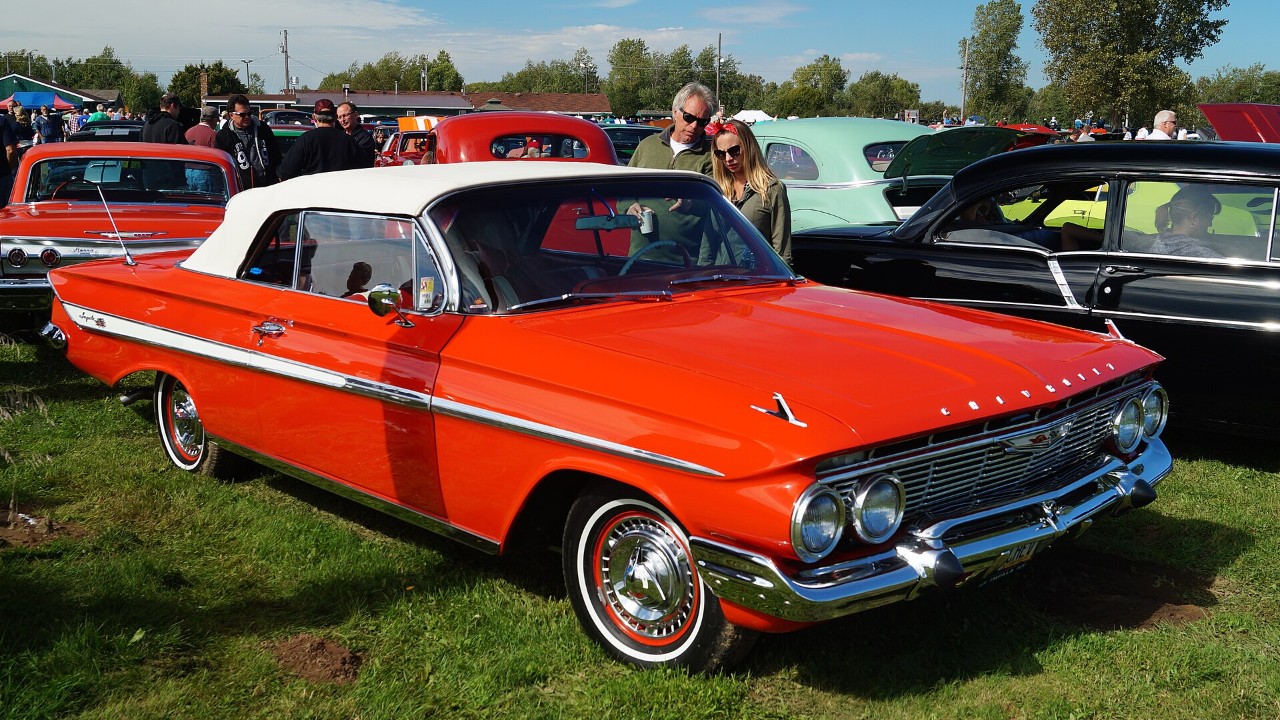
Chevrolet restyled the Impala for 1961, and the new body was trimmer and boxier than the wild 1958–1960 cars. The bigger news came from the options list. The Super Sport package debuted that year as a true performance option, with upgraded suspension and engines. Buyers could order it on any Impala, even sedans and wagons.
At the same time, engine choices covered every budget. The 348-cubic-inch V8 came at 305, 340 or 350 hp. Meanwhile, a new 409-cubic-inch V8 carried a 360-hp rating. Only 142 factory 1961 Impala SS cars got the 409, so most convertible buyers chose milder engines. Still, the same badge on the fender linked the family car to Chevrolet’s fastest models.
That’s why we think the 1961 Impala convertible made so many people feel successful. A buyer could get the look of Chevrolet’s top car without paying for its biggest engine. It was the car you parked in front of the house on purpose. For shoppers today, a documented SS car commands far more attention than a clone. So check the paperwork before you pay an SS price.
3. 1962 Ford Galaxie 500 Sunliner
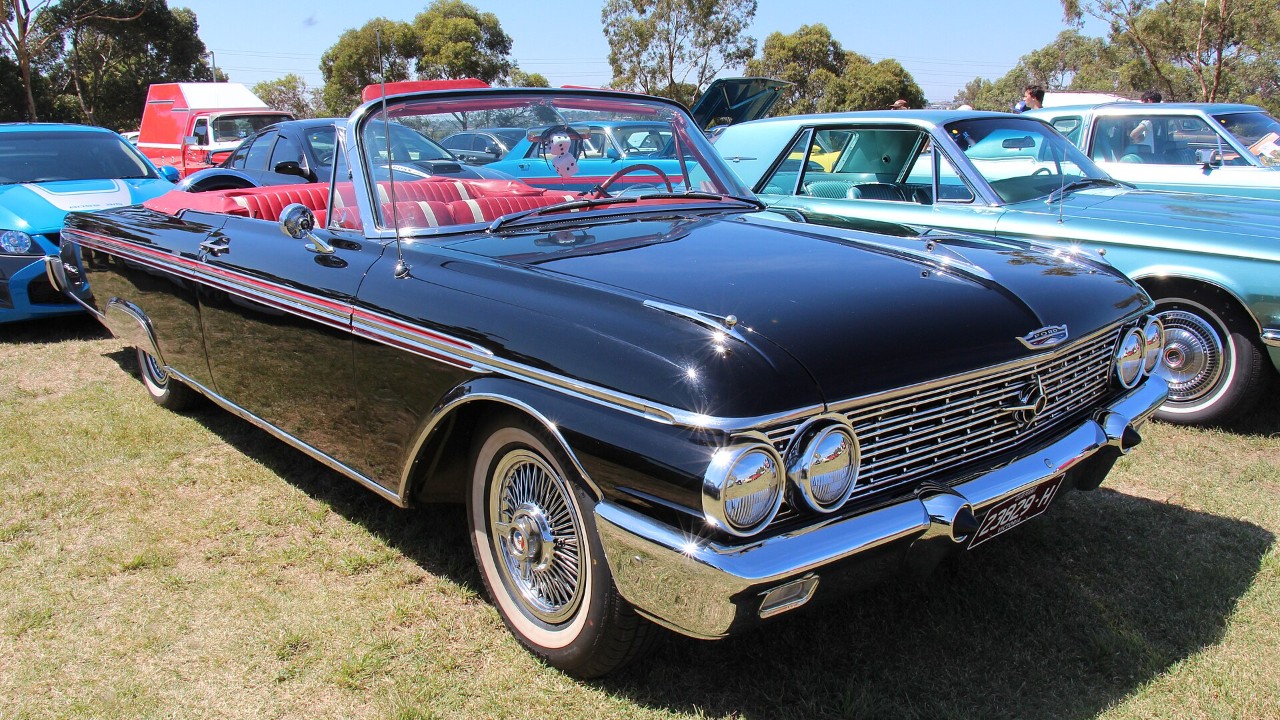
For 1962, Ford made the Galaxie 500 its top-line full-size trim, and the Sunliner was the convertible in that range. It had plusher interior trim, more exterior chrome and some extra luxury equipment. Ford built 446,195 Galaxies in all that year. A sportier Galaxie 500XL convertible also appeared, with its own emblem in place of the Sunliner script.
Ford also offered a wide spread of engines. A 223-cubic-inch six was the base engine, and the 292 V8 came standard on the 500 and XL. At the top sat a 406 V8 with a single four-barrel or triple carburetors. RM Sotheby’s offered a 352-equipped Sunliner at Fort Lauderdale in 2022. It carried a power top, power steering, power brakes and a pushbutton radio, against an estimate of $45,000 to $55,000.
In our opinion, this Ford convertible defined the comfortable American good life. After all, it was big, bright and easy to drive, with enough chrome to look expensive. Our list of rare Galaxie models Ford absolutely nailed covers more of the range. For buyers, the power top and its hydraulic parts deserve a careful check, since a worn system is a common project on any older convertible.
4. 1963 Mercury Comet S-22 convertible
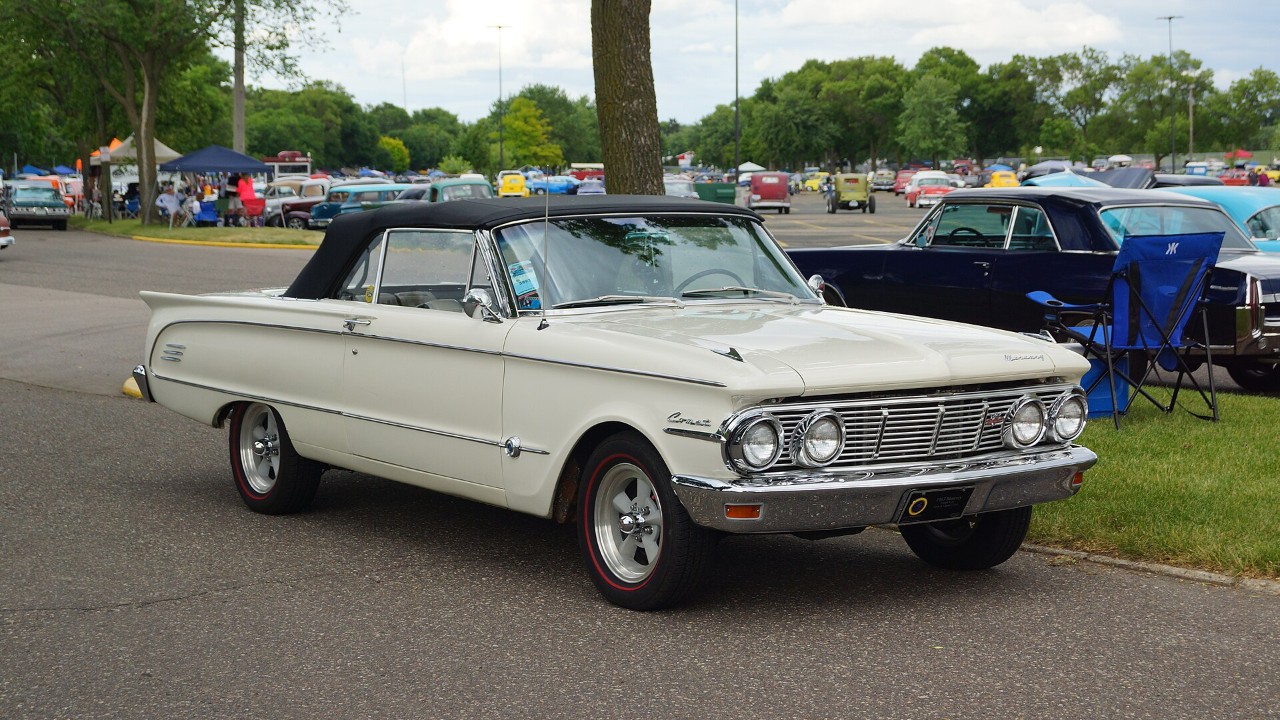
The Comet brought Mercury style to the compact class. In fact, its first generation used the Ford Falcon platform. For 1963, Mercury added a convertible and a hardtop to the Comet Custom and S-22 lines. The S-22 package dated back to 1961, when it brought bucket seats and a center console to the two-door sedan.
That combination gave a compact buyer a taste of the sporty life. Better yet, the convertible version let them enjoy it with the top down. Engine choices included the 144 and 170 Thriftpower sixes. For more punch, Mercury also offered a 260-cubic-inch V8 with a two-barrel carburetor, rated at 164 hp.
We think the S-22 is one of the most underrated feel-good cars of its time, a Ford convertible in Mercury clothes. Bucket seats and a console were features buyers usually saw in bigger, pricier cars. Here they came in a small, economical package with a Mercury badge on the hood. The car let a young family feel stylish without a big payment. If you find one, confirm it is a real S-22, since the trim pieces are easy to add to a lesser Comet.
5. 1963 Ford Falcon Futura convertible
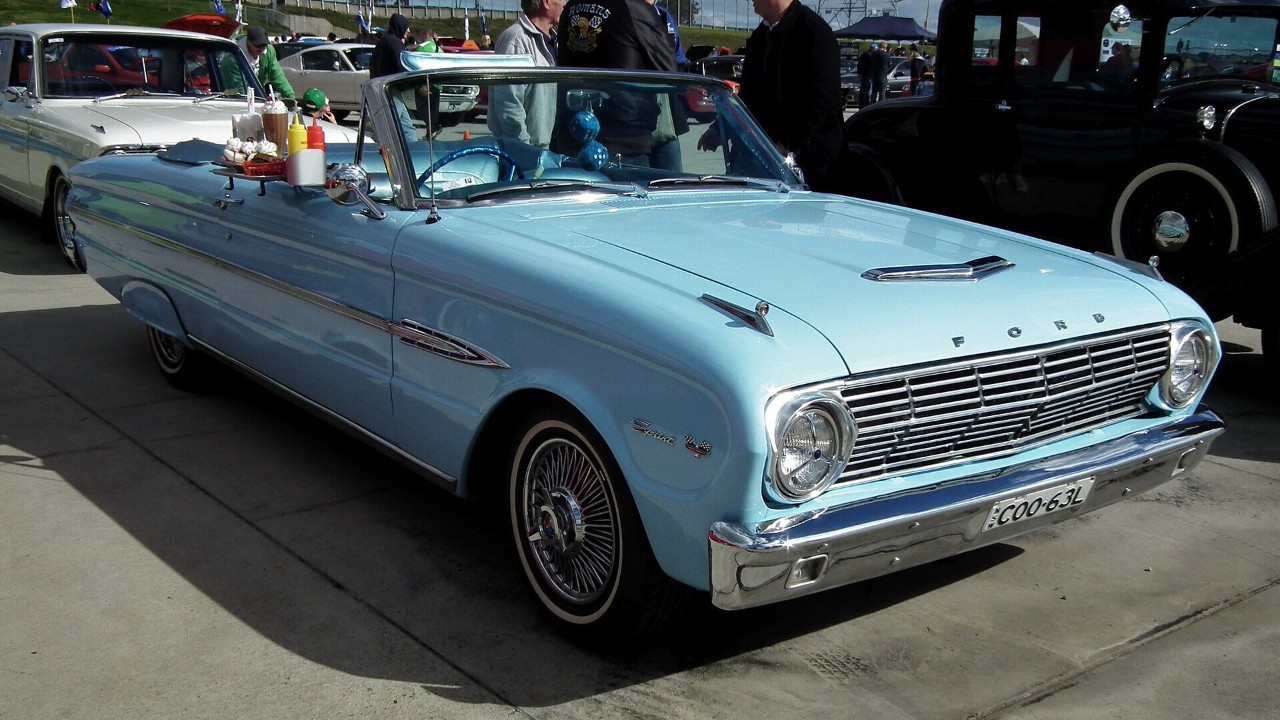
The Falcon was a runaway hit, with more than half a million sold in its first year. For 1963, Ford gave the line an open-air option. The range included a Futura Convertible and a Futura Sports Convertible. Futura was the higher trim, with bucket seats, a console and a slightly upgraded interior.
At first, power was modest. The 170-cubic-inch six served most buyers. Then, in February 1963, Ford added a 260-cubic-inch V8 rated at 164 hp. Later in the model year, a Sprint version arrived, and Ford built 4,602 Sprint convertibles with bucket seats. That made the Falcon a small car that could finally keep up with traffic in style.
In our view, the Futura is the Ford convertible that made success feel attainable. It was the economy car people already trusted, now dressed up for a summer evening. For a young couple, that was a big step up from a plain sedan. Today, a Futura convertible is an easy classic to own. Buyers should check the floors and the convertible-top frame, since those are the parts we’d inspect first on any old convertible.
6. 1964 Dodge Dart GT convertible
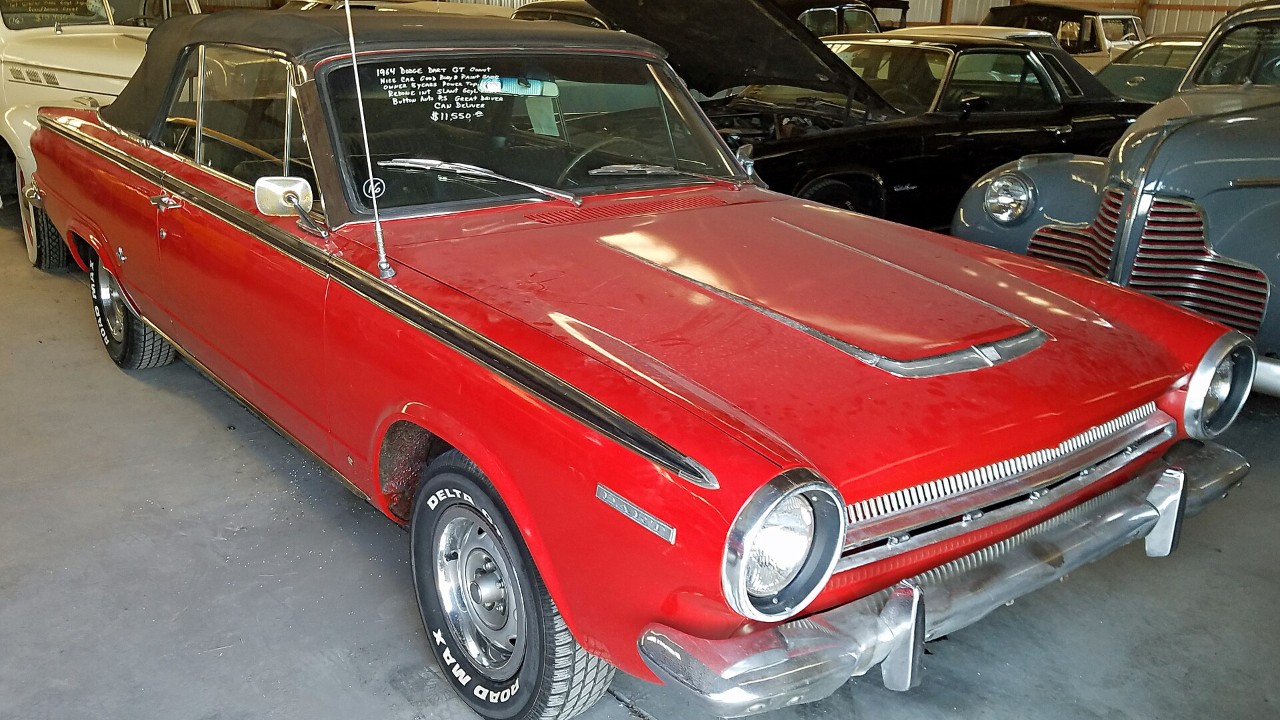
Dodge launched the compact Dart for 1963 as a “senior compact” on a 111-inch wheelbase. The premium GT trim came only as a hardtop or a convertible. As a result, the GT convertible was the dressiest small Dodge you could buy. The standard 170-cubic-inch slant six made 101 hp, and the 225 made 145 hp.
For 1964, the Dart got a new reason to feel special. Dodge added a compact 273-cubic-inch V8 with a two-barrel carburetor, rated at 180 bhp, as the top engine option. In addition, 1964 was the final year for pushbutton control of the optional TorqueFlite automatic. Dodge also strengthened the door locks and refined the automatic choke.
We think the 1964 Dart GT convertible hit a sweet spot. It had the polish of a bigger car, the economy of a compact and the option of a modern V8. For a buyer stepping up from a basic sedan, it felt like a real promotion. If you shop for one, the slant six is reliable and easy to service. But a 273 V8 car carries the most appeal today, so expect to pay more for one.
7. 1965 Rambler American 440 convertible
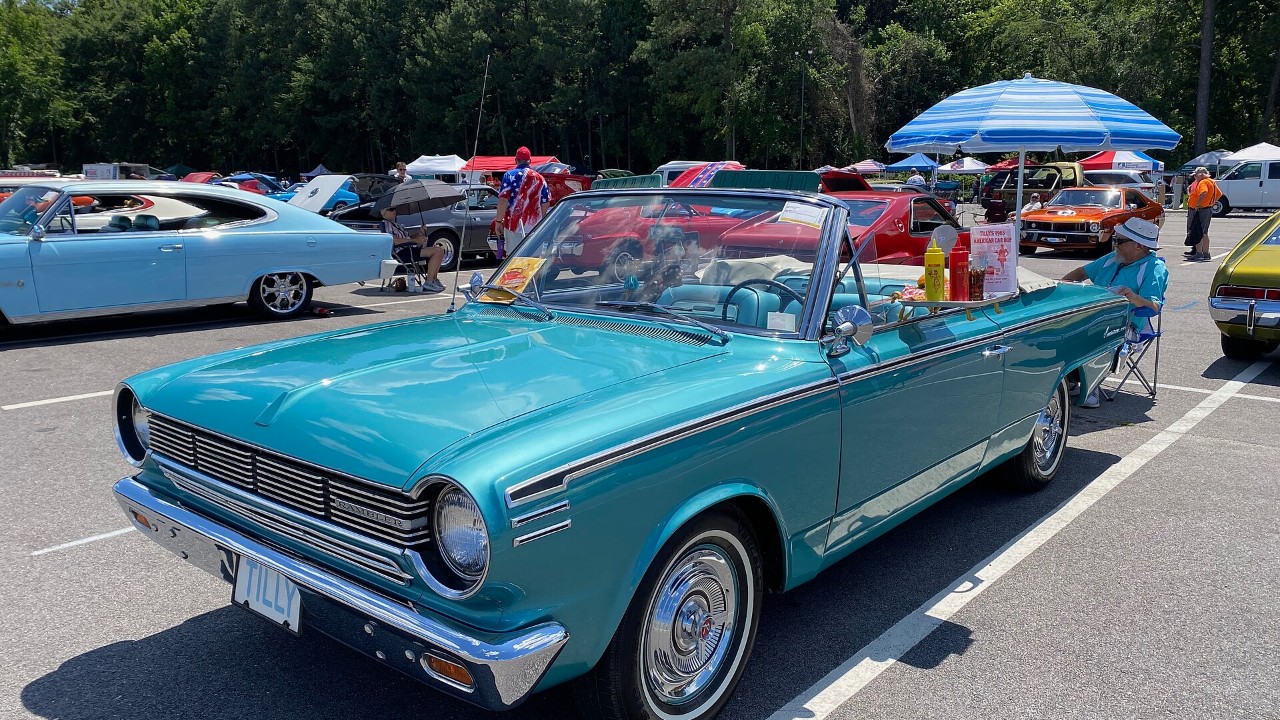
The third-generation Rambler American was the model’s only completely new design. Dick Teague, who later designed the Javelin and AMX, shaped it. For 1965, the American 440 convertible started at $2,418. That made it the most affordable U.S.-made open body style that year, a big claim for a car with this much charm.
Even so, buyers got real comfort for that price. They could choose twin reclining front seats or bucket seats with a center console. Engines ranged from the 195.6-cubic-inch six to a new 232-cubic-inch overhead-valve six rated at 155 hp. AMC also had economy credentials to brag about. A Rambler American won the Mobil Economy Run outright in 1965.
Our take is that the American 440 convertible made success feel affordable in the most literal way. It was the cheapest American convertible you could buy, yet it looked smart and well-made. For more of the brand, see our list of forgotten Ramblers that were pure blasts to drive. Buyers today should look for the 232 six and check the top mechanism, since a top rebuild is a big job on any older convertible.
8. 1982 Chrysler LeBaron convertible
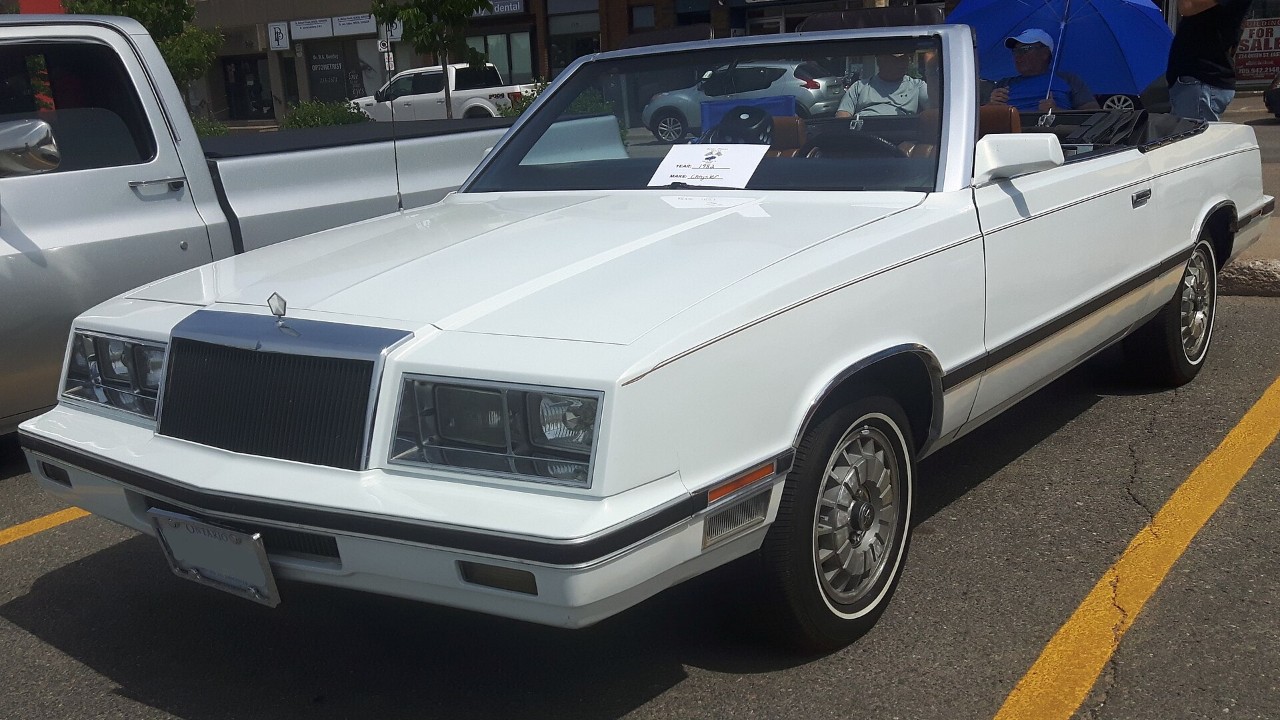
Detroit had given up on convertibles by the mid-1970s. Cadillac called its 1976 Eldorado “the last American production convertible,” and production stopped in April 1976. Then Chrysler brought the idea back. The LeBaron convertible arrived in January 1982 as the first factory-authorized U.S. convertible since that Eldorado, according to Curbside Classic’s history of the car.
Cars & Concepts of Brighton, Michigan, converted the K-car bodies by removing the roof and adding structural bracing. Lee Iacocca saw a niche, and buyers proved him right. In the end, Chrysler built 12,825 LeBaron convertibles in 1982. Equally important, the Mark Cross Edition cost under $15,000, while Buick’s Riviera convertible started near $24,000 later that year.
In our opinion, the LeBaron convertible is the 1980s version of this list’s promise. It gave buyers a little luxury and a lot of sunshine on a sensible K-car base. Power came from a 2.2-liter Chrysler four or a 2.6-liter Mitsubishi four. For buyers, an early car with a working top and clean interior is the one to find, since sun damage inside is costly to reverse.
9. 1985 Dodge 600 ES Turbo convertible
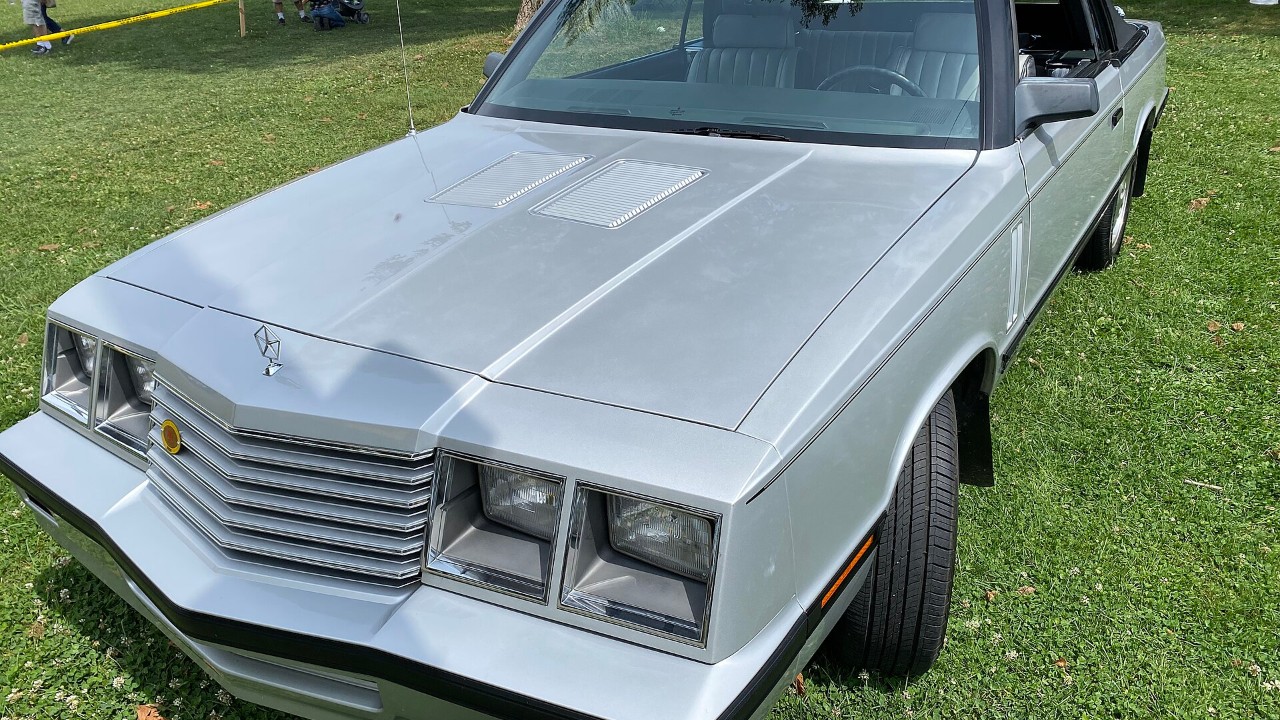
Dodge followed Chrysler’s lead with its own drop-top. The Dodge 600 convertible ran from 1984 through 1986. Midway through 1984, an ES Turbo convertible arrived as a sporty package. It came with a sport-tuned ES suspension, standard leather seats, a digital dashboard and a four-spoke steering wheel.
Above all, the turbo made the difference. The 2.2-liter Turbo four carried a 142-hp rating, enough to make a K-car convertible feel lively. Dodge built 13,809 600 convertibles in 1985, and 5,621 of the ES Turbo cars sold that year. By 1986, the ES Turbo convertible carried a base price of $14,856. After that season, Dodge dropped the body style.
We think the 600 ES Turbo convertible offered a rare mix for its day: an open top, leather and a turbo for under $15,000. For many buyers in the mid-1980s, that felt like a genuine upgrade in life. In our view, they make a fun entry point into convertible ownership. Buyers should check the turbo, the digital dash and the top seals, since all three can be costly to fix.
More from Fast Lane Only