On 13 June 1976, the six-wheeled Tyrrell P34 finished first and second in the Swedish Grand Prix at Anderstorp. Jody Scheckter won from pole, and teammate Patrick Depailler followed him home. No six-wheeled car has won a Formula 1 race before or since.
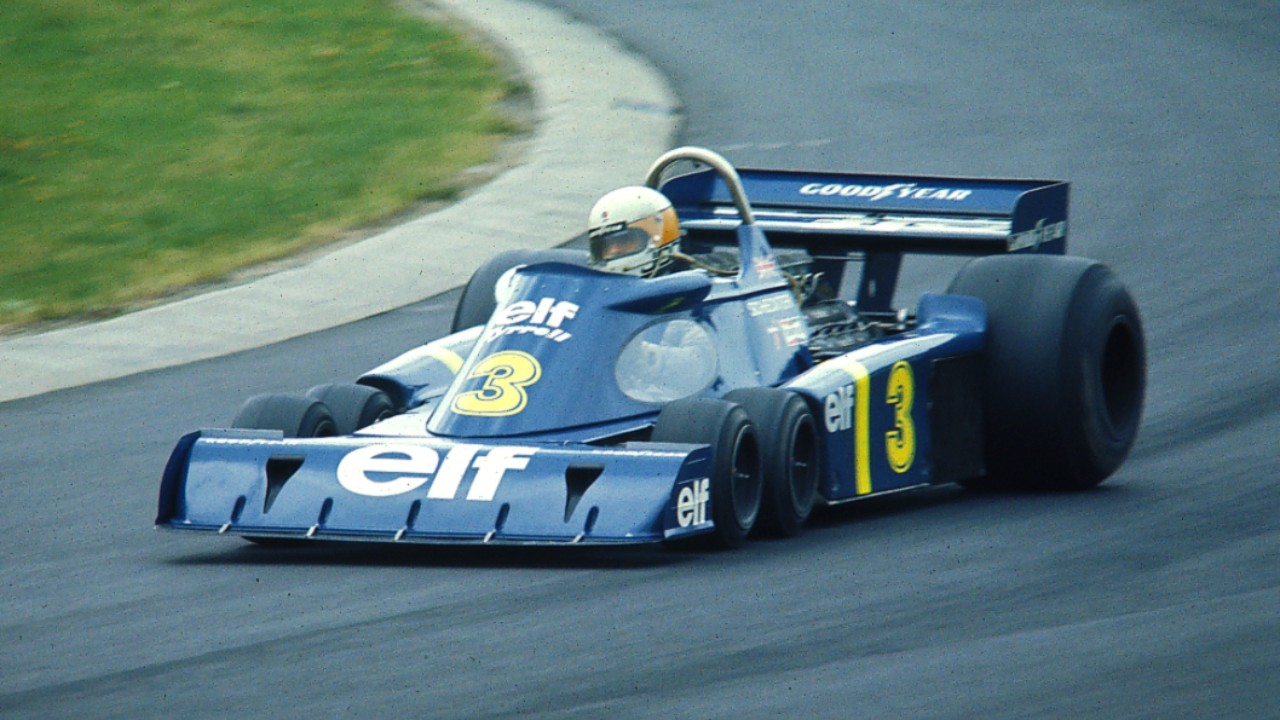
The P34 looked unlike anything else on the grid. Instead of two front wheels, it carried four small ones, with a conventional pair at the back. Yet it was a serious attempt to find speed in an era when most teams used the same engine and gearbox.
Still, Sweden was the day the Tyrrell P34 idea worked best. Here is how the car came about, how the race played out and why the six-wheeler disappeared.
Why Derek Gardner gave the Tyrrell P34 four front wheels
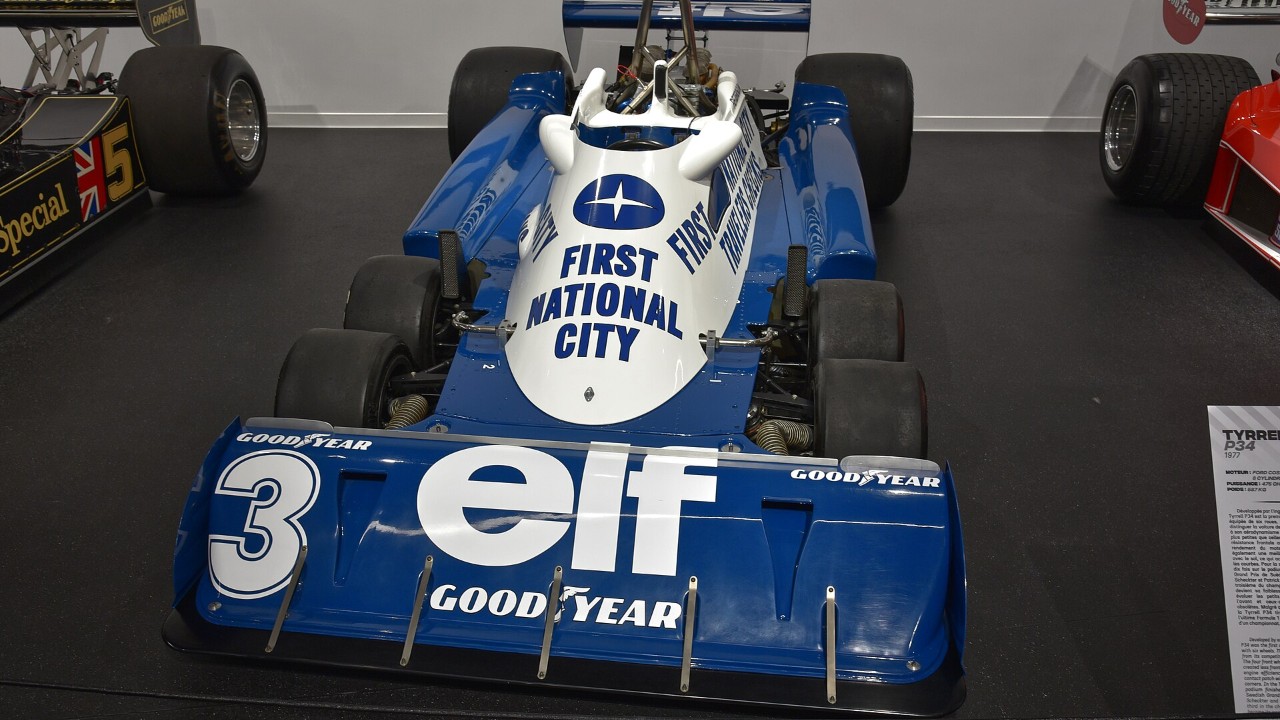
Tyrrell’s chief designer, Derek Gardner, conceived the P34, according to Goodwood. His goal was to shrink the front wheels. The aim of four small fronts was to reduce drag and improve grip, as Formula One History explains. The car ran special 10-inch front tires that Goodyear produced for it.
That focus made sense at the time. Nearly every team relied on the same Cosworth DFV engine and Hewland gearbox, Formula One History notes. So a team had to look elsewhere for an advantage. The Technik Museum Sinsheim, which owns a P34, lists its eight-cylinder engine at 3.0 liters and 420 horsepower.
First, Tyrrell unveiled the car to the press at the Hilton Hotel at Heathrow in September 1975, Motor Sport magazine reports. Then it made its race debut at the 1976 Spanish Grand Prix at Jarama. Depailler qualified third there but retired with brake problems.
How the 1976 Swedish Grand Prix unfolded
Scheckter took pole at Anderstorp with a lap of 1:25.659, according to the results archive at OldRacingCars.com. However, Mario Andretti took the lead at the start in his Lotus. Chris Amon had qualified a remarkable third in an Ensign and ran fourth early on.
But Andretti’s lead came with a catch. Officials handed him a one-minute penalty for jumping the start, so he had to build a gap of more than a minute to keep the win. He led the first 45 laps, Motor Sport says. Then his engine failed on lap 46, which left the two Tyrrells running first and second.
Amon’s race also ended early. His suspension failed, and he crashed out of fourth place. After that, the order at the front held to the flag.
The official result
The race ran 72 laps, according to the official Formula 1 results. Scheckter won in 1:46:53.729 and scored 9 points. Depailler finished second, 19.770 seconds behind, for 6 points. Meanwhile, Niki Lauda took third for Ferrari, 33.870 seconds back.
Further back, Jacques Laffite finished fourth for Ligier, and James Hunt was fifth for McLaren. Clay Regazzoni completed the points in sixth for Ferrari. Every one of the top six completed the full 72 laps.
In fact, Motor Sport’s verdict is blunt. The race “was, is, and always will be the only F1 grand prix won in a six-wheeled car,” the magazine writes. Similarly, Goodwood calls the P34 “the first and only six-wheel car to win a Grand Prix.”
What happened to the six-wheeler
The P34 had other strong days in 1976. At Monaco that year, both Scheckter and Depailler stood on the podium behind Lauda, Goodwood and Formula One History report. By season’s end, Scheckter finished third in the drivers’ standings, and Tyrrell took third among constructors.
For 1977, Tyrrell raced the P34B, a heavier version with a wider front track. Unfortunately, that wider track exposed the small front wheels to the airflow. At the same time, Goodyear turned its attention back to standard-size tires. As a result, Tyrrell returned to a conventional four-wheeled car for 1978. In all, the team built six P34 chassis between 1975 and 1977, according to Formula One History.
Later, other teams tried six wheels too. March built the 2-4-0 in 1977, and Williams built the FW07D and FW08D, Motor Sport says. Those cars put four driven wheels at the rear, and none of them won a Grand Prix. In 1983, the FIA’s rules set a maximum of four wheels, ending the idea for good.
Today, one Tyrrell P34 lives at the Technik Museum Sinsheim in Germany. The car has been on display in the museum’s Hall 2 since 1996.
More from Fast Lane Only