Ford put a flathead V8 in an affordable car in 1932, and for the rest of the decade the coupe was the body that showed it off best. Short roof, long hood, room for two and a trunk. In fact, a Ford V8 coupe from these years still draws a crowd at any cruise night, stock or hot-rodded. We never get tired of them, so here are nine we admire most, from the prewar years to the early postwar Shoebox era.
1. 1933 Ford Coupe

For 1933, Ford stretched the wheelbase from 106 inches to 112 inches, and the whole car looked longer and lower for it. The grille gained a pointed, forward-sloping base, and the fenders turned rounder and skirted. Inside, a new dash carried an oval instrument insert. Buyers could also order the four-cylinder Model B, but the V8 went up to 75 hp that year. As a result, this is the coupe where Ford’s styling finally caught up with its engine.
2. 1934 Ford Coupe

Ford cleaned up the 1933 look rather than replacing it. The 1934 grille sat flatter, with a wider surround and fewer bars, and the hood louvers ran straight. De Luxe cars added pinstriping, twin horns and twin taillights. Meanwhile, the flathead V8 climbed to 85 hp. This was also the last year for the four-cylinder Model B, so every Ford after it carried eight cylinders until 1941. To us, that makes the ’34 the end of one chapter.
3. 1936 Ford Five-Window Coupe
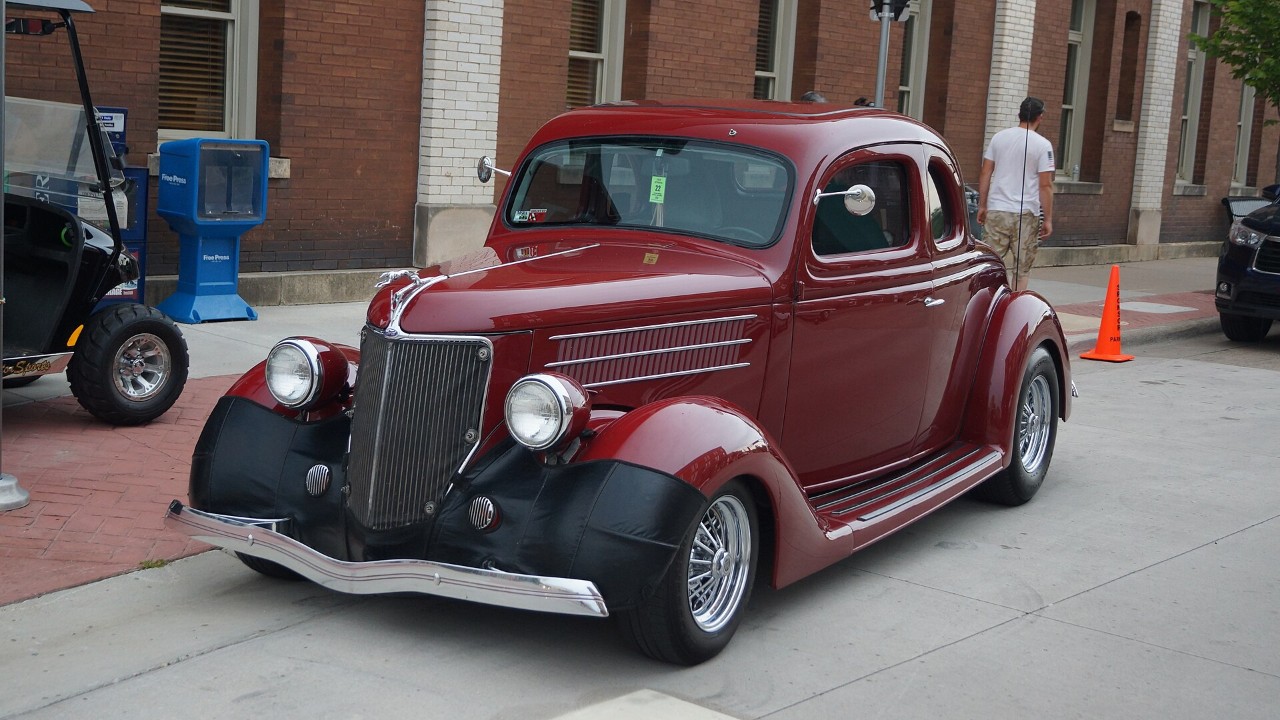
By 1936, the 221-cubic-inch flathead V8 was the only engine Ford offered, and the five-window coupe was its everyday sporty choice. That year brought an inverted pentagonal grille with all-vertical bars and a concealed horn. Ford also swapped wire wheels for pressed-steel artillery wheels. Ford also offered a rumble seat as a coupe option in this era. We like it because it’s the Ford that hot rodders built over decades, and a stock one now looks almost exotic.
4. 1937 Ford De Luxe Coupe

The 1937 Ford tucked its headlights into the front fenders and gave the car an all-steel top and a V-shaped grille. For the first time, buyers also got a choice of V8s, a 60-hp entry engine or the familiar 85-hp unit. Ford had started that flathead story with the 1932 Model 18, and by now it was the brand’s identity. On the De Luxe, walnut woodgrain window trim and chrome outside set it apart. Prices started at $850 when production began.
5. 1939 Ford V8 De Luxe Coupe

This is the year Ford finally gave its cars hydraulic brakes, a long overdue step. The De Luxe got a low, pointed grille with heavier vertical slats, and the headlights moved farther apart. Downdraft carburetors widened the torque band, although the flathead stayed at 85 hp. The prow-like nose and curved tail make it one of the prettiest Ford V8 coupe shapes, in our view. Also in 1939, Ford launched its Mercury line.
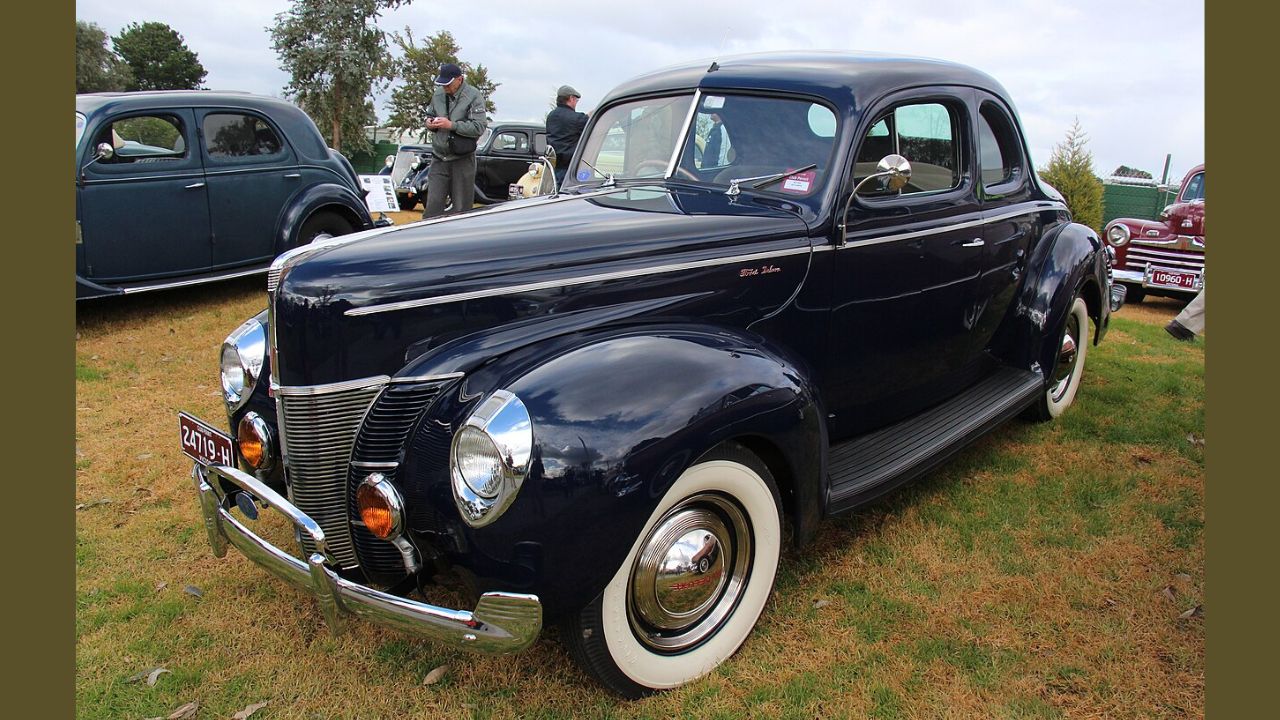
6. 1940 Ford De Luxe Coupe

Bob Gregorie, the designer behind the Lincoln-Zephyr, shaped the 1940 De Luxe, and it shows. The grille spread out toward the fenders, sealed-beam headlights arrived, and a column shifter worked the three-speed. Ford built 27,919 De Luxe coupes that year at about $700 each. Many later became hot rods, so an original one is now the harder find. It was also the last year of the 1937 design, and we’d call it the best-looking version of that body.
7. 1946 Ford Super De Luxe Coupe
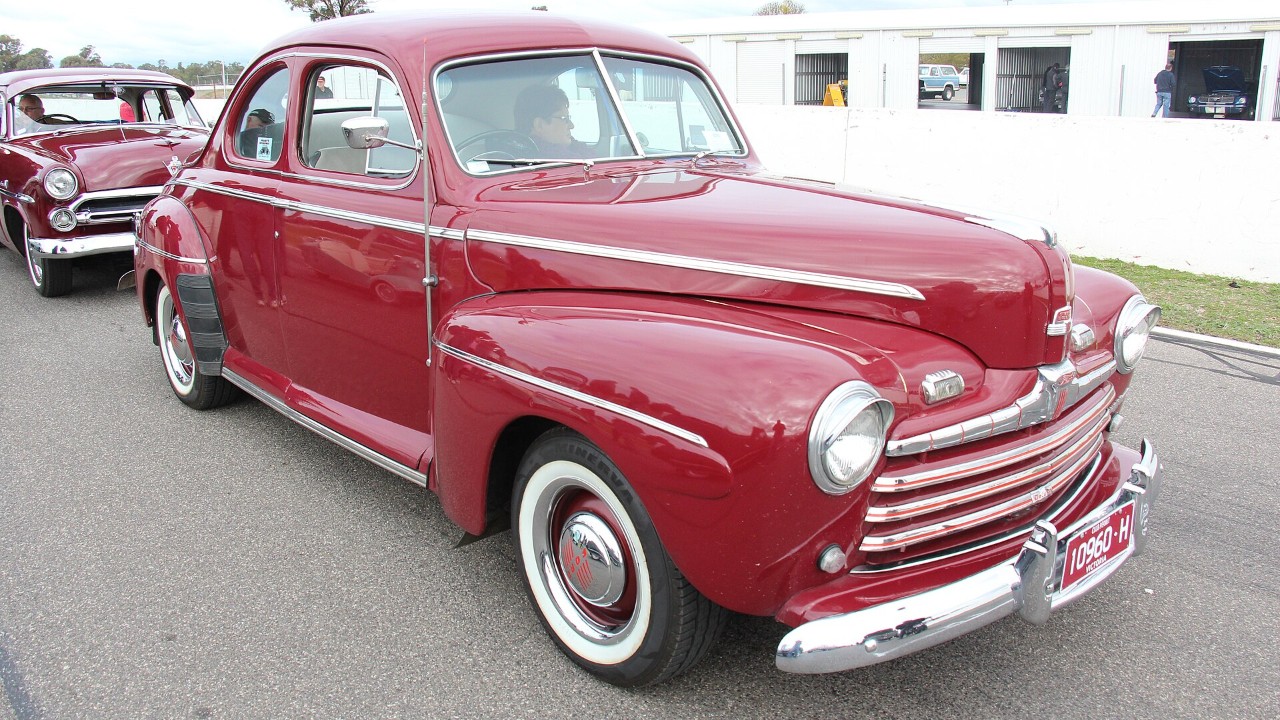
When civilian production restarted, the first postwar Ford was a white Super De Luxe Tudor built on July 3, 1945, and Ford gave it to President Truman. The V8 coupes that followed used the 59A engine from Mercury. That engine displaced 239.4 cubic inches and made 100 hp at 3,800 rpm. A new grille with three horizontal stainless bars freshened the face. Inside, Super De Luxe buyers got navy and gray trim instead of brown. We like it as the coupe that marked Ford’s return to civilian cars.
8. 1949 Ford Custom Club Coupe
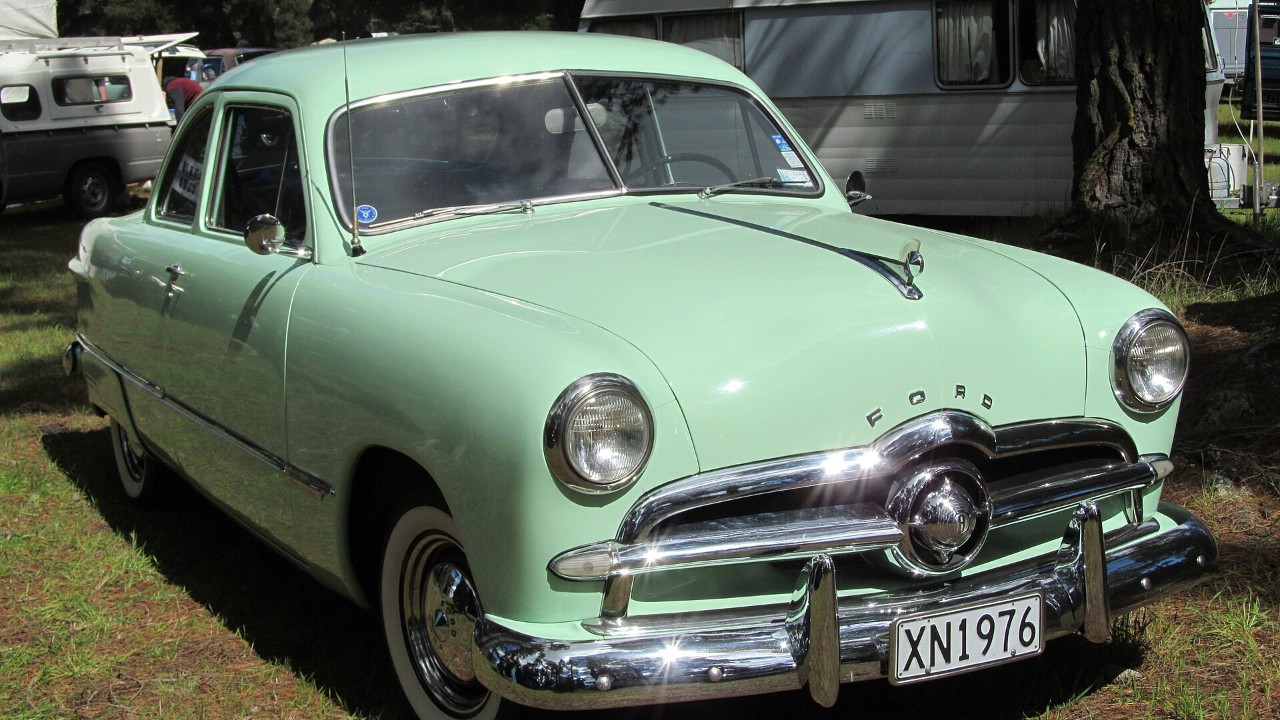
The 1949 Ford dropped running boards and blended the fenders into one slab-sided body. People called it the Shoebox, and the fastback Club Coupe wore the new Custom trim. A 226 six came standard, but the 239 flathead V8 sat on the options list, and that’s the one we’d want. It worked, too. Ford sold 1,118,740 cars for 1949 and returned to first place among American makers. We wrote more about how the 1949 Ford changed American car design.
9. 1951 Ford Victoria
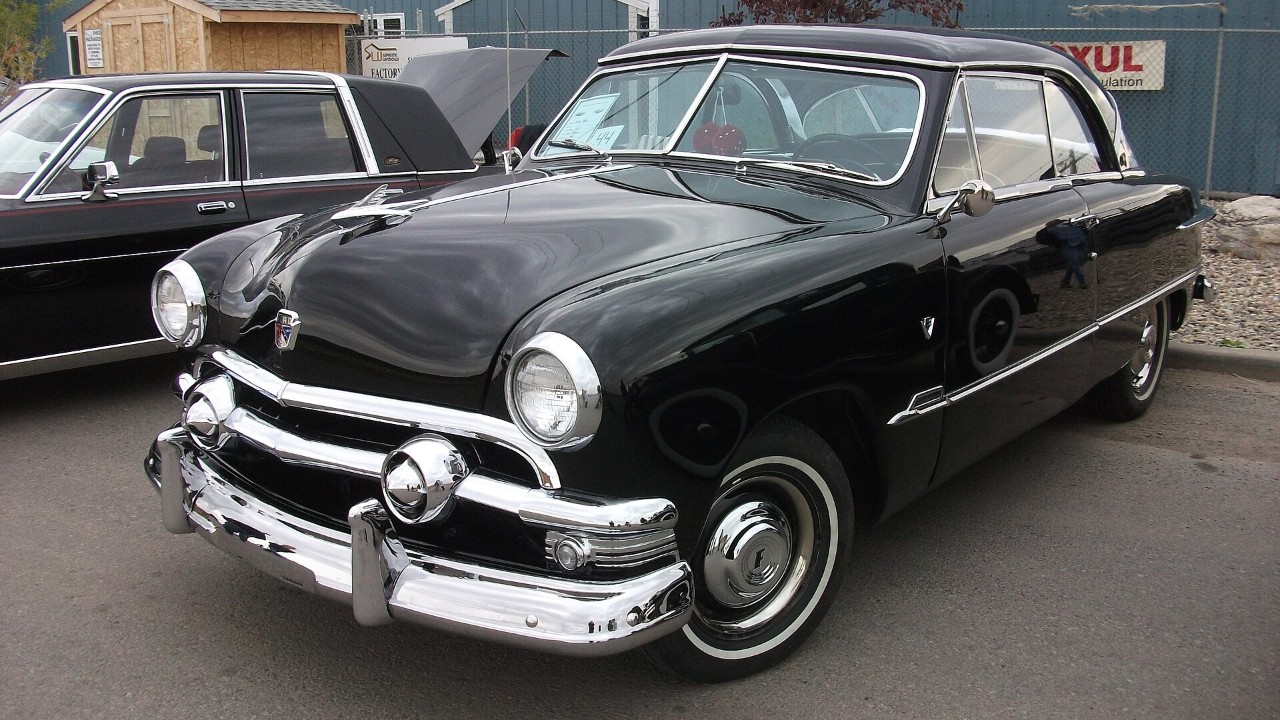
Ford brought back the Victoria name for 1951, last used in 1934, and put it on a pillarless two-door hardtop. The Victoria went after the Chevrolet Bel Air and the Plymouth Belvedere. A dual-bullet grille marked the 1951 cars, and Ford-O-Matic became Ford’s first automatic option from November 1950. We think it’s the most elegant coupe Ford built with a flathead. Buyers agreed, and the Victoria outsold the Bel Air by nearly 10 percent.
More from Fast Lane Only