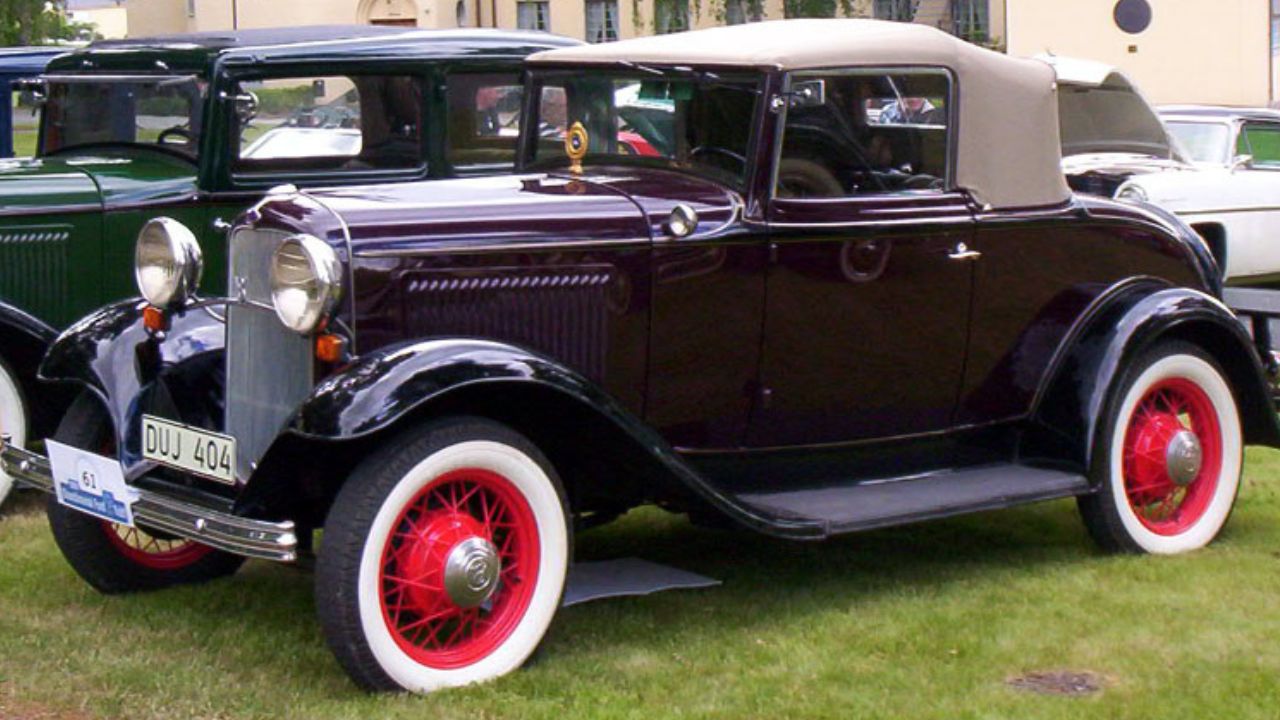
The 1932 Ford Model 18 arrived as a modest family car with a steel body, mechanical brakes, and simple styling. It left history as the machine that gave ordinary Americans affordable V‑8 power and a blank canvas for speed. In the hands of young tinkerers, racers, and customizers, the car that came to be known simply as the Deuce rewrote what hot rodding could be and still shapes performance culture nearly a century later.
How Ford’s first affordable V‑8 rewired American speed culture
When the Model 18 hit showrooms, its most radical feature sat under the hood. Ford’s flathead V‑8 brought eight‑cylinder performance to buyers who had previously been limited to fours and sixes, and it did it at mass‑market prices. As historians have noted, this engine effectively put higher horsepower into the hands of working‑class drivers and hobbyists, breaking the link between big power and luxury pricing that had defined the 1920s.
The flathead’s architecture also made it a natural playground for experimentation. Its simple side‑valve design, cast‑iron block, and broad parts availability encouraged owners to mill heads, swap camshafts, and bolt on multiple carburetors. That mechanical openness turned the Model 18 into a rolling laboratory and helped the V‑8 become, in the words of one chronicler, a powerplant that gave power to.
Performance was only part of the story. The Model 18’s chassis and proportions proved just as influential. Its 106‑inch wheelbase, sturdy frame rails, and simple suspension could handle more power than the factory intended. At the same time, the car’s upright grille shell, flowing fenders, and compact cabin created a silhouette that hot rodders could strip, channel, and chop without losing visual balance. That mix of mechanical strength and visual harmony set the template for what a traditional hot rod should look like.
From dry lakes to dragstrips, the Deuce becomes a hot rod icon
By the late 1930s and 1940s, young builders were buying used 1932 Fords, pulling fenders, and heading for the dry lakes of Southern California. The cars were light, cheap, and easy to modify. The flathead V‑8 responded to every new trick, from home‑built intake manifolds to salvaged ignition parts. The result was a wave of stripped‑down coupes and roadsters that could outrun almost anything on the road.
Those early experiments created a visual language that still defines hot rodding. Highboy roadsters with raised bodies, exposed frame rails, and narrow tires became the archetype of the fast, no‑nonsense street car. Builders refined the recipe into a set of unwritten rules: a chopped windshield, a de‑chromed body, a warmed‑over V‑8, and a stance that suggested speed even when parked. Period features like the famous highboy roadster documented by traditional builders showed how far enthusiasts could push the basic Ford shell without losing its identity.
As hot rodding grew from an underground pastime into a national hobby after the Second World War, the 1932 Ford remained at the center. Dragstrips filled with Deuce coupes and roadsters, many still using flathead power, others converted to newer overhead‑valve V‑8s. Magazines, club plaques, and early speed‑parts catalogs turned the car into shorthand for the entire movement. When popular culture needed a visual stand‑in for rebellious speed, it often reached for a chopped 1932 Ford coupe.
What changed in hot rodding because of the 1932 Ford Model 18
The Model 18 did more than supply a platform. It helped create the economic and cultural structure of hot rodding. Affordable V‑8 power and a simple chassis encouraged a cottage industry of cam grinders, intake makers, and speed shops. That early ecosystem evolved into the modern aftermarket, where enthusiasts can order everything from crate engines to complete reproduction bodies. Analysts of car culture have traced how this aftermarket transformed car modification into a mainstream business, and they frequently point to the Deuce era as a starting point for American aftermarket culture.
The car also shifted expectations for what a street machine should be. Before the early 1930s, most performance cars were either hand‑built racers or high‑priced luxury models. The 1932 Ford made it plausible for a teenager with basic tools to build something that could challenge factory sports cars. That democratization of speed fed into club culture, organized racing, and eventually the idea that any production car might serve as a platform for personal expression.
Even the language of hot rodding changed. The nickname “Deuce” became a badge of honor, a way to signal that a build followed certain traditional lines. The car’s grille shell, firewall shape, and distinctive frame horns became visual cues that separated old‑school hot rods from newer customs. When later generations revived traditional building styles, they often returned to those same 1932 design cues as a kind of visual shorthand for authenticity.
Why the Deuce still matters in a digital, electrified car world
Ninety years after the Model 18 arrived, its influence remains visible in museums, auctions, and weekend cruise nights. Curators have dedicated entire exhibits to the car’s legacy, including a major display that brought together landmark Deuce builds at the Petersen Automotive Museum. That show, which marked 90 years of, treated the car not just as a collectible but as a lens on American design, youth culture, and engineering.
Coverage of the same anniversary emphasized how builders across generations kept returning to the Deuce, from early dry‑lakes racers to contemporary high‑end customs. Features on historic hot rods highlighted the way individual cars carried personal stories of risk, craftsmanship, and improvisation. The Model 18 became a kind of shared language between generations of enthusiasts, a car that grandparents and grandchildren could recognize and discuss in the same breath.
Anniversary retrospectives have also stressed how rare it is for a mass‑produced family car to gain this level of cultural weight. Writers marking the 90th anniversary pointed out that the Deuce did not start life as an exotic or a halo model. Its legend came from what people did with it, not from what Ford originally intended. That distinction matters in an era when many performance cars arrive from the factory already optimized and sealed against modification.
In a digital age, the Model 18’s ongoing appeal also reflects a desire for analog engagement. Builders still favor its simple frame and mechanical controls because they can understand, tune, and repair every part. The car rewards patience and hands‑on experimentation rather than software updates. For many, that tactile connection is the point, especially as new vehicles lean on electronic driver aids and complex proprietary systems.
Reproduction Deuces and the future of traditional hot rodding
The supply of original 1932 Ford bodies and frames is finite, yet the culture around the car shows little sign of fading. To bridge that gap, companies have invested in accurate reproduction bodies and components. One manufacturer spent years scanning and re‑engineering every panel to create a steel body that closely matches original Ford dimensions, a project chronicled in coverage of how a supplier recreated the Deuce. That effort signaled that demand for traditional hot rods remains strong enough to support modern tooling and manufacturing.
These reproduction shells, paired with updated chassis components and crate engines, allow builders to combine 1930s style with contemporary reliability. Some opt for fuel‑injected small‑block V‑8s, disc brakes, and overdrive automatics, blending nostalgia with daily‑drivable manners. Others stay closer to the original formula, retaining flathead power and period‑correct hardware. In both cases, the underlying idea remains the same: use the 1932 Ford’s proportions as a canvas for personal expression.
The car’s influence also extends into digital spaces. Online communities trade build threads, technical diagrams, and historical photos, keeping knowledge about traditional techniques alive. Younger enthusiasts who may never have seen a Deuce in person can still learn how to channel a frame, adjust a dropped axle, or tune a multi‑carburetor setup. That cross‑generational teaching helps ensure that the skills associated with early hot rodding do not vanish as older builders retire.
More from Fast Lane Only
- Unboxing the WWII Jeep in a Crate
- 15 rare Chevys collectors are quietly buying
- 10 underrated V8s still worth hunting down
- Police notice this before you even roll window down
*Research for this article included AI assistance, with all final content reviewed by human editors