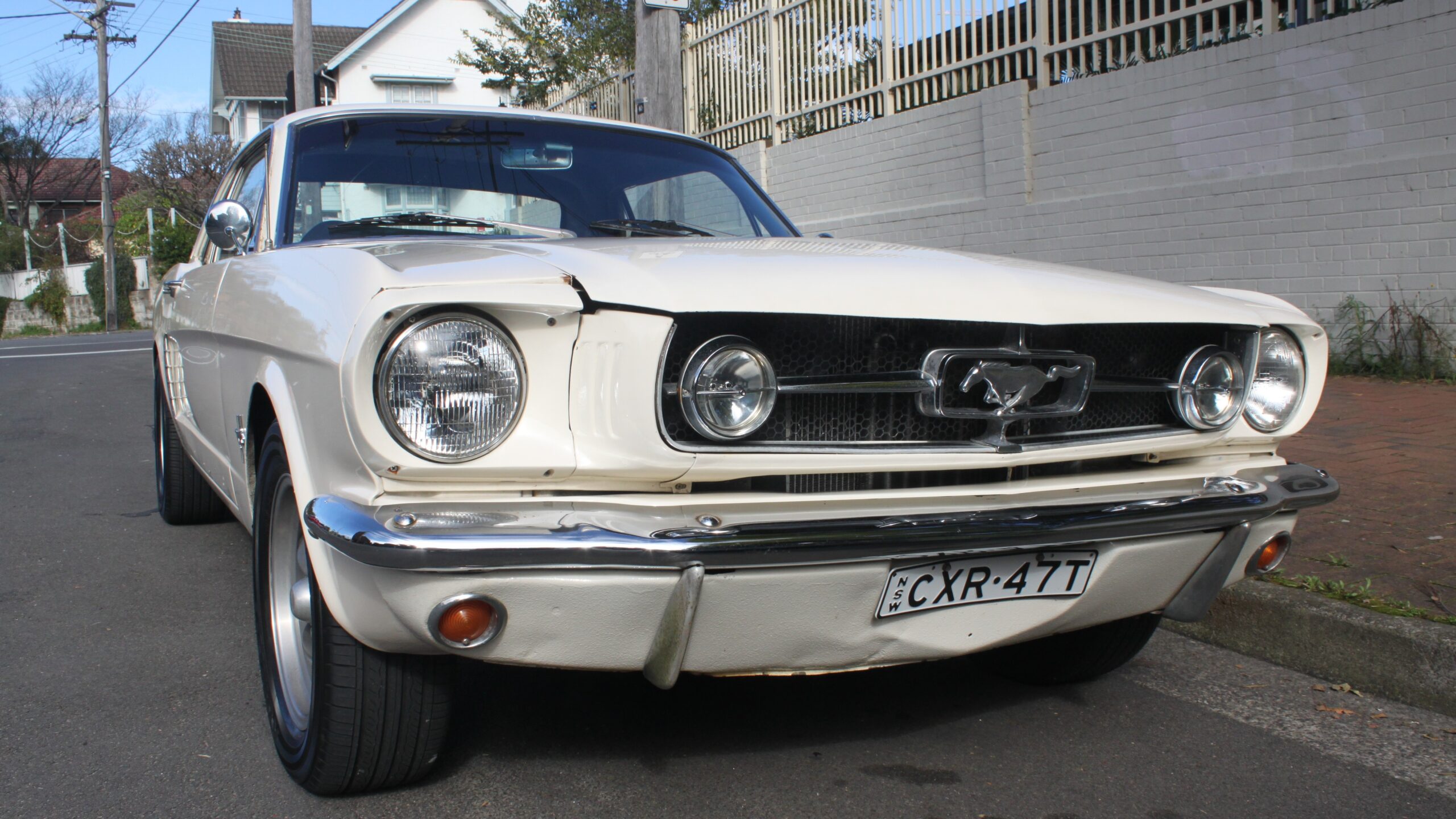
The 1965 Ford Mustang is remembered as the car that made performance feel attainable for ordinary buyers, but it was the 271 horsepower “Hi-Po” 289 V8 that gave that promise real teeth. This high-compression small block turned a stylish compact coupe into a legitimate performance car that could be ordered from a neighborhood dealer for the price of a well-optioned family sedan. Six decades later, the formula it perfected still shapes how automakers sell speed to the mass market.
Looking back at that engine and the car wrapped around it shows how cleverly Ford blended image, engineering, and price. The 271 horsepower Mustang did not invent the muscle car, yet it crystallized the idea that an affordable, youth-oriented model could carry serious performance hardware and still sell in huge numbers.
What happened
When Ford launched the Mustang for 1965, the car’s base configuration was modest. Entry-level buyers got a 170 cubic inch inline-six with around 100 horsepower, bucket seats, and the long-hood, short-deck styling that made the car an instant hit. The real story, however, sat higher on the option sheet in the form of the 289 cubic inch V8, offered in several states of tune, including a top “K-code” version rated at 271 horsepower.
The 289 High Performance V8 was more than a simple step up from the standard 260 and 289 engines. It used a solid-lifter camshaft, heavier-duty valve springs, a higher compression ratio, and a four-barrel carburetor to reach its 271 horsepower rating. Ford paired it with stronger internals and upgraded driveline components so the engine could survive high revs and repeated hard use. Buyers who checked the K-code box also received mandatory supporting hardware such as a four-speed manual transmission and improved rear axle gearing, turning the compact coupe into a sharply responsive street car.
Contemporary road tests showed that a properly equipped 271 horsepower Mustang could run from zero to 60 mph in the mid 6-second range and cover the quarter mile in the high 14s. Those numbers put it in the same conversation as far more expensive European sports cars, yet the Mustang still carried a price tag within reach of middle-class households. The car’s basic structure was derived from the Falcon compact, which kept development and production costs under control and allowed Ford to pour more value into the engine and performance options.
The result was a car that could be ordered in wildly different personalities. A buyer could leave the dealership with a six-cylinder automatic convertible meant for cruising, or with a hardtop packing the 271 horsepower V8, a close-ratio four-speed, and a limited-slip rear axle. Ford’s marketing leaned heavily on that flexibility, but the halo around the model came from the cars that carried the strongest engines and appeared in racing and enthusiast press.
That halo remains powerful in the collector market. High-performance variants of early Mustangs, including K-code cars, are among the versions that enthusiasts seek most aggressively. Guides that track auction and private sale trends describe the 1965 high performance specification as a high-demand variant among collectors, especially when the cars retain their original engine and drivetrain. Originality, documentation, and factory performance options now carry a premium that would have surprised many of the car’s first owners.
Survivor examples show how these cars were used in real life. One well-documented 1965 Mustang, still in the hands of the woman who bought it new, illustrates how an early car could remain largely untouched for decades. That particular coupe, preserved with its original drivetrain and interior, has been described as a piece of pony car perfection, a reminder that the Mustang was as much daily transportation as it was a performance statement. Many similar cars were driven year-round, parked on streets, and maintained on ordinary budgets, which makes unmodified survivors especially rare.
On the showroom floor in the mid 1960s, the price equation looked compelling. A V8 Mustang could be optioned with the high performance engine, upgraded suspension, and appearance packages while still undercutting the cost of many full-size V8 coupes and imported sports cars. The car’s popularity exploded, with total Mustang production crossing the million-unit mark faster than any previous model in American history. The 271 horsepower engine represented a small fraction of that volume, yet its presence in the lineup defined how enthusiasts and rivals perceived the car.
Why it matters
The 271 horsepower Mustang mattered because it reframed what “affordable performance” looked like in the mid 1960s. Before the Mustang, performance often meant buying a larger, heavier car with a big engine, or paying a premium for a low-volume sports model. Ford’s decision to drop a high-compression V8 into a compact, stylish body and sell it through mainstream dealers created a template that competitors quickly copied.
That template relied on three pillars: image, accessibility, and tuning potential. The image came from the Mustang’s proportions and marketing, which positioned it as young, energetic, and slightly rebellious. Accessibility came from the base price and the fact that the car shared many parts with the Falcon and other Ford models, which kept costs low. Tuning potential came from the 289 V8 itself, which responded well to aftermarket cams, carburetors, and exhaust systems. Owners could buy a K-code car and then push it further with relatively simple modifications, or start with a lower-output V8 and build up.
The 271 horsepower rating also mattered psychologically. At a time when many mass-market cars still made well under 200 horsepower, a compact coupe with a number that started with “2” and crept toward “300” felt like a serious machine. That perception helped the Mustang punch above its actual performance, since real-world acceleration depended heavily on gearing, traction, and driver skill. Ford’s marketing leaned on the numbers while also promoting the car’s practicality, letting buyers justify the purchase as both fun and sensible.
Racing programs amplified the effect. Ford developed competition versions of the Mustang for road racing and rallying, using the 289 V8 as the core. Success in events like the SCCA Trans-Am series and European rallies gave the street cars reflected glory. Buyers who ordered a 271 horsepower Mustang could feel a connection to the cars they saw on track, even if their own car spent most of its life in traffic or on suburban back roads.
The long-term impact shows up in how automakers still structure performance lineups. Modern sport coupes and hot hatchbacks often follow the same pattern: an accessible base model, a stronger engine option that transforms the car’s character, and a small number of halo variants that grab attention. The Mustang’s early success proved that this laddered approach could generate both volume and enthusiasm, which encouraged rivals like Chevrolet, Pontiac, and Chrysler to respond with their own compact performance models.
The comparison between a 1965 Mustang and a current model also highlights how expectations have shifted. Analyses that adjust for inflation show that a new Mustang today costs significantly more in nominal dollars than its ancestor, yet the gap in real purchasing power is narrower than it first appears. One breakdown calculated that a 2025 Mustang starts more than 8,000 dollars higher in sticker price than a 1965 car, then weighed how much better the modern car is in performance, safety, and comfort. That comparison framed the new car’s higher price against gains in power, refinement, and equipment, showing how today’s Mustang delivers far more capability for the money.
Even so, the core idea has not changed much. A current Mustang GT offers a V8 with more than double the power of the original K-code, along with stability control, airbags, and advanced infotainment. Yet it still follows the same philosophy: a mainstream coupe that can be ordered in mild or wild form, with a strong V8 sitting near the center of its identity. The 1965 car’s influence shows up not only in the Mustang’s own evolution but also in the broader market for accessible performance cars that balance everyday usability with serious speed.
For enthusiasts and historians, the 271 horsepower Mustang also represents a turning point in how Detroit thought about youth culture. Ford saw that younger buyers wanted cars that felt personal and expressive, not just appliances. By giving those buyers access to a legitimate performance engine in a stylish package, the company helped shift the industry’s focus toward emotion and individuality. That shift carried into the muscle car era and continues in modern performance branding.
On the collector side, the car’s significance has translated into rising values and meticulous restorations. K-code Mustangs with original drivetrains, correct colors, and factory documentation now command strong prices at auction. Restorers go to great lengths to source date-correct components such as carburetors, manifolds, and ignition parts, because the market rewards authenticity. The same car that once appealed because it was attainable now attracts attention because so few untouched examples remain.
What to watch next
The legacy of the 271 horsepower Mustang raises questions about how affordable performance will look in the next decade. Regulatory pressure, electrification, and changing buyer preferences are reshaping the market that the original car helped create. Automakers face the challenge of delivering the same emotional appeal and sense of value in an environment where big-displacement V8s are under scrutiny.
One key area to watch is how manufacturers translate the Mustang formula into electrified or hybrid performance models. Electric drivetrains can deliver instant torque and impressive acceleration in relatively affordable packages, but they lack the mechanical character that defined the 289 High Performance V8. The sound, vibration, and shifting that made the original car engaging are difficult to replicate with motors and single-speed transmissions. Companies experimenting with synthetic soundscapes and multi-speed gearboxes for EVs are, in part, trying to recapture the involvement that engines like the K-code provided.
Price will remain a central tension. The original Mustang succeeded because it wrapped aspirational performance in a price tag that young buyers could stretch to meet. As modern cars add complex electronics, safety systems, and emissions controls, keeping performance variants within reach becomes harder. Enthusiasts will be watching whether future entry-level performance models can maintain the balance that the 1965 car struck between cost and capability, or whether performance becomes increasingly confined to higher-priced trims.
The collector market for early high performance Mustangs will also continue to evolve. As surviving K-code cars age, questions about preservation versus use grow sharper. Some owners choose sympathetic mechanical refreshes that keep cars roadworthy while preserving as much originality as possible. Others pursue full restorations that return cars to showroom condition, sometimes at the expense of factory finishes and minor imperfections. Auction results and private sales over the next few years will show whether buyers place a premium on untouched survivor status or on meticulously restored examples.
More from Fast Lane Only