General Motors is putting fresh money behind an old-school power source, committing $150 million to prepare a key Michigan plant for the next generation of small-block V8 engines. The move shows that even as the company pushes hard into electric vehicles, it still sees a long and profitable future for big internal-combustion engines in trucks and performance models.
Combined with earlier commitments approaching $1 billion at other engine facilities, the new investment sketches a clear strategy: GM intends to keep its V8s competitive on power, efficiency, and emissions while it gradually ramps up battery-electric production.
What happened
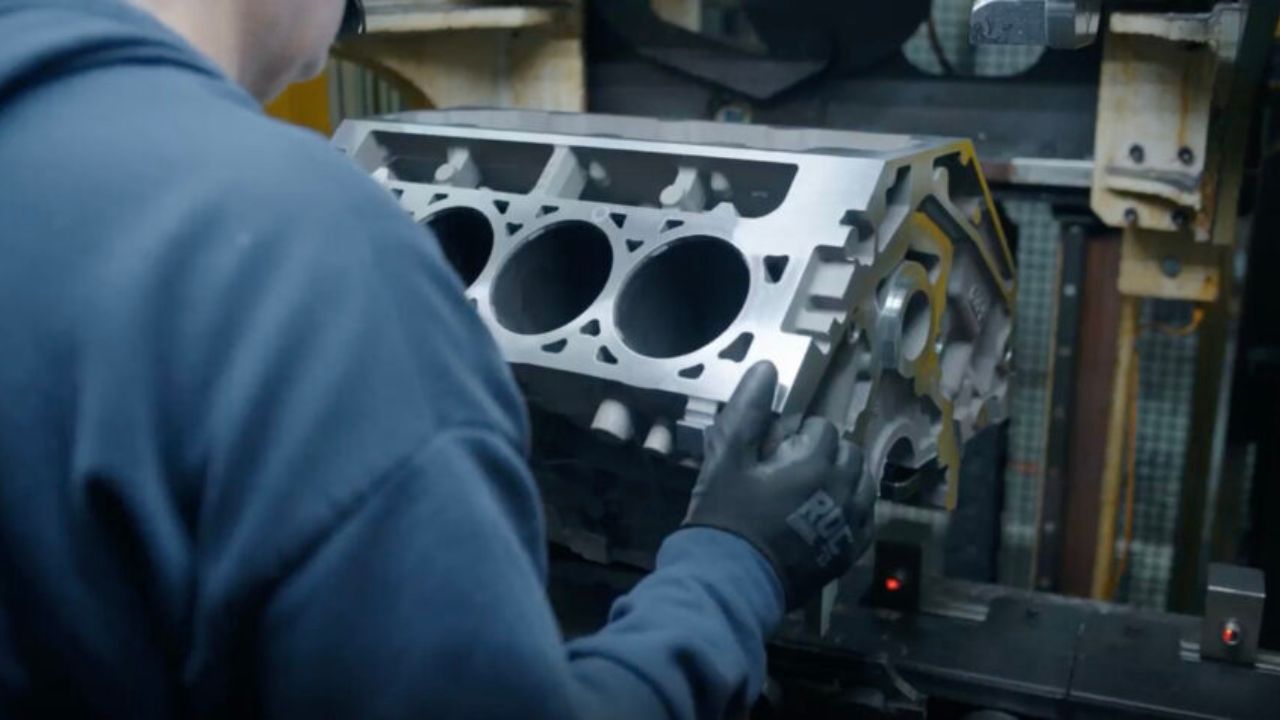
GM has approved a $150 million investment in its Saginaw Metal Casting Operations in Saginaw, Michigan, to support production of components for a new generation of V8 engines. According to company information summarized in one report, the funding will be used to upgrade the aluminum casting facility so it can produce engine blocks, cylinder heads, and other critical parts for the next iteration of GM’s small-block V8 family. The Saginaw plant already supplies castings for current V8 programs, so the new money is aimed at retooling and modernizing existing lines rather than building an entirely new facility.
The Saginaw investment is part of a broader capital program tied to GM’s next-gen V8 strategy. Earlier, the company committed $854 million for a new family of V8 engines at its Tonawanda engine plant in Buffalo, New York, along with related upgrades at other sites. Within that package, GM allocated $854 million for the engine program itself and an additional $34 million for components and tooling at other facilities, bringing the total to $888 million. The Tonawanda plant is being prepared to build the new V8s that will power future full-size trucks and SUVs, including successors to key models such as the Chevrolet Silverado and GMC Sierra, as well as large SUVs like the Chevrolet Tahoe and GMC Yukon.
At Saginaw, the $150 million will go toward expanding aluminum casting capacity, installing new equipment, and refining processes so the plant can support higher-output and more thermally efficient engines. The facility is expected to continue using advanced aluminum alloys and precision casting methods to reduce weight while maintaining the strength needed for high-compression, direct-injection V8s. GM’s small-block architecture has evolved through multiple generations, and the new program is expected to maintain basic layout continuity while enabling higher efficiency and lower emissions.
The Saginaw Metal Casting Operations site, which has produced engine blocks and other aluminum components for decades, is a central node in GM’s internal-combustion supply chain. The new investment is projected to help secure current jobs at the plant and potentially open the door to additional positions as volumes ramp up for the next-generation V8. Local leaders and plant management have framed the investment as a vote of confidence in the facility’s long-term role within GM’s North American manufacturing network.
The Tonawanda engine plant, supported by the earlier $888 million commitment, will assemble the engines that rely on castings from Saginaw and other suppliers. GM has said that Tonawanda will produce V8s for full-size trucks and SUVs, which remain among the company’s highest-margin products. Upgrades at Tonawanda include new machining lines, assembly equipment, and testing systems designed to handle the new engine family’s tighter tolerances and more complex features, such as advanced cylinder deactivation and improved fuel delivery systems.
These investments come alongside GM’s ongoing spending on electric vehicle platforms and battery plants, but they are targeted specifically at internal-combustion programs. That dual-track approach reflects the company’s assessment that demand for gasoline-powered trucks and performance vehicles will remain strong well into the next decade, particularly in North America where towing, payload, and long-range capability are prized by buyers.
GM’s decision to put $150 million into the Saginaw plant, combined with the $888 million committed to the Tonawanda facility, indicates a coordinated strategy to keep its V8 supply chain competitive. The Saginaw upgrades will focus on casting technology and capacity, while Tonawanda will concentrate on final engine assembly and testing. Together, these projects are intended to deliver a new small-block V8 that can meet stricter emissions standards while still delivering the power and durability that truck and SUV customers expect.
According to one detailed account, the Saginaw investment will include new tooling and process improvements to support higher-pressure casting methods. These changes are designed to improve metallurgical consistency in engine blocks and heads, which in turn allows engineers to reduce wall thickness and overall engine weight without sacrificing strength. Lighter engines help improve fuel economy and vehicle handling, which are key factors as regulators push for lower fleet emissions and customers expect better efficiency from large vehicles.
GM has not yet released full technical specifications for the next-generation V8, but the scale of the investments at Saginaw and Tonawanda suggests a major update rather than a minor revision. The company’s small-block V8 has historically underpinned a wide range of products, from Chevrolet Corvette and Camaro performance cars to heavy-duty pickups. The new engine family is expected to continue serving multiple vehicle lines, which helps justify the large capital outlays across the casting and assembly plants.
The Saginaw Metal Casting Operations facility has long been a showcase for GM’s aluminum casting capabilities. The new $150 million commitment, as described in a report on GM to invest, reinforces the plant’s role as a key supplier of powertrain components for GM’s most profitable vehicles. By pairing that investment with the $888 million Tonawanda program detailed in another report on Tonawanda plant, GM is effectively locking in its next phase of V8 production capacity.
Why it matters
The decision to pour hundreds of millions of dollars into new V8 capacity matters on several levels, starting with GM’s product strategy. Full-size pickups and large SUVs remain the company’s profit engines, and those vehicles still rely heavily on V8 powertrains. By investing in a new generation of small-block V8s, GM is signaling that it expects strong demand for gasoline trucks and SUVs to continue even as it rolls out more electric models such as the Chevrolet Silverado EV and GMC Hummer EV.
From a financial standpoint, V8-powered trucks and SUVs help fund GM’s transition to electric vehicles. These products typically carry higher margins than compact cars or crossovers, and customers often pay premiums for higher-output engines and towing packages. Ensuring that GM has a modern, efficient V8 lineup helps protect that revenue stream while the company spends heavily on Ultium battery plants, EV platforms, and software development. In effect, the next-gen V8 program serves as a bridge that supports the company’s bottom line during a long and expensive technology transition.
The investments also have significant implications for jobs and regional economies. The Saginaw Metal Casting Operations plant employs a large workforce in Michigan, and the new funding is expected to help secure those jobs by keeping the facility relevant in GM’s future engine programs. Similarly, the Tonawanda engine plant in New York is a major employer in the Buffalo area. The $888 million program there is aimed at sustaining engine assembly jobs as GM phases out older powertrains and introduces the new V8 family.
For workers and local communities, the message is that internal-combustion manufacturing still has a future, even as EV production grows. That is particularly important in regions like Michigan and western New York, where auto plants and suppliers form a central part of the economic base. Investments in casting and engine assembly help stabilize tax revenues, support local suppliers, and maintain skilled trades positions that might otherwise be at risk as automakers shift resources to battery plants and EV assembly lines.
On the technology front, the next-generation V8 program reflects the auto industry’s broader effort to squeeze more efficiency and lower emissions out of internal-combustion engines. Regulators in the United States and other markets are tightening fuel economy and greenhouse gas standards, which puts pressure on large vehicles that traditionally consume more fuel. GM’s new V8s are expected to incorporate advanced combustion strategies, improved thermal management, and features such as cylinder deactivation and variable valve timing to reduce fuel consumption when full power is not needed.
By upgrading the Saginaw casting facility, GM can produce lighter and more precisely engineered engine components, which helps engineers design V8s that meet stricter standards without sacrificing performance. That is critical for customers who buy trucks and SUVs for towing, hauling, and off-road use. If GM can deliver engines that feel at least as powerful as current models while using less fuel and emitting fewer pollutants, it strengthens the case for keeping internal-combustion options in the lineup even as EV adoption grows.
The decision also highlights the practical limits of rapid electrification in certain segments. Heavy-duty pickups, large SUVs, and high-performance sports cars present unique challenges for battery-electric powertrains, including weight, range under heavy load, and charging infrastructure for long-distance towing. By continuing to invest in V8s, GM is acknowledging that many customers in these segments may prefer or require gasoline engines for years to come, particularly in regions where charging networks remain sparse or where customers routinely tow heavy trailers over long distances.
At the same time, the next-gen V8 program is not a retreat from electrification. Instead, it fits into a portfolio approach where GM offers both advanced internal-combustion engines and EVs, depending on use case and customer preference. That strategy allows the company to comply with emissions regulations while still serving buyers who are not ready or able to switch to electric vehicles. It also gives GM flexibility to adjust its production mix as market demand evolves, rather than betting everything on a single technology path.
Strategically, the investments in Saginaw and Tonawanda help GM maintain control over key parts of its powertrain supply chain. By keeping casting and engine assembly in-house, the company can better manage quality, protect proprietary designs, and coordinate production with its vehicle assembly plants. That becomes especially important as engines incorporate more advanced materials and complex features that require tight integration between design, casting, machining, and assembly.
There is also a competitive dimension. Rivals such as Ford and Stellantis are making their own bets on the future of internal-combustion engines in trucks and performance vehicles, even as they roll out EVs. GM’s willingness to invest heavily in a new small-block V8 family signals that it intends to compete aggressively in this space. If the new engines deliver strong performance and efficiency gains, they could help GM defend or grow its share in profitable segments like full-size pickups and large SUVs.
For enthusiasts and longtime GM customers, the commitment to a next-generation V8 carries symbolic weight. The small-block V8 has been central to GM’s identity for decades, powering iconic models from the Chevrolet Corvette to high-performance Camaros and a long line of trucks. By funding a new chapter in that engine’s evolution, GM is telling its core audience that it is not abandoning the mechanical character and driving experience that V8 fans value, even as it invests heavily in silent, battery-powered vehicles.
More from Fast Lane Only