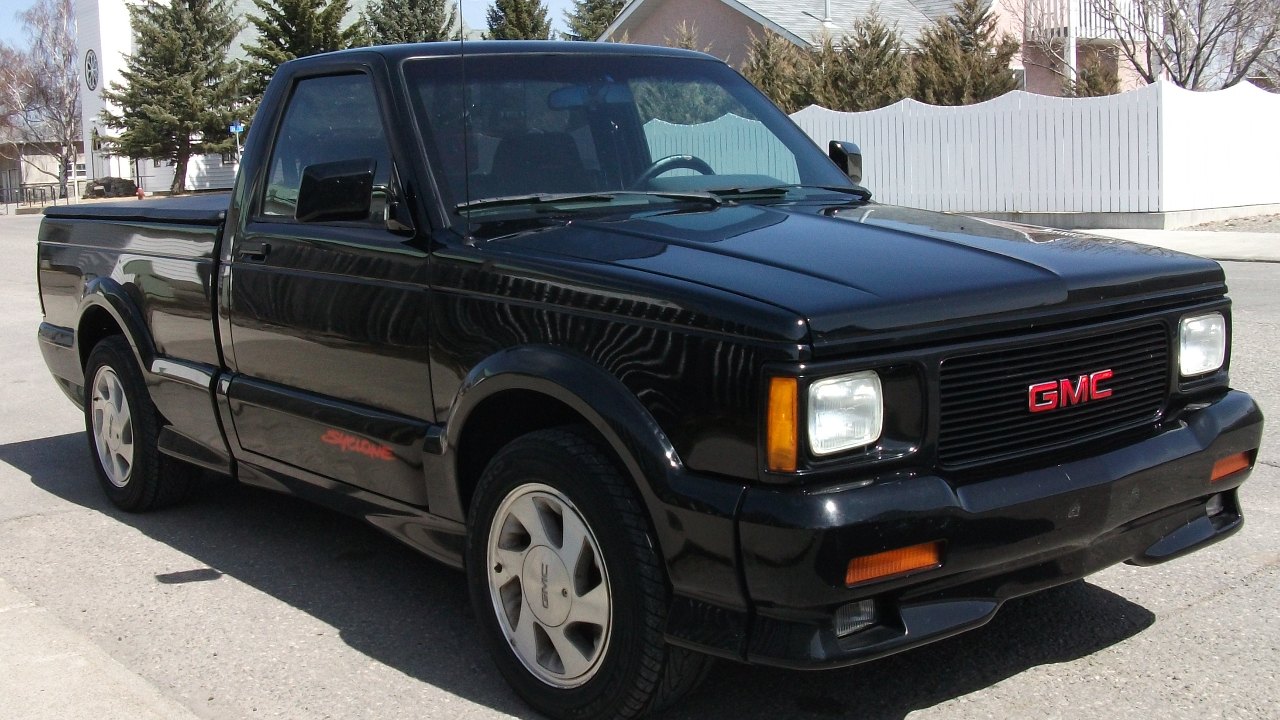
The GMC Syclone turbo truck burned bright and brief, arriving in the early 1990s as a factory hot rod that could outrun contemporary sports cars and then disappearing almost as quickly as it came. Today, that short production window and outrageous performance have turned it into one of the most closely watched performance pickups in the collector market, with values that reflect both nostalgia and scarcity.
To understand why demand is so strong now, I need to start with the basic production story: exactly which years GMC built the Syclone, how many trucks actually left the factory, and why the program ended just as it was redefining what a pickup could do.
How long GMC actually built the Syclone
The Syclone story is often described as a single model year, but the reality is more nuanced. The core production run centered on the 1991 model year, when GMC turned its compact Sonoma pickup into a turbocharged, all-wheel-drive street weapon. Contemporary reporting on the model notes that the 1991 Syclone was the primary focus of the program, with the truck engineered and assembled through a partnership between GMC (part of General Motors) and a specialty builder identified as Production Automotive Servi in the technical record. That collaboration produced a truck that was far more than a trim package, with a heavily reworked drivetrain and chassis that set it apart from the standard Sonoma.
Although enthusiasts often talk about the Syclone as a one-year wonder, at least one detailed buyer’s guide points out that GMC produced a total of 2,995 trucks in 1991, and then produced three models in 1992. That small 1992 batch is often overlooked, but it confirms that Syclone production did not end abruptly at the stroke of a calendar year. Instead, the program tapered off, with the bulk of trucks clearly tied to the 1991 model year and a tiny tail of 1992 builds that effectively closed the chapter. Beyond those figures, additional production years are unverified based on available sources.
Why the Syclone’s short run matters to collectors
The Syclone’s limited production is only half the story; the other half is what the truck could do. At its debut, coverage of three standout GMC trucks notes that the 1991 GMC Syclone was named the fastest stock pickup truck in the world, a title it earned with a combination of turbocharged power, all-wheel drive, and a focus on straight-line speed that was unheard of in a compact truck. That performance reputation was not marketing fluff. A later historical look at the 1991–1993 GMC Syclone and Typhoon platform describes how the Syclone was nearly developed as a Buick Grand National pickup, underlining how deeply its DNA was tied to General Motors’ most famous turbocharged muscle car of the era.
Technical retrospectives from earlier this year describe how the Syclone’s turbocharged V6, paired with an all-wheel-drive system, delivered acceleration and handling that felt closer to a sports car than a work truck. One detailed history of the early 90s program explains that this engine and drivetrain combination gave the Syclone unprecedented capability for a pickup of its time, which in turn helped cement its status as a high-performance legend from that period. Another enthusiast-focused profile calls the GMC Syclone “The Granddaddy of Performance Pickups” and frames it as a world-class muscle machine that was fast, furious, and unlike anything else on American roads. That blend of rarity and genuine performance is exactly what collectors tend to reward.
Production numbers, rarity and how they shape value
From a collector’s perspective, the production math is straightforward and compelling. With 2,995 trucks built in 1991 and only three more in 1992, the total run sits just under 3,000 units. That is a tiny figure compared with mainstream pickups of the era, which routinely sold in the tens or hundreds of thousands. A detailed buyer’s guide on Syclone pricing emphasizes that these low numbers, combined with the truck’s performance credentials, have helped push asking prices well beyond what anyone would have expected for a compact GMC pickup when it was new. The same guide notes that some of the highest recorded sales have reached into six figures, with one example cited at a lofty $108,000, underscoring how scarcity and condition can dramatically move the needle.
Valuation specialists who track classic vehicles have also flagged the Syclone as a rising star. A dedicated valuation tool for the 1991 GMC Syclone treats it as a distinct collectible model, separate from ordinary Sonoma pickups, and charts how condition, originality, and mileage influence pricing tiers. That structured approach to valuation is a sign that the truck has moved firmly into the realm of recognized classics rather than being treated as a quirky used performance vehicle. When I look at those production numbers alongside the formal valuation frameworks, the pattern is clear: the Syclone’s short run has become a core part of its identity, and the market is pricing that rarity accordingly.
How the market is pricing Syclones today
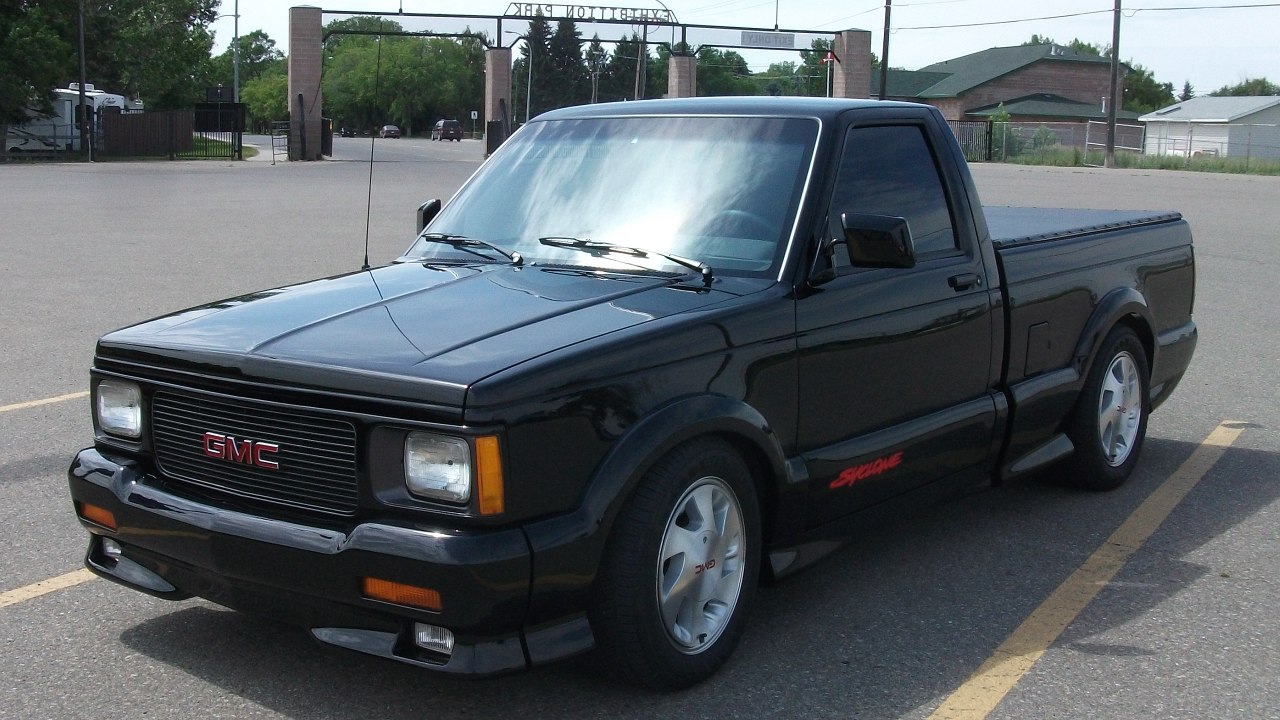
Recent sales data and market commentary show that the Syclone is no longer a sleeper in the collector world. A social media market snapshot dated Sep 22, 2025, highlights two concrete examples: one Syclone selling for $29,000 in July 2025 with 71k miles and TMU, Modified, and another bringing $75,000 in May 2024 with 24k miles, Modified. The same snapshot cautions that these prices reflect specific trucks with modifications and mileage quirks, and that values for low-mileage, original examples, or for the rarest configurations that were never produced, would likely be different. Even with those caveats, the spread between a higher-mile modified truck and a cleaner, lower-mile example illustrates how condition and originality are already driving a wide range of outcomes.
Broader commentary on the Syclone’s collectibility reinforces that picture. A feature shared on Oct 26, 2025, describes how the Syclone proves that trucks can be just as thrilling as sports cars and notes that it remains highly collectible. That same piece cites an average market price of $44,214, a figure that reflects strong demand among enthusiasts and collectors. Another analysis from Feb 10, 2023, framed under “Now for the” closing thoughts on the GMC Syclone and its trajectory, points out how much its value has risen after more than 30 years and argues that the truck has become a serious investment-grade vehicle rather than a cheap curiosity. Taken together, those data points show a market that has already repriced the Syclone upward, with room for significant premiums on the best examples.
Why demand is likely to stay strong
Looking ahead, I see several reasons why collector interest in the Syclone is unlikely to fade. First, the truck occupies a very specific niche: it is a factory-built, turbocharged, all-wheel-drive compact pickup from the early 1990s, created in limited numbers and tied to the same performance culture that produced icons like the Buick Grand National. A detailed historical piece from Apr 9, 2020, on the 1991–1993 GMC Syclone and Typhoon platform underscores how the Syclone nearly became a Buick-branded performance pickup, which only deepens its appeal to fans of that era of General Motors engineering. Another retrospective from Jun 12, 2024, on the Syclone as a high-performance legend from the early 90s stresses that, despite its impressive performance and advanced drivetrain, the truck had a short production life, a combination that tends to age well in the collector world.
Second, the broader culture has finally caught up to what the Syclone was doing in 1991. Modern performance trucks and SUVs are now mainstream, but the Syclone was there decades earlier, and contemporary profiles still describe it as “The Granddaddy of Performance Pickups” and highlight its world-class muscle credentials. A blog entry from Jul 1, 2024, celebrating three timeless GMC trucks, singles out the 1991 GMC Syclone for its status as the fastest stock pickup truck in the world at the time of its debut, praising its acceleration, power, and driving experience. That kind of historical recognition, combined with structured valuation tools and documented sales in the tens of thousands of dollars, suggests that the Syclone has crossed the line from cult favorite to established classic. With fewer than 3,000 built across 1991 and 1992 and no evidence of additional production beyond those years based on available sources, I expect that scarcity, performance pedigree, and growing nostalgia will keep collector demand for the GMC Syclone turbo truck strong for years to come.