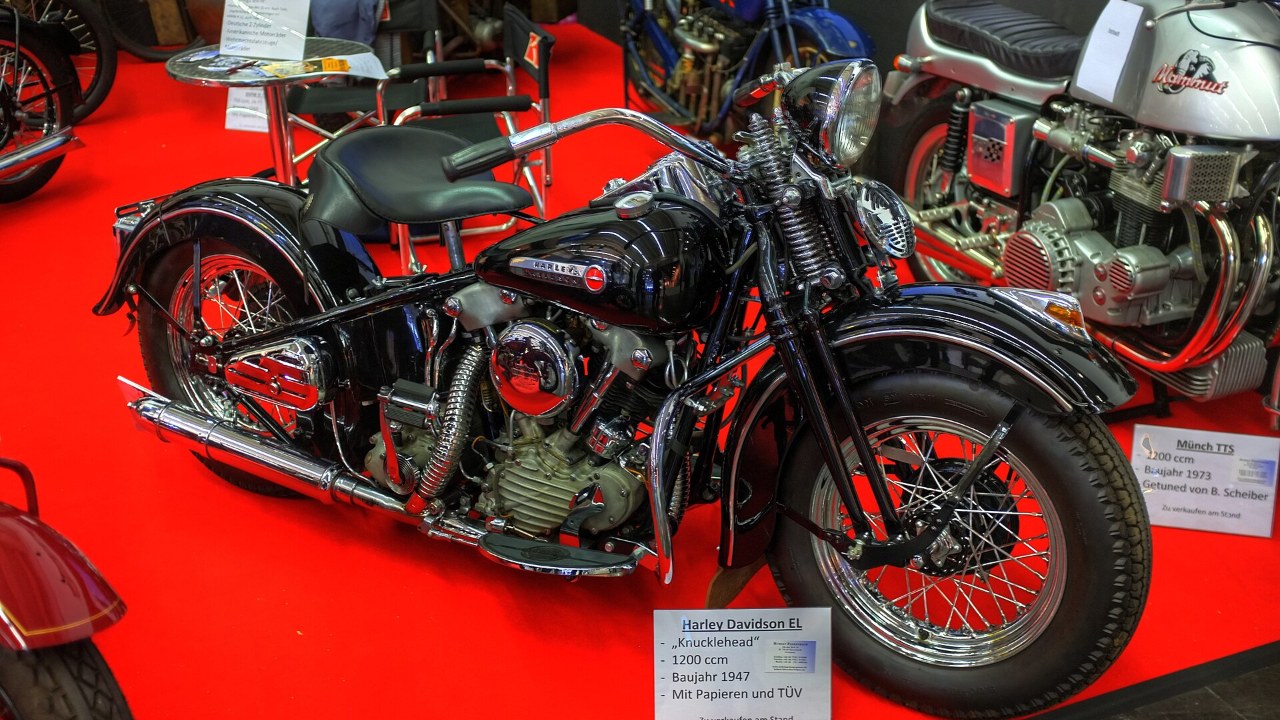
Riders named many generations of Harley-Davidson’s V-twin for the way the top of the engine looks. Knucklehead, Panhead and Shovelhead were never factory model names. Instead, each Harley engine nickname came from owners describing the shape of a rocker cover or a cylinder head.
Here are six of those nicknames, in the order the engines arrived. Each one comes with the part that inspired it.
1. Flathead V-Twin, from 1929
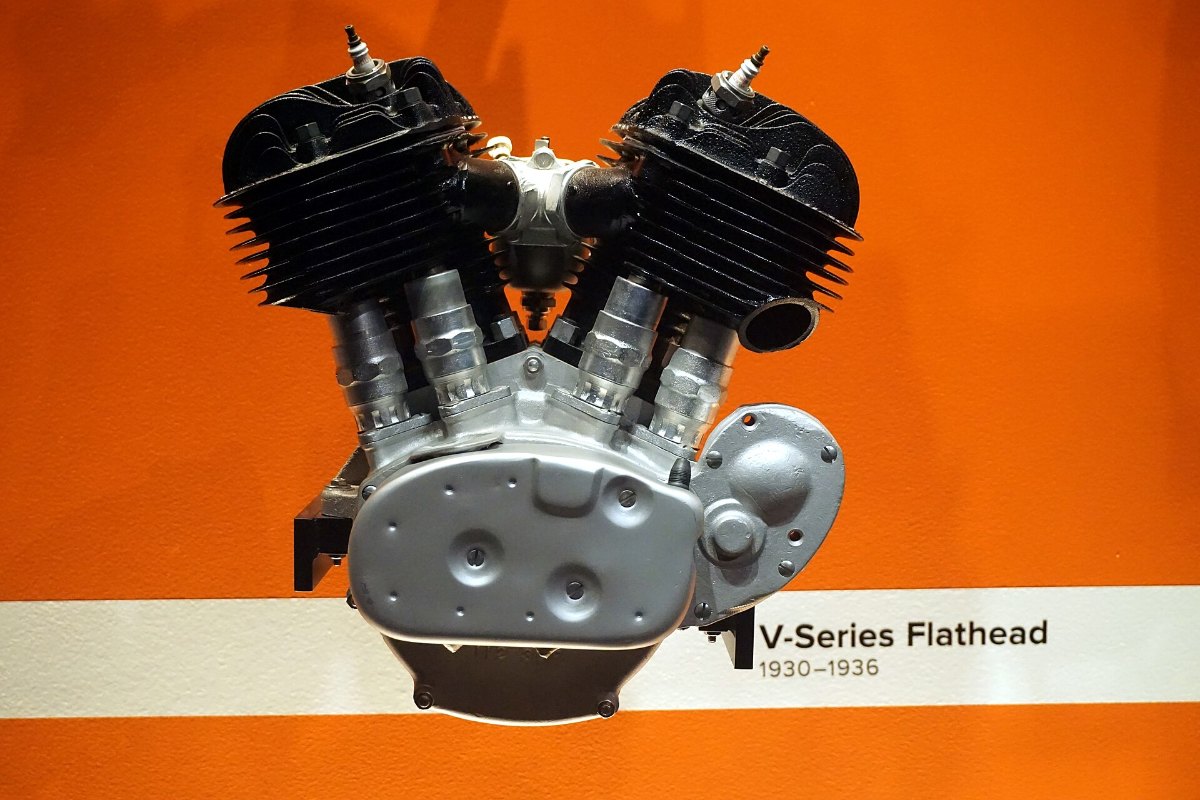
The Flathead is a side-valve engine. Its valves sit beside the cylinder rather than above it, so the cylinder head needs no room for valve gear. That leaves a low, flat-topped head with cooling fins, and riders named the engine for exactly that shape.
Harley-Davidson’s own engine history says the Flathead V-twin arrived for 1929 at 45 cubic inches. A 74-cubic-inch version followed in 1930, and an 80-cubic-inch version came in 1937. The company also notes it powered military motorcycles through World War II. After that, it stayed in the Servi-Car three-wheeler until 1973. However, sources date the end differently. Jalopnik’s history of the V-twin closes the Flathead’s run in 1948, before the Servi-Car’s final years.
2. Knucklehead, 1936–1947
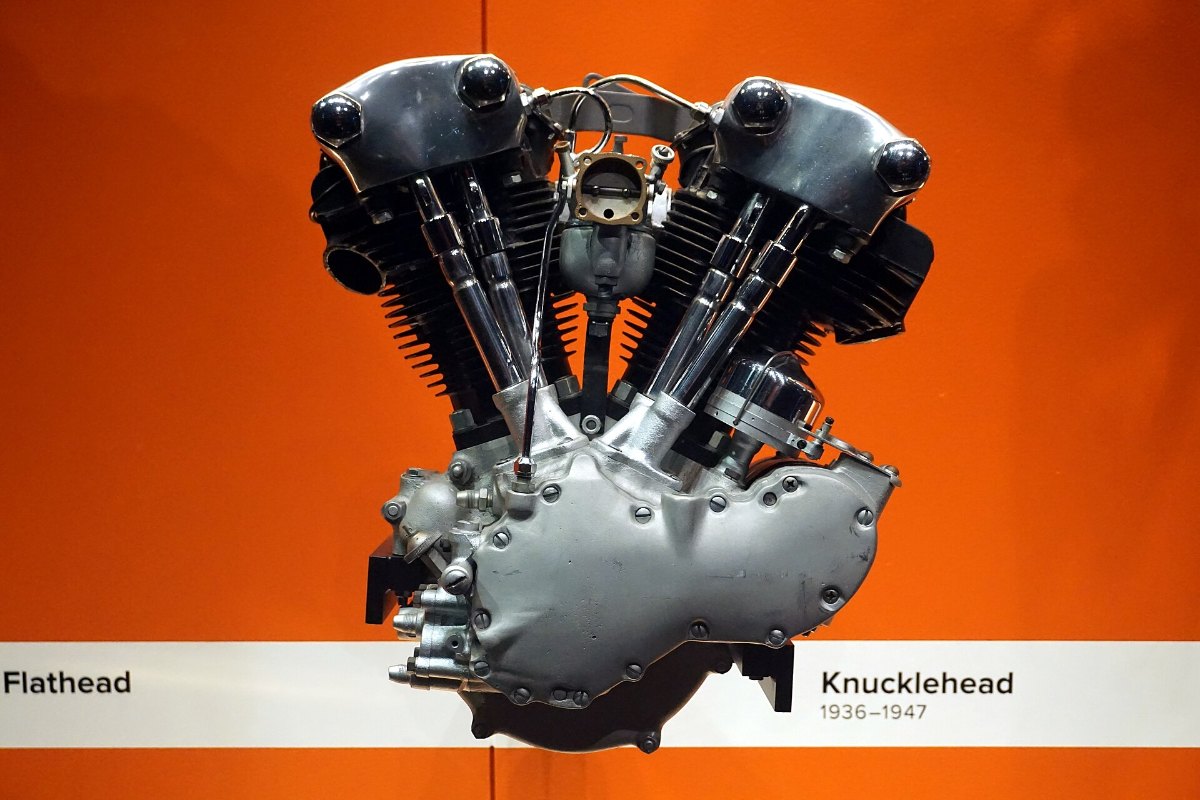
The Knucklehead was Harley-Davidson’s first overhead-valve engine. That meant the valves moved up into the heads, so they needed covers to enclose the rocker arms. Those rounded rocker boxes, together with the pushrod tubes running up to them, reminded riders of the knuckles on a closed hand.
Harley-Davidson’s history lists the Knucklehead from 1936 through 1947, first at 61 cubic inches and later at 74. Jalopnik gives the same years and the same two displacements. It also credits the nickname to the rocker boxes.
3. Panhead, 1948–1965
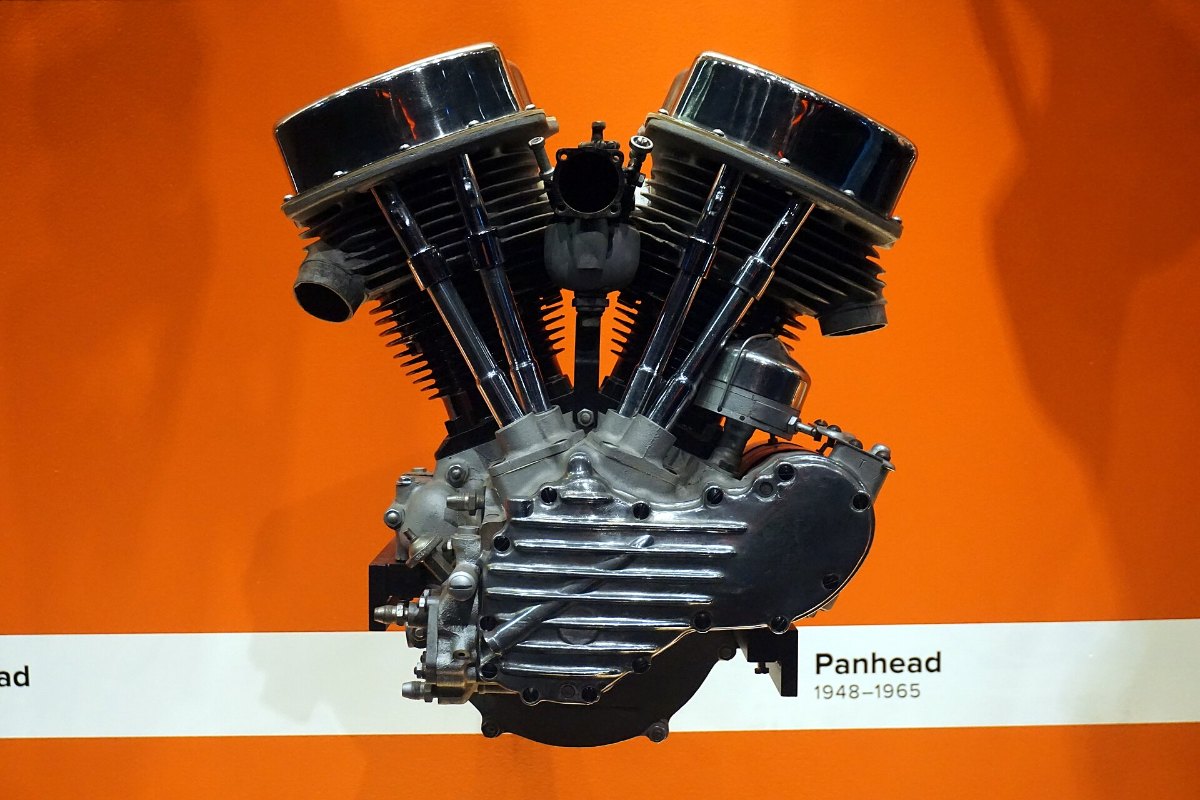
For 1948, the Big Twin got a new top end with stamped rocker covers. Owners thought the covers looked like upside-down cake pans, and the name Panhead followed.
But the changes went deeper than the covers. According to the Harley-Davidson history, the Panhead brought aluminum cylinder heads and hydraulic valve lifters. It also added better oiling and roller bearings on the crank pin. The same history says Harley built it in 61- and 74-cubic-inch sizes through 1965. Jalopnik’s timeline agrees on that 1948 to 1965 span, too.
4. Ironhead, the Most Literal Harley Engine Nickname, 1957–1985
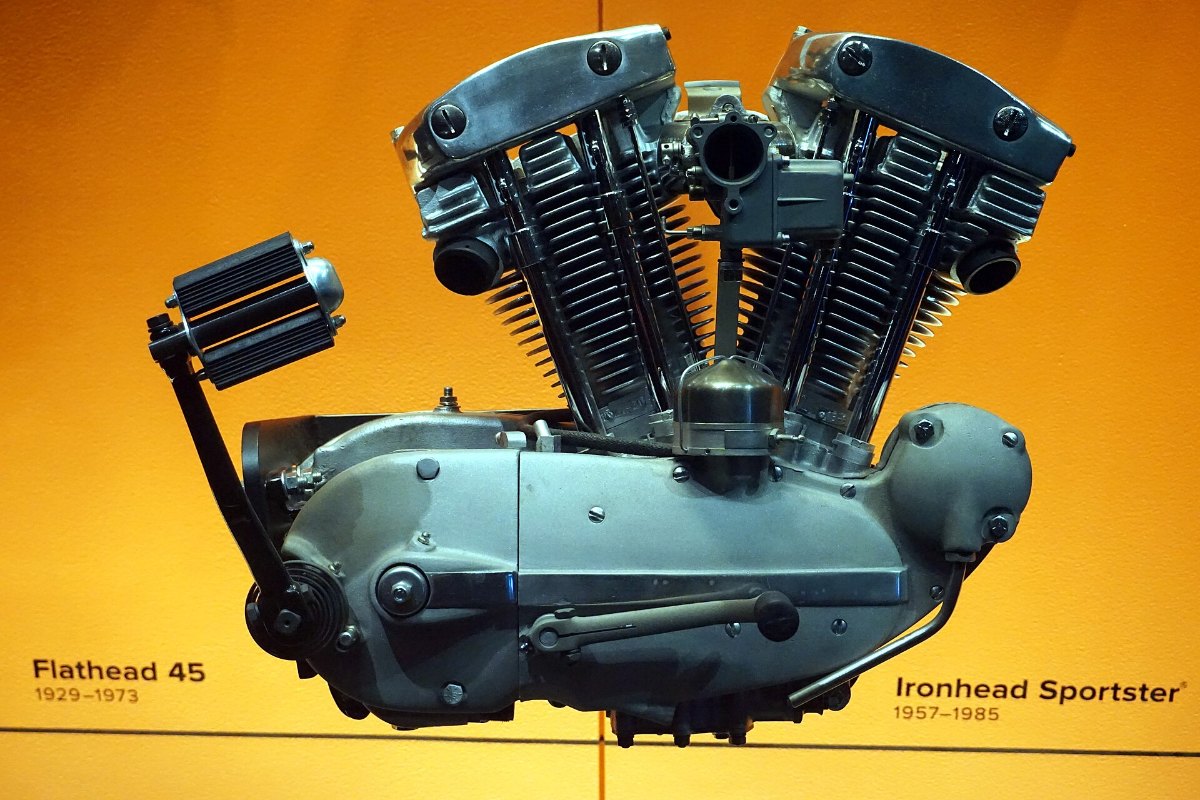
The Ironhead is the original Sportster engine. Its nickname is also the most literal on this list, because the cylinder heads were cast iron. That set it apart from the Big Twins of the same era, which had switched to aluminum heads with the Panhead.
Harley-Davidson’s history dates the Ironhead from 1957 to 1985 and lists it at 55 cubic inches. By comparison, Jalopnik puts the starting displacement at 54 cubic inches. It says the engine later grew to 61, so expect to see both figures in Sportster references.
5. Shovelhead, 1966–1984
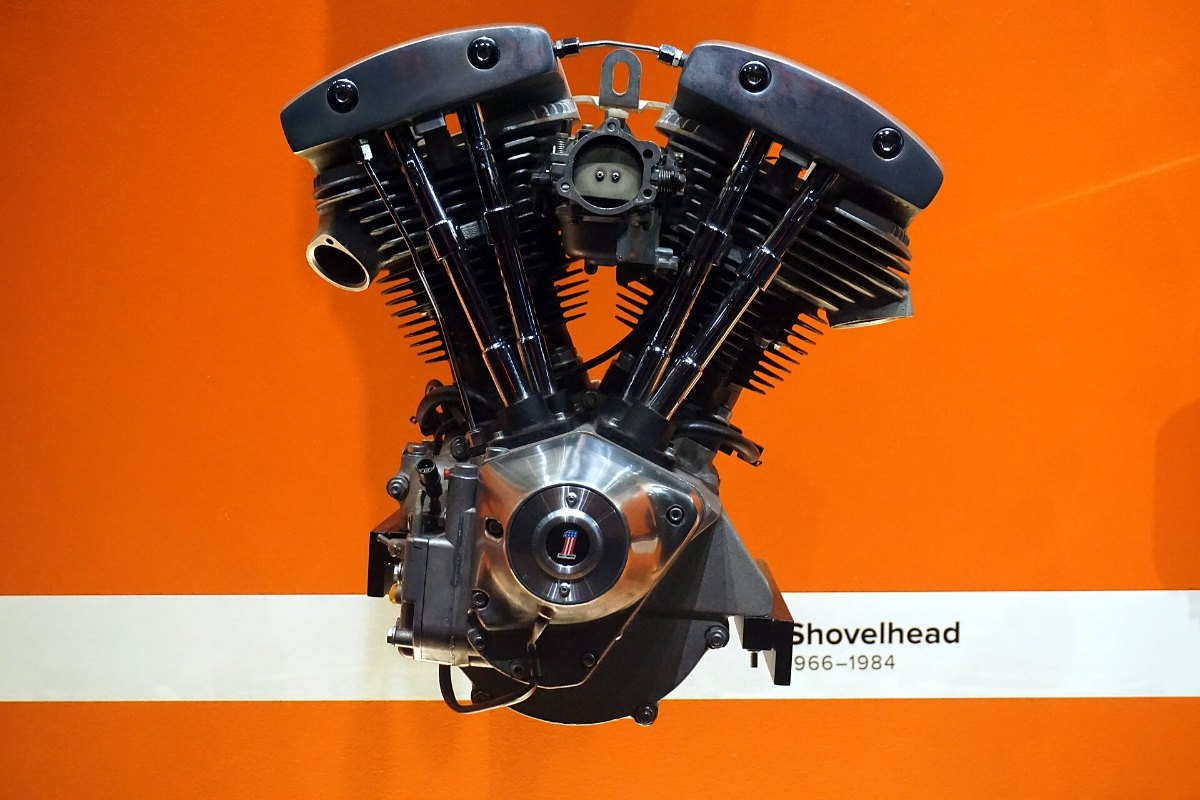
The Shovelhead replaced the Panhead in the Big Twin line for 1966. It brought redesigned aluminum heads and new rocker covers. Riders compared the covers to the upturned scoop of an old coal shovel. Another explanation is a shape that looked shoveled out.
Harley-Davidson’s history gives the Shovelhead’s run as 1966 to 1984 in 74- and 80-cubic-inch sizes. Jalopnik also adds the year of the larger engine. It says the Shovelhead grew from 74 to 80 cubic inches in 1978.
6. Blockhead (Evolution), 1984–1999
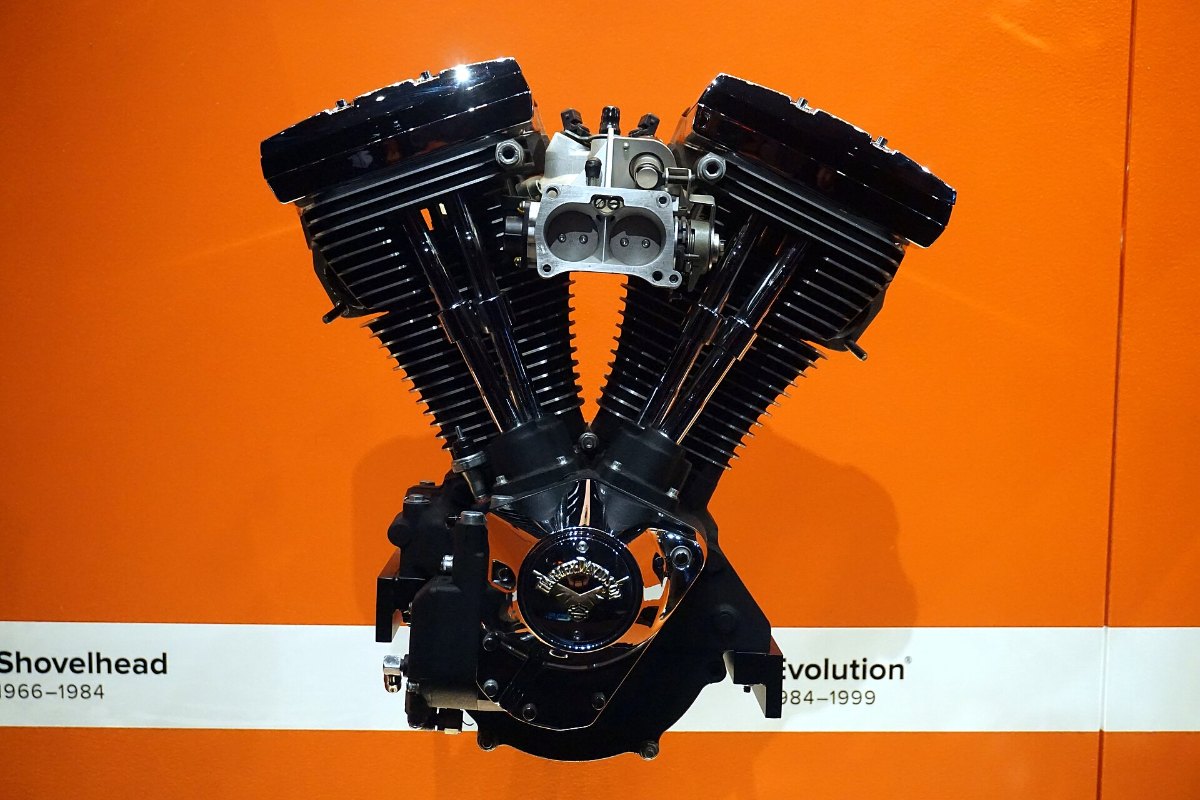
The Evolution engine, usually shortened to Evo, is better known by its official name than by a nickname. Even so, some riders call it the Blockhead because its rocker covers are squared off. That sets it apart from the rounded shapes that came before.
According to Harley-Davidson, the 80-cubic-inch Evo was the first Harley engine designed with computer-aided design tools. It kept the 45-degree V-twin layout and pushrod-operated overhead valves. But it moved to aluminum cylinders as well as aluminum heads. Jalopnik’s history credits the occasional Blockhead nickname to those squared rocker covers. Finally, both sources close the Evolution’s Big Twin run in 1999.
More from Fast Lane Only
- Unboxing the WWII Jeep in a Crate
- 15 rare Chevys collectors are quietly buying
- 10 underrated V8s still worth hunting down
- Police notice this before you even roll window down
This article was created with the help of AI and was reviewed and edited by Fast Lane Only editors before publication.