
Six cylinders in a row is one of the oldest ideas in the engine bay, and the inline-six has earned its reputation the hard way. Because the layout is naturally smooth, it needs no balance shafts to calm it down. It also leaves plenty of room around the block, so a mechanic can reach the spark plugs without a fight.
Not every straight six deserves blind faith, though. Some carried weak head gaskets, and others used parts that turned scarce once production ended. Plenty were simply too complicated for the jobs owners gave them.
These 11 are our picks for the inline-six engines we would trust completely, from farm-town American workhorses to Australian, Japanese and German designs. That verdict is our opinion, while the figures behind it come from factory papers, auction records and the engine histories we read for this story.
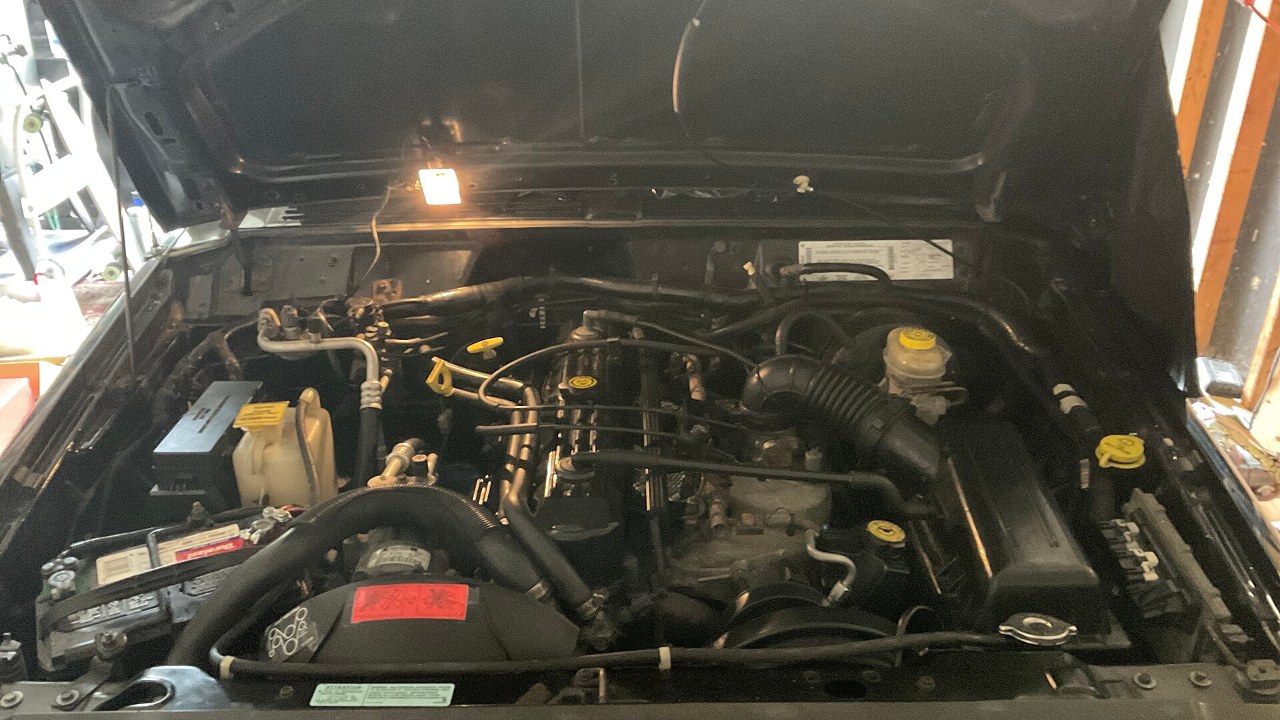
1. Jeep 4.0 inline-six

The Jeep 4.0 traces its roots to an American Motors six from 1964. However, it reached its best-known form in 1987, when it landed in the Cherokee and Comanche with fuel injection and a cast-iron block. Hagerty’s list of great straight sixes notes that its launch rating of 173 horsepower and 215 lb-ft beat the V6 engines GM, Ford and Nissan offered at the time.
Output later peaked at 190 horsepower and 235 lb-ft. Chrysler kept building it until 2006, and a Chinese-built version lasted until 2012, according to SlashGear’s survey of reliable sixes. It powered millions of Cherokees and Wranglers in between.
Our take: the 4.0 is not flawless. SlashGear points to oil leaks, coolant leaks and odd noises after about 100,000 miles. Even so, those are seals and hoses, not broken cranks. If you shop for one, budget for a rear main seal and a fresh cooling system, then drive it.
2. Chrysler Slant-6 twin-carb
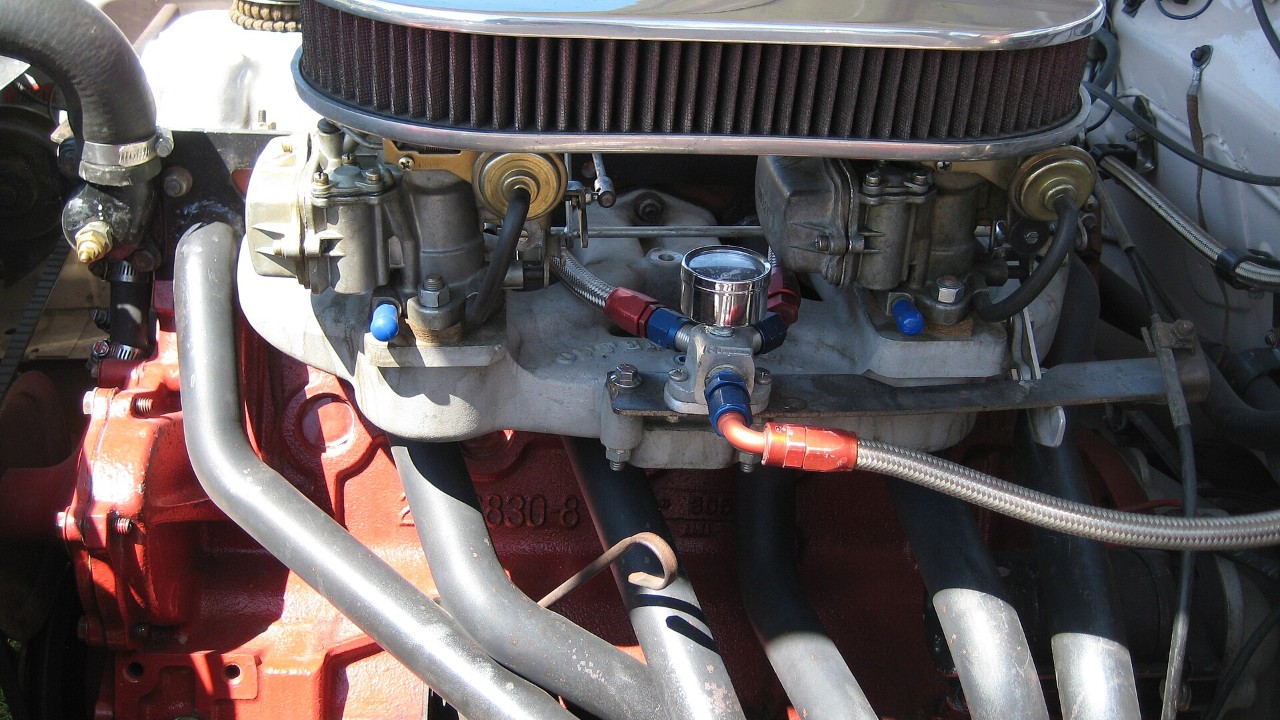
Chrysler’s Slant Six arrived for 1960 in 170- and 225-cubic-inch sizes. Engineers leaned the block 30 degrees so it would fit under the Valiant’s low hood. That tilt also made room for longer intake and exhaust runners, which helped low-end torque.
The engine in our photo wears two carburetors, a setup that turns a commuter motor into something with a little more snap. In fact, Chrysler’s Argentine arm sold a Valiant GT from 1965 to 1968 with dual one-barrel Holleys. It claimed 180 bhp, compared with 145 bhp for the single-carb engine. If that sounds tempting, our roundup of old inline-sixes you shouldn’t ignore covers more of the same breed.
Chrysler used the Slant Six in cars until 1983 and in Dodge pickups until 1987. We trust it because the basic design asks so little. The only real trouble came late, when emissions-era electronic carburetors made a simple engine fussy.
3. 1954–1955 Chevrolet 235 Blue Flame six
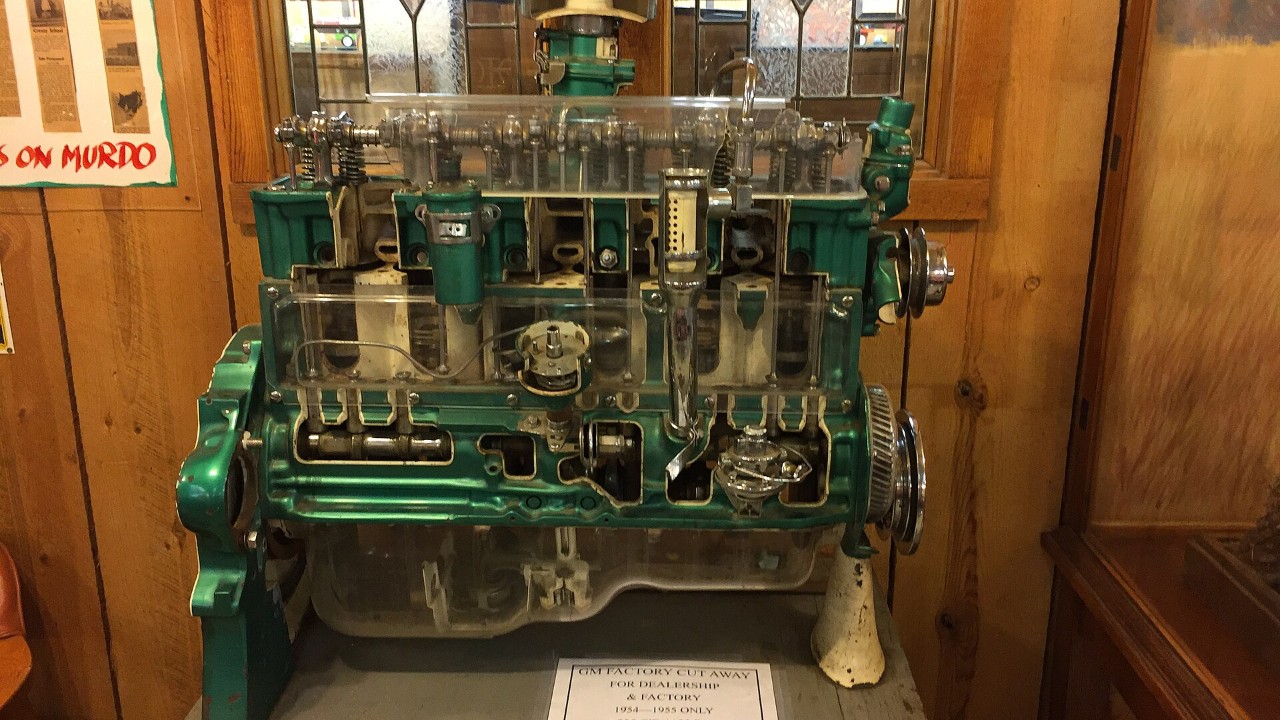
Chevrolet’s six was its only engine from 1929 to 1954, and the family earned the nickname “Stovebolt” for the slotted fasteners on its valve cover. The 235-cubic-inch Blue Flame version arrived in 1953. The cutaway in our photo shows the passenger-car engine of 1954 and 1955. By then, Chevrolet was close to adding its first optional overhead-valve V8, which arrived for 1955.
That same 235 also powered the first Corvette. RM Sotheby’s describes the 1953 car’s engine as a 150-horsepower Blue Flame six with three side-draft Carter carburetors and a two-speed Powerglide automatic. Chevrolet built just 300 Corvettes that year, and RM Sotheby’s sold the 65th one for $379,500.
In our view, the Blue Flame belongs here because it did unglamorous work for decades. The second-generation six stayed in production until 1962, according to Hagerty. That long run is a big reason we would trust one today.
4. BMW M54B25 inline-six

The M54B25 is the 2.5-liter member of BMW’s M54 family, built from 2000 to 2006. It displaces 2,494 cc and makes 189 horsepower at 6,000 rpm and 181 lb-ft at 3,500 rpm. Unlike the cast-iron sixes on this list, it uses an aluminum block with iron cylinder liners.
That combination keeps weight down without giving up a hard-wearing bore surface. As a result, the M54B25 suits drivers who want a smooth six without a heavy nose. It is also naturally aspirated, so there is no turbocharger to replace down the road.
Our take: the M54B25 is the sensible, unstressed member of its family. It makes modest power from its displacement, and we like engines that never work near their limits. If you want an affordable six-cylinder BMW, a full service history matters more to us than the number on the odometer.
5. Toyota 1FZ-FE inline-six
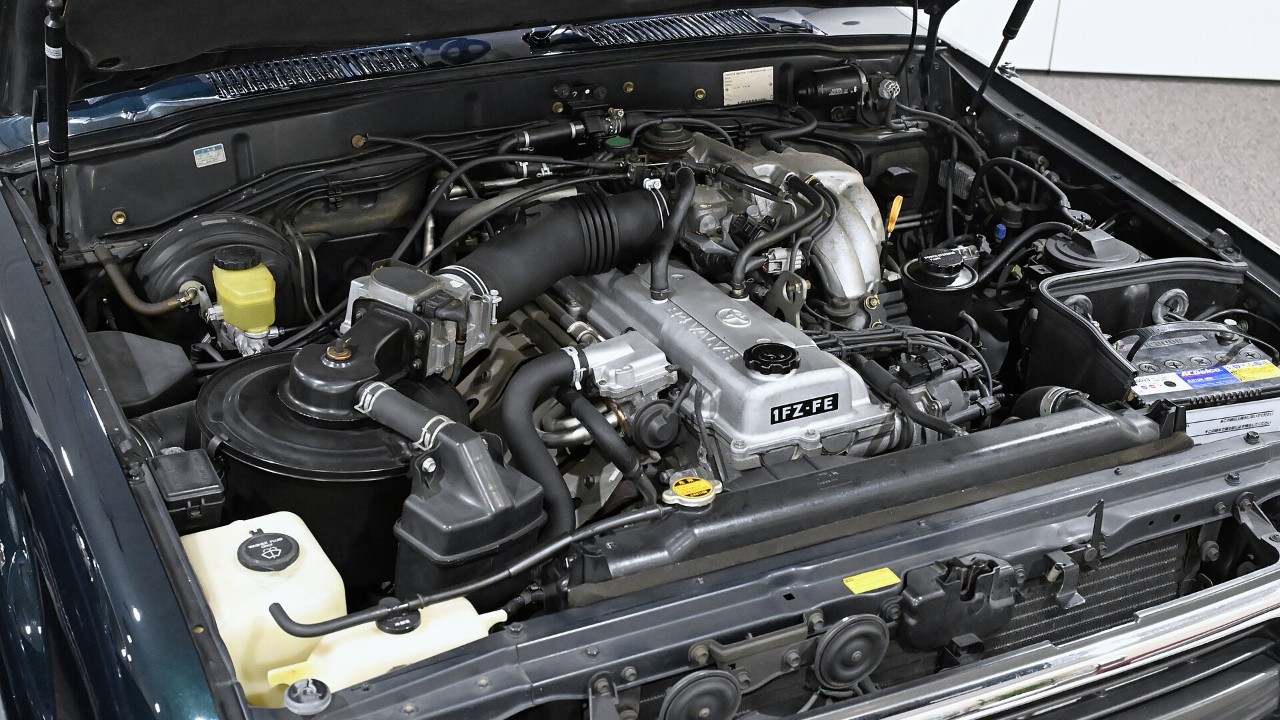
Toyota introduced the 1FZ-FE inline-six for the Land Cruiser in 1993, and its engineers explained the design in SAE technical paper 930876. The 4.5-liter six made 212 horsepower at 4,600 rpm and 275 lb-ft at 3,200 rpm. Toyota also gave it four valves per cylinder, twin cams with a scissors gear and knock control.
According to the paper, Toyota designed its parts to survive severe off-road use. The engine in our photo sits in a 1993 Land Cruiser VX Limited, an 80-series truck. Meanwhile, 8020 Automotive notes that the 1FZ-FE kept a cast-iron block in every version and also served in the 1995–1997 Lexus LX450.
Early engines could suffer head gasket failures, and cooling hoses wear out around 100,000 miles. Fix those, and we would happily point an 80-series toward the horizon without a second thought.
6. AMC 258 inline-six

American Motors created the 258 in 1971 by fitting a longer 3.895-inch-stroke crankshaft and a slightly taller block. The 3.75-inch bore stayed the same. That simple stretch gave AMC a 4.2-liter six it would keep building through 1990.
The 258 went almost everywhere AMC did. It appeared in the Hornet, Concord, Eagle, Pacer, Matador, Gremlin and Spirit, and it also found work in Jeep CJs, Cherokees, Wagoneers and the International Scout. Our photo shows one under the hood of a 1980 AMC AMX, proof that it served sporty models as well as wagons.
We would trust a 258 because it comes from the same AMC six family that later produced the Jeep 4.0. It is also a plain overhead-valve engine with nothing exotic inside. If you buy one, a careful tune-up and a clean fuel system go a long way.
7. Holden 149 red motor
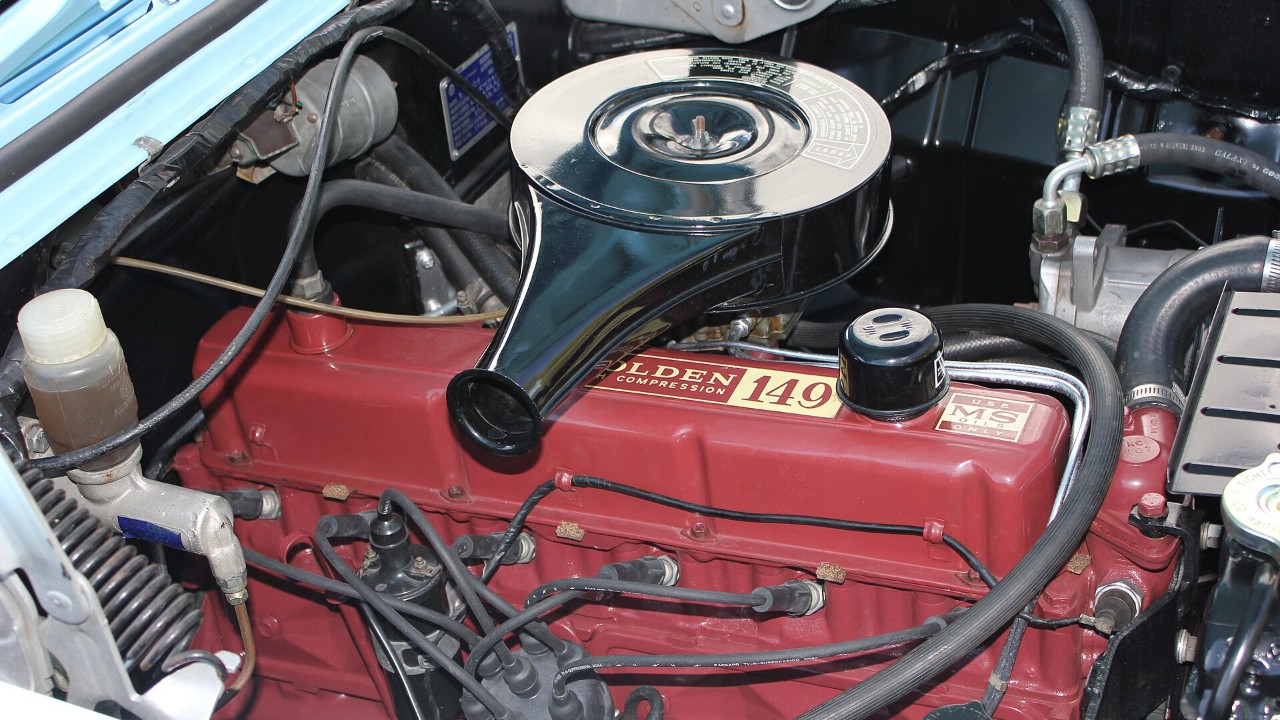
Holden launched its “red” six in 1963 in two sizes, 149 and 179 cubic inches. The smaller engine went into the EH, the first Holden to carry it. Unique Cars and Parts says the 149 developed 100 bhp, a jump of a third over the engine it replaced.
That extra power changed how the car drove. The same source says an EH could accelerate in top gear about as quickly as the earlier EJ did in second, and it could spin its rear wheels on a wet road in first. Australian owners came to regard the red motors as close to indestructible.
The family stayed in production long enough to make its last appearance in the 1980 VB Commodore. For an engine born in the early 1960s, that is a remarkable run. Our take: a 149 is a simple, rebuildable six that rewards basic care.
8. Toyota 2F inline-six
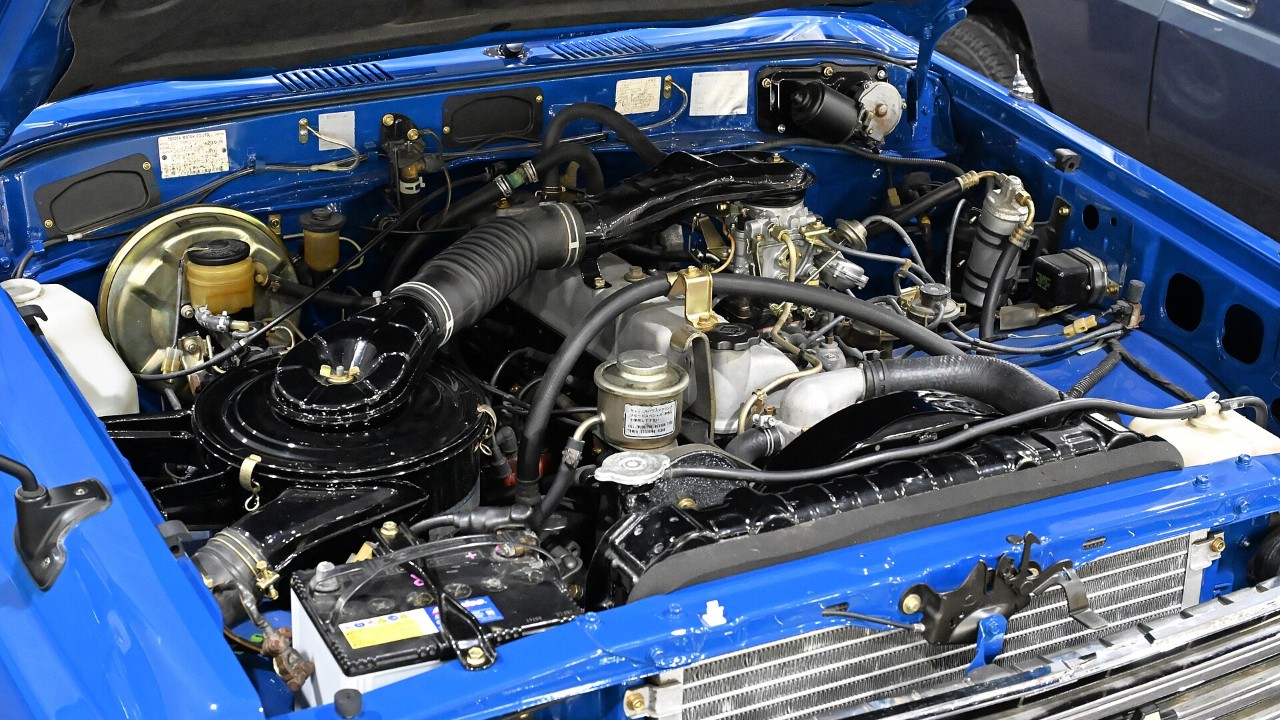
The 2F is the carbureted 4.2-liter six behind generations of Land Cruisers, including the FJ60 wagon in our photo. It displaces 4,230 cc, and Legacy Overland puts its output at roughly 135 to 155 horsepower, depending on year and setup. Torque comes in at about 210 lb-ft.
Those numbers sound modest today, but the 2F was never about speed. Instead, Toyota built it to lug a heavy wagon up a rocky trail at low rpm, all day. Legacy Overland notes that Land Cruisers with this engine commonly run up hundreds of thousands of miles.
Our take: the 2F is the kind of engine you can fix with hand tools far from town. It has no fuel injection computer to fail, and that simplicity is exactly why we would trust one on a long trip into the back country.
9. Ford Barra 190 inline-six
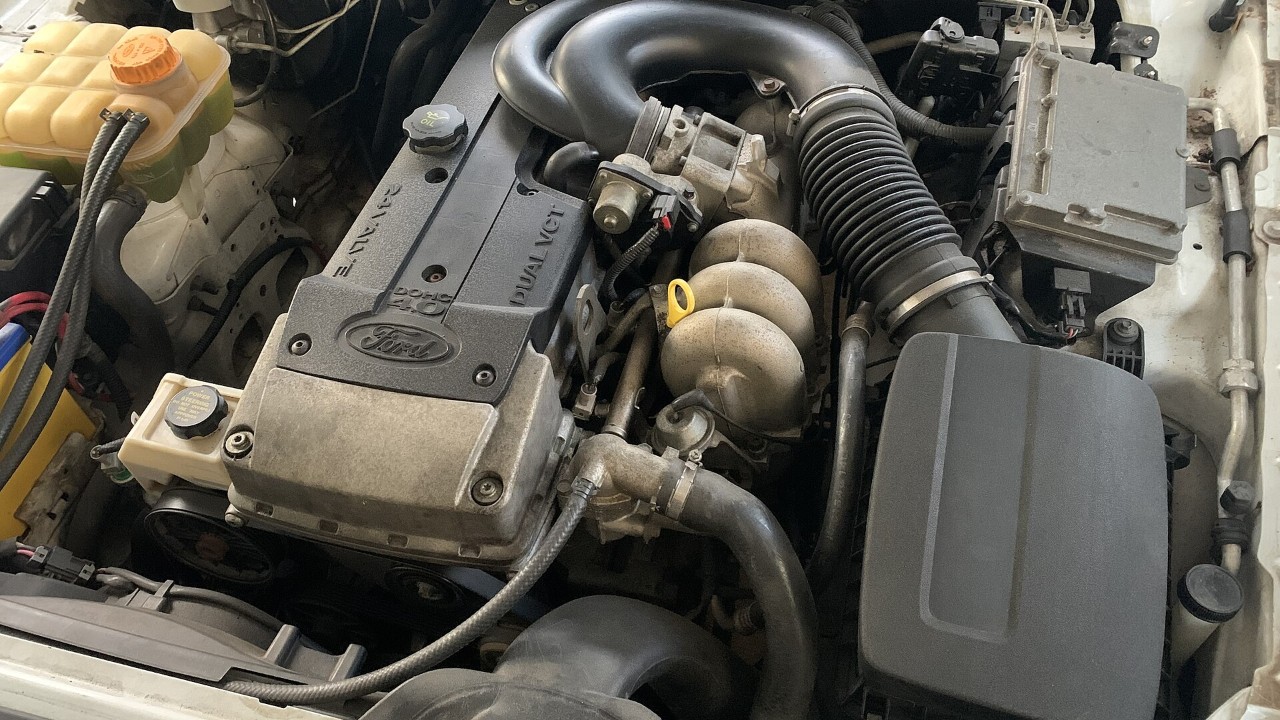
Ford Australia built the Barra six at its Geelong engine plant from 2002 until the last one rolled out on September 26, 2016. Every version displaced 3,984 cc and used a cast-iron block with an aluminum head. The Barra 190 arrived in 2005 as standard equipment in the BF Falcon and SY Territory.
The naturally aspirated 190 made 190 kW, or 255 horsepower, at 5,250 rpm and 282 lb-ft at 2,500 rpm. Its turbocharged siblings reached far higher outputs, which shows how much strength Ford built into the basic engine. SlashGear’s reliability ranking says most owners report few problems beyond the odd oil leak.
In our view, the non-turbo 190 is the one to trust most. It carries the same tough block without the extra heat and boost. For a deeper look at sixes that never needed eight cylinders, see our piece on inline-sixes that didn’t need a V8.
10. BMW M30 inline-six
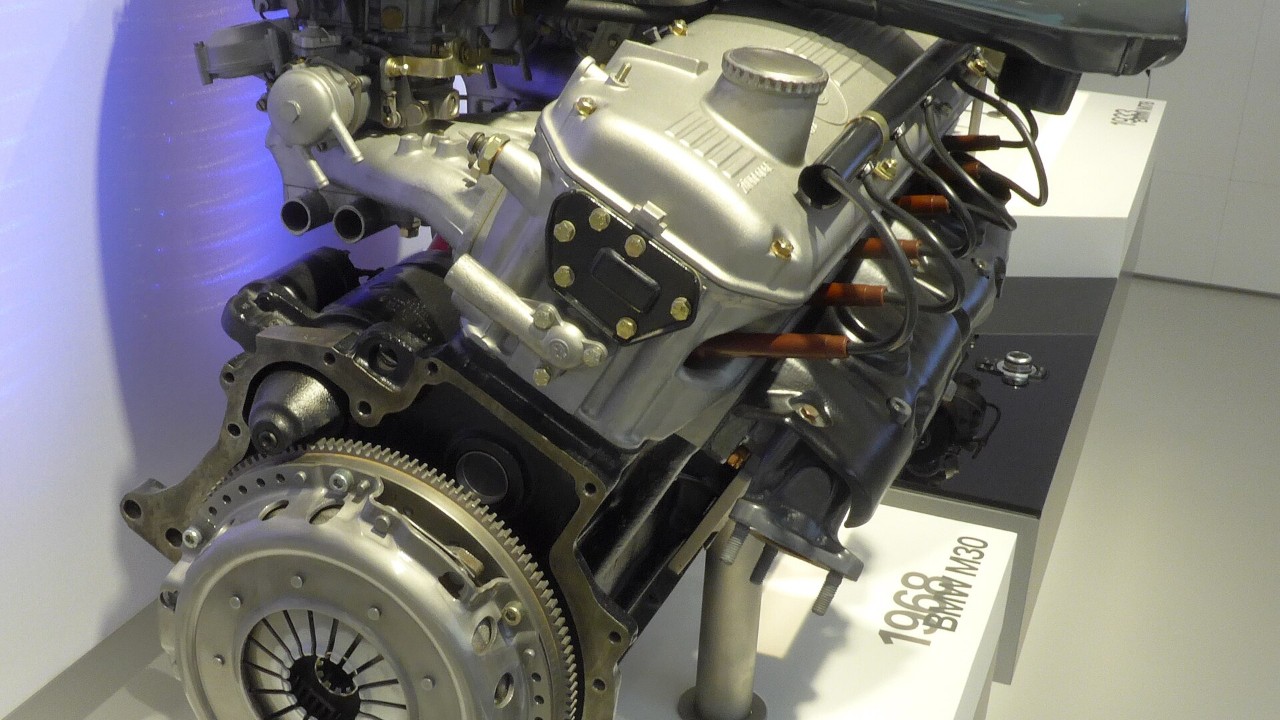
BMW’s M30 started out in 1968 as a 2.5-liter overhead-cam six with twin Solex carburetors and 148 horsepower. Later it gained Bosch fuel injection and grew to 3.5 liters. The engine stayed in production for 27 years before BMW retired it in 1995.
It earned the nickname “Big Six” after BMW introduced the smaller M20. It uses a cast-iron block, an aluminum head and a chain-driven camshaft, so there is no timing belt to replace on schedule. In 1989, the Alpina B10 Bi-Turbo coaxed 360 horsepower out of it, according to SlashGear.
Our take: an M30 asks for occasional valve adjustments and little else. That is a small price for an engine that powered BMW sedans and coupes for nearly three decades.
11. GM Vortec 4200 LL8 inline-six
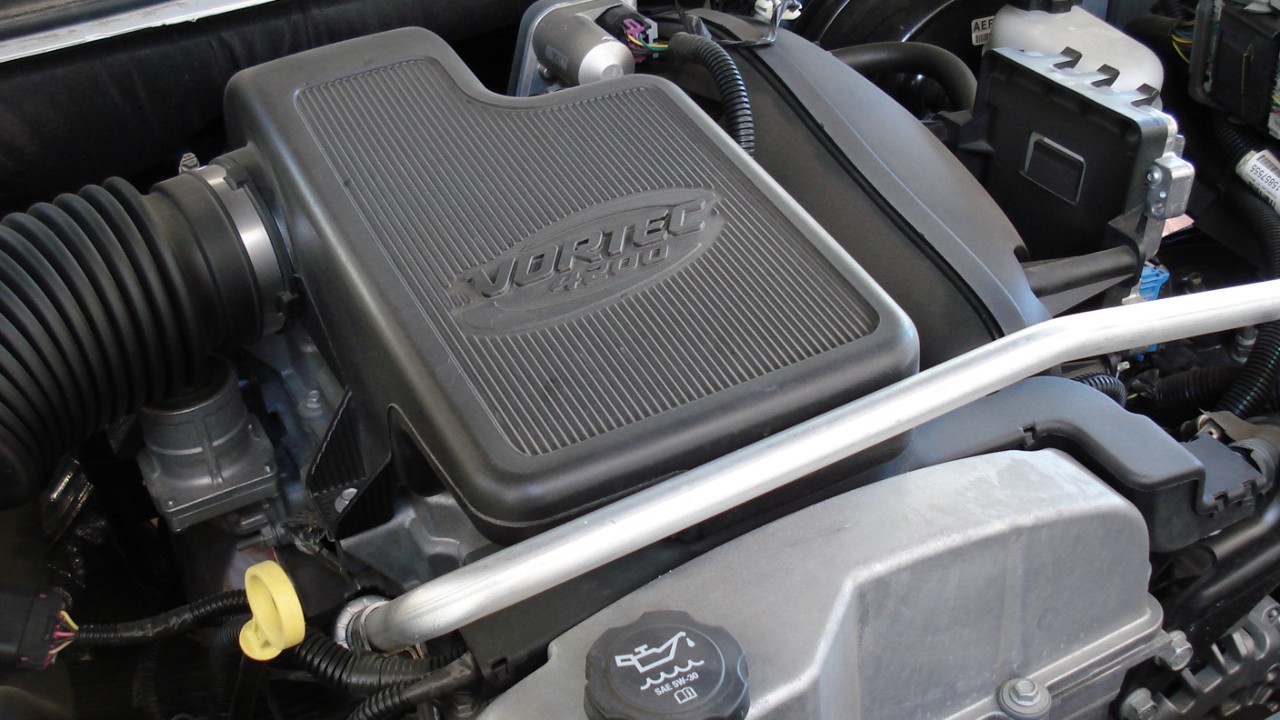
GM built the Vortec 4200 from 2002 to 2009 for its midsize SUVs, including the 2006 Chevrolet TrailBlazer in our photo. The 4.2-liter six uses an aluminum block and head, dual overhead cams and four valves per cylinder. It launched at 270 horsepower, rose to 275 for 2003 and reached 291 horsepower for 2006.
The LL8 also turned up in the GMC Envoy, Oldsmobile Bravada, Buick Rainier, Saab 9-7X and Isuzu Ascender. It made Ward’s 10 Best Engines list for 2002 through 2005, a strong showing for a truck engine.
We trust it because GM gave a family SUV a smooth, modern six instead of a V6. Its run ended only when the Moraine, Ohio, plant closed and GM dropped the SUVs built there.
More from Fast Lane Only


