The idea of a plain family car hiding serious racing firepower sounds like folklore from the drag strip, yet it has very real roots in Detroit engineering. In the 1960s, one seemingly ordinary V8 package quietly rewrote expectations for what a mid-size American sedan could do when the light turned green. That unlikely combination of subtle styling and brutal performance still shapes how enthusiasts build and race sleeper cars today.
This story centers on Chrysler’s 426 cubic inch Hemi, an engine born for competition but often wrapped in unassuming sheet metal. When that racing heart found its way into cars like the Plymouth Belvedere, the result was a machine that looked like a commuter and accelerated like a purpose-built dragster.
How a race-bred V8 ended up in a mild-mannered Plymouth
The 426 Hemi started life as a racing project, designed so Chrysler could dominate NASCAR and sanctioned drag racing. Engineers focused on hemispherical combustion chambers, oversized valves, and a bottom end strong enough to live at high rpm. The engine was expensive, heavy, and clearly aimed at competition, not grocery runs.
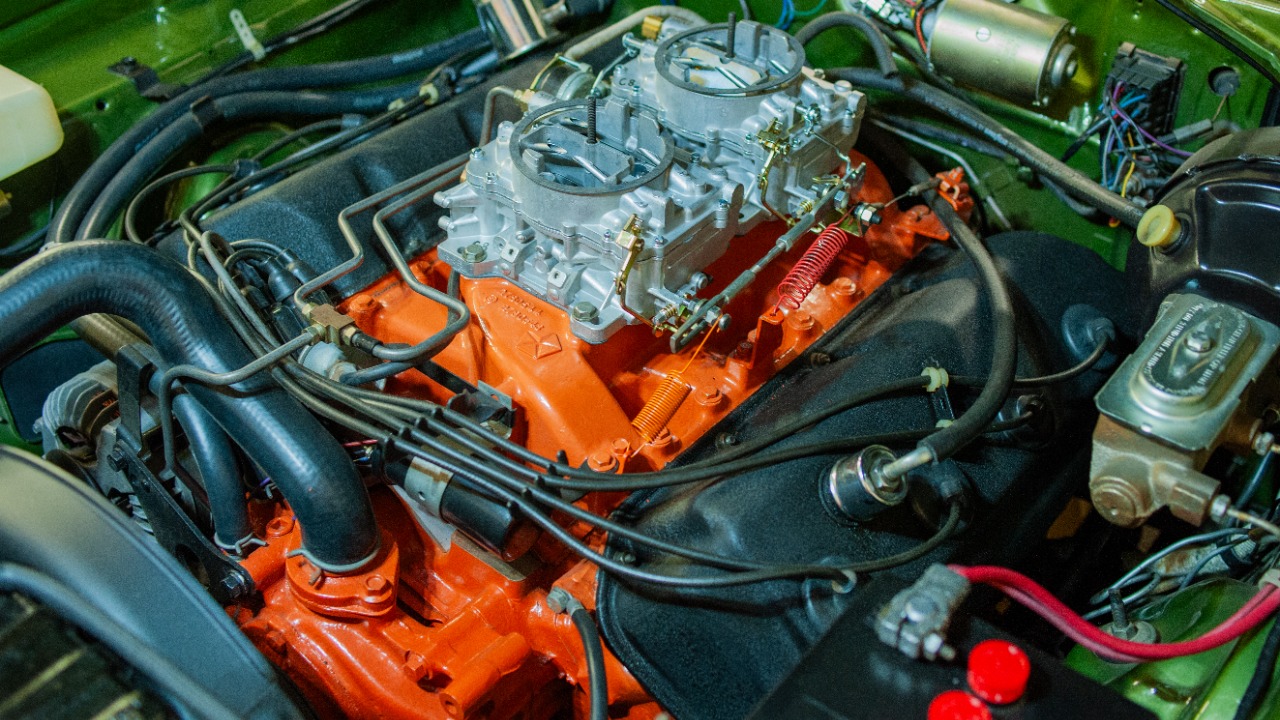
By the mid 1960s, however, Chrysler began offering a street version of the 426 Hemi in mid-size models such as the Plymouth Belvedere and Satellite. On paper, it produced 425 horsepower, a figure that immediately put it at the sharp end of the American horsepower race. In reality, racers knew the rating was conservative, especially once the engine was uncorked with better exhaust and tuning.
One surviving example, a seemingly stock 1966 Plymouth Belvedere II, captures this transformation perfectly. The car wears simple hubcaps, a straight body, and modest trim, but under the hood sits a 426 cubic inch Hemi V8 that turns the sedan into a serious performance threat. That particular Belvedere, documented as a sleeper build, uses the big-block Hemi as its centerpiece and keeps the exterior intentionally understated, which makes its performance surprise even more dramatic once the throttle is opened. The project illustrates how a car that looks like a quiet daily driver can hide a full-strength 426 Hemi under the hood.
Chrysler’s choice to install this engine in a mid-size platform changed the character of cars like the Belvedere. Instead of being remembered only as sensible transport, they became the bones for quarter-mile weapons. Buyers could order a car that blended into traffic yet carried hardware straight from the race track.
Engineering tweaks that turned brute force into usable speed
The Hemi’s basic architecture was only part of the story. To make the engine work in a street chassis, Chrysler and later builders had to solve problems of traction, drivability, and durability. The 426 Hemi’s tall deck and large ports favored high rpm power, so gearing became critical. Many Belvedere Hemi cars used short rear axle ratios and heavy-duty manual transmissions to keep the engine in its sweet spot.
Suspension tuning also changed. The Belvedere’s simple leaf-spring rear setup could struggle to put power down on marginal surfaces, so racers experimented with traction bars, stiffer springs, and different shock valving to keep the tires planted. On the front end, modest changes in ride height and alignment helped weight transfer without advertising that anything unusual was going on beneath the car’s conservative body.
Cooling and fuel delivery needed upgrades too. The big Hemi generated substantial heat, so larger radiators and better fan setups were common. Carburetion moved from tame street calibrations to more aggressive jetting and timing curves once owners realized how much power was left on the table. Each incremental adjustment made the engine more responsive, yet the outward appearance of the car often stayed nearly stock.
These refinements did not turn the Belvedere into a polished luxury grand tourer. They created a focused tool that could survive repeated hard launches, long highway drives to the track, and the occasional commute. That balance between race engineering and everyday usability is a key reason this particular V8 configuration became a template for sleeper builds.
Why this quiet-looking Hemi matters in the current car culture
Today’s performance scene is crowded with turbocharged imports, modern muscle, and electric cars that can run astonishing quarter-mile times. Yet the sleeper Hemi Belvedere still resonates, partly because it represents a different philosophy. Rather than advertising speed with wings, stripes, and massive wheels, it hides capability in a body that could pass for a retiree’s Sunday driver.
That approach aligns with a broader trend among enthusiasts who value understatement. Builders increasingly choose stock-style wheels, original paint colors, and minimal badging while investing heavily in engines, brakes, and suspension. The 426 Hemi Belvedere shows that this formula is not new. It is a direct descendant of factory efforts to homologate race engines in street cars, then cloak them in everyday sheet metal.
The car also highlights how performance heritage shapes brand identity. For Chrysler, the Hemi name still carries weight, long after the original 426 left production. Modern Hemi engines in cars like the Dodge Charger and Challenger trade on that history, even though their designs differ from the 1960s architecture. The legend of a mild-looking sedan with a racing V8 inside helps explain why the badge still commands attention among buyers and collectors.
There is a preservation angle as well. Surviving Hemi Belvederes, especially those that retain their sleeper character, have become reference points for restorers and historians. They show how factory options were configured, how owners modified cars for drag racing, and how a supposedly ordinary family car could become a serious piece of performance hardware with the right option box ticked.
In an era when many performance cars arrive from the factory with aggressive styling and configurable driving modes, the quiet menace of a stock-looking Belvedere feels refreshingly direct. It reflects a time when the biggest engineering change was hidden under the hood, not in software menus.
From drag strips to digital builds, the sleeper formula evolves
The legacy of that unassuming Hemi V8 now stretches far beyond mid-1960s Plymouths. Builders adapt the same concept across a wide range of platforms, from late-model pickup trucks with turbocharged V8 swaps to older European sedans that hide modern American powertrains. The goal remains the same: combine an ordinary exterior with extraordinary acceleration.
Modern technology has expanded what is possible within that template. Where the original Hemi Belvedere relied on carburetors and mechanical ignition, today’s sleepers often use electronic fuel injection, programmable engine management, and data logging. These tools allow precise tuning while keeping the engine bay relatively clean and unflashy. Yet the conceptual link to the 426 Hemi remains clear, especially when builders choose large displacement V8s that echo the original’s torque-rich character.
Digital culture has amplified the appeal. Video platforms are full of clips where quiet-looking sedans humiliate obvious sports cars at the drag strip or on roll races. Many of those builds follow the visual cues pioneered by cars like the Belvedere: stock hubcaps, factory colors, and interiors that could pass for original, paired with engines that produce several times the factory output.
Looking ahead, the sleeper idea is likely to adapt again as electrification spreads. Electric powertrains, with their instant torque and compact packaging, are almost tailor-made for stealth performance. An otherwise anonymous crossover could conceal a battery and motor setup capable of supercar-level acceleration. In that sense, the Hemi-powered Belvedere may prove to be an early chapter in a longer story about hiding serious performance inside unremarkable shapes.
For many enthusiasts, though, the appeal of the original formula will endure. The sound, vibration, and mechanical presence of a big V8 like the 426 Hemi create an experience that modern drivetrains cannot quite replicate. As long as there are drag strips, back roads, and car meets, the image of a quiet Plymouth rolling up to the line, only to launch with unexpected violence, will continue to inspire new generations of sleepers.
The surprise is no longer that a modest-looking sedan can be fast. It is how a single race-bred V8, tucked into an otherwise ordinary car, managed to shape an entire subculture of performance that still thrives decades later.
More from Fast Lane Only
- Unboxing the WWII Jeep in a Crate
- 15 rare Chevys collectors are quietly buying
- 10 underrated V8s still worth hunting down
- Police notice this before you even roll window down
*Research for this article included AI assistance, with all final content reviewed by human editors