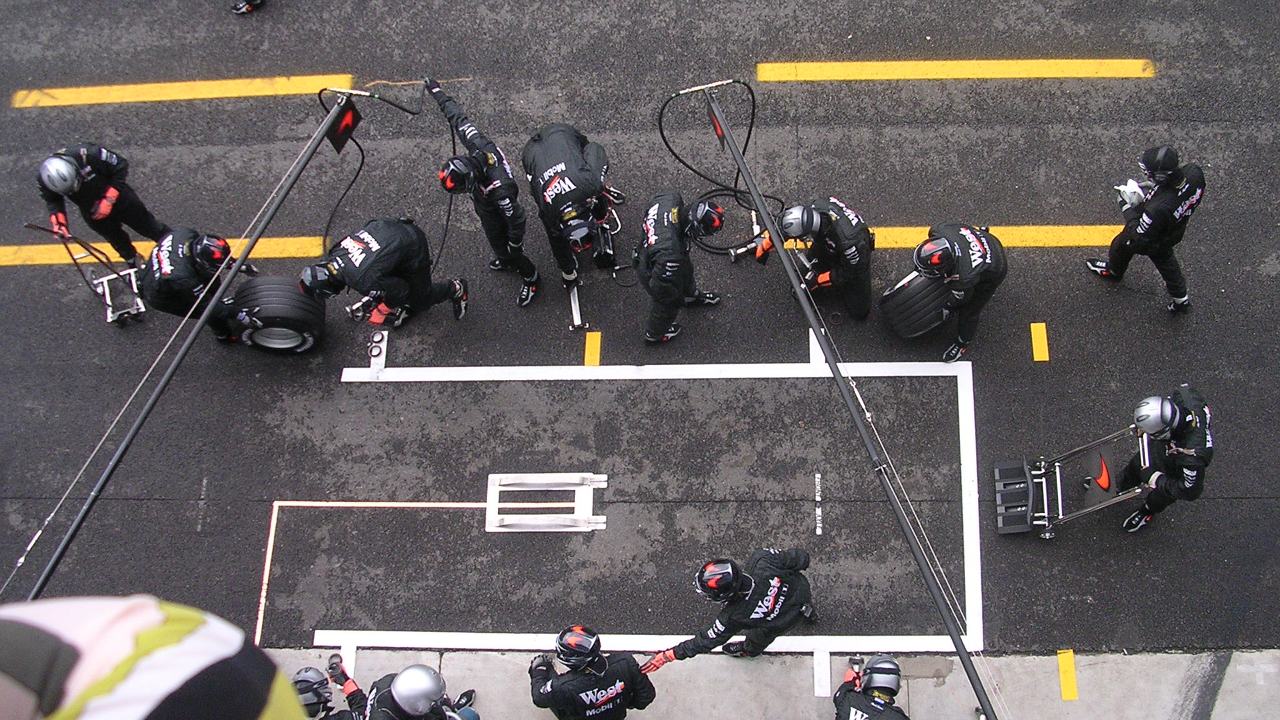
Formula 1 pit stops used to look like a coffee break, now they are closer to a flash of strobe lighting. What once took close to a full minute has been compressed into a blur of bodies and tools that can be over in less than the time it takes you to blink. That transformation, from slow service bay to high speed choreography, is one of the sharpest examples of how engineering, data and human training can completely rewrite what is possible in sport.
From 67 seconds to “where did the car go?”
To really feel how radical modern pit stops are, I like to start at the beginning, when a stop was almost a mini rebuild. In the 1950s, a routine visit to the pits took an average of 67 seconds, a lifetime in racing terms, with mechanics refuelling, checking bodywork and swapping tyres at a measured pace. Fifteen years later, a slick operation was still around half a minute, and strategy was built around the assumption that a stop was a major interruption rather than a quick reset.
Compare that to the early 1990s, when a typical pit stop still sat in the 7–10 second range, and you can see how much ground has been covered in a single generation. Today, a well drilled crew can service a car in roughly 2–2.5 seconds as a matter of routine, with the very best stops dipping under two seconds and turning the whole sequence into what one recent breakdown described as a tightly choreographed maneuver in all of sports. That shift is not just about bragging rights, it has changed how teams think about race strategy, tyre choice and even how aggressively drivers can push between stops.
Why F1 pit stops outpace every other series
When people compare motorsport pit lanes, Formula 1 usually comes out looking like it is running in fast forward. There are structural reasons for that. F1 allows a large crew to swarm the car, with around twenty mechanics assigned to a stop and, as one comparison put it, three mechanics per tyre handling the wheel gun, the old wheel and the new one. In other series such as IndyCar or NASCAR, rules limit the number of people over the wall, which naturally stretches the time needed to complete the same tasks.
On top of that headcount advantage, F1 teams have spent decades refining the tools and processes that sit behind those two seconds of chaos. Modern wheel guns, wheel retention systems and hydraulic jacks are all designed around the same goal: remove every unnecessary movement and every fraction of a second of delay. Recent technical breakdowns of pit equipment describe how wheel guns are tuned for instant engagement and release, how jacks snap the car up and down in a single clean motion, and how the choreography of the crew is rehearsed until it looks almost pre programmed.
The choreography starts before the car stops
The part of a pit stop that makes the highlight reels is the moment the car is stationary, but the real choreography starts several seconds earlier. Drivers are trained to hit their marks with almost absurd precision, because if the car is even a few centimetres off the ideal position, the crew has to adjust and the whole sequence slows down. One detailed breakdown of the process describes this as Approach and Precision Entry, with the driver already aligning the car, managing speed and even adjusting steering inputs before they cross the pit lane line.
Once the car hits the box, every mechanic has a single, tightly defined role. One person operates the front jack, another the rear, three mechanics per wheel handle removal and refit, and others stand ready to tweak the front wing or clear debris if needed. The key is that nothing is improvised. As one engineer put it in a separate analysis, the pit stop begins before the car stops, and that mindset has pushed teams to script every movement, from when a mechanic steps off the pit wall to how they rotate their wrists on the wheel gun.
Training crews like elite sprinters
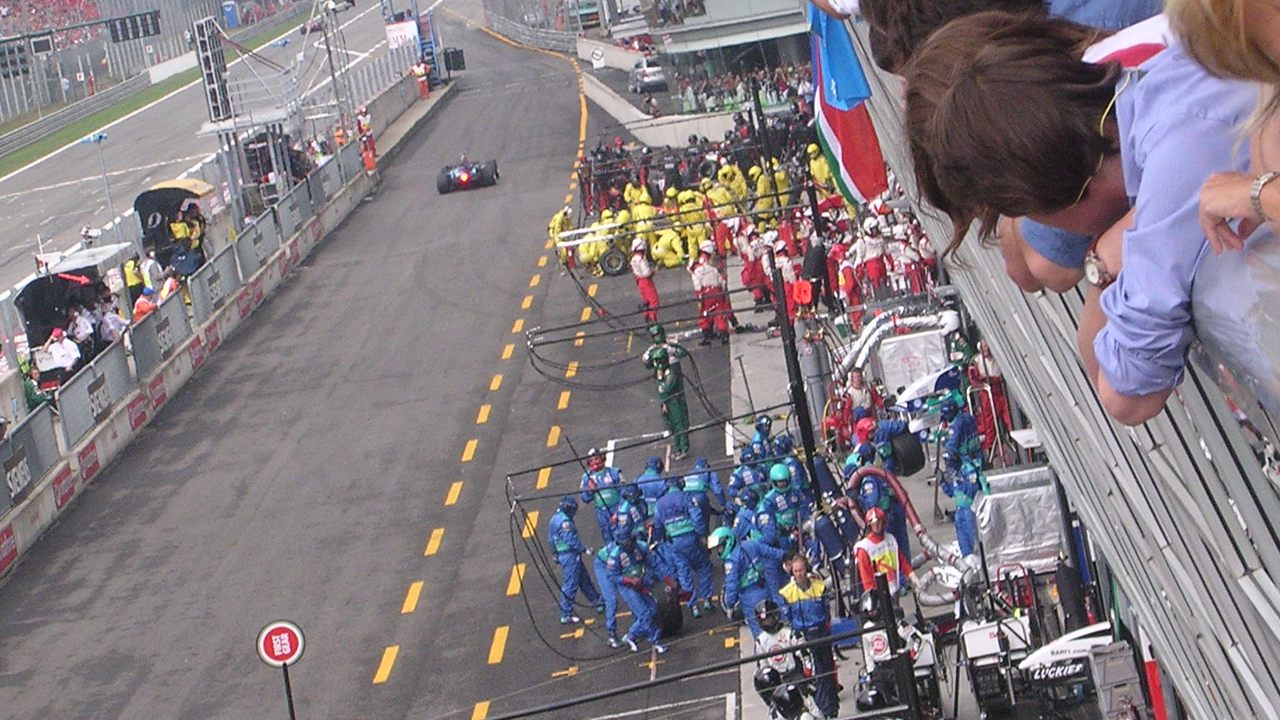
What looks like instinct in the pit lane is really the product of training that would not look out of place in an Olympic program. Teams drill their crews relentlessly, not just on the sequence of actions but on the physical conditioning needed to repeat those actions under pressure. Recent technical deep dives into pit stop preparation describe how crews work on explosive strength, reaction time and flexibility, with specific exercises designed to help mechanics maintain explosive strength through a long season.
This is not a new obsession, it is the logical endpoint of a trend that started decades ago. By the 1980s, pit stops had already become more organized and strategic, with Teams practicing relentlessly to shave off precious seconds. Today, that same mindset is backed by sports science, video analysis and data from every stop. If a mechanic is a fraction late on a trigger pull or a jack operator hesitates, the team can see it in the data and build the next week’s training around fixing it.
Engineering the perfect two second ballet
Even the best trained crew cannot hit sub two second times without hardware that is just as refined. Modern pit equipment is a quiet star of the show. Detailed technical breakdowns highlight how front and rear jacks are now lightweight, high strength devices that lift the car in a single smooth motion and drop it the instant the last wheel is secure. Wheel nuts and hubs are engineered so that the wheel gun can remove and refit them in a single, continuous action, with built in retention systems that prevent the kind of loose wheel incidents that used to be a regular hazard. One recent analysis of pit stop technology breaks this down into a table of innovations in jacks, wheels and crew choreography, showing how each Technical component has been tuned for speed.
The flip side of that precision is that the margin for error is tiny. As one performance coach pointed out in a separate look at pit stop evolution, Any tiny crack or deformation in a wheel or nut risks a disastrous pit stop or even a wheel failure on track. That is why inspection routines are so meticulous and why teams invest so heavily in materials and quality control. The same engineering that makes a two second stop possible also demands a level of attention to detail that borders on obsessive.
Strategy, risk and the future of pit lane choreography
All of this speed has reshaped how races unfold. When a stop costs roughly 2–2.5 seconds in stationary time, plus the time lost entering and exiting the pit lane, strategists can be far more aggressive with tyre choices and stint lengths. Historical analysis of pit strategy shows how teams moved from treating stops as rare, expensive events to using them as flexible tools, with multiple planned visits and the option to react to safety cars or changing conditions on the fly. As The Evolution of Pit Stops in modern Formula 1 has made clear, a single slow or fumbled stop can still determine victory or defeat, which is why teams pour so much effort into keeping their choreography sharp.
There is also a human side to this arms race. The same social clips that celebrate a 20 mechanic subtwo second ballet also underline how much pressure sits on each person in that circle. One mistimed movement can injure a colleague or send a car back out with a problem. That is why teams are constantly reviewing procedures, not just to go faster but to cut waste and reduce risk. Looking ahead, the next gains may not come from shaving another tenth off the stopwatch, but from making that two second dance more robust, safer and more adaptable to whatever new regulations or technologies arrive in the pit lane.
More from Fast Lane Only: