Among Chevrolet loyalists, a handful of engines have always hogged the spotlight: big-blocks in Chevelles, small-blocks in early Camaros, the halo Corvette mills. Yet one particular V8, tucked into a short run of unassuming Novas, quietly built a reputation that still shapes how builders think about power, packaging, and authenticity. Its influence is less about catalog numbers and more about how a clever combination of parts turned a compact Chevy into a feared street machine.
That sleeper spirit, born in an era of factory-backed performance and dealer tricks, now guides a new wave of projects that chase usable power, stealthy looks, and period-correct character as much as raw output. Builders who care about that mix keep circling back to the same formula.
How a modest Nova became a template for serious power
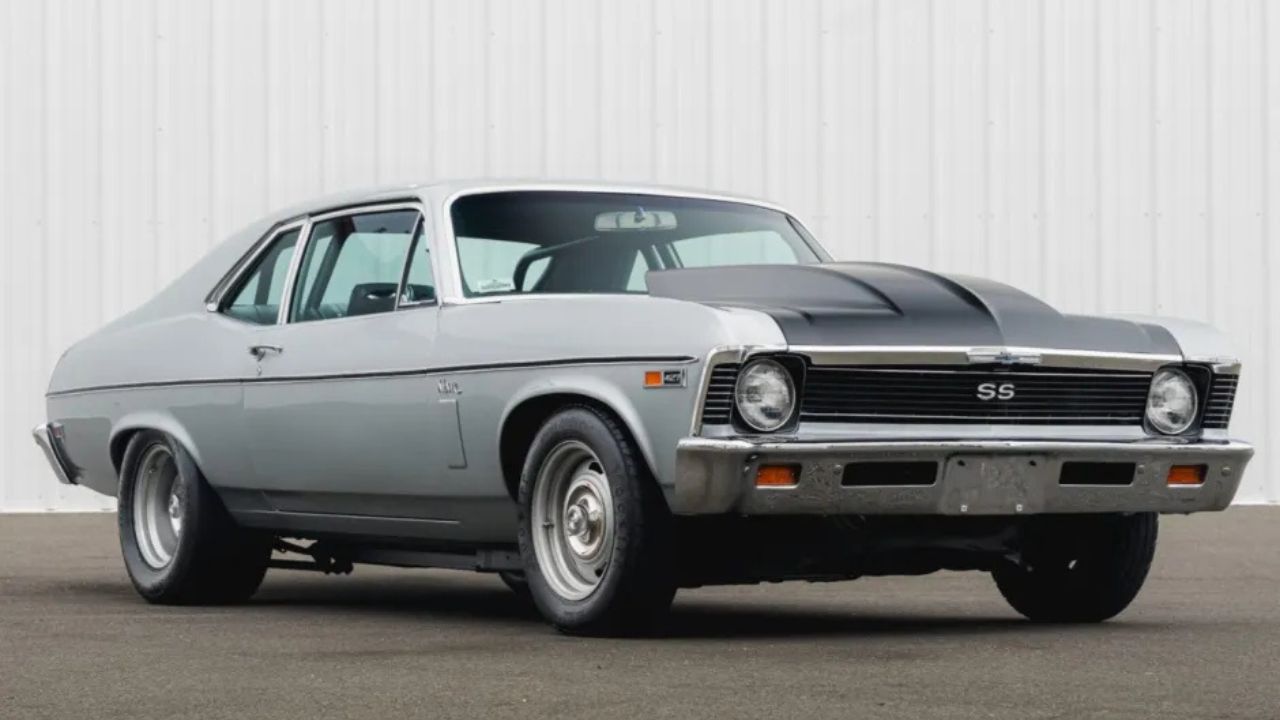
The Chevrolet Nova never set out to be a halo car. It started life as a practical compact, with economy engines and basic trim. The transformation came when performance dealers realized that the Nova’s short wheelbase, light weight, and straightforward engine bay made it a perfect host for the same big powerplants that lived in heavier Chevelles and Camaros. Among those dealers, Don Yenko and his team in Pennsylvania became the most famous for turning the car into a weapon.
Yenko’s approach was simple and ruthless: take a small, relatively anonymous Nova body, drop in a serious big-block, and reinforce the driveline just enough to survive. The result was a car that could blend into traffic, then erase almost anything at a stoplight. One rare Yenko Nova illustrates how that formula turned into a street racing legend, with a Chevrolet big-block that delivered race-car performance in a car that still wore basic Nova sheetmetal.
For builders, what mattered most was not just the horsepower rating, but the way the engine fit the chassis. The big-block’s torque curve suited short, brutal sprints, and the Nova’s compact footprint made the car feel more agile than full-size muscle. The combination showed that a carefully chosen engine, in the right body, could outperform heavier cars that looked more aggressive on paper.
The lesson spread quickly. Independent shops and home builders began to see the Nova as a blank canvas. Chevrolet’s own parts bin helped, since the same engine mounts, transmissions, and rear axles used in higher-profile models could be adapted to the compact platform. The engine at the center of the Yenko builds, once just another option in Chevrolet’s lineup, started to gain a second life as the go-to choice for anyone trying to recreate that balance of stealth and violence.
From street racing myth to builder playbook
As the original Yenko cars aged into collectibles, their core mechanical recipe filtered into the broader hobby. Builders paid attention to how the big-block Nova cars were geared, how they managed traction, and how the engines were tuned to survive repeated hard launches on marginal fuel. The engine’s reputation grew not only because it was fast, but because it proved durable when abused in exactly the way street racers tend to abuse hardware.
That durability is a key part of why this Chevrolet engine became a favorite in modern builds. A strong bottom end, generous bearing surfaces, and thick cylinder walls gave tuners room to add compression, camshaft, and better induction without turning the block into a hand grenade. Parts availability, helped by Chevrolet’s long production runs and the aftermarket’s enthusiasm, made it possible to repair or upgrade without hunting for rare components.
Over time, the engine’s street credibility started to matter as much as its dyno numbers. Builders who were too young to see the original Yenko Novas run still heard stories about compact Chevrolets that could embarrass big-block Mopars and Fords. When those builders went looking for a powerplant for their own projects, the engine that had powered those tales carried an intangible weight. It felt authentic, tested, and connected to a specific moment in American car culture.
That cultural cachet influenced how restomods and pro-touring projects were specified. Instead of defaulting to generic crate engines, many shops chose period-correct Chevrolet big-blocks or their modern descendants, then dressed them to evoke the original Yenko combinations. The goal was not just speed, but a kind of mechanical storytelling, where the engine bay reflected a lineage that traced back to those quiet terrors of the local boulevard.
Why the Yenko-style formula resonates with builders now
Modern builders work in a different environment than the one that produced the original Nova conversions. Emissions rules are stricter, fuel quality varies, and buyers expect a level of reliability and comfort that early muscle cars never offered. Even so, the underlying appeal of a compact body with a serious Chevrolet engine has only grown stronger.
Packaging is a big part of the reason. The Nova’s engine bay dimensions are similar to many later GM compacts and midsize cars, which means the same family of engines can be adapted to a surprising range of platforms. Builders who understand how the big-block fit in a Yenko Nova can translate that knowledge to early Camaros, later X-body cars, and even some pickup projects. The engine becomes a modular solution, familiar to work with and proven under stress.
There is also a shift in what enthusiasts value. Instead of chasing the highest possible dyno sheet, many now want a car that feels fast at legal speeds, sounds right, and carries a story. A torquey Chevrolet V8 in a small car delivers that experience. It pulls hard from low rpm, rewards short gearing, and makes every on-ramp feel dramatic without requiring track-only behavior.
On the business side, shops have learned that builds anchored around a historically significant engine are easier to sell. A Nova or similar project that uses the same family of engine that powered a known street legend can be marketed with a clear narrative. Buyers understand what they are getting, both in terms of performance and heritage, and they are often willing to pay a premium for that connection.
At the same time, the aftermarket has stepped in with components that keep the old formula viable. Modern aluminum heads, hydraulic roller cams, and better ignition systems let builders retain the core architecture of the classic Chevrolet engine while improving drivability, emissions, and fuel efficiency. The result is a powerplant that looks and feels period-correct, yet starts easily, idles cleanly, and tolerates long highway trips.
How builders are evolving the quiet favorite
The next chapter for this quietly revered Chevrolet engine is less about pure nostalgia and more about adaptation. Builders are increasingly blending old-school hardware with contemporary technology, and the big-block that once hid under a plain Nova hood is at the center of that shift.
Fuel injection is the most visible change. Many modern projects use throttle-body or multi-port systems that sit under air cleaners styled to resemble original carburetors. Underneath, the engine benefits from precise fueling, self-learning ECU strategies, and compatibility with modern fuels. The character of the power delivery remains familiar, but cold starts, altitude changes, and long-term reliability improve dramatically.
Another evolution is the way these engines are integrated into the chassis. Where early conversions often relied on stiff springs and crude traction aids, current builds use coilovers, four-link rear suspensions, and modern tires to put power down. The same torque that once overwhelmed bias-ply rubber now works with advanced suspension geometry to make the car faster and more predictable on both street and track.
There is also a growing interest in preserving original Yenko and big-block Nova cars while building faithful tributes. Original examples, including the rare street racing survivors, are increasingly treated as historical artifacts. Builders who want the experience without risking a valuable original are creating clones that replicate the look and mechanical feel, often with subtle upgrades hidden beneath stock-appearing finishes.
Fast Lane Only
- Unboxing the WWII Jeep in a Crate
- 15 rare Chevys collectors are quietly buying
- 10 underrated V8s still worth hunting down
- Police notice this before you even roll window down
*Research for this article included AI assistance, with all final content reviewed by human editors