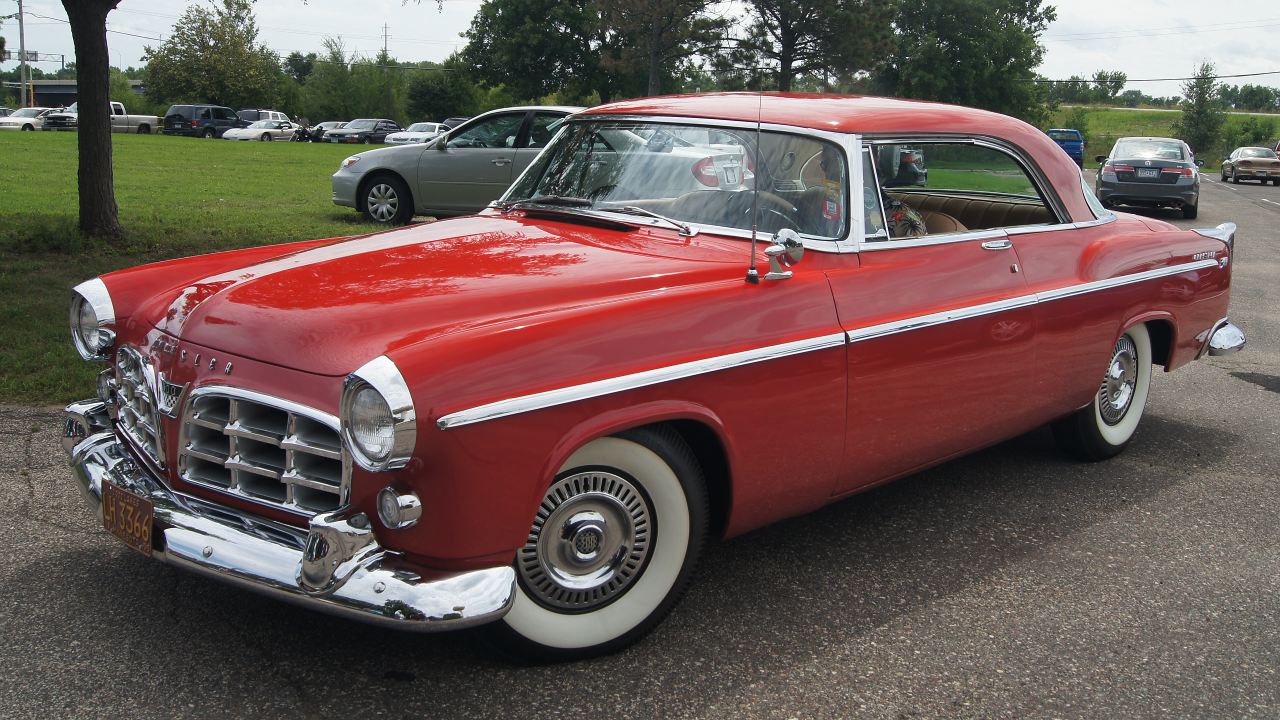
In the middle of America’s pastel boom of the mid‑1950s, the 1955 Chrysler C-300 arrived looking almost conservative, yet it quietly rewrote the rules for how much power a full‑size car could carry. Instead of chrome excess or tailfin drama, it paired a sober body with race‑bred hardware and became a template for the big‑engine, straight‑line stormers that would later be called muscle cars. I see its impact less in the noise it made at the time and more in the way its basic formula echoed through Detroit for the next decade.
Calling any single machine the “first” muscle car is always contentious, but the C-300 makes a strong, evidence‑backed claim. It delivered a factory‑rated 300 horsepower in an era when family sedans were still struggling to break into the 200s, and it did so in a car that buyers could drive off a showroom floor and straight to a racetrack. That quiet dual identity, part luxury coupe and part competition weapon, is what allowed it to light the fuse on the muscle era without ever needing to shout about it.
The case for the C-300 as the first muscle car
Debates over the “first muscle car” usually circle around later icons, but several historians and enthusiasts now point back to Chrysler’s 1955 hardtop as the starting gun. The C-300 combined a big‑block V‑8 with a relatively ordinary two‑door body, a configuration that would become the muscle car blueprint in the 1960s. One detailed valuation of the model flatly describes the 1955 Chrysler C-300 hardtop as “the first real muscle car,” noting that it produced 300 horsepower from its 331-c Hemi V‑8 and could sprint from 0 to 90 m in 16.9 seconds, performance that put it in a different league from typical mid‑fifties cruisers.
Video retrospectives on the car’s legacy echo that framing, arguing that while opinions differ on which American car deserves the crown, the majority view has shifted toward the C-300 as a legitimate origin point. One analysis of early performance models stresses that in 1955, while America was obsessed with pastel colored coupes, glistening hardtops, and flashy tail fins, a more serious machine slipped into showrooms with a focus on speed rather than decoration. Another commentator, Jan, walks through the competing claims and still comes back to the Chrysler as a credible “first” because it was a regular production car, not a limited racing special, yet it delivered race‑ready power straight from the factory.
Engineering a 300-horsepower shock to the system
The C-300’s technical package is what turned a handsome but restrained coupe into a quiet revolution. Under its hood sat a 331-c Hemi V‑8 tuned to an even 300 horsepower, a figure that was astonishing for a showroom car at the time and is still cited verbatim in modern test drives and historical write‑ups. Contemporary driving impressions emphasize how that engine pulls the big Chrysler with an ease that feels more like a later muscle car than a mid‑fifties boulevardier, and they underline that the “300” badge was not marketing fluff but a literal reference to its output.
Chrysler’s engineers built the car around that engine, not the other way around. Period histories note that the C-300 borrowed heavily from the company’s competition program, with the Hemi derived from racing experience and the chassis tuned for high‑speed stability rather than soft isolation. A detailed classic‑car profile points out that After all, a 300 buyer wasn’t expected to be bothered with shifting gears, so the car came with a robust automatic that could handle the torque while still appealing to affluent customers. Only red, white and black paint was available, a limited palette that underscored the car’s serious intent and made its performance focus feel deliberate rather than accidental.
Luxury looks, muscle intentions
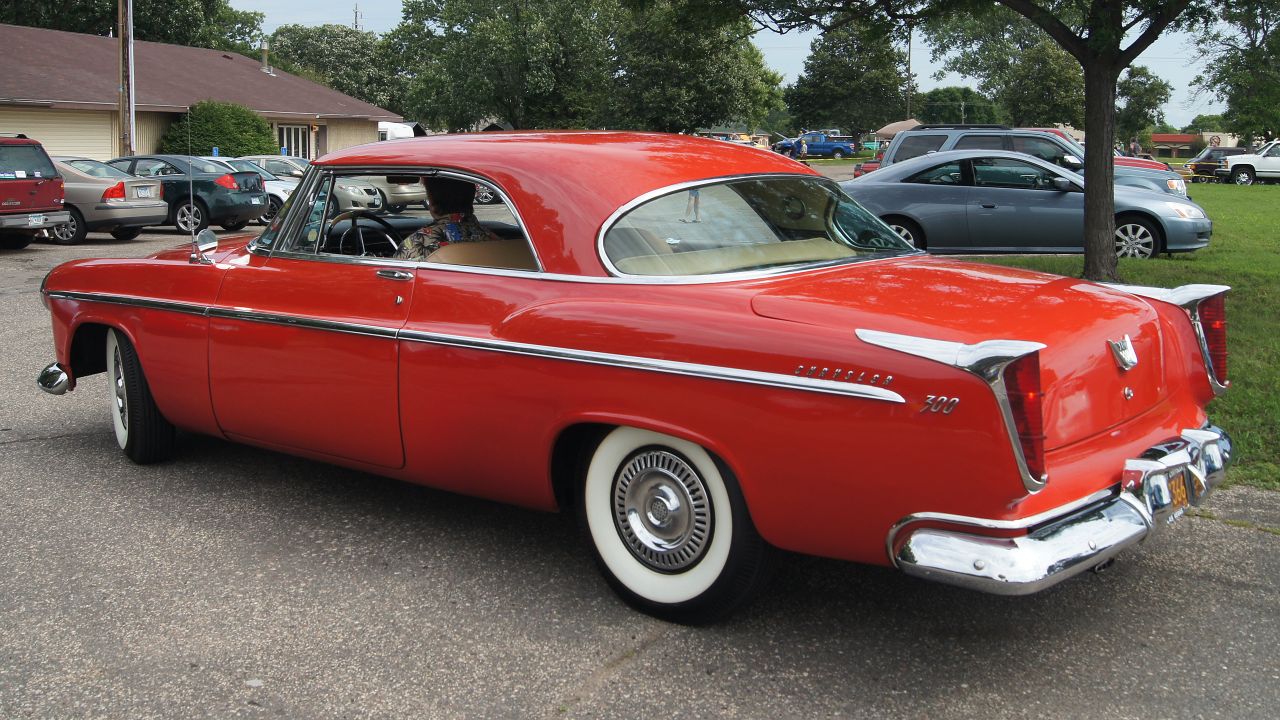
What made the C-300 so subversive is how little it advertised its capabilities. From a distance it looked like a well‑mannered Chrysler hardtop, with clean lines and restrained trim that fit comfortably into the brand’s premium image. One retrospective on the broader 300 lineage notes that what a designer lives to do and lives to be about is being part of popular culture, and the early 300s did that by blending American muscle with refined design instead of cartoon aggression. The C-300’s cabin, with its upscale materials and emphasis on comfort, reinforced the impression that this was a gentleman’s express, not a stripped‑out hot rod.
That visual understatement let the car “fly under the radar,” as one modern analysis of the 300 letter series puts it, even while it was quietly starting a horsepower war. In an era when some performance specials wore loud graphics or racing stripes, Chrysler relied on subtle cues like the simple “300” badges and its limited color choices to signal that this was something different. Later commentators have argued that this dual identity, part luxury coupe and part muscle machine, helped normalize the idea that serious performance could live inside a refined package, a concept that would later define many of Detroit’s most desirable muscle and personal‑luxury cars.
From NASCAR dominance to showroom legend
The C-300’s reputation was not built on brochures alone, it was forged on the track. Contemporary accounts of its competition record highlight how Chrysler dominated NASCAR with the car, using essentially the same 331-c Hemi V‑8 that powered customer models. The same valuation source that calls it the first real muscle car also notes that the C-300’s combination of 300 horsepower and robust engineering allowed it to run from 0 to 90 m in 16.9 seconds, a figure that translated directly into success in stock‑car racing where sustained high speed and durability were critical.
That racing pedigree fed back into the showroom, giving the car a mystique that went beyond its spec sheet. Enthusiast videos that revisit the model today often open from behind the wheel, pointing out that the car feels like a purpose‑built performance machine despite its plush interior and automatic transmission. One quick‑drive review underscores that it was named for the fact that it was the first one with 300 horsepower, and that this output was not just a marketing boast but a number proven in competition. By winning on Sunday with a car that looked very much like what customers could buy on Monday, Chrysler helped cement the link between big‑engine coupes and real‑world performance that would become central to the muscle car mythos.
The 300 letter series and the muscle era it inspired
The C-300 did not remain a one‑off experiment, it launched a full 300 letter series that carried its performance ethos forward and helped escalate Detroit’s power race. Later analyses of the series argue that these cars lit the match for the muscle car power wars, noting that in this era, Chrysler was willing to put serious horsepower into cars that still looked restrained and premium. Each successive letter car built on the original formula of a large, powerful engine in a relatively understated body, reinforcing the idea that high performance could be part of a brand’s identity rather than a niche sideline.
Design retrospectives produced over the summer have framed the 300 lineage as rooted in American muscle, refined by design, and embraced by drivers who wanted both speed and status. A video released in Jul traces how the 300 badge, starting with the C-300, became shorthand for a certain kind of confident power that did not need flamboyant styling to make its point. When I look at the later muscle boom of the 1960s, with cars like big‑block intermediates and luxury‑leaning performance coupes, I see the C-300’s DNA everywhere: a big engine, a comfortable cabin, and a quiet promise that if you put your foot down, this seemingly polite car would behave like a racer.