The 1964 Ford Fairlane Thunderbolt did not just win drag races, it forced sanctioning bodies to rethink what “stock” meant. By stuffing race hardware into a mid-size shell and stripping away anything that did not help at the quarter mile, Ford created a car that lived in the gray area between showroom model and pure competition machine. The result was a short, explosive chapter in factory racing that still shapes how manufacturers chase performance within the rules.
From mid-size Fairlane to factory weapon
The Ford Fairlane Thunderbolt began as a relatively ordinary Ford Fairlane, a mid-size platform that was never intended to carry the burden of deciding national drag racing titles. Ford engineers saw an opportunity in that smaller body, using it as a lighter host for the company’s most serious racing hardware. Instead of continuing to rely on heavier full-size cars, they turned the Fairlane into a purpose-built quarter mile tool that still wore a production badge, a move that let them exploit the letter of factory racing regulations while challenging their spirit. According to descriptions of The Ford Fairlane Thunderbolt, the car was explicitly created as a limited production, factory experimental drag racer, not a conventional street model.
That experimental status mattered because it allowed Ford to homologate a car that was barely street legal, yet still counted as a production entry in competition. The Thunderbolt program produced only enough cars to satisfy the rulebook, but each one was built with a singular purpose, to dominate the strip. Reporting on Ford Fairlane Thunderbolts notes that they were a “factory experimental” effort, a phrase that captures how Ford used the Fairlane nameplate as a legal wrapper for what was essentially a race car delivered through dealers.
Lightweight tricks that stretched “stock” credibility
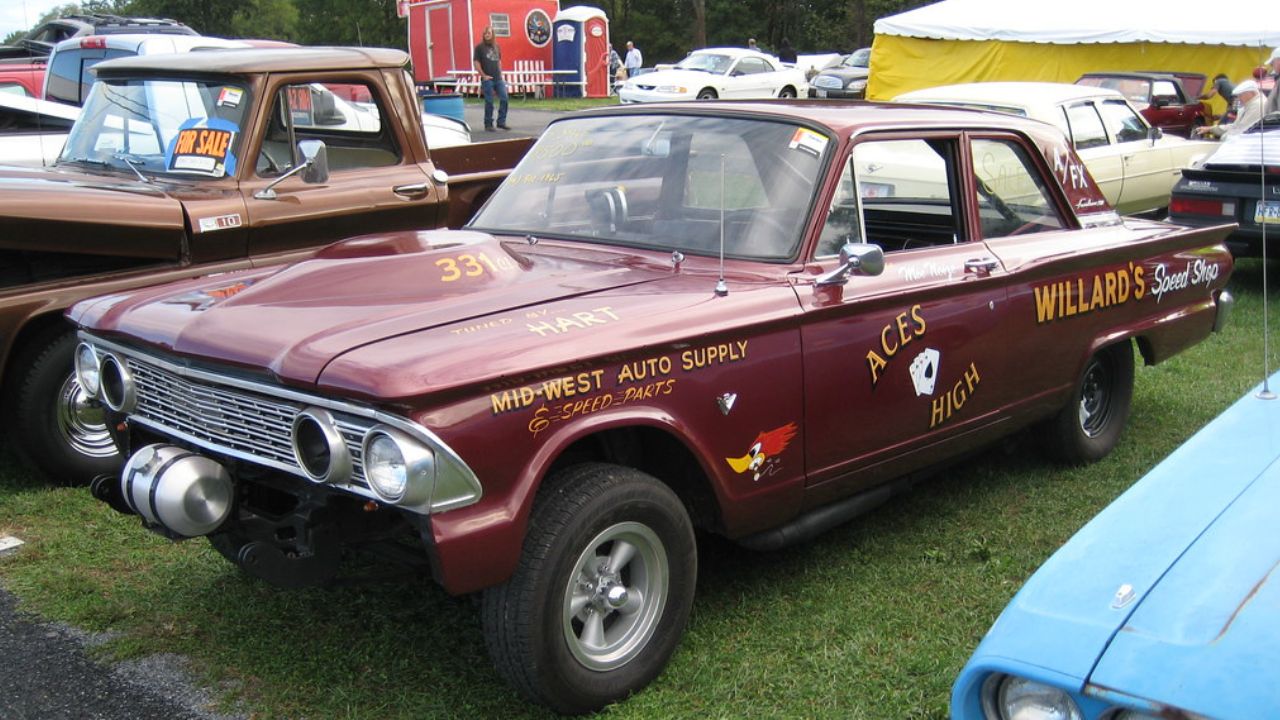
To turn the Fairlane into a Thunderbolt, Ford attacked weight with a ruthlessness that made the car’s showroom roots increasingly theoretical. Engineers replaced heavy steel panels with lighter materials, shaving every possible pound to improve acceleration. Fiberglass was used for the doors, hood, front fenders, and front bumper, a radical step for a car that still had to pass as a production model on paper. Coverage of a tribute build notes that Fiberglass panels were central to the original Thunderbolt recipe, a reminder that Ford was willing to sacrifice conventional durability and comfort for pure performance.
The interior and trim followed the same ruthless logic. Anything that did not help the car leave the line faster was a candidate for deletion, from sound deadening to some convenience features, leaving a stripped cabin that barely resembled a family Fairlane. Contemporary accounts of the Ford Thunderbolt Fairlane describe it as a car that “dominates and changes” the drag racing landscape, language that reflects how far Ford pushed the definition of a stock-bodied entry. By keeping the basic silhouette and VIN structure while hollowing out the rest, the Thunderbolt turned the rulebook’s production requirements into a technicality.
Big power in a smaller package
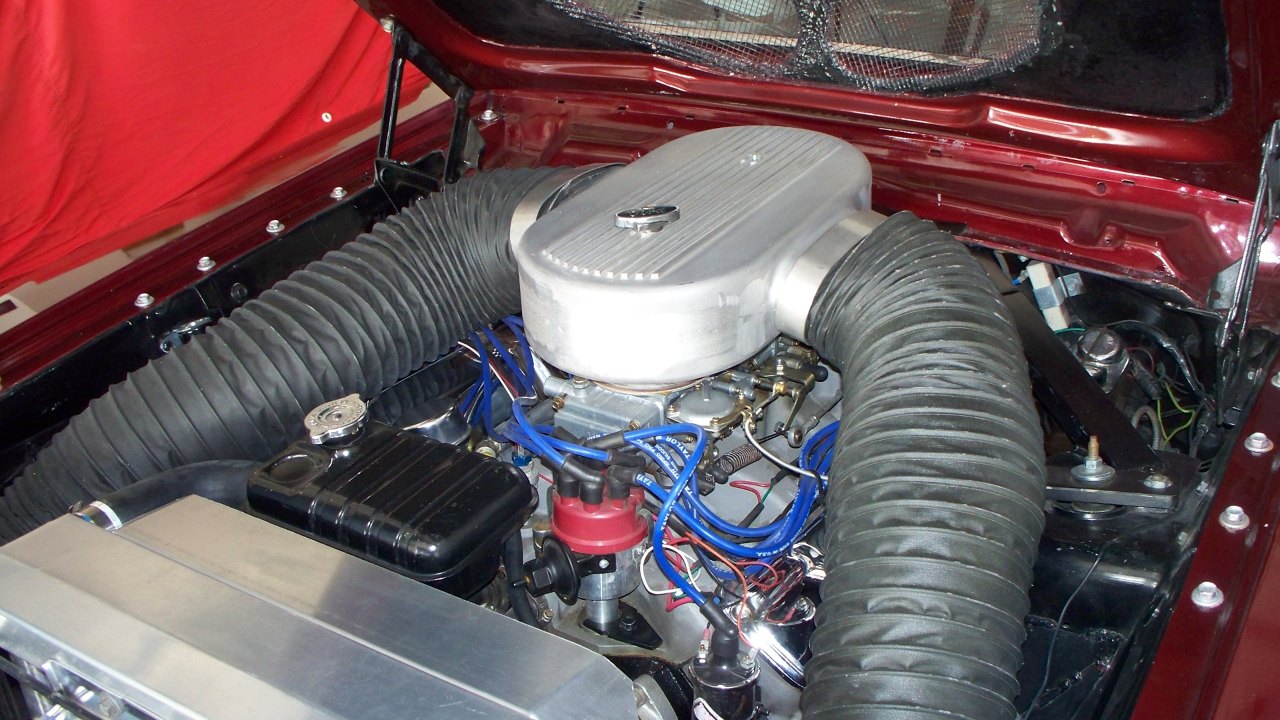
Weight reduction alone did not bend the rulebook, it was the combination of a light shell with serious race power that made the Thunderbolt so disruptive. Ford chose not to stick with its traditional big full-size platforms, instead of continuing to rely on heavier big-block powered sedans, the company dropped its top drag racing engine into the more compact Fairlane body. A detailed video history notes that But Ford ultimately gained the upper hand in its rivalry by abandoning the old formula and embracing this smaller, more focused package, a strategic shift that turned the Thunderbolt into a giant killer.
That engine choice, combined with the lightweight body, produced performance that stretched the idea of what a factory car could be. Official output figures were conservative, but internal and enthusiast reporting on Ford Fairlane Thunderbolts points to real-world power closer to 600 hp, a staggering number for a mid-size chassis of that era. By hiding race-spec performance inside a body that still carried a Fairlane badge, Ford complied with the letter of production rules while delivering a car that behaved nothing like the family sedans those rules were written for.
Homologation by the bare minimum
The Thunderbolt’s production numbers reveal just how narrowly Ford threaded the regulatory needle. Instead of building thousands of units, the company produced only what was necessary to qualify the car for factory classes. Reporting on the Martin Thunderbolt program states that “Ultimately, 100 1964 Ford Fairlane Thunderbolts were built (49 of them 4-speeds with 51 automatics),” figures that underline how tightly Ford calibrated its commitment. Those exact numbers, 100, 49, 51, show a manufacturer doing just enough to satisfy the rulebook while keeping the project focused on competition rather than mass sales.
That minimal run also shaped how the Thunderbolt was perceived by racers and officials. With only 100 cars in existence, each one was effectively a hand-delivered weapon for serious drag teams, not a model intended for everyday buyers. The limited production status, confirmed in descriptions of The Ford Fairlane Thunderbolt, meant that the car lived in a gray zone between homologation special and pure race car. By meeting the minimum threshold and no more, Ford honored the written rules while undermining the assumption that “stock” classes would be filled with genuinely mainstream vehicles.
Legacy of a rulebook stress test
The Thunderbolt’s impact can be measured not only in trophies but in how it forced racing organizations to tighten their definitions. Once a car like the Thunderbolt proved that a manufacturer could build a tiny batch of near-race cars and still call them production models, regulators had to respond. Later rule changes around minimum production numbers, allowable modifications, and material use all reflected lessons learned from this kind of factory experimental program. Enthusiast coverage of the Ford Thunderbolt Fairlane frames it as a car that “changes the” sport, a phrase that captures how its existence pushed officials to close loopholes that had seemed theoretical until Ford exploited them.
The car’s legend also lives on in modern tribute builds that echo its original compromises. Contemporary projects modeled on the 1964 Ford Fairlane Thunderbolt still rely on lightweight panels and aggressive powertrains, often using fiberglass doors, hoods, front fenders, and bumpers to recapture the original’s stripped focus. One detailed feature on a tribute project highlights how builders still chase the same balance of minimal weight and maximum traction that defined the factory cars. For me, that persistence is the clearest sign of how the Thunderbolt bent the rulebook, it created a template for turning a nominally stock shell into a purpose-built drag machine, a template that racers and regulators have been reacting to ever since.
More from Fast Lane Only: