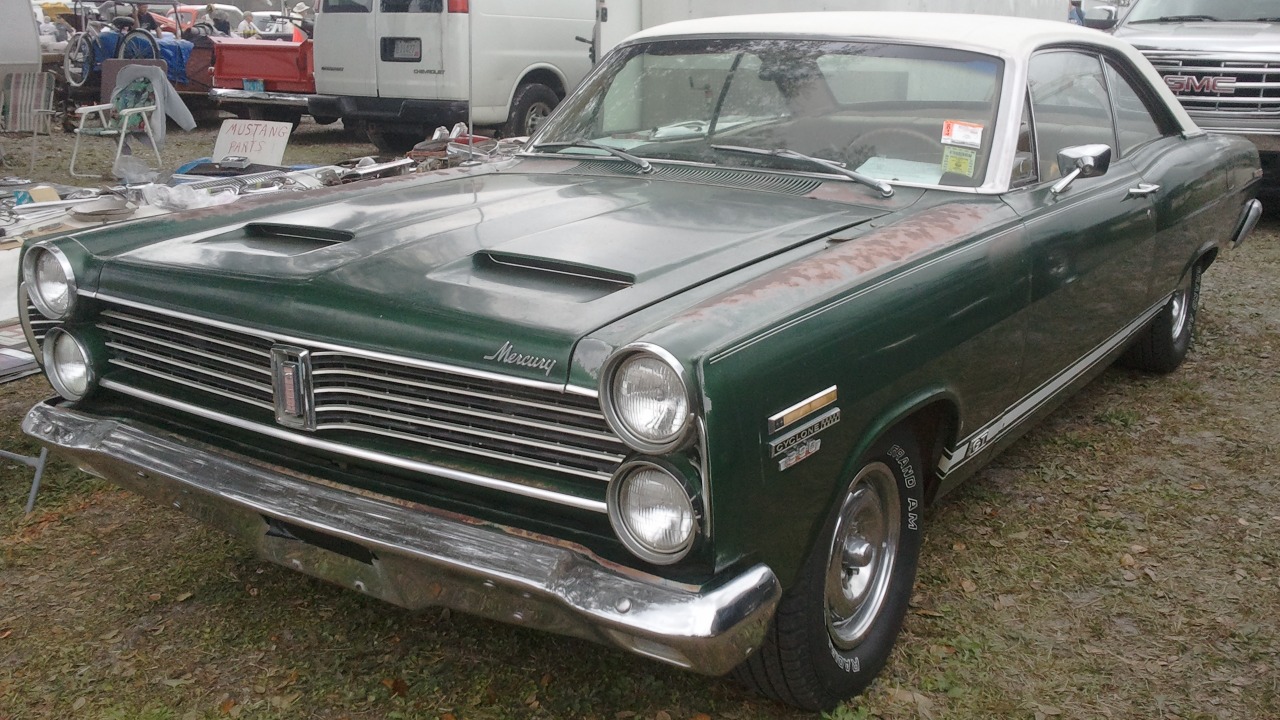
The 1967 Mercury Comet Cyclone GT arrived at a volatile moment in Detroit, when every division wanted its own muscle car hero yet shared corporate parts blurred the lines. Within that crowded field, the Cyclone GT gradually carved out a personality that was more refined than a street brawler but more focused than a family coupe. Its story is less about headline sales and more about how a mid-size Mercury found character between the extremes of comfort and speed.
That balance of understated style and genuine performance helps explain why enthusiasts still chase these cars even though they never matched the sales of better known rivals. The Cyclone GT’s path from option package to distinct identity reveals how Mercury tried to stand apart inside the Ford empire.
From Comet offshoot to confident muscle identity
When Mercury first attached the Cyclone name to the Comet line, it functioned as a sporty trim on a compact platform that shared much with Ford’s Fairlane. By 1967 the Cyclone GT had grown into a mid-size fastback with its own visual attitude, even if the bones were familiar. The car wore a clean, Coke-bottle profile, a recessed grille, and brightwork that looked more upscale than the typical budget muscle offering.
Under the skin, the Cyclone GT leaned on the same big-block V8 architecture that powered other Ford products, but Mercury tuned the experience differently. The GT package emphasized a blend of highway composure and quarter-mile capability, with strong acceleration paired to a cabin trimmed in better materials than many direct competitors. That mix reflected Mercury’s broader mission as a step up from Ford without drifting into Lincoln territory.
Enthusiasts who study the lineage point out that the Cyclone name eventually detached from the Comet badge and moved onto Mercury’s intermediate line. Later cars such as the 1969 models, which shared structure with the Montego, show how Mercury kept refining the concept of a mid-size performance car with a more adult flavor. The 1969 Mercury Montego, for instance, carried over the idea of a mid-size platform with upscale cues, reinforcing how the division tried to merge performance and comfort in one package, a direction that can be seen in period coverage of the 1969 Mercury Montego.
Compared with louder muscle icons, the 1967 Cyclone GT did not rely on wild graphics or cartoonish branding. Instead, it used restrained styling, a serious V8, and a comfortable interior to attract buyers who wanted speed without sacrificing dignity. That approach helped the car stand apart from its own corporate siblings, even if it sometimes left it overlooked in the broader market.
Design and engineering choices that shaped its character
The Cyclone GT’s identity came from a series of specific design and engineering decisions rather than a single breakthrough. Mercury gave the car a long hood and short deck that fit the era’s performance fashion, yet the detailing leaned toward crisp lines and chrome rather than aggressive scoops and spoilers. The result was a car that looked fast but not juvenile.
Inside, the dashboard layout and seat designs reflected Mercury’s emphasis on comfort. Bucket seats, full instrumentation, and optional console shifters gave the driver a sense of purpose, while sound insulation and trim quality reminded occupants that this was not a stripped-out drag special. That dual personality meant the Cyclone GT could serve as a daily driver, a weekend cruiser, and a respectable bracket racer.
On the mechanical side, the availability of strong V8 engines placed the GT firmly in muscle territory. At the same time, Mercury’s tuning and option structure often encouraged buyers to choose automatic transmissions and power accessories, which again nudged the car toward a more mature audience. The chassis setup favored stability at highway speeds, which suited buyers who spent more time on interstates than at the drag strip.
Collectively, these choices gave the Cyclone GT a personality that was closer to a junior luxury muscle car than a bare-knuckle street racer. That nuance may have limited its appeal among younger buyers chasing maximum performance per dollar, yet it created a loyal following among drivers who valued a broader range of abilities.
Why the Cyclone GT’s distinct role matters to collectors now
Although the Mercury Cyclone family never achieved the sales figures of some rivals, the cars have gained steady recognition among collectors. Market analysis has described the Cyclone as a sales disappointment in period, yet also questioned whether it deserved that fate, highlighting how the model offered strong performance and distinctive styling that did not fully translate at the showroom. Enthusiast market coverage of the Mercury Cyclone points out that the cars now attract buyers who appreciate their underdog status and relative rarity.
From a value perspective, classic car guides show that Cyclone models, including well kept GTs, can trade for less than comparable big-name muscle cars while delivering similar mechanical hardware. Reports on how much a classic Mercury Cyclone is worth today describe a market where these cars often sit below the price of equivalent Chevrolets or Pontiacs, which makes them appealing to enthusiasts seeking V8 performance with a different badge. Coverage that examines Cyclone values notes that condition and originality heavily influence pricing, with tidy examples commanding a premium over tired survivors.
The 1967 GT in particular benefits from its position at a turning point. It represents the moment when the Cyclone name was gaining separation from the Comet identity and moving toward a standalone performance line. Collectors who favor that narrative often seek out 1967 cars as a bridge between the earlier compact-based models and the later intermediates that leaned more heavily into NASCAR and drag racing imagery.
Another reason the Cyclone GT matters today is its reflection of Mercury’s broader struggle for identity. The brand had to live between Ford’s volume offerings and Lincoln’s luxury flagships, which often left it with well engineered but hard to categorize products. The Cyclone GT captures that tension in sheet metal, offering a car that is both muscular and polite. For collectors who enjoy stories as much as specifications, that blend adds depth to the ownership experience.
Lessons the Cyclone GT offers for Mercury’s legacy and future enthusiasm
Looking beyond auction prices, the 1967 Comet Cyclone GT helps explain how Mercury experimented with character inside a corporate structure that favored parts sharing. The car shows that a division can use styling, trim, and option mixes to create a distinct feel even when the engine blocks and floorpans come from a common bin. That lesson resonates with enthusiasts who study how other brands tried to differentiate themselves within large automotive groups.
The Cyclone’s later evolution, including its move onto platforms shared with cars like the Montego, also illustrates how quickly a model can shift roles. What began as a sporty offshoot of a compact line became an intermediate muscle car and later a more luxury oriented performance coupe. Each step reflected changing market tastes and corporate strategy, but the core idea of a Mercury that blended speed and comfort remained.
For present day fans, the Cyclone GT’s story encourages a broader view of the muscle era. Instead of focusing only on the headline drag strip heroes, it highlights the value of cars that aimed for balance. Owners who bring these Mercurys to shows often emphasize their drivability and subtle styling as much as their power output. That perspective helps keep interest alive in models that once sat in the shadow of louder competitors.
There is also a preservation angle. Because the Cyclone GT never sold in huge numbers, surviving examples carry more weight as historical artifacts. Restorers and clubs that concentrate on these cars help document option codes, color combinations, and production quirks that might otherwise fade. Their work ensures that the story of Mercury’s mid-size performance experiment remains visible alongside the better known legends.
More from Fast Lane Only
- Unboxing the WWII Jeep in a Crate
- 15 rare Chevys collectors are quietly buying
- 10 underrated V8s still worth hunting down
- Police notice this before you even roll window down
*Research for this article included AI assistance, with all final content reviewed by human editors