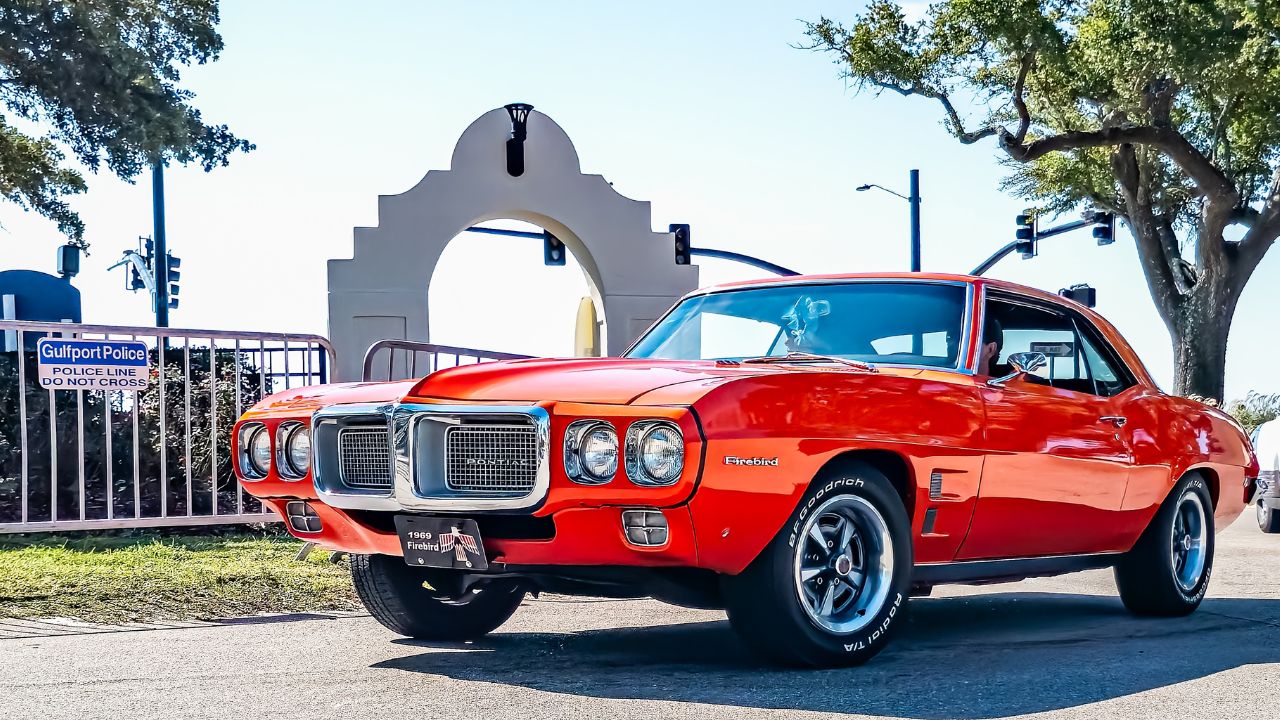
Pontiac built its reputation on accessible performance, but some of its boldest ideas never reached the spotlight. Among them was an experimental Firebird variant that quietly previewed technology and design choices that later became industry staples. That forgotten project helps explain both Pontiac’s rise and its eventual disappearance from showrooms.
Looking back at that car today shows how a single underpromoted experiment can shape expectations for power, efficiency, and style, even when the badge itself no longer exists.
How Pontiac’s overlooked Firebird experiment broke from the script
By the late 1970s and early 1980s, the Pontiac Firebird had become shorthand for V8 bravado, T-top roofs, and loud graphics. The brand’s experiment in question stepped away from that formula. Rather than chasing only straight-line speed, engineers focused on lighter weight, cleaner aerodynamics, and more efficient powertrains. According to one detailed breakdown of the forgotten Firebird, Pontiac used this model as a rolling test bed for ideas that did not fit neatly into the existing marketing story.
On the outside, the car wore subtler bodywork than the high-profile Trans Am packages of the era. The emphasis was on airflow rather than ornament. Flush glass, a smoother nose, and carefully shaped spoilers were chosen to reduce drag. At a time when many buyers still equated performance with cubic inches and chrome, Pontiac aimed this Firebird at drivers who cared about fuel economy and long-distance comfort as much as quarter-mile times.
The experiment continued under the skin. Engineers worked with smaller displacement engines tuned for a broader torque curve, paired them with gearing intended to keep revs low at highway speeds, and trimmed unnecessary weight from suspension and interior components. Their goal was a car that could cruise efficiently yet still carry the handling character enthusiasts expected from a Firebird. The project showed that Pontiac understood the energy and regulatory pressures reshaping the American market, even if the showroom spotlight stayed on louder, more traditional variants.
The interior also signaled a shift in priorities. Instead of a purely driver-centric cockpit dominated by analog gauges and aggressive trim, the cabin featured more ergonomic seating, improved sound insulation, and a focus on everyday usability. Pontiac was testing whether buyers would accept a subtler, more grown-up Firebird that still carried the brand’s performance DNA.
What changed in the public story of Pontiac performance
The experiment arrived at a moment when Pontiac’s identity was under strain. Corporate fuel economy targets, emissions rules, and rising insurance costs were squeezing the classic muscle-car formula. Yet the brand’s marketing continued to lean on the image of screaming V8s and flamboyant styling. The quieter Firebird project did not fit the narrative Pontiac had spent years cultivating, even though it responded more directly to the realities of the period.
Rather than elevating this car as the next evolution of Pontiac performance, the company treated it almost like a side note. Advertising budgets favored high-profile special editions that photographed well and tied into pop-culture moments. The more efficient Firebird, with its restrained visuals and technical focus, was left to speak for itself on dealer lots. That choice limited public awareness and kept the experiment from reshaping expectations in the way it might have.
Meanwhile, the broader industry was pivoting. Japanese brands were proving that drivers would embrace smaller engines and lighter platforms if the cars felt responsive and well built. Domestic competitors were beginning to experiment with turbocharging, fuel injection, and wind-tunnel-tested shapes. Pontiac had a candidate that could have led that shift inside General Motors, but its most forward-looking Firebird never received the sustained backing needed to become a halo for the new era.
As a result, the public story of Pontiac performance remained anchored to a fading past. Enthusiasts still loved the noise and attitude, yet regulators, fuel prices, and changing tastes were pushing the market in another direction. The forgotten Firebird showed that Pontiac engineers understood the challenge. The disconnect came from how the company chose to present, or not present, that understanding to buyers.
Why this quiet Firebird experiment matters now
Seen from today’s vantage point, the car looks far less like an oddball and far more like an early draft of the modern performance coupe. Lightweight construction, careful aerodynamics, and smaller but smarter engines are now standard practice. The experiment hinted at that future long before it became mainstream.
The story also resonates with the current shift toward electrification. Many brands today are trying to translate long-standing performance identities into a world of batteries, software, and range anxiety. The tension between heritage and innovation that Pontiac faced with this Firebird mirrors the debate that surrounds electric versions of classic nameplates. The lesson is that engineering progress alone is not enough. Companies must also be willing to let their marketing and product planning evolve in public, even if that means challenging loyalists.
For Pontiac, the reluctance to fully champion its more efficient Firebird contributed to a pattern. The brand often developed advanced ideas inside the General Motors structure, then saw them diluted, delayed, or overshadowed by safer choices. Over time, that pattern eroded the clear identity that had once set Pontiac apart. When corporate leaders later streamlined divisions, Pontiac lacked a widely understood future-facing role, even though its engineers had repeatedly pointed in promising directions.
Enthusiasts who track the history of the Firebird now see this forgotten variant as a missed opportunity. It could have anchored a new chapter in Pontiac’s story, one that combined responsible performance with distinctive styling and handling. Instead, it became a curiosity for collectors and historians, proof that the brand saw the road ahead but struggled to convince executives and customers to follow.
What a larger role might have changed for Pontiac and its legacy
If Pontiac had treated this Firebird as a central pillar rather than a side project, the brand’s trajectory might have looked different. A high-profile launch, clear messaging around efficiency and handling, and consistent updates could have repositioned Pontiac as General Motors’ leader in modern performance technology. That identity might have made it harder to justify the brand’s eventual retirement.
A stronger commitment to the experiment could have produced a family of related models. Lighter, more aerodynamic Firebirds might have influenced everything from mid-size sedans to compact coupes inside the company. Suppliers and internal teams would have been pushed to prioritize weight reduction, advanced powertrains, and cleaner shapes years earlier. The ripple effects could have reached well beyond a single nameplate.
For the broader industry, a more visible Pontiac pivot might have accelerated the acceptance of efficiency-focused performance among American buyers. Domestic brands often move in response to each other. If one of the most recognizable muscle-car badges had loudly embraced a new formula, rivals might have followed more quickly, and the stereotype of efficiency as dull transportation might have faded sooner.
Instead, the experiment’s influence has been indirect. Engineers carried lessons from the project into later vehicles, and enthusiasts now point to the car as an example of what Pontiac could be when it looked ahead rather than back. The model’s limited recognition also gives it a certain cult appeal, a reminder that innovation sometimes happens quietly, without the fanfare it deserves.
As automakers wrestle with another era of upheaval, the forgotten Firebird stands as a case study. Technical foresight must be matched by clear storytelling and the courage to let a beloved brand grow. Pontiac had the ingredients for that shift parked right in its showrooms. The fact that so few people noticed is exactly why this experiment deserved a larger role.
More from Fast Lane Only
- Unboxing the WWII Jeep in a Crate
- 15 rare Chevys collectors are quietly buying
- 10 underrated V8s still worth hunting down
- Police notice this before you even roll window down
*Research for this article included AI assistance, with all final content reviewed by human editors