By the late 1960s, Detroit’s muscle car market was booming.
Every major manufacturer seemed determined to build faster, more powerful, and increasingly sophisticated performance cars. The Pontiac GTO had established the formula, while competitors rushed to offer their own interpretations. Buyers could choose from upscale performance machines loaded with special trim, premium interiors, and expensive options.
There was just one problem.
Many of these cars were becoming too expensive for the young enthusiasts who helped create the muscle car movement in the first place.
Manufacturers kept adding features.
Prices kept rising.
Some buyers simply wanted the basics: a powerful engine, a capable chassis, and a reasonable price.
Plymouth recognized that opportunity better than almost anyone else.
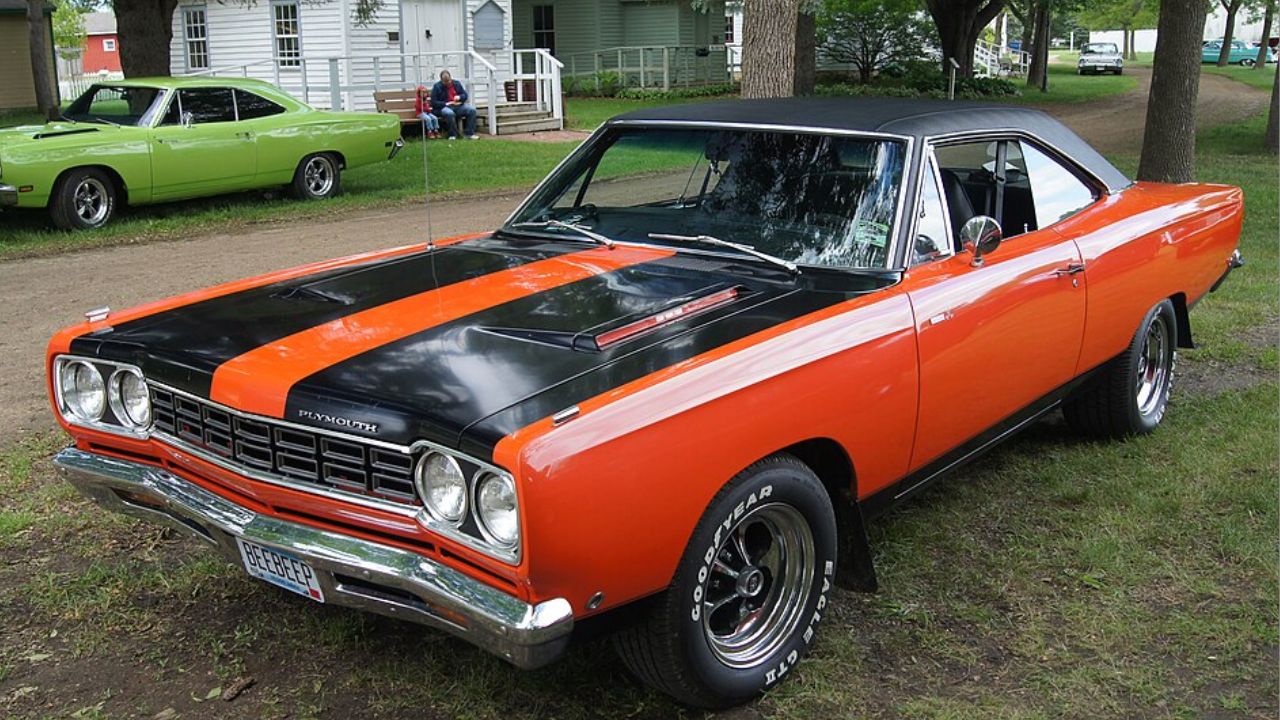
In 1968, the company introduced the Road Runner, a car that ignored many of the industry’s assumptions about what a muscle car needed to be. Instead of adding luxury features and premium equipment, Plymouth stripped away unnecessary extras and focused almost entirely on performance.
The result was one of the smartest ideas ever to emerge from Detroit.
The Road Runner didn’t just become a successful muscle car.
It helped redefine what buyers actually wanted.
Plymouth Saw a Gap in the Market
The Road Runner was born from careful observation.
By 1967, Plymouth executives noticed an important trend. While high-performance cars remained popular, many customers were becoming frustrated by rising costs.
The original concept behind muscle cars had been simple.
Take a relatively affordable midsize automobile, install a large V8 engine, and sell it at a price young buyers could afford.
Over time, however, many muscle cars evolved into premium products.
Performance remained important, but luxury and image increasingly became part of the equation.
Plymouth wondered whether the market might be ready for a return to fundamentals.
The answer turned out to be yes.
The Belvedere Provided the Foundation
Rather than creating an entirely new vehicle, Plymouth used the existing Plymouth Belvedere platform as the Road Runner’s foundation.
This decision kept development costs low and allowed engineers to focus resources where they mattered most.
The Belvedere already offered solid engineering, respectable dimensions, and enough room to accommodate Chrysler’s powerful V8 engines.
It was practical.
It was proven.
Most importantly, it was affordable.
Those characteristics aligned perfectly with the Road Runner’s mission.
Plymouth wasn’t trying to reinvent the automobile.
The company was trying to build the best performance bargain possible.
Performance Came Before Everything Else
The philosophy behind the Road Runner was remarkably straightforward.
Every decision centered on performance value.
Luxury features that increased costs without improving speed were eliminated. Fancy trim packages were minimized. Expensive interior upgrades became secondary concerns.
Buyers received the essentials.
A strong engine.
A capable chassis.
A sporty appearance.
The formula may seem obvious today, but it represented a surprisingly bold move at the time.
Most manufacturers were moving in the opposite direction.
Plymouth simplified the product instead.
That simplicity became one of the car’s greatest strengths.
The Standard 383 Delivered Serious Power
One reason the Road Runner succeeded immediately was its standard engine.
Unlike many competitors that required expensive upgrades for meaningful performance, the Road Runner came equipped with Chrysler’s respected 383-cubic-inch V8.
This wasn’t an entry-level powerplant.
The 383 produced substantial horsepower and torque, providing acceleration capable of satisfying even demanding enthusiasts.
Buyers didn’t need to spend extra money to receive a legitimate muscle car.
Performance was included from the beginning.
This value proposition resonated strongly with customers.
The Road Runner offered serious speed at a price many people could actually afford.
That combination proved irresistible.
The Name Came From a Cartoon Character
Perhaps the most brilliant aspect of the Road Runner involved its name.
Rather than inventing a traditional automotive designation, Plymouth licensed the famous Road Runner character from Warner Bros..
At first glance, the idea seemed unusual.
Most performance cars relied on aggressive or technical names intended to convey power and seriousness.
The Road Runner took a different approach.
The cartoon connection made the car memorable, approachable, and fun.
It immediately stood out from competitors.
The marketing benefits were enormous.
Customers remembered the name.
They remembered the character.
And they remembered the car.
The “Beep Beep” Horn Was Marketing Genius
Plymouth didn’t stop with the name.
The company incorporated the character directly into the ownership experience.
Road Runners featured special emblems and, perhaps most famously, a horn that mimicked the cartoon character’s signature “beep beep.”
The feature was playful and completely unnecessary.
It was also brilliant.
The horn gave the car personality.
It transformed the Road Runner from a collection of mechanical components into something memorable.
In an industry often obsessed with specifications, Plymouth created an emotional connection.
Buyers loved it.
The feature became one of the most recognizable elements of the car.
Buyers Understood the Mission Immediately
One reason the Road Runner became such a success was clarity.
Customers immediately understood what the car represented.
There was no confusion about its purpose.
The Road Runner wasn’t pretending to be a luxury coupe.
It wasn’t marketed as a sophisticated grand touring machine.
It existed to provide affordable performance.
That straightforward mission resonated with enthusiasts.
People appreciated the honesty.
The car delivered exactly what it promised.
Few automotive products communicate their purpose as effectively.
The Road Runner became a masterclass in product positioning.
Sales Exceeded Expectations
Plymouth anticipated respectable demand.
The actual results were far better.
The Road Runner quickly became one of the biggest success stories in the muscle car market.
Sales significantly exceeded initial projections, proving that Plymouth’s understanding of customer priorities was remarkably accurate.
Buyers responded enthusiastically to the combination of power, affordability, and personality.
The company’s gamble had paid off.
The Road Runner wasn’t merely popular.
It became one of the defining muscle cars of its era.
Success arrived almost immediately.
Optional Engines Expanded the Appeal
Although the standard 383 satisfied most buyers, Plymouth offered additional options for those seeking even greater performance.
The legendary 426 Hemi remained available.
So did other powerful Chrysler engines capable of transforming the Road Runner into a formidable street and strip machine.
These options broadened the model’s appeal.
Budget-conscious buyers could stick with the standard engine.
Hardcore enthusiasts could spend more for maximum performance.
Either way, the Road Runner retained its essential character.
The core formula never changed.
Value remained the priority.
Competitors Quickly Took Notice
The Road Runner’s success sent a clear message throughout Detroit.
Buyers didn’t necessarily want more luxury.
Many wanted more value.
Competitors responded accordingly.
Manufacturers increasingly explored ways to offer affordable performance packages aimed at younger enthusiasts.
The Road Runner influenced product planning across the industry.
Its impact extended far beyond Plymouth showrooms.
The car demonstrated that understanding customer priorities could be just as important as adding horsepower.
That lesson remains relevant today.
It Captured the Spirit of the Muscle Car Era
Perhaps more than any other vehicle, the Road Runner embodied the original spirit of the muscle car movement.
The formula was simple.
Affordable transportation.
A large V8 engine.
Minimal compromises.
Maximum fun.
While other muscle cars evolved into increasingly expensive products, the Road Runner remained focused on those fundamentals.
That authenticity contributed significantly to its lasting appeal.
Enthusiasts recognized that the car stayed true to its mission.
Collectors Still Appreciate the Concept
Today, the Road Runner enjoys tremendous respect among collectors and historians.
Part of that admiration stems from its performance capabilities.
Another part comes from the brilliance of the idea itself.
The car solved a real problem in the marketplace.
Plymouth identified an underserved audience and created a product tailored specifically to its needs.
That’s smart business.
It’s also smart automotive design.
The Road Runner remains a reminder that innovation doesn’t always require new technology.
Sometimes it requires a better understanding of customers.
The Right Idea at the Right Time
Looking back, the 1968 Plymouth Road Runner succeeded because Plymouth asked a simple question.
What do performance enthusiasts actually want?
The answer wasn’t luxury.
It wasn’t prestige.
It wasn’t complexity.
The answer was affordable speed.
By focusing relentlessly on that goal, Plymouth created one of the most successful muscle cars in history.
Detroit’s Cleverest Performance Bargain
The 1968 Plymouth Road Runner became one of Detroit’s smartest ideas because it stripped the muscle car formula down to its essentials and delivered exactly what buyers wanted.
With a standard 383 V8, affordable pricing, memorable marketing, and a clear identity, the Road Runner proved that performance didn’t have to be expensive or complicated.
The car’s success reshaped the industry and helped define an era.
More than half a century later, it remains one of the clearest examples of what happens when a manufacturer truly understands its audience.
The Road Runner wasn’t the fanciest muscle car of the 1960s.
It didn’t need to be.
It was one of the smartest.
And that made all the difference.
More from Fast Lane Only