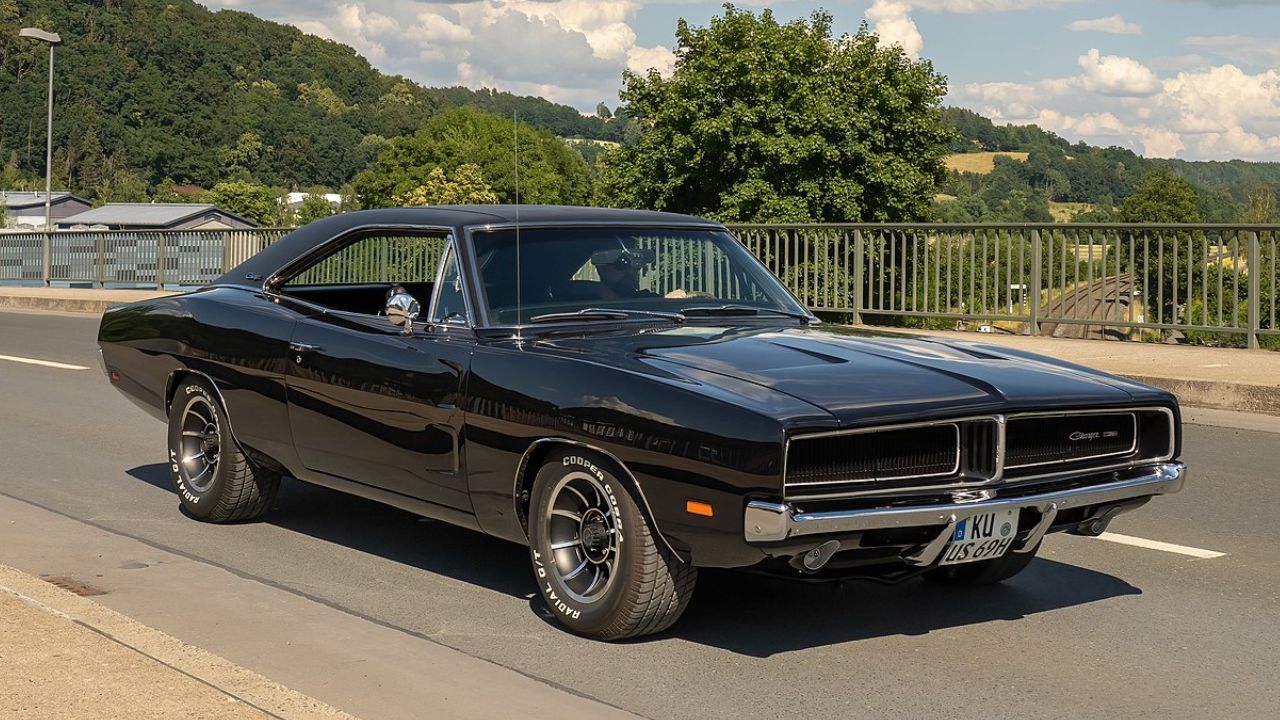
Few American cars have achieved the level of recognition enjoyed by the 1969 Dodge Charger.
Even people with little interest in automotive history can often identify one on sight. The car’s hidden headlights, sweeping fastback roofline, flying buttress rear window design, and muscular proportions have made it one of the most enduring icons of the muscle car era. Decades after production ended, the Charger remains a staple of movies, television shows, advertisements, collectibles, and enthusiast gatherings.
What’s remarkable is that the Charger wasn’t originally designed to become a cultural phenomenon.
Dodge introduced it as a stylish personal performance car intended to compete in an increasingly crowded market. It shared showroom space with numerous other muscle cars, many of which offered comparable performance and similar price points. At the time, there was no guarantee that the Charger would stand apart from its rivals in the long run.
Yet something about the 1969 model resonated with buyers and enthusiasts alike.
Part of the appeal came from its dramatic styling. Part came from its powerful engine options. And part came from a remarkable second life in popular culture that transformed the car from a successful muscle machine into a genuine American icon.
Today, the 1969 Charger is far more than a classic Dodge.
It has become one of the most recognizable automobiles ever built.
Dodge Created a Distinctive Design
The Charger’s rise to icon status begins with its appearance.
When Dodge redesigned the Charger for 1968, the company abandoned the more formal styling of the original generation and introduced something dramatically different. The new car featured flowing lines, sculpted bodywork, and a sleek fastback profile that immediately separated it from many competitors.
For 1969, Dodge refined the formula rather than reinventing it.
The front grille received subtle revisions, while the overall shape remained largely unchanged. That proved to be a wise decision because the basic design was already exceptional. The Charger looked aggressive without appearing exaggerated, elegant without seeming soft, and modern without sacrificing muscle car attitude.
It was the kind of design that captured attention instantly.
More importantly, it was memorable.
The Hidden Headlights Became a Signature Feature
One of the most distinctive elements of the 1969 Charger was its concealed headlight system.
When the headlights were not in use, rotating covers created the appearance of a full-width grille stretching across the front of the car. The effect gave the Charger a clean, uninterrupted face unlike anything else on American roads.
The design added drama.
Drivers and bystanders alike noticed the transformation when the headlights emerged from behind the grille. It was a feature that felt sophisticated and futuristic at a time when most cars simply exposed their headlights permanently.
Years later, the hidden headlights would become one of the easiest ways to identify a classic Charger.
Few styling elements contributed more to the car’s lasting recognition.
The Flying Buttress Roofline Set It Apart
While the front end attracted immediate attention, the Charger’s side profile may have been even more important to its identity.
The car featured a dramatic flying buttress roof design that extended from the roof toward the rear deck, creating a recessed rear window area. This styling treatment gave the Charger a sleek, almost exotic appearance compared to many contemporary muscle cars.
The design also enhanced the car’s sense of motion.
Even when parked, the Charger looked fast.
Dodge designers succeeded in creating a silhouette that was instantly recognizable from a distance. Many classic muscle cars share similar proportions, but very few possess a roofline as distinctive as the Charger’s.
That uniqueness became a major factor in the car’s long-term popularity.
Performance Matched the Appearance
Great styling alone rarely creates an automotive legend.
Fortunately for Dodge, the Charger offered plenty of performance to support its dramatic appearance.
Buyers could choose from a wide range of engines, including powerful V8 options that transformed the car into a serious performance machine. The lineup ranged from respectable small-block engines to some of Chrysler’s most famous big-block powerplants.
Most notably, the Charger could be equipped with the legendary 426 Hemi.
The availability of such an engine instantly elevated the car’s reputation among enthusiasts. Even buyers who never ordered a Hemi appreciated knowing that the Charger represented one of Dodge’s premier performance platforms.
The car looked powerful because it often was.
That authenticity mattered.
It Appealed Beyond Traditional Muscle Car Buyers
Another reason the Charger became so recognizable is that it appealed to a broader audience than many muscle cars.
While some competitors focused almost exclusively on performance enthusiasts, the Charger combined speed with style and comfort. Buyers interested in personal luxury coupes found it attractive, while performance-minded customers appreciated its available power.
This versatility expanded the car’s reach.
The Charger wasn’t confined to a single market segment.
It attracted younger buyers seeking excitement, professionals looking for a stylish daily driver, and enthusiasts searching for one of Detroit’s most distinctive performance cars.
The wider audience helped strengthen its cultural presence.
NASCAR Added Credibility
Like many performance cars of the era, the Charger benefited from racing success.
Dodge invested heavily in NASCAR competition, and Charger-based race cars became formidable competitors on some of America’s most famous tracks.
The connection between racing and showroom models mattered tremendously during the late 1960s. Buyers followed motorsports closely, and victories on Sunday often influenced dealership traffic on Monday.
The Charger’s competition success enhanced its image.
The car wasn’t simply attractive.
It was associated with winning.
That credibility helped establish the Charger as one of Dodge’s flagship performance vehicles.
The Daytona Expanded the Legend
Although the standard Charger remains the most recognizable version today, the introduction of the Dodge Charger Daytona in 1969 added another fascinating chapter to the story.
Created primarily for NASCAR homologation purposes, the Daytona featured an enormous rear wing and a distinctive aerodynamic nose cone. Its appearance was unlike anything else produced by an American manufacturer at the time.
While the Daytona was built in relatively small numbers, its existence reinforced the Charger’s performance image.
The standard Charger benefited from the attention generated by its radical sibling.
Together, they strengthened the model’s overall reputation.
Hollywood Eventually Discovered the Charger
The Charger’s transformation from popular muscle car to cultural icon accelerated dramatically in the decades following its production run.
Hollywood embraced the car’s visual appeal.
Filmmakers and television producers recognized that the Charger looked spectacular on screen. Its aggressive styling, broad stance, and unmistakable silhouette made it ideal for action sequences and dramatic appearances.
Unlike some vehicles that fade from public consciousness after production ends, the Charger gained new audiences through entertainment media.
Each appearance introduced the car to another generation of enthusiasts.
Its recognition continued growing long after Dodge stopped building it.
Television Made It Famous Worldwide
No discussion of the Charger’s popularity would be complete without mentioning its television success.
The most famous example is undoubtedly the orange Charger known as the General Lee from the television series The Dukes of Hazzard.
Although the show’s car was based on the 1969 Charger, its influence extended far beyond that specific version. Millions of viewers became familiar with the Charger’s shape, proportions, and personality.
The series transformed the car into a household name.
For many people, it became the first muscle car they could identify instantly.
That level of exposure is extraordinarily rare.
Collectors Reinforced Its Reputation
As the muscle car hobby expanded during the 1980s, 1990s, and 2000s, the Charger emerged as one of the most desirable vehicles in the collector market.
Enthusiasts appreciated its styling, performance history, and cultural significance.
Demand remained strong.
The car’s continued popularity helped ensure its visibility at auctions, car shows, magazines, and enthusiast events. New generations repeatedly encountered the Charger and discovered why earlier enthusiasts admired it so much.
Its reputation continued building upon itself.
Few cars maintain that momentum for so long.
A Design That Never Looked Dated
Perhaps the biggest reason the 1969 Charger remains recognizable today is that its design aged remarkably well.
Many vehicles become obvious products of their era.
The Charger somehow avoided that fate.
Its proportions remain attractive. Its details still feel purposeful. The overall design continues to communicate strength and motion in a way that resonates with modern audiences.
The car doesn’t require explanation.
People see it and immediately understand its appeal.
That’s the mark of exceptional design.
The Car That Became an American Icon
The 1969 Dodge Charger became one of America’s most recognizable cars because it combined all the right ingredients at the right moment.
Its dramatic styling, hidden headlights, flying buttress roofline, powerful engine options, racing credibility, and eventual Hollywood fame created a legacy that few automobiles can match.
Many muscle cars were fast.
Many were attractive.
Very few became cultural symbols.
The Charger achieved something larger than automotive success.
It became part of American popular culture.
More than fifty years after it first appeared in Dodge showrooms, people around the world still recognize its shape instantly.
That kind of recognition cannot be engineered through horsepower alone.
It happens when a great car captures the imagination of an entire culture.
The 1969 Charger did exactly that.
More from Fast Lane Only