The history of American muscle cars is often told through sales figures.
The best-known models usually sold in large numbers and became fixtures on roads across the country. Cars like the Pontiac GTO, Chevrolet Chevelle SS, and Plymouth Road Runner built their reputations partly because so many people saw them, drove them, or knew someone who owned one.
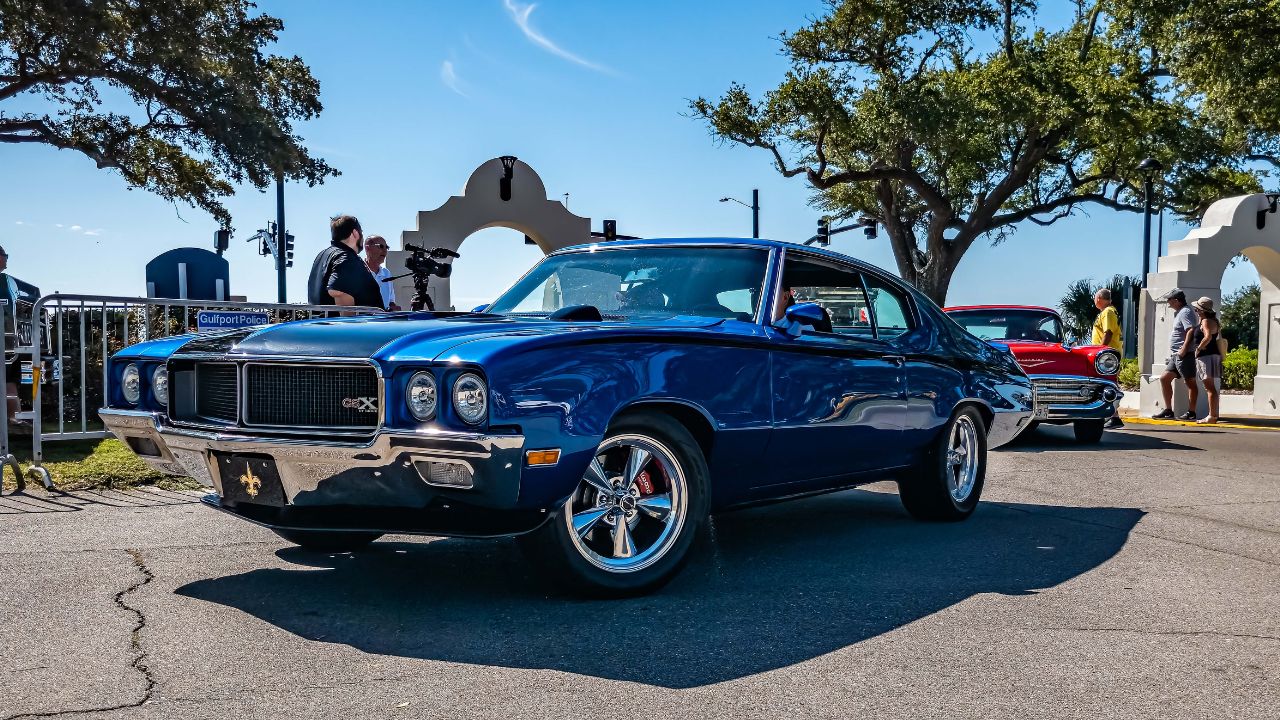
The 1970 Buick GSX followed a very different path.
It was never intended to be a high-volume seller. Buick did not build the GSX to dominate sales charts or become the most common muscle car in America. Instead, the company created a highly specialized performance machine designed to showcase everything its engineering and styling teams could accomplish at the peak of the muscle car era.
As a result, production remained relatively limited.
Yet the GSX achieved something far more valuable than mass-market success.
It became a legend.
More than fifty years later, the GSX is regarded as one of the greatest muscle cars ever produced. Its reputation rests not on how many were sold, but on how effectively Buick combined extraordinary torque, striking design, rarity, and real-world performance into a single unforgettable package.
The car proved that greatness is not always measured in volume.
Sometimes it is measured in impact.
Buick Wanted a Halo Car
By 1970, Buick had already established itself as a serious player in the performance market.
The division’s Gran Sport models had earned respect among enthusiasts thanks to their powerful engines and impressive acceleration. While Buick still maintained its reputation for comfort and refinement, performance buyers were increasingly discovering that the brand had much more to offer than luxury-oriented transportation.
Management wanted to build on that momentum.
The goal was not simply to create another GS model. Buick wanted a halo car—something that would attract attention throughout the automotive industry and elevate the entire lineup.
The GSX became that car.
It was designed to represent the absolute best Buick could offer in terms of performance, styling, and exclusivity.
The Timing Could Not Have Been Better
The GSX arrived at the peak of Detroit’s horsepower wars.
Manufacturers were competing aggressively for performance headlines. Every year seemed to bring larger engines, higher output ratings, and increasingly bold designs. Consumers embraced the competition, and automakers responded by pushing their engineering departments to deliver ever more impressive machinery.
Buick entered this environment with confidence.
Rather than attempting to copy rivals directly, the company focused on its own strengths. Buick engineers understood that their engines produced enormous amounts of torque, often more than many competing muscle cars. Instead of chasing the highest horsepower numbers, they emphasized the qualities that made Buick performance unique.
The GSX became the ultimate expression of that philosophy.
The 455 V8 Was the Real Star
At the heart of the GSX sat Buick’s massive 455-cubic-inch V8.
While many enthusiasts focused on horsepower ratings during the muscle car era, experienced drivers often paid closer attention to torque. This is where the GSX truly excelled.
The Stage 1 version of the 455 produced one of the highest torque ratings available in an American production car at the time. The engine delivered tremendous pulling power throughout the rev range, creating acceleration that felt effortless and immediate.
On the street, this characteristic mattered enormously.
The GSX didn’t require high engine speeds to feel fast. A simple press of the accelerator unleashed a wave of torque capable of surprising even seasoned enthusiasts.
That reputation spread quickly.
Real-World Performance Earned Respect
Magazine tests and owner experiences consistently demonstrated that the GSX was more than just a collection of impressive specifications.
The car delivered exceptional real-world performance.
Its combination of displacement, torque, and gearing allowed it to accelerate with remarkable authority. Whether launching from a stoplight or passing slower traffic on the highway, the GSX felt powerful under virtually all driving conditions.
Many competitors relied on aggressive gearing or high-rpm power delivery to achieve impressive numbers.
The Buick took a different approach.
Its strength came from abundant low-end and mid-range power, making the car feel incredibly fast during everyday driving. Owners appreciated that difference.
The GSX’s performance was easy to access.
Buick Made Sure It Looked Special
Performance alone was not enough.
If Buick wanted the GSX to serve as a halo car, it needed a visual identity capable of matching its mechanical capabilities.
The styling department delivered exactly that.
Available in dramatic colors such as Saturn Yellow and Apollo White, the GSX featured bold striping, front and rear spoilers, hood-mounted tachometer options, and other unique design elements that distinguished it from ordinary GS models.
The result was impossible to ignore.
Even in an era known for flashy muscle cars, the GSX stood apart. It looked every bit as aggressive as the performance it delivered.
That visual impact helped create a lasting impression.
Exclusivity Became Part of the Formula
One reason the GSX became legendary is that Buick never attempted to make it a mass-market product.
The company understood that the car occupied a specialized niche.
Instead of chasing maximum production volume, Buick focused on creating something distinctive and memorable. Limited production numbers naturally followed.
This exclusivity enhanced the car’s appeal almost immediately.
Owners knew they possessed something uncommon. Enthusiasts recognized that sightings were relatively rare. The GSX carried an air of specialness that many higher-volume muscle cars struggled to match.
Rarity alone does not create a legend.
Combined with genuine capability, however, it can be extremely powerful.
The GSX Showed Buick’s Confidence
The existence of the GSX also reflected a fascinating moment in Buick history.
For decades, many consumers viewed the division primarily as a builder of comfortable, premium automobiles. The GSX challenged that perception directly.
It demonstrated that Buick was willing to compete aggressively in the performance arena.
More importantly, it showed that the company could succeed there.
The GSX wasn’t an imitation of a Pontiac, Chevrolet, or Dodge muscle car. It embraced Buick’s own identity while delivering world-class performance.
That authenticity helped the car earn respect from enthusiasts.
The GSX felt uniquely Buick.
It Arrived Just Before Everything Changed
The timing of the GSX adds another layer to its legend.
The car debuted just as the muscle car era approached its peak. Within a few years, rising insurance costs, tightening emissions regulations, and changing consumer priorities would dramatically reshape the automotive landscape.
The GSX therefore represents one of the final expressions of unrestricted muscle car thinking.
Buick built the car before compromise became unavoidable.
As a result, the GSX captures a moment when performance remained the primary objective and manufacturers were willing to pursue it with remarkable enthusiasm.
That historical significance continues to resonate.
Collectors Value What It Represents
Today, the GSX enjoys a reputation that far exceeds its production numbers.
Collectors recognize that the car represents more than just a rare Buick. It symbolizes the peak of the division’s performance ambitions and serves as one of the strongest examples of what American manufacturers could accomplish during the muscle car era.
Values have risen accordingly.
Enthusiasts seek out the GSX not simply because it is uncommon, but because it delivers a unique combination of performance, styling, and historical importance.
The car offers something many competitors cannot.
A distinct identity.
The Legend Grew Over Time
Interestingly, the GSX’s reputation became even stronger after production ended.
As muscle car enthusiasts began looking beyond the most obvious choices, appreciation for Buick’s performance accomplishments increased dramatically. People discovered the car’s remarkable torque figures, impressive road-test results, and limited production numbers.
Word spread.
The GSX transformed from an overlooked performance model into one of the hobby’s most respected machines.
Its legend was built gradually.
That organic growth gave the reputation additional credibility.
The admiration was earned rather than manufactured.
The Car That Didn’t Need Big Numbers
Looking back, the 1970 Buick GSX succeeded because it focused on quality rather than quantity.
Buick never needed to sell hundreds of thousands of examples. The company only needed to create a car good enough to leave a lasting impression on everyone who encountered it.
The GSX accomplished exactly that.
Its massive torque, distinctive styling, limited production, and authentic performance credentials ensured that enthusiasts would remember it long after production ended.
A Legend Built on Impact, Not Volume
The 1970 Buick GSX never needed huge sales to become legendary because its significance was never tied to production numbers.
Instead, the car earned its place in history through exceptional engineering, unforgettable styling, and a driving experience that stood apart from almost everything else available at the time.
It represented Buick at its most ambitious and confident.
More than fifty years later, collectors and enthusiasts continue celebrating the GSX because it delivered something truly special.
Not everyone bought one.
But everyone remembered it.
And in the world of automotive legends, that’s often even more important.
More from Fast Lane Only