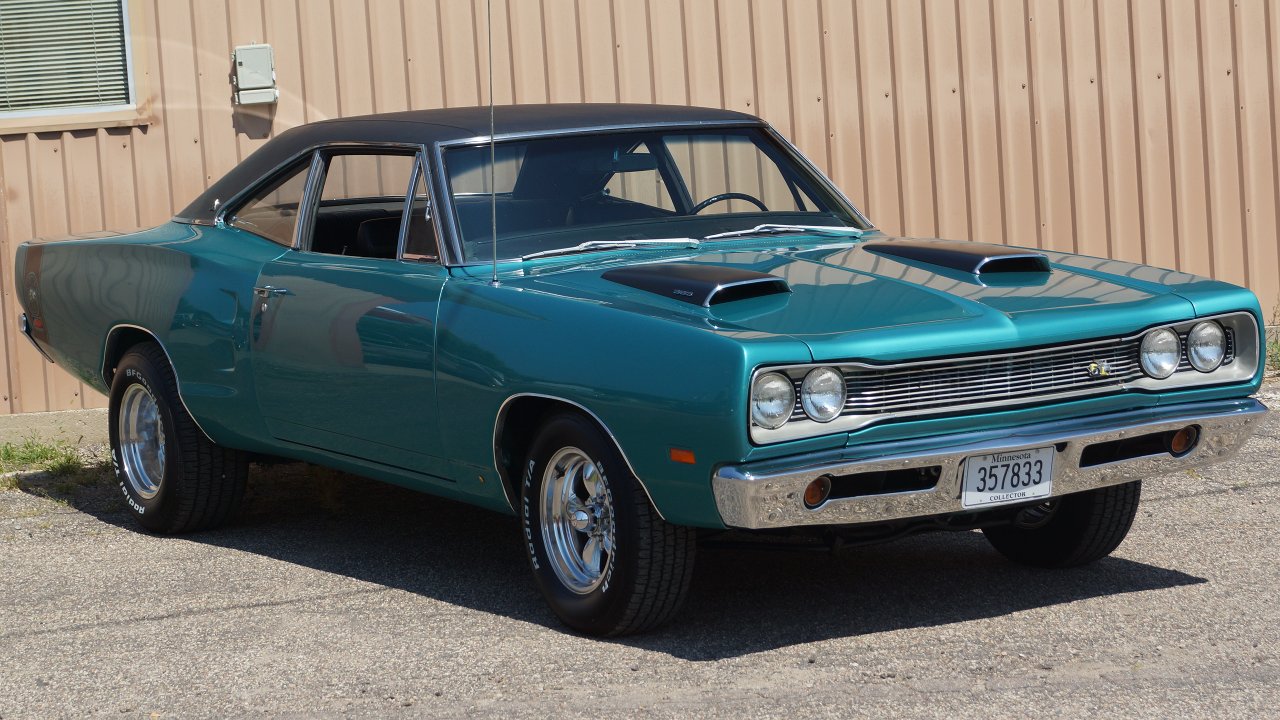
The 1969 Dodge Super Bee did not become a cult favorite by chasing luxury buyers or prestige badges. It earned its reputation by giving working people access to serious performance, loud styling, and honest mechanical hardware at a price that still left room in the paycheck. That mix of brute force and blue-collar pragmatism turned a single model year of Super Bee production into one of the clearest expressions of late‑1960s American muscle.
Seen today at auctions, cruise nights, and in online owner groups, the 1969 Dodge Super Bee stands as a reminder that the muscle car boom was not only about top‑shelf halo cars. It was also about stripped‑down sedans and hardtops that delivered big‑block power, minimal frills, and a sense that ordinary drivers could share the same asphalt as far more expensive machinery.
Built from basic hardware, tuned for working people
The Super Bee story is rooted in the decision by Dodge to start with humble underpinnings instead of a premium platform. For its low‑budget performance model, Dodge drew from Chrysler B‑Body stock and used the Coronet 440 pillar sedan as the foundation, a choice that kept costs down while still providing a strong, mid‑size chassis. Positioned as a performance‑oriented derivative of the Dodge Coronet, the Super Bee relied on that sturdy structure and simple construction to handle the torque of big V8 engines without demanding luxury‑car money.
That strategy aligned with a broader push inside Mopar to offer affordable muscle rather than only high‑trim showpieces. The 1969 Dodge Super Bee was described as Mopar’s answer to affordable muscle, packing big power into a bold, aggressive package that was Based on the same basic architecture as more ordinary Coronets. By avoiding elaborate interiors and complex options, Dodge could sell the Super Bee to buyers who might otherwise have settled for a modest family sedan, giving them a car that looked and felt ready for the drag strip while still fitting a working household budget.
Styling that shouted muscle without the luxury gloss
Part of the Super Bee’s appeal came from the way it looked unapologetically tough rather than polished. The 1969 Dodge Coronet Super Bee is often described as a legendary muscle car with aggressive styling, including a long hood, wide stance, and black accents that emphasized its performance intent. Owners and observers point to details like the bold side stripes, functional hood scoops on higher‑spec cars, and wide tires that filled the wheel wells as visual cues that this was not a mild family sedan dressed up with chrome.
Color choices reinforced that attitude. Dodge leaned into loud hues that matched the era’s taste for attention‑grabbing muscle, with bold colors such as HEMI Orange and Plum Crazy Purple appearing on Super Bees and related models. Enthusiasts also celebrate cars finished in vivid B5 Blue, a shade that made even a relatively plain Super Bee stand out in traffic. Combined with minimal chrome and straightforward trim, these paints made the car look like a street‑legal race machine rather than a status symbol, which resonated with buyers who wanted to be noticed for power and personality instead of luxury.
Powertrain choices that delivered serious speed per dollar
The mechanical side of the 1969 Dodge Super Bee was where its blue‑collar legend truly took shape. The car is consistently described as a muscle car powerhouse that combined aggressive styling with serious performance at an affordable price, and that reputation rests on its range of big V8 engines. The Super Bee was known for powerful V8 engines that gave it strong straight‑line performance, with the model frequently cited as a muscle car icon because its power, aggressive looks, and price made it a favorite among performance enthusiasts who could not justify a top‑tier exotic.
Within that lineup, the 1969 Dodge Super Bee 440 Six Pack became a particular point of pride. Enthusiast accounts describe the 440 Six Pack as a special order package that turned the Super Bee into a B‑Body beast, pairing a 440 cubic inch engine with triple two‑barrel carburetors for serious street and strip capability. The Super Bee was also offered with other big‑block options that gave buyers a range of performance levels, from strong street cruiser to near‑race‑ready machine, all while keeping the basic car relatively simple and attainable. That combination of choice and value helped cement its reputation as a working person’s route into high performance.
A model year that refined the formula and broadened appeal
Although the Super Bee had been introduced in 1968 as a high‑performance variation of the Coronet, the 1969 model year sharpened the concept in ways that mattered to everyday buyers. Reports on the Dodge Super Bee generations note that in 1969 Dodge added a hardtop version to the lineup, expanding beyond the original pillared sedan. That change gave customers who wanted a sleeker profile and slightly more upscale appearance a way to buy into the same mechanical package, without abandoning the car’s core identity as a budget‑minded muscle machine.
At the same time, the 1969 Dodge Coronet Super Bee continued to be framed as a quintessential example of American muscle, with its powerful engines, aggressive styling, and affordable price making it a popular choice for performance enthusiasts. Descriptions of the car emphasize that it was a muscle car icon whose mix of speed, power, and style fit an era when those traits were king, yet it remained accessible enough that a buyer with a steady job could realistically sign the paperwork. That balance between refinement and restraint in 1969 helped the Super Bee reach more garages without losing the raw character that defined its first year.
Why the Super Bee still resonates with blue‑collar enthusiasts
Decades after the original production run, the 1969 Dodge Super Bee continues to be celebrated as a working man’s muscle car, a label that reflects both its origins and its enduring fan base. One account explicitly describes the 1969 Dodge Super Bee as a legendary muscle car known for bold styling and powerful V8 engines, produced by Dodge during the height of the muscle car era. Another characterizes it as Mopar’s answer to affordable muscle, a car that delivered big power in a package that did not pretend to be luxurious or refined. Those descriptions align with the way owners still talk about the car: not as a delicate collectible, but as a tough, straightforward machine built to be driven hard.
Visual evidence from period‑correct and restored examples reinforces that image. A red 1969 Dodge Coronet Super Bee is described as a muscle car with a long hood, black accents, and wide tires, details that underline its no‑nonsense stance. Enthusiast commentary on multiple Super Bees from 1968, 1969, and 1970 notes that tastes in youth culture have shifted toward connectivity and multi‑purpose vehicles, yet the appeal of simple, fast, rear‑drive cars remains strong. The Super Bee fits that nostalgia perfectly, representing a time when a buyer could walk into a Dodge showroom, choose a basic B‑Body shell, add a serious V8, and drive out with a car that felt ready for the drag strip without requiring a banker’s salary.
That legacy has also shaped how later enthusiasts and commentators talk about related models such as the Dodge Charger Super Bee In 1969 and the way Dodge positioned its muscle offerings more broadly. References to the Dodge Charger Super Bee The Legend of the and to the mightiest Super Bee packages within the Mopar League show that the name has come to stand for a particular philosophy: big displacement, straightforward engineering, and pricing that once put high performance within reach of line workers, mechanics, and young families. The 1969 Dodge Super Bee, sitting at the center of that story, earned its blue‑collar legend status not through rarity or opulence, but by proving that serious speed could be sold in plain clothes and still feel special every time the key turned.
More from Fast Lane Only