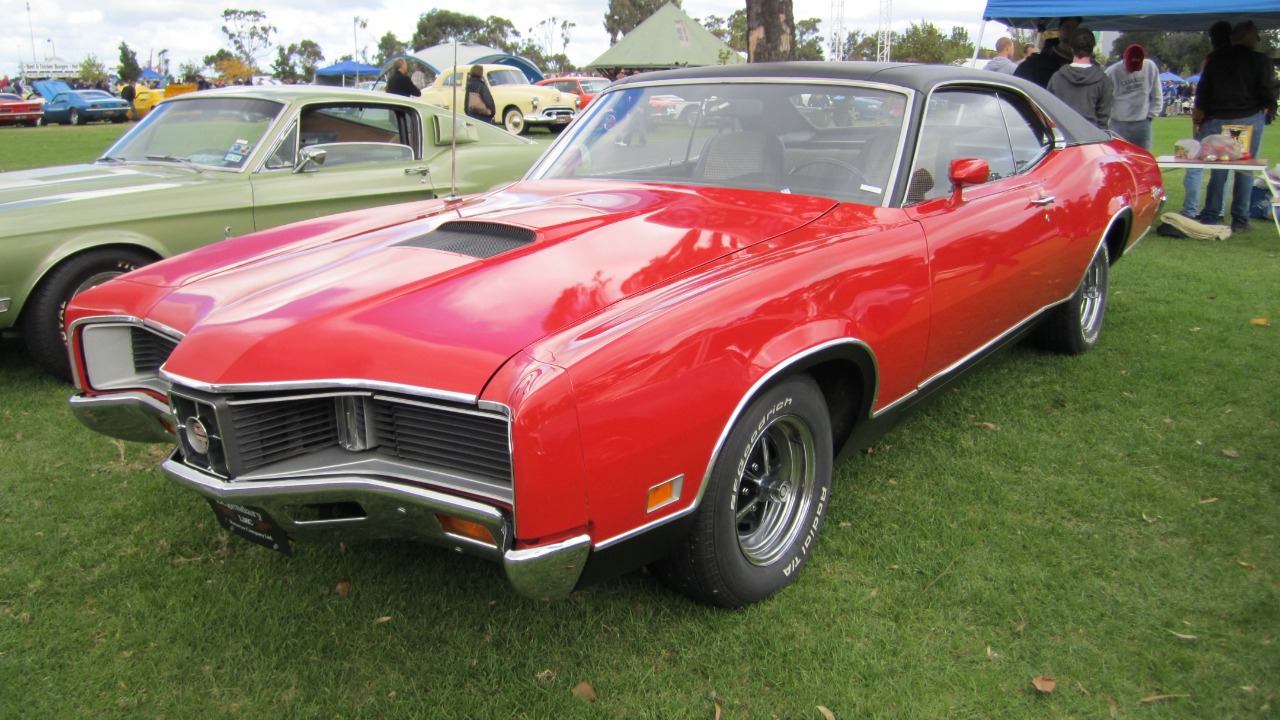
Some classic cars feel like they were designed to look fast while sitting still. The 1970 Mercury Cyclone Spoiler was different: it looked fast because it had to be fast. It wasn’t born from a styling studio daydream so much as from the very practical, very expensive reality of racing at high speed.
Back then, showroom cars and race cars weren’t living on separate planets. If a manufacturer wanted to run certain bodies and parts in top-tier stock car racing, it often had to sell a street-legal version too. That’s where the Cyclone Spoiler comes in—an honest-to-goodness bridge between the dealership and the oval.
A street car built to satisfy the rulebook
In the late ’60s and early ’70s, NASCAR’s “homologation” requirements forced automakers to make real production versions of special aero parts. The idea was simple: if it raced, the public had to be able to buy it. That rule pushed manufacturers to build limited-run models that were basically rolling loopholes—legal on paper, purposeful in the wind tunnel.
The Cyclone Spoiler was Mercury’s way of showing up to the aero arms race with the right paperwork and the right sheetmetal. It wasn’t trying to be subtle, either. When you see “Spoiler” on the fender, it’s not a vibe; it’s a mission statement.
Why “aero” suddenly mattered more than bragging rights
On big-speed tracks, horsepower is only part of the argument. Drag and lift can make two cars with similar engines behave like they’re from different decades. When everyone’s pushing 180 mph-plus, the air becomes a rival you can’t outmuscle, only outsmart.
That’s why the Cyclone Spoiler’s shape wasn’t just decoration. The front end, the overall profile, and the add-ons were meant to cut resistance and keep the nose planted. It’s the same logic modern race teams obsess over—just executed with 1970s tools and a whole lot of confidence.
The nose that told you everything
The Cyclone Spoiler’s most famous feature was its extended, aerodynamic front end. Compared with more upright muscle cars of the era, this longer nose helped smooth airflow and reduce the “brick wall” effect at speed. In racing terms, that meant better stability and less wasted power fighting the wind.
It also helped address front-end lift, the sneaky problem that makes steering feel light when you most want it to feel rock-solid. The goal wasn’t to look futuristic for fun; it was to keep the tires working when the track turned into a blur. If a street car ends up looking like it’s leaning into the wind, there’s usually a reason.
The spoiler wasn’t a punchline
The word “spoiler” gets tossed around today like a fashion accessory. On this car, it was closer to a tool—something you added because the stopwatch demanded it. By managing airflow at the rear, a spoiler could help reduce lift and calm the car down at the kind of speeds where “calm” is a real performance feature.
And yes, it also looked cool, which never hurts. But the vibe came from function, not the other way around. If it seems a little over-the-top for a road car, that’s because the road car was playing dress rehearsal for the oval.
From dealership floors to high-banked ovals
The Cyclone Spoiler’s entire point was to connect Mercury’s showroom lineup to its racing ambitions. Selling the street version helped legitimize the aero bits used in competition. It was a direct pipeline: build it, sell it, race it.
That connection mattered because racing was marketing with a checkered flag. A fast, stable body shape wasn’t just about winning; it was about showing buyers that Mercury could run with the best. The Cyclone Spoiler was essentially a rolling argument that performance wasn’t only under the hood—it was also in the wind.
Engines: not the only star, but still part of the story
It’s impossible to talk about a muscle-era special without acknowledging the big V8 energy swirling around it. The Cyclone Spoiler could be ordered with serious power, and that helped it feel like more than an aero experiment. After all, nobody wants a race-inspired body with an engine that feels like it got lost on the way to the party.
Still, the key racing connection wasn’t just the horsepower menu. It was the fact that the body and aero package were conceived with competition in mind. Think of the engine as the headline and the aerodynamics as the behind-the-scenes reporting that explains why the headline happened.
Limited production, big intent
Cars like the Cyclone Spoiler weren’t meant to be everywhere. They were produced in limited numbers because their real job was to make the race car legal and competitive. The street versions were the “proof of purchase” that satisfied the rules and justified the parts.
That limited-run nature is also why they feel so special now. You’re not just looking at an old Mercury; you’re looking at a moment when regulations, engineering, and ego all collided. It’s the kind of car that exists because someone decided second place wasn’t acceptable.
What made it feel different than a typical muscle car
Most muscle cars from the era were shaped by straight-line swagger: big engines, bold styling, and the assumption that air was just something you drove through. The Cyclone Spoiler treated air like a design constraint. That shift in thinking is what tied it so closely to racing.
Even at normal speeds, the car’s proportions hint at its purpose. It doesn’t look delicate, but it does look intentional. And if you’ve ever seen a purpose-built race car up close, you know that’s the highest compliment: nothing is random.
Why the racing link still matters today
Plenty of classics are beloved because they’re beautiful, loud, or nostalgic. The Cyclone Spoiler adds another layer: it’s a street car that exists because racing demanded it. That’s a more direct relationship than most modern “track editions” can claim, because this one was built to satisfy real competition rules.
It also helps explain why the car has such a specific, almost stubborn personality. It wasn’t designed to appeal to everyone; it was designed to win. And it’s hard not to admire a machine that wears its reason for existing right there on its face—long nose, sharp intent, and all.
More from Fast Lane Only
- Unboxing the WWII Jeep in a Crate
- 15 rare Chevys collectors are quietly buying
- 10 underrated V8s still worth hunting down
- Police notice this before you even roll window down
*Research for this article included AI assistance, with all final content reviewed by human editors.