The late 1970s were full of wild shapes, but almost no car turned geometry into attitude quite like the Lotus Esprit. By 1978, its razor-edged profile was not just a styling experiment, it was a statement that a wedge could be as potent as any big-capacity engine. I want to look at how that moment, crystallised by the Esprit’s early evolution and its leap onto the big screen, turned a sharp silhouette into a genuine weapon in the supercar wars.
The wedge era finds its cutting edge
When I picture the Esprit, I see a car that distilled the wedge craze into something lean and purposeful rather than theatrical. Other exotics of the period chased drama with scoops and wings, but the Lotus approach was to keep the lines clean and let the stance do the talking. In 1978, that mattered, because the Esprit did not have a huge multi‑cylinder engine to lean on, so the visual message had to be that lightness and sharpness could beat brute force.
That philosophy put the Esprit in quiet opposition to the more opulent Italian supercars that dominated posters and bedroom walls. Brands like Ferrari were still building curvaceous grand tourers that celebrated power and heritage, while Lotus was effectively saying that a low, knife‑like body and a mid‑engine layout could deliver a different kind of thrill. I see that contrast as the starting point for understanding how the Esprit’s wedge stopped being a mere fashion and started to feel like a deliberate weapon in a very competitive arena.
From studio sketch to 1978 street fighter
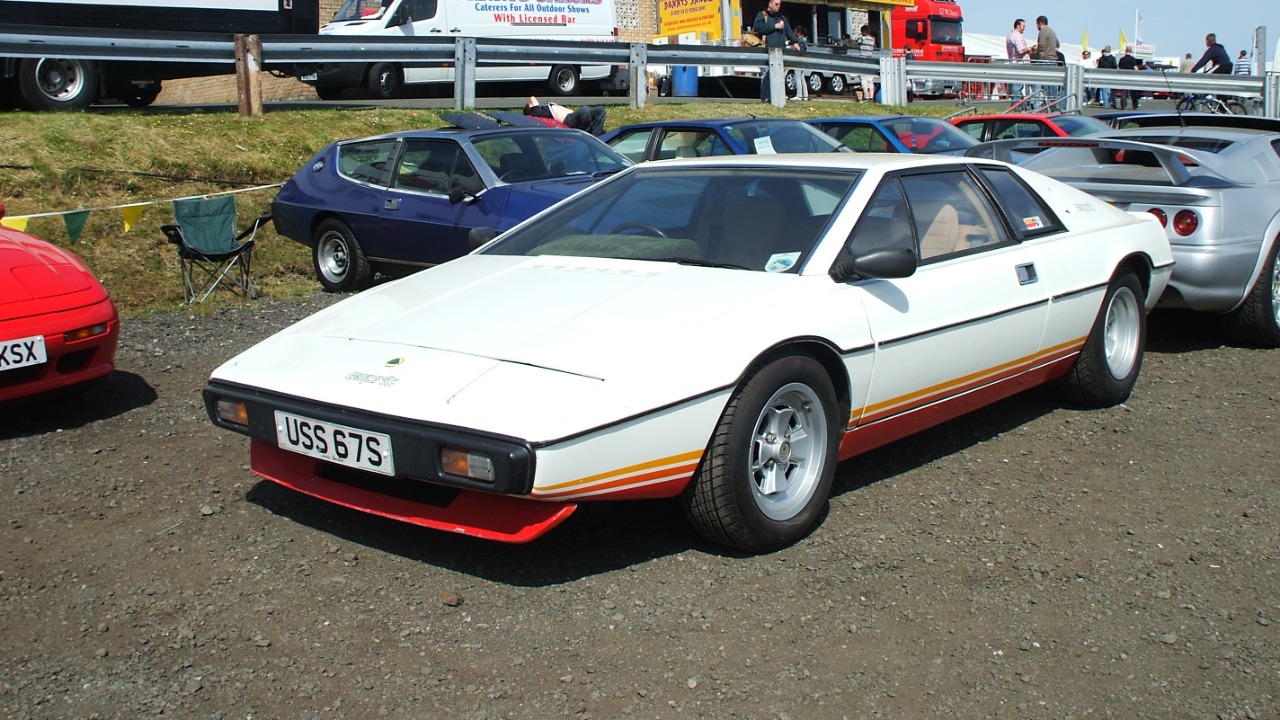
By the late 1970s, the Esprit’s engineering had begun to catch up with its visual aggression, which is where the “weapon” idea really takes hold for me. Underneath that angular shell, Lotus kept refining the chassis and suspension so the car could back up its looks with precision. The chassis and rear suspension were reworked with an upper link at the back to relieve stress on the half‑shafts, a very Lotus way of turning a potential weak point into an opportunity to sharpen handling. I read that as a clear sign that the company wanted the Esprit to feel as focused on a twisting road as it looked in a showroom window.
That focus extended to the way the car was packaged and detailed. The Esprit’s cabin was low and dramatic, with the driver pushed forward and the glasshouse tapering around them, which made the wedge shape feel like a cockpit rather than just a styling exercise. Even the way the stereo and instruments were arranged was designed to create what one period description called a “dramatic environment,” and that theatricality mattered because it turned every drive into a small event. In 1978, when many sports cars still felt like modified saloons, that combination of engineering tweaks and immersive design helped the Esprit’s geometry feel like a tool for speed rather than a designer’s indulgence.
James Bond turns the wedge into a cultural weapon
The real inflection point, at least in my mind, came when the Esprit stepped into the world of James Bond. The Lotus Esprit S1 that appeared in The Spy Who Loved Me was nicknamed Wet Nellie by the production team, a playful nod that hints at how central the car was to the film’s identity. On screen, the Esprit did not just look futuristic, it literally transformed into a submarine and fired cement at pursuing vehicles, which turned that wedge profile into a kind of cinematic gadget in its own right. I see that sequence as the moment the Esprit stopped being just a specialist British sports car and became a global pop‑culture object.
What strikes me is how naturally the car fit into the Bond universe. The low nose, the flat planes and the mid‑engine stance made it look like a piece of military hardware even before the special effects team went to work. When James Bond, played by Roger Moore, drove it off the pier and into the sea, the transformation felt almost plausible because the Esprit already looked like something that could belong to a secret service armoury. That is where the wedge became a weapon in the cultural sense: the shape itself carried enough menace and modernity that audiences were willing to believe it could do almost anything.
From forgotten prop to enduring myth
The afterlife of that Bond car underlines just how powerful the Esprit’s image became. Once filming wrapped, the submarine version of the Esprit was stored away and eventually forgotten, which is a wonderfully incongruous fate for such a famous movie machine. According to a detailed account of the prop’s journey, it sat in a storage unit until it was rediscovered and later identified as the original screen car, a twist that only deepened its legend. I find it telling that a vehicle once treated as expendable set dressing is now recognised as a key piece of automotive and film history.
The story did not end with rediscovery either. The same report notes that the submersible Esprit, the one fans know as Wet Nellie, is now owned by Elon Musk, who has spoken about being inspired by that very Bond sequence. In that sense, the wedge profile that once slipped off a jetty in a fictional chase has influenced real‑world technology entrepreneurs and their ambitions. When I think about the Esprit as a “weapon,” I see this chain of influence, from a prop built for After filming was complete to a collector’s item that still shapes how people imagine the future of transport.
How rivals and later Esprits sharpened the formula
Once the Esprit had shown how effective a wedge could be, other cars with similar silhouettes found their own fame, often through the same cinematic route. The Lamborghini Countach is a prime example, its angular bodywork burned into public memory by appearances in films like Cannonball Run. Yet even there, I notice a difference: the Countach is remembered as a wild, almost cartoonish presence, while the Esprit’s Bond role framed its wedge as something stealthier and more tactical. That contrast helped Lotus carve out a distinct identity in a field crowded with dramatic shapes.
Lotus itself kept evolving the Esprit to keep that edge sharp. The Turbo model, launched at the Royal Albert Hall in 1980, took the original Giugiaro design and added cross‑spoke alloy wheels and body‑coloured aerodynamic add‑ons that hinted at the extra performance underneath. I see that car as the logical extension of the 1978 formula: the same low, aggressive wedge, now backed by forced induction and visual cues that made the bodywork look even more like a precision instrument. It proved that the shape was not a dead‑end trend but a platform Lotus could keep refining.
Living with the legend today
For anyone tempted to chase the dream and buy an Esprit now, the wedge’s transformation into a weapon has some very practical consequences. A detailed buyers guide points out that early cars used a rear hub carrier bolted directly to the chassis so the driveshaft could double as a suspension arm, a clever but uncompromising solution that hurt refinement. That is the flip side of the Esprit’s focused character: the same engineering that made it feel like a scalpel on a back road can make it demanding in daily use. I think that tension is part of the car’s appeal, but it is also a reminder that this is not a casual classic.
Even so, I understand why enthusiasts keep circling back to the Esprit, especially the late‑1970s cars that first nailed the look. The combination of that low, angular body, the mid‑engine layout and the Bond connection gives the car a layered appeal that few rivals can match. When I compare it with the softer lines of contemporary grand tourers or the more flamboyant Italian exotics, the Esprit still feels like the purist’s choice, a car that turned its wedge profile into a precise tool for speed and storytelling alike. In a world where so many performance cars blur into one another, that sharpness, both literal and metaphorical, is exactly what keeps the 1978 Lotus Esprit feeling dangerous in all the right ways.
More from Fast Lane Only: