The 1987 Oldsmobile 442 arrived at a moment when classic American muscle seemed like a fading photograph, not a living product on a showroom floor. Power was down, emissions rules were up, and the brands that once built quarter-mile legends were suddenly talking about fuel economy and downsizing. Against that backdrop, Oldsmobile tried to bottle some of its late‑1960s magic one more time, using the 442 badge as a bridge between its glory days and a very different automotive future.
When I look at that final‑generation 442, I see less of a numbers car and more of a statement. It was Oldsmobile’s way of saying that performance and personality still mattered, even if the spec sheet no longer scared stoplights into submission. To understand why that matters, you have to trace how the 442 evolved from a brute-force muscle car into a carefully tuned, almost nostalgic performance package.
The 442 legacy that set the bar impossibly high
Oldsmobile did not invent the muscle car, but it helped define what the formula looked like when it got serious. In the late 1960s and early 1970s, the 442 nameplate stood for big‑block torque, aggressive styling, and a kind of middle‑class swagger that let you roll into a dealership and drive out with something that could embarrass more expensive machinery. Over a little more than a century, the division built plenty of memorable models, yet the early 442s became shorthand for Oldsmobile at its most confident and most willing to chase performance.
By the time enthusiasts started looking back on those cars as the “last great” Oldsmobiles, the contrast with what came later was already baked in. The original 442s were born in an era of cheap fuel and lax regulations, when engineers could chase horsepower with relatively few constraints and let the marketing department worry about the rest. That heritage loomed over every later attempt to revive the badge, including the mid‑1980s cars that some fans now revisit through detailed retrospectives on the 1985‑1987 442, because the name itself promised more than the changing industry could realistically deliver.
How regulations and rivals boxed Oldsmobile in
By the early 1980s, the world that had created the original 442 was gone. New, strict emissions standards reshaped what every American manufacturer could sell, and the era of big‑cube engines and single‑minded straight‑line speed gave way to catalytic converters, lower compression, and a lot of engineering compromise. Following the new, strict emissions standards that all American cars needed to adhere to came a wave of downsized platforms and shared components, and Oldsmobile suddenly had to fight for performance credibility inside General Motors while also staying on the right side of regulators.
That pressure was not just technical, it was political inside the corporate family. Chevrolet and Pontiac had their own performance halos, and the 442 often lived in the shadow of those louder, more heavily marketed siblings. As the decade wore on, the combination of regulatory limits and internal competition eroded the business case for a niche performance coupe. The 442 nameplate survived into the late 1980s, but as one detailed look at its Downfall notes, it was axed in 1987, a casualty of changing priorities rather than a lack of enthusiast affection.
The G‑body stage and the “gentleman’s muscle” pivot
To understand why the 1987 442 felt like a revival attempt, you have to look at the platform under it. By the early 1980s, By the early 1980s, General Motors was revamping its platforms, and the Cutlass line was split into different bodies, with the Oldsmobile Cutlass Supreme on the G‑body. That G‑body architecture, shared with other GM intermediates, gave Oldsmobile a rear‑wheel‑drive canvas with traditional proportions, the kind of long hood and short deck that still looked right wearing a performance badge.
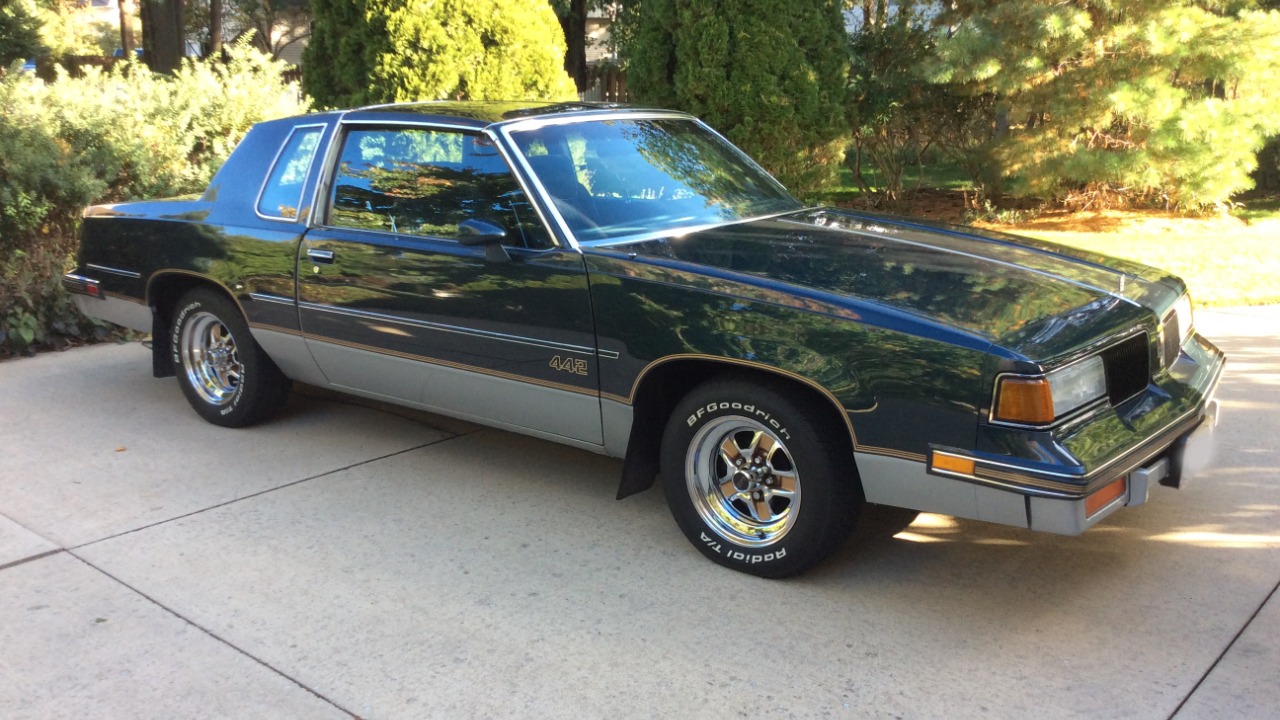
Oldsmobile leaned into that layout by positioning the 442 as a sort of “gentleman’s muscle car,” a coupe that mixed V8 power and firmer suspension tuning with a more upscale interior and restrained styling. Instead of wild graphics and giant spoilers, the mid‑1980s 442s relied on subtle two‑tone paint, tasteful striping, and the kind of comfort features that made them easy to live with every day. The 1987 model sat at the end of that run, using the G‑body Cutlass Supreme as its base and trying to balance nostalgia for the old street brawlers with the reality that buyers now expected air conditioning, decent fuel economy, and a quiet highway ride alongside their performance aspirations.
What the 1987 442 actually brought to the fight
On paper, the 1987 Oldsmobile 442 was not a return to the tire‑shredding brutality of its late‑1960s ancestors, and I do not think it was meant to be. Instead, it was a carefully curated package that tried to squeeze as much character as possible out of the hardware GM was willing to sign off. The car used a small‑block V8, rear‑wheel drive, and a performance‑oriented axle ratio, then layered on cosmetic cues that linked it back to the glory days, from the badging to the color schemes. It was more about feel than outright speed, a car that wanted to remind you of what muscle used to mean without pretending the clock had been turned back.
That approach made the 1987 442 a kind of bridge between eras. It still offered the long‑hood stance, the burble of a V8, and the satisfaction of a rear‑drive chassis, but it did so within the constraints of emissions equipment and corporate fuel‑economy targets. For buyers who remembered the original 442s, it was a chance to reconnect with that identity in a package that fit the late‑1980s world. For younger enthusiasts, it served as an introduction to the idea that performance could be about more than raw numbers, that a car could be quick enough, comfortable enough, and distinctive enough to feel special even if it no longer ruled the drag strip.
Why the revival was brief but still matters
The 1987 Oldsmobile 442 did not save Oldsmobile, and it did not reverse the broader decline of traditional muscle cars, but I see it as an honest attempt to keep that spirit alive during a difficult transition. The fact that it was axed in 1987 underscores how fragile that kind of niche performance program had become inside a large corporation focused on efficiency and volume. Yet the car’s short run also sharpened its appeal, turning it into a snapshot of what was possible when engineers and product planners tried to honor a storied badge within tight limits.
Today, when I look at surviving examples of the 1985‑1987 442, I do not judge them against the quarter‑mile times of their grandparents. I see them as artifacts from a moment when Oldsmobile still believed that a name like 442 meant something, even if the market and the rulebook had moved on. In that sense, the 1987 model did revive muscle, not by recreating the past, but by translating it into a more refined, more constrained, yet still recognizable form. It was the last time Oldsmobile tried to make that translation in a rear‑drive V8 coupe, and that alone gives it a place in the long, complicated story of American performance cars.
More from Fast Lane Only: