The 1998 Subaru Impreza 22B did not just borrow credibility from rallying, it arrived as a road‑legal distillation of a World Rally Championship dynasty. Built in tiny numbers to celebrate a dominant era on the stages, it fused competition hardware, aggressive styling and cult scarcity into a package that still defines what a homologation special should be. I want to trace how that mix of motorsport pedigree, engineering detail and later collector frenzy turned the 22B into rally legend rather than just another fast Subaru.
From WRC dominance to birthday present
To understand why the 22B matters, I start with the backdrop: in the 1990s, In the World Rally Championship, Subaru was the manufacturer to beat, powered by a blue and gold Impreza that became a rolling billboard for gravel glory. Those factory cars, driven by star names and backed by a full works program, turned the Subaru Impreza into a global shorthand for all‑weather speed. When the company’s competition arm kept stacking up results, the idea of bottling that success into a road car stopped being a marketing fantasy and became a logical next step.
By the late 1990s, Subaru was also looking inward, marking milestones in its own corporate story as much as its rally record. The brand had just turned 40 years old, and that anniversary collided neatly with a run of world titles that begged for a commemorative model. Rather than a trim package or a sticker set, Subaru chose to create a short‑run Impreza that would mirror the look and feel of the works WRC car, giving committed fans a way to park a slice of that era in their own garages.
A road car that thought it was a rally special
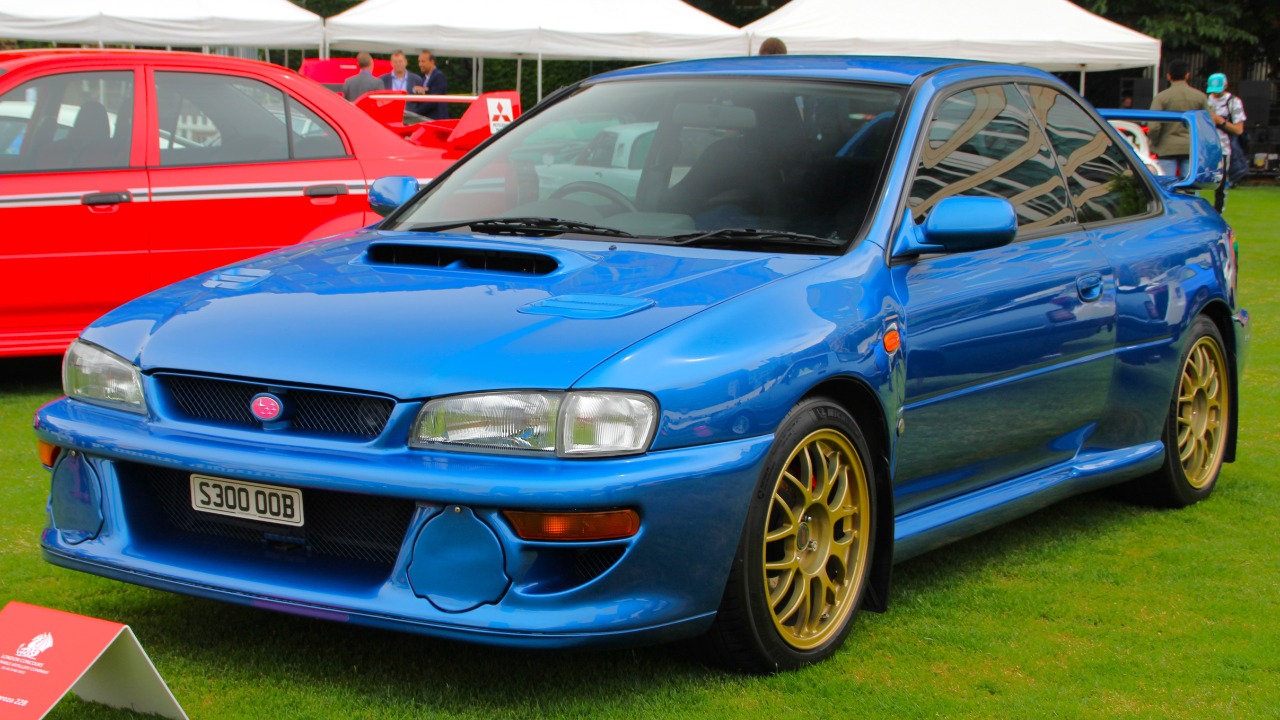
What made the 22B so compelling to me is how unapologetically it leaned into its competition roots. The car was powered by a balanced, hand‑built 2.2-liter flat‑four engine that produced 276 horsepower at 6,000 rpm, a configuration that echoed the torque‑rich character of the rally engines of the day. That motor sat inside a chassis tuned for immediacy rather than comfort, with gearing and response that made back roads feel like special stages. It was not a sanitized performance car, it was a machine that asked the driver to meet it halfway.
Underneath, the hardware pushed the Impreza platform to a new level. Reports on WRX models often praise their pace, but the 22B went further with a driver‑adjustable center differential that let owners bias torque toward the rear wheels if desired, mimicking the tuning flexibility of a rally car. When I look at that setup, combined with the short wheelbase and punchy turbo engine, it is clear why so many drivers describe the 22B as feeling like a competition car that just happens to wear number plates.
Design lifted straight from the stages
The 22B’s legend is not only about how it drives, it is also about how it looks when you walk up to it. This car was given a unique color of blue and had fender flared widebody taken from the Peter Stevens designed WRC car, so the stance and proportions are almost a one‑to‑one echo of the works machines that fans watched on television. The swollen arches, deep front bumper and towering rear wing turned an otherwise modest compact sedan into something that looked ready to launch off a Finnish crest. Even parked, it carries the visual tension of a car that expects to be driven hard.
That visual drama was not just for show, it fed directly into the way enthusiasts perceived the car’s authenticity. In an era when the market was full of warmed‑over specials, the 22B’s bodywork, color and stance signaled that this was not a marketing exercise but a genuine link to the stages. When I see modern clips calling the Subaru Impreza 22B “the rally car,” it is that combination of functional aero, rally‑inspired detailing and squat, purposeful posture that makes the description feel accurate rather than hyperbolic.
Rarity, mythology and supercar money
Scarcity is the accelerant that turned the 22B’s strong fundamentals into full‑blown mythology. Enthusiast breakdowns of Things Everyone Forgot About The Subaru Impreza 22B STI routinely highlight how few were built and how tightly they were controlled, which is why the car is often described as the Rarest JDM Sports Car of its era. That limited production run meant that even when the cars were new, demand outstripped supply, and stories of instant sell‑outs only added to the aura. For fans outside Japan, the car’s home‑market focus made it feel even more unattainable.
Over time, that scarcity has translated into values that would have sounded absurd when the car launched. One high profile example saw a 22B sold for mind‑blowing £480,000, which the same report pegged at $600,000, putting a humble Subaru Impreza firmly into supercar territory. When I watch modern reviews describing a 1998 Subaru Impreza 22B as an Impreza for Supercar Money, it is clear that the market is not just paying for performance figures, it is paying for a story that blends rally dominance, rarity and the sense that this car represents the peak of a particular Subaru of engineering philosophy.
How the cult keeps growing
What fascinates me now is how the 22B’s reputation continues to expand long after the last example left the factory. Enthusiast videos frame the car as a high‑water mark from a time when, as one Mar review puts it, there was a time when cars had soul and were not engineered primarily to satisfy safety regulations and fuel economy targets. That nostalgia is powerful, and the 22B fits it perfectly, because it feels like a rally car disguised as a road car rather than a mass‑market product tuned to offend no one. When I see it sideways on gravel, it looks like a time capsule from a less compromised era.
The cultural footprint goes even further, spilling into gaming and fan communities that treat the car as a character in its own right. One Bio describes The Subaru Impreza 22B STi as a high‑performance version of the Subaru Impreza produced by Subaru Tecnica International, complete with the iconic blue and gold color scheme that fans instantly recognize. When I connect that kind of digital reverence with the real‑world clips that still call the 22B the original rally icon for Subaru, it is obvious why the car’s legend feels larger than its modest footprint and four‑cylinder engine. The 22B is no longer just a limited‑run Impreza, it is the shorthand for an entire generation of rally‑bred performance that enthusiasts, myself included, are still chasing.