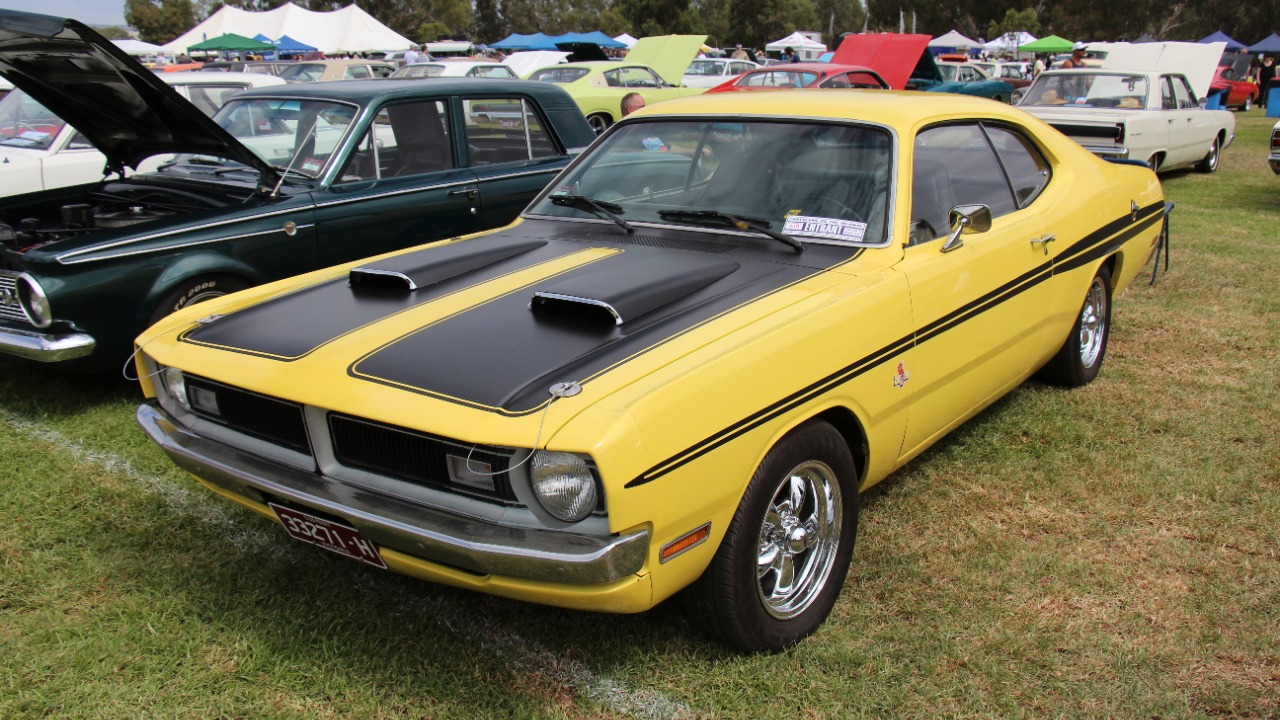
The Demon 340 has quietly shifted from quirky compact to blue-chip Mopar, moving from the fringes of the muscle car conversation into the center of serious collector attention. Its rise in value rests on a mix of limited production, period performance credibility, and a short, controversial model run that gives the car a story as sharp as its styling.
As I trace how this once budget-minded street brawler became a high-dollar Dodge classic, the pattern that emerges is clear: the Demon 340 combined the right engine, the right timing, and just enough controversy to stay memorable long after bigger, flashier muscle cars faded from the market.
From Dart offshoot to standalone performance icon
The Demon 340 started life as a spin on a sensible compact, not a halo car, which makes its later status as a prized collectible even more striking. Dodge built the car on the Dodge Dart platform, turning a practical small sedan into a short-wheelbase performance coupe that could carry serious power without the bulk or price of full-size muscle. One detailed account notes that the 1971 Dodge Demon was a performance-oriented compact based on the Dodge Dart platform and that it was introduced in 1971 specifically to give buyers a lighter, more agile alternative to the brand’s bigger V8 offerings, a move that positioned the car as a kind of factory hot rod hiding in plain sight within the compact segment in 1971.
That strategy is echoed in another period-focused overview that describes the 1971 Dodge Demon as a compact muscle car built off the Dart, with aggressive looks and a distinct front grille that separated it visually from the more conservative sedans. The same reporting explains that the car was Introduced as a budget-friendly muscle option, with rally styling cues and bold graphics that made it stand out in showrooms without pricing it out of reach of younger buyers, a combination that now reads like an early blueprint for the modern “entry-level performance” niche Introduced as a budget-friendly muscle car.
Why the 340 small-block matters so much
The heart of the Demon’s modern appeal is right in its name: the 340 cubic inch small-block that gave the car its punch and its identity. Collectors prize this engine because it delivered big-block style performance in a lighter, more responsive package, and because its output stayed remarkably consistent across its production life. One technical review notes that Horsepower stayed consistent throughout it’s life, from 68 to 73, with only minor fluctuations, underscoring how the 340 maintained its reputation as a stout, reliable performer even as emissions and insurance pressures started to choke other engines of the era Horsepower stayed consistent.
That mechanical credibility is reinforced by period performance anecdotes that have become part of Demon lore. A feature on an unrestored survivor highlights a 71, 340 car that remained in super-low-mileage condition, emphasizing how a well-preserved example could still deliver the kind of quarter-mile performance that made the model famous, with the piece calling out the car as an un-restored low-mileage ’71 340 survivor and detailing how its original drivetrain still backed up the factory performance claims decades later 71, 340.
Short run, big controversy, lasting cachet
Scarcity alone does not make a classic, but a short and controversial production run can give a car a mystique that pays dividends in the collector market. The Demon 340 benefited from exactly that dynamic. A detailed historical overview explains that The Dodge Demon 340 was part of the fourth-generation Dodge Dart lineup and that its run was brief, with the model’s distinctive devil-themed branding and mascot ultimately prompting a rebrand to Dart Sport, a shift that effectively capped the number of cars that would ever carry the Demon 340 name and its original graphics package The Dodge Demon 340.
The broader context of the early 1970s only sharpened that sense of a car caught at a turning point. One retrospective notes that In the early 1970s, the automotive industry was facing a lot of challenges, citing Political pressures, bad press, and tightening emissions rules that pushed automakers away from overtly aggressive performance branding and high-compression engines. The Demon 340 arrived just as those forces were gathering, which meant its devilish mascot and unapologetic performance focus were out of step with where the market was heading, but perfectly aligned with what later generations would romanticize about the muscle era In the early 1970s.
Design details that aged into desirability
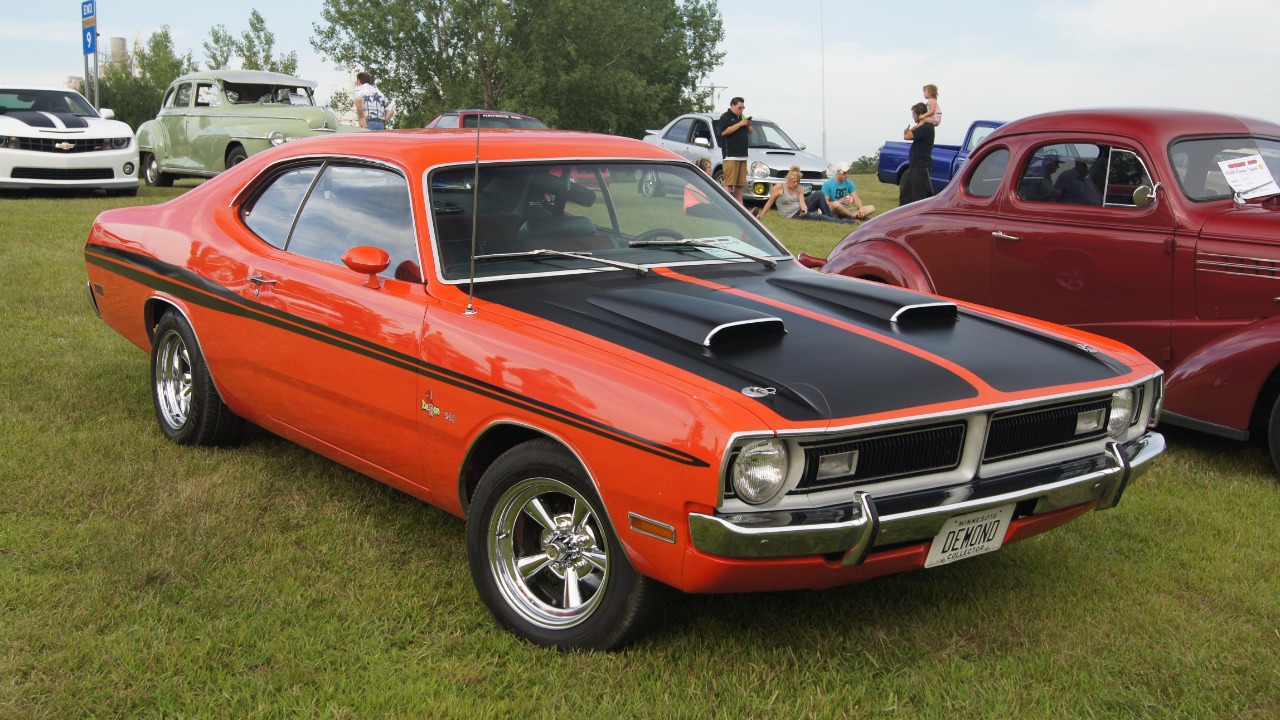
Beyond the engine and the name, the Demon 340’s styling and equipment mix have aged into exactly the kind of details collectors now hunt for. Contemporary descriptions emphasize that the 1971 Dodge Demon was a bold and controversial addition to Dodge’s muscle car lineup, with a unique front fascia, cartoonish devil mascot, and side stripes that made it instantly recognizable in traffic. One enthusiast-focused summary from Jun 10, 2025, describes the 1971 Dodge Demon as a performance compact that bridged the gap between economy cars and full-size muscle, highlighting how the visual differences between the two model years gave each version its own following among restorers and purists Jun 10, 2025.
Chassis and suspension choices also play a role in the car’s modern reputation. A detailed buyer’s guide points out that Rallye suspension and E70 x 14 bias-belted tires enhanced handling and that heavy-duty brakes shortened stops, giving the Demon 340 a more balanced feel than some of its straight-line rivals. The same guide notes that the Demon’s mascot was a distinctive part of the package and that the model was rebranded as Dart Sport 340 for 1973, a change that effectively froze the original Demon look in a narrow window of production and made surviving cars with intact graphics and Rallye equipment especially desirable today Rallye suspension.
How owners and enthusiasts reframed the Demon 340
Values do not rise in a vacuum; they follow enthusiasm, and the Demon 340 has benefited from a passionate owner base that has spent years reframing the car from oddball to icon. One enthusiast write-up from May 18, 2025, calls the 1971 Dodge Demon 340 The Mischievous Muscle Machine and describes it as Mopar’s bold answer to the growing demand for compact performance, emphasizing how its combination of light weight, strong small-block power, and playful branding made it a favorite at local tracks and cruise nights long before auction houses caught on The Mischievous Muscle Machine.
Another enthusiast-focused overview from Jun 16, 2025, reinforces that narrative by describing how the Demon was Introduced as a budget-friendly muscle car with aggressive looks, rally stripes, and a distinct front grille that set it apart from other Dodge offerings. That same piece frames the car as a compact muscle model that has since become a favorite among fans of vintage American performance, with its mix of affordability and character helping it stand out in a crowded field of classic cars and making it a natural candidate for rising values as other Mopars become harder to afford Demon.
Production numbers, rarity, and the GSS halo
Rarity is a key driver of value, and while the Demon line was not built in microscopic numbers, the performance variants and special packages were limited enough to matter. A detailed breakdown of a high-spec example notes that of the 69,861 Demons produced, only a small fraction were built to the highest performance specifications, including the GSS package that added dealer-tuned upgrades and distinctive badging. The same account describes how Inside this Demon, an especially correct interior and period-correct details add to the car’s appeal, illustrating how originality and documentation can dramatically increase what collectors are willing to pay for a Demon 340 GSS compared with a more basic model Inside this Demon.
Production context also matters when comparing the Demon 340 to other Mopar muscle cars. A buyer’s guide focused on 1971-’72 Demon 340 models explains that these cars offered a robust small-block alternative to heavier, big-block machines, and that the 340-powered versions were positioned as affordable Mopar muscle in a relatively bulletproof shell. The same guide notes that the 1971-’72 Dodge Demon 340 engine package delivered performance that could rival some 383-powered models, which helps explain why collectors now see these cars as a smart way to access period-correct Mopar performance without the higher acquisition and restoration costs associated with larger, rarer engines 1971-’72 Dodge Demon 340.
Market perception and the “budget brawler” narrative
One of the most powerful drivers of the Demon 340’s current status is the way it is framed in modern media as a “budget brawler,” a car that punched above its weight both in period and today. A video feature from May 10, 2024, describes how Dodge leadership recognized that younger buyers wanted something that could appeal to them as far as a budget friendly street brawler, and that the car that emerged from that thinking was the Demon 340, with its compact footprint, strong small-block, and stripped-down attitude. That narrative of a car built to deliver maximum fun per dollar has translated neatly into the collector era, where buyers still see the Demon 340 as a way to access authentic muscle car performance without paying Hemi money budget friendly street brawler.
Earlier reporting from Jun 6, 2025, on the 1971 Dodge Demon reinforces that positioning by describing the car as a performance-oriented compact muscle model based on the Dodge Dart platform, with a focus on delivering strong acceleration and handling in a smaller, more affordable package. That same overview notes that the 1971 Dart Demon was marketed to drivers who wanted the look and feel of a serious performance car without the insurance and fuel costs of the biggest engines, a value proposition that resonates strongly with today’s buyers who are balancing nostalgia with practicality when they decide where to put their money Dodge Dart.
Why the Demon 340 now commands serious money
When I look across the reporting and the way enthusiasts talk about the car, the Demon 340’s climb in value comes into focus as the product of intersecting forces rather than a single breakthrough moment. Historically grounded pieces from Apr 16, 2023, and later explain how the model arrived at a time of Political and regulatory upheaval, carried a distinctive devil-themed brand identity that was quickly retired, and wrapped a durable, high-output 340 small-block in a compact, Rallye-tuned chassis. Those ingredients created a car that felt special in period and became even more distinctive as other muscle cars blurred together in memory Political pressures.
Layered on top of that is the way modern enthusiasts and owners have championed the Demon 340 as a core part of Mopar history rather than a footnote. Detailed community write-ups from Jun 10, 2025, and Jun 16, 2025, frame the car as a compact muscle standout with a mischievous personality, while technical reviews of the 340 engine emphasize that its Horsepower stayed consistent from 68 to 73, reinforcing its reputation as a dependable performer. Add in the limited production of high-spec variants like the GSS, the documented 69,861 total Demons, and the survival stories of un-restored low-mileage ’71 340 survivor cars, and the result is a model that now checks every box collectors look for: story, scarcity, performance, and a visual identity that could only have come from Dodge in the early 1970s 68 to 73.
More from Fast Lane Only