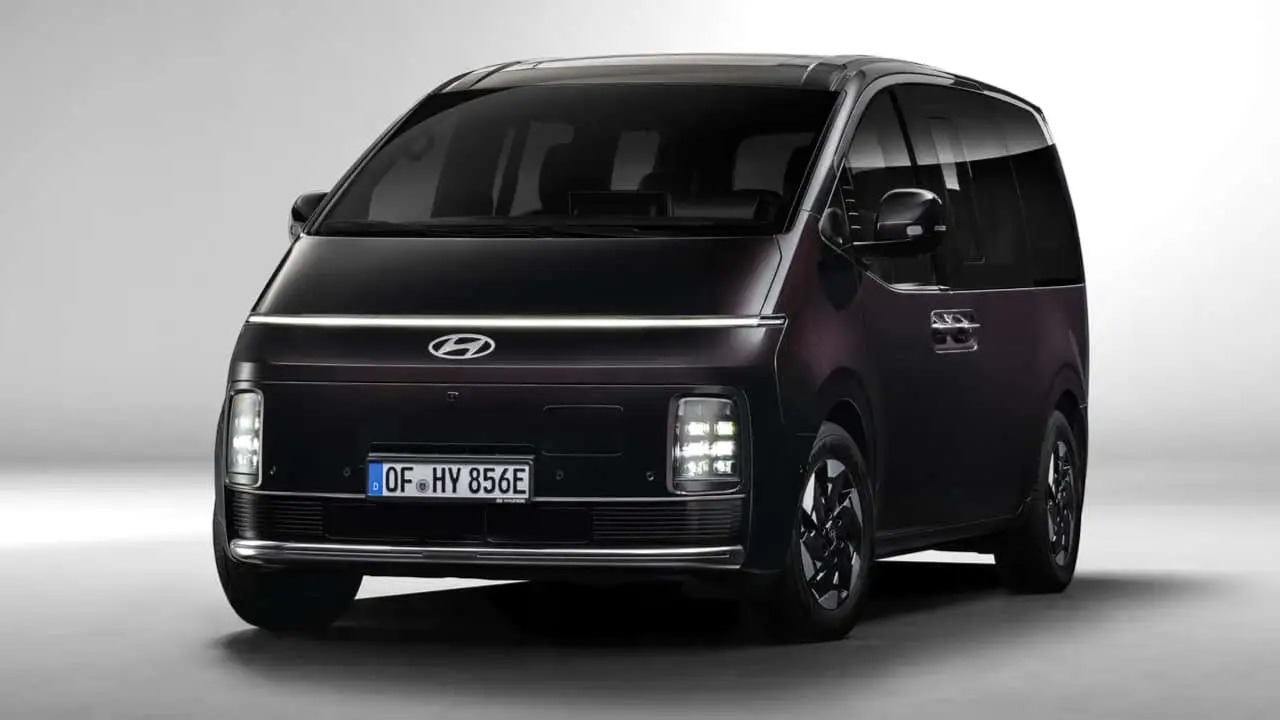
Hyundai is stepping directly into Volkswagen’s turf with the Staria Electric, a futuristic people mover that targets the same nostalgic, lifestyle-leaning buyers the ID. Buzz was supposed to win over. Where Volkswagen’s retro van has struggled to convert buzz into broad adoption, Hyundai is betting that hard numbers on space, charging speed, and practicality will matter more than heritage. I see the Staria Electric as a calculated attempt to correct the ID. Buzz playbook, not by copying its charm, but by outclassing it on everyday usability.
From retro dream to real-world disappointment
Volkswagen’s ID. Buzz arrived with enormous expectations, especially in Europe and among American enthusiasts who saw it as a spiritual successor to the classic Microbus. In practice, the vehicle has not lived up to that emotional build up. In Europe, the Buzz holds nearly 70 percent share of the electric van segment, yet that dominance reflects a small, slow growing niche rather than a breakout mainstream hit. A detailed look at the U.S. response, including critical commentary in mid 2025, paints the ID. Buzz as a case study in how strong branding and nostalgia can mask compromises in price, packaging, and performance that limit broader appeal.
From my perspective, the ID. Buzz faltered because it tried to be an icon first and a tool second. Its footprint and interior flexibility have been constrained, its range and charging performance have not reset expectations, and its pricing has pushed it toward affluent early adopters rather than families or shuttle operators who actually need a van. The result is a vehicle that photographs beautifully but struggles to justify itself as a rational purchase, especially when buyers compare it with more conventional crossovers or vans that offer more seats and more usable space for less money. That gap between image and utility is precisely where Hyundai is positioning the Staria Electric.
Hyundai’s strategic entry into a Buzz-dominated niche
Hyundai has not stumbled into this segment by accident. The company has deliberately developed a battery electric version of the Hyundai Staria minivan to enter a European market where the Buzz currently dominates. Reporting from Europe notes that the Hyundai Staria is arriving in a space where the ID. Buzz holds nearly 70 percent share, which means Hyundai is targeting a category that is established but underexploited. Rather than chasing a vague “lifestyle EV” label, Hyundai is presenting the Staria Electric as a multi purpose vehicle that can serve as a family hauler, airport shuttle, or commercial people mover.
The timing and geography of Hyundai’s rollout underline that strategy. The production Staria Electric, an 800-volt minivan, debuted in Brussels and is scheduled to go on sale in Korea and Europe before the middle of 2026. Hyundai has confirmed that the Staria Electric will arrive in Korea and certain European markets in the first half of 2026, with arrival timing for other regions still under discussion. By starting in Korea and Europe, Hyundai is focusing on regions where electric vans already have regulatory support and urban use cases, and where the ID. Buzz has created awareness but not yet locked in customer loyalty. I read that as a deliberate attempt to meet existing demand with a more functional alternative rather than trying to invent a new segment from scratch.
Packaging, powertrain, and the case for everyday usability
Where the ID. Buzz leans on retro styling, the Staria Electric leans on numbers. The Hyundai STARIA Electric has 9 seats and charges faster than most smartphones, a claim that immediately signals its focus on capacity and turnaround time. The Staria Electric will be available as a seven seater and as a nine seat wagon version, giving Hyundai flexibility to serve both private buyers and fleet operators. Under the floor is an 84-kWh battery and a 215-horsepower motor driving the front wheels, a configuration that prioritizes efficiency and packaging over headline grabbing acceleration. The front drive Staria Electric with a single electric motor putting out 215 horsepower would actually be the least powerful minivan in Hyundai’s lineup, which I interpret as a conscious tradeoff in favor of range and cost.
The charging and electrical architecture are where Hyundai’s technical choices stand out. Thanks to its 800-volt electrical system, Hyundai said the electric van can recharge from 10 percent to 80% in about 20 minutes with DC fast charging. The official WLTP range rating is 248 miles on a full charge, which is competitive for a large, upright van and more than sufficient for daily urban and suburban duty cycles. The Korean automaker did not specify the maximum power input of the Staria when connected to a DC fast charger, but it did confirm that the 800-volt platform is designed for the same top up behavior seen in Hyundai’s other fast charging EVs. In practical terms, that means a shuttle operator can cycle the van through a charger during a lunch break and return it to service without lengthy downtime, a scenario where the ID. Buzz has struggled to differentiate itself.
Interior tech and flexibility where the Buzz fell short
Inside, Hyundai is clearly targeting the everyday frustrations that have limited the ID. Buzz’s appeal. The Staria Electric is described as a futuristic electric minivan that can drive up to 248 miles on a full charge, but that is not the best part. The cabin is designed around multiple seating configurations, including seven seat and nine seat layouts, with an emphasis on easy access and flat load floors. The production Staria will feature large in car displays that adorn the dashboard, along with modern connectivity such as Apple CarPlay and Android Auto. That combination of flexible seating and familiar tech is aimed squarely at families and ride share drivers who value function over nostalgia.
Hyundai Motor Company has framed the STARIA Electric Debuts, Setting a New Standard for Spacious, Everyday Zero-Emission Mobility as a step forward in multi purpose vehicle innovation. The company highlights the STARIA as a vehicle that can support spacious, everyday zero emission mobility rather than a niche lifestyle statement. I see that positioning as a direct response to the ID. Buzz’s limitations. Where Volkswagen offered a stylish but relatively constrained interior, Hyundai is promising a true MPV that can handle school runs, hotel shuttles, and cargo duty without compromise. That focus on versatility, supported by the nine seat configuration and generous dimensions referenced in enthusiast discussions of The Hyundai Staria EV, gives Hyundai a tangible advantage in real world use cases.
Global ambitions and the question of U.S. potential
Hyundai’s global rollout plan hints at ambitions that extend beyond Europe and Korea, even if the company is cautious in its public statements. The Staria Electric has been unveiled globally, with sales beginning in 2026, and Hyundai has already acknowledged strong interest from markets that are not part of the initial launch. One detailed report describes the Staria Electric as “Probably Not for America” in its current form, noting that the underfloor 84-kWh battery and 215-horsepower motor driving the front wheels are tuned for efficiency rather than the higher speed, long distance expectations of many U.S. buyers. At the same time, another analysis of Hyundai’s forbidden fruit minivan suggests that the Staria Electric might come to the USA after all, with Hyundai indicating that arrival timing for North America is still under evaluation.
More from Fast Lane Only