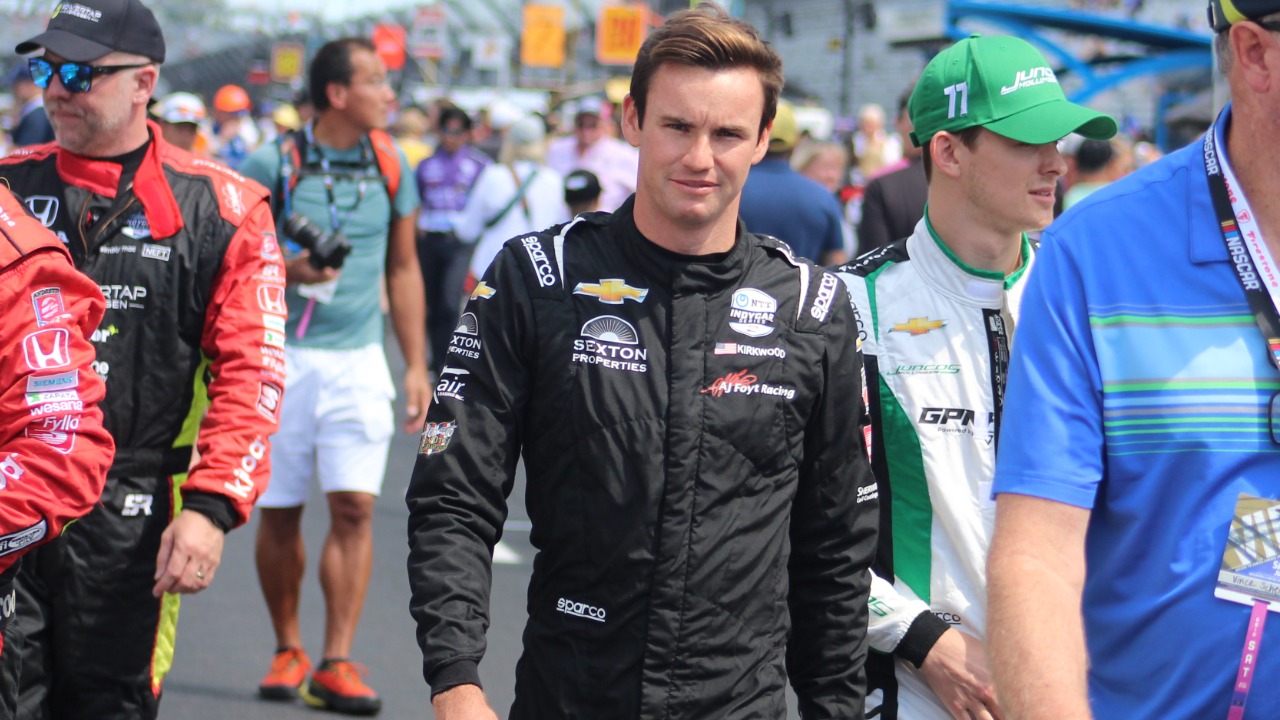
Kyle Kirkwood left the streets of Arlington with more than a trophy, stepping into the IndyCar championship lead after a fierce duel that reshaped the early-season narrative. His victory in the inaugural Grand Prix on the Texas street circuit came at the expense of Alex Palou, who had seemed poised to extend his own authority over the series.
The result not only elevated Kirkwood to the top of the standings, it also signaled a broader shift, with Andretti Global suddenly looking like the team most capable of dictating the tempo of the title fight.
How Kirkwood seized control in Arlington
The new points leader has been building toward a moment like this since his arrival in IndyCar, and in Arlington he converted speed into a statement win. Kirkwood attacked the tight street layout with evident confidence, then produced the decisive move in the closing stages to secure victory and the championship edge over Alex Palou.
Across his IndyCar tenure, Kyle Kirkwood has been associated with raw pace on temporary circuits, and Arlington fit that pattern as he managed the race from the front once he cleared Palou.
Reports from Arlington describe Kirkwood making a forceful but controlled pass on Palou that defined the outcome, a move that reflected the composure of a driver who now expects to dictate races rather than simply react to them.
In the aftermath, the points table confirmed what the on-track battle had hinted: Kirkwood now holds the series lead, with Palou relegated to the role of chief pursuer after finishing second.
Palou’s response and the new dynamic at the top
Alex Palou did not leave Arlington empty-handed, but second place felt like a missed opportunity given that he had led 16 laps on Sunday and appeared in control for long stretches. His pace was strong enough to keep most of the field at arm’s length, yet once Kirkwood arrived on his gearbox, Palou could not repel the decisive attack.
The Spaniard remains firmly embedded in the title picture as the primary threat to Kirkwood, and Alex Palou has already shown in previous seasons that he is adept at absorbing setbacks and turning them into long-term gains.
Even so, Palou’s ability to bank a strong result on an unfamiliar layout still mattered in Arlington, particularly given the attrition and strategic chaos that often define new street races.
Yet the optics of being passed for the win by a rival who then moved ahead in the standings will sharpen the intensity of their rivalry as the calendar shifts toward more traditional venues.
The updated table after Arlington, which details the gap between Kirkwood, Palou and the rest of the contenders, reflects how quickly one race can reorder expectations in IndyCar.
Andretti Global’s surge and the supporting cast
Kirkwood’s triumph was not a solo act; it was the centerpiece of a strong weekend for Andretti Global that hinted at a deeper structural shift. The team has now recorded its 78th victory in a combined 1,507 starts dating back to 2003, a statistic that underlines both its longevity and its renewed sharpness.
Inside the organization, Kirkwood’s rise to the top of the standings validates the decision to build around his street and road course strengths, while other Andretti Global entries also showed front-running pace in Arlington.
One of the most telling aspects of the race was how consistently Andretti machinery appeared near the front, suggesting that the team has unlocked a setup window that suits both the current car and the unique demands of the Arlington layout.
Elsewhere in the paddock, Pato O’Ward emerged as the top Chevrolet finisher in fifth for Arrow McLaren, a result that kept him in the broader points conversation even as the spotlight fell on Kirkwood and Palou.
The full championship picture, including the positions of veterans such as Will Power, Marcus Ericsson and Josef Newgarden, can be seen in the complete standings that followed the Arlington weekend.
Those rankings show how a single strong or weak outing on a street circuit can dramatically compress or stretch the margins among drivers who expect to contend deep into the season.
What the standings say about the season ahead
The numbers now attached to Kirkwood’s name tell a clear story: he is the benchmark that others must chase as the series heads toward the next phase of the schedule. A separate look at Kirkwood’s record highlights how rapidly he has evolved from promising prospect to consistent frontrunner.
His Arlington performance, which combined aggressive racecraft with measured tire and fuel management, suggests that the current points lead is grounded in more than a single opportunistic result.
Palou, meanwhile, remains the most credible challenger, with his own statistical profile reinforcing that assessment. A closer view of Palou’s achievements shows a driver who rarely finishes outside the top positions and who tends to grow stronger as a season progresses.
The duel between Kirkwood and Palou now frames the championship narrative, but the standings also leave room for others to intervene, particularly if upcoming events favor drivers with oval expertise or teams that excel in changeable conditions.
For now, though, the balance of power has shifted toward Andretti Global and its new standard-bearer, with Arlington serving as the race where potential hardened into tangible control of the IndyCar title race.
More from Fast Lane Only