Jeep engines have powered everything from wartime scout cars to luxury SUVs since the 1940s. Some came from Willys, some from Kaiser and AMC, and later ones from Chrysler. A few earned reputations that outlived the vehicles they first went into, and each Jeep engine below earned ours.
These are the seven we’d trust with a long trip far from a parts store. The picks are our opinion, and the specs behind them come from the references listed at the end.
Willys Go Devil L134 four

The Go Devil was a 134-cubic-inch flathead four with about 60 hp and 105 lb-ft of torque, according to Driving Line. It powered the military Willys and then the civilian CJ. Willys later gave the civilian version a better cooling system and a smoother crankshaft. There is almost nothing on it to go wrong, and that is the point. We’ve written about why the Go Devil became a WWII mechanical legend. The Hurricane replaced it in 1952.
1963 Jeep Tornado OHC six
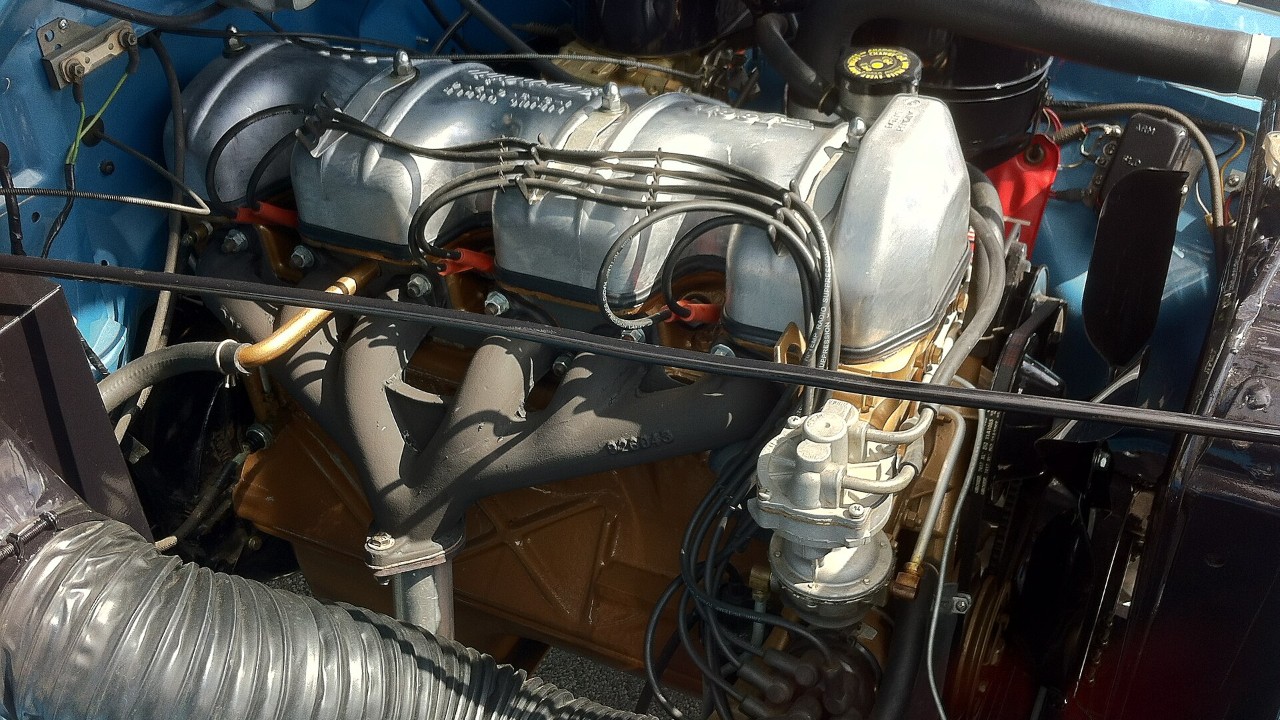
Kaiser Jeep launched the 230-cubic-inch Tornado in 1962 for the new Wagoneer and Gladiator. It made 140 hp at 4,000 rpm and 210 lb-ft of torque, according to Mac’s Motor City Garage. A single chain-driven camshaft with only six lobes worked both valves in each cylinder. Early engines did burn oil, so we’d only trust one that has been rebuilt and sorted. Even so, the military kept it in the M715, and IKA built it in Argentina through 1982.
AMC 360 V8 in a Jeep CJ

This one lives in a customized CJ, but Jeep first offered the AMC 360 in 1971 in J-series pickups and Wagoneers. JeepTech lists 245 hp (gross) for 1971, and 195 hp net for the optional four-barrel version in 1973. It has a cast-iron block and heads with hydraulic lifters. In short, it is a simple pushrod V8 with plenty of low-end torque. That makes it a sensible choice when someone wants V8 power in a small Jeep.
AMC 2.5-liter four in a 1992 Jeep Wrangler YJ

AMC introduced its 2.5-liter four in 1984, while it still owned Jeep. The engine started with a one-barrel carburetor in the CJ-7 and later moved to fuel injection. For example, JeepTech lists 117 hp for the throttle-body version in 1987–1990 Wranglers. It uses a cast-iron block and head with five main bearings. The four is no rocket, but it is honest. We’d trust it in a light Wrangler as long as nobody expects highway passing power.
Jeep 4.0-liter inline-six
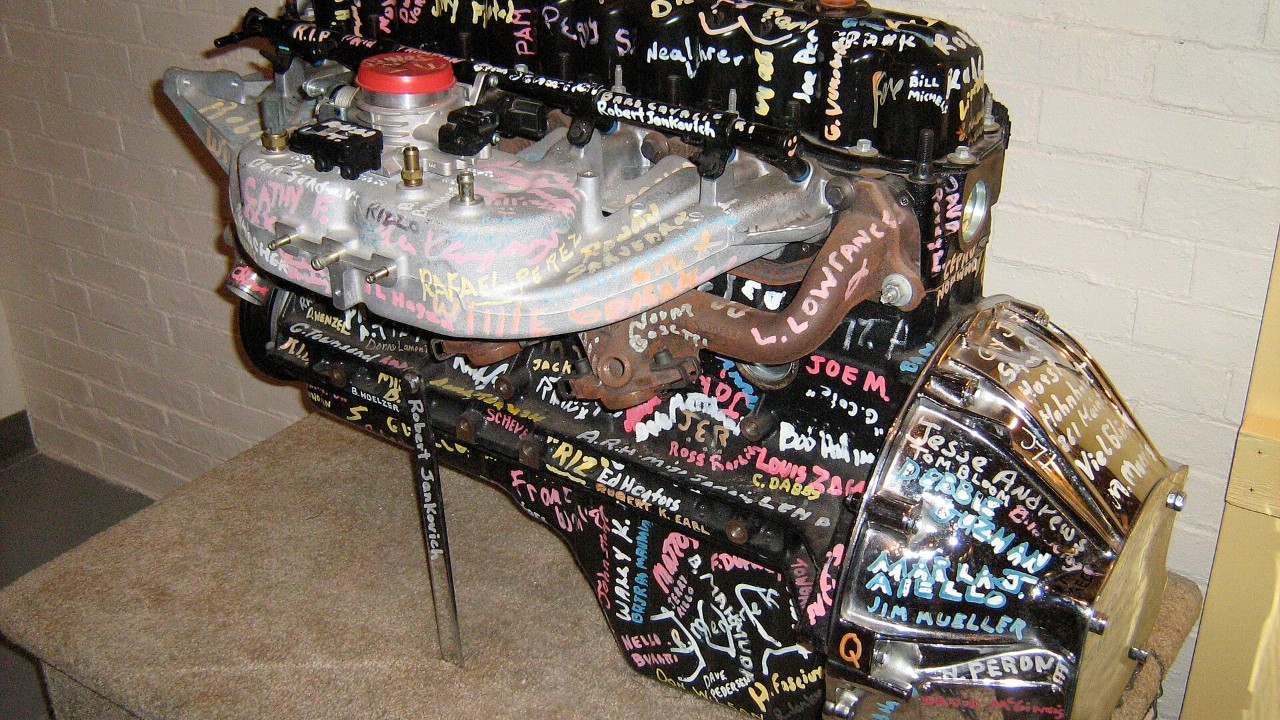
This is the Jeep engine most owners name first. The 242-cubic-inch six used overhead valves, hydraulic lifters, seven main bearings and multi-port fuel injection developed with Renault and Bendix. SlashGear says owners can expect more than 200,000 miles with regular maintenance. Jeep reworked it for the 1999 Grand Cherokee, which JeepSpecs rates at 195 bhp and 230 lb-ft. It stayed in the lineup through the 2006 model year, when a 3.8-liter V6 replaced it.
Jeep 4.7 PowerTech V8 engine

The 4.7 replaced the older 5.2-liter V8 in the Grand Cherokee. It is a single-overhead-cam 90-degree V8 with a cast-iron block and aluminum heads. JeepSpecs lists 235 bhp and 295 lb-ft for the standard engine. Later, a High Output version arrived for 2002 with about 30 more horsepower. We’d trust a 4.7 that comes with a stack of oil-change receipts. In our view, that torque makes it a fine long-distance tow engine.
5.7 Hemi V8 in a Jeep

The 5.7-liter Hemi reached the Jeep Grand Cherokee for 2005, rated at 325 hp and 370 lb-ft of torque. It also brought the Multi-Displacement System. That system switches between four- and eight-cylinder operation and can improve fuel economy by up to 20 percent, according to Auto123. It is closely related to the Hemi in the Chrysler 300C and Dodge Magnum. That shared hardware is a big part of why we’d trust one for towing and long highway runs. We’ve also covered talk that the Grand Cherokee may regain the Hemi V8.
More from Fast Lane Only