Kaiser-Frazer was born in 1945, when shipbuilder Henry J. Kaiser teamed up with car executive Joseph Frazer. It built its cars at Willow Run, Michigan, in a plant the government had put up for Ford’s B-24 bombers. One of its oddest products, the Sears Allstate, was a car you bought from a department store.
For a few years after World War II, pent-up demand gave the newcomer a strong start. Then the Big Three launched their new postwar designs, and the newcomer struggled. By the end of the 1955 model year, Kaiser was out of the American car business.
That short life is why so few of these cars turn up today. These are our picks, from the Sears Allstate to the Darrin roadster: seven Kaiser-Frazer cars with small production runs, odd sales channels or features that never caught on. Each one is a car we’d stop and stare at in any parking lot.
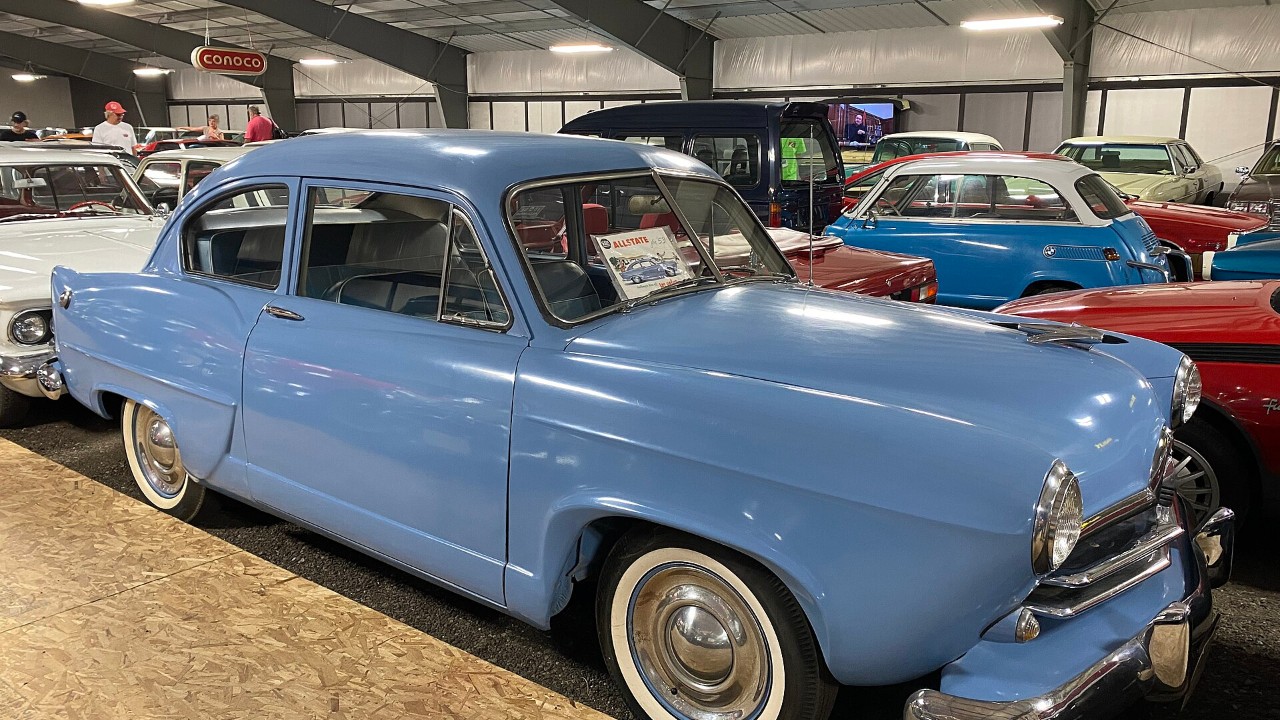
1. 1953 Sears Allstate

Imagine walking into Sears for a set of tires and leaving with a car. That was the pitch behind the Allstate, a Henry J compact that Kaiser rebadged and sold through Sears starting in 1952. It wore its own grille, hood ornament, hubcaps, badges and interior trim. Fittingly, it also rolled out on Allstate-brand tires and an Allstate battery.
Underneath, it was the same small Kaiser economy car. The Henry J came out of a federal loan deal that called for a five-seater priced at no more than $1,300, according to Hagerty. Buyers could choose a 68-horsepower four-cylinder or an 80-horsepower six.
The Sears Allstate idea never caught on. Hagerty puts Allstate production at fewer than 2,400 cars, and Sears dropped it after two slow years. By comparison, the Henry J sold 81,000 in its first year alone.
Our take: the Allstate is the purest oddity on this list. It is a reminder that in the early 1950s, even a mail-order catalog company thought it could sell cars. If you see one at a show, check the badges, because it is easy to mistake for a plain Henry J.
2. 1951 Frazer Vagabond hatchback
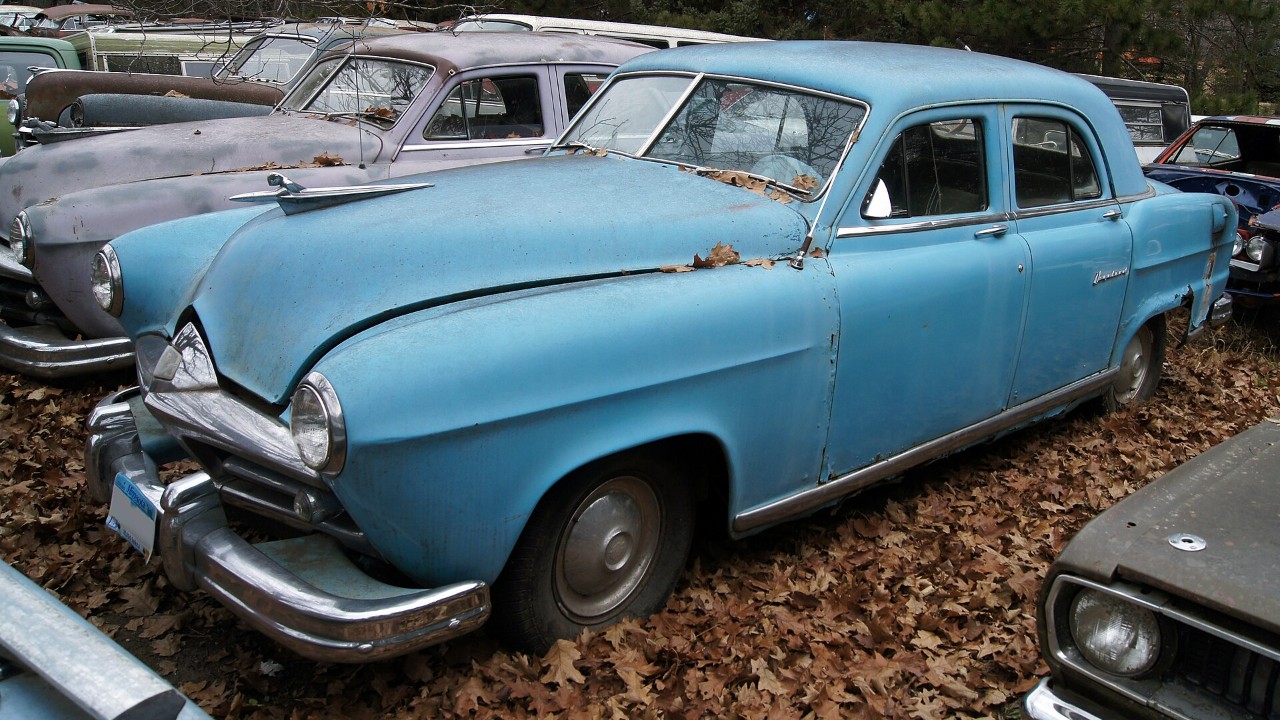
Long before hatchbacks filled every suburb, Frazer sold a sedan that turned into a cargo hauler. The 1951 Vagabond had a rear liftgate and a dropgate, so the whole back end opened up. Fold the rear seat, and the cargo area grew to 130 cubic feet.
There was one quirk. The left rear door doesn’t open, because the spare tire rides behind it, Old Cars Weekly explains. Power came from Kaiser-Frazer’s Supersonic six, which by then made 115 horsepower. Hydra-Matic drive was available at extra cost.
Kaiser-Frazer had been building these utility sedans since 1949. The design wasn’t perfect, though, because owners reported leaks and squeaks, according to Hagerty.
The 1951 Frazers used the existing body shell with new front and rear styling. Frazer was on its way out, and the Vagabond went with it. About 2,900 Vagabonds sold, roughly a third of that year’s Frazer output.
We love this one because it solved a problem the industry later solved with the station wagon and the SUV. It just did it with a four-door sedan and a lot of hinges. Parked with the gates closed, it looks like any other early-1950s sedan.
3. 1953 Kaiser Dragon
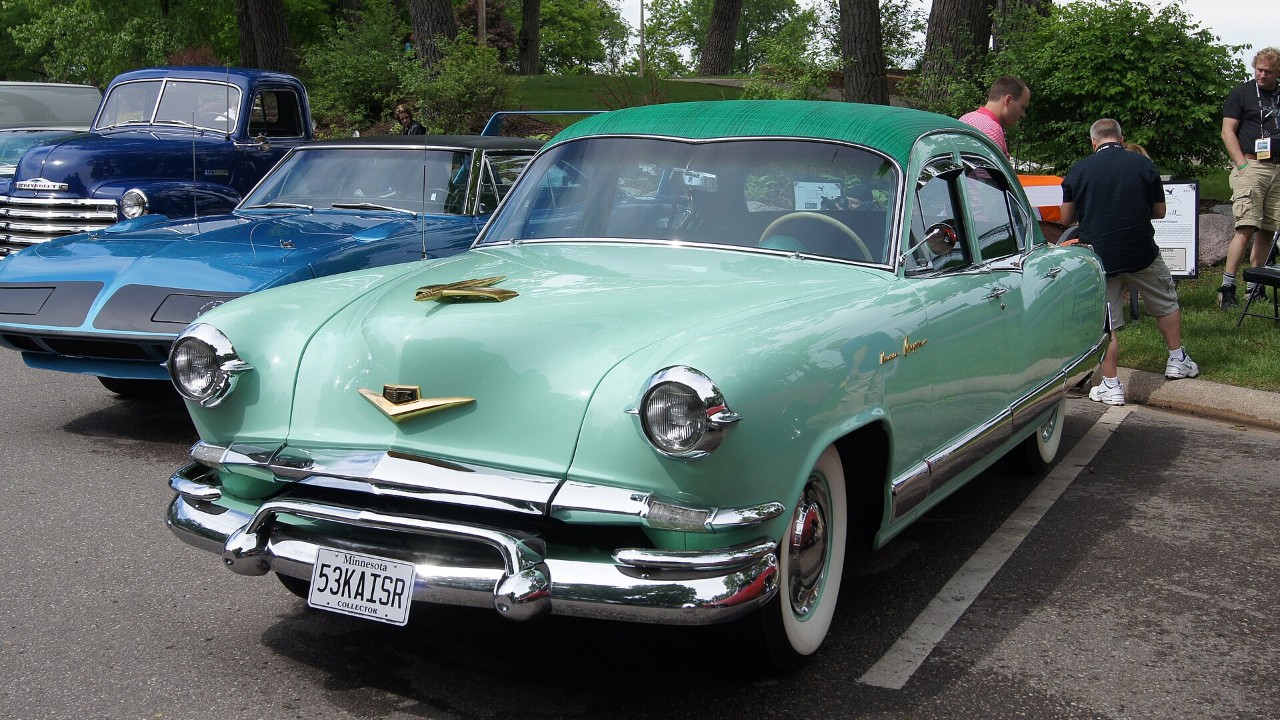
The 1953 Dragon cost close to $4,000, at a time when a Buick Roadmaster cost $3,358. For that money, Kaiser gave buyers a 14-karat gold-plated hood ornament and gold-plated nameplates. It also padded the cabin with almost 200 pounds of insulation.
The interior used a grass-patterned vinyl called “Bambu” paired with “Laguna” fabric. A plate with the owner’s name went on the dashboard. According to Curbside Classic, each buyer also got a personal letter from Edgar Kaiser.
Kaiser had first used the Dragon name in 1951 as a trim package with vinyl meant to look like reptile hide. For 1953, it became a model of its own, sold only as a four-door sedan.
Hydramatic automatic, power steering, a radio, a heater and tinted glass all came standard. Under the hood, however, sat a 118-horsepower six, while the cheaper Buick had a 188-horsepower V8. In the end, only 1,277 Dragons sold.
In our view, the Dragon was a luxury car with a mid-price engine, and that gap didn’t help. Today, its gold trim and odd vinyl make it one of the strangest American sedans of the decade. We dug into its name in an earlier look at the ’53 Kaiser Dragon.
4. 1954 Kaiser Darrin KF-161
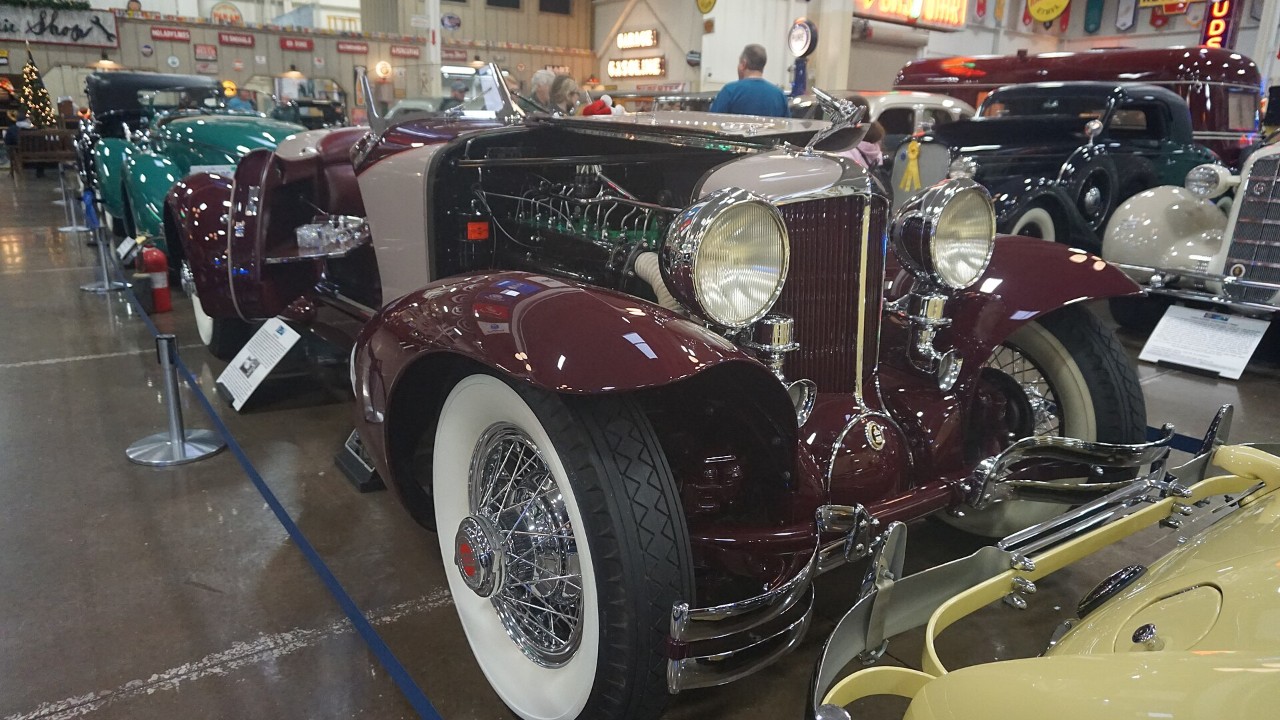
Like the Sears Allstate, Kaiser’s sports car started with a Henry J chassis, plus a body by designer Howard “Dutch” Darrin. Glasspar built its fiberglass bodies, Hagerty notes. Kaiser then fitted a 90-horsepower Willys six and doors that slid forward into the front fenders.
Performance was modest, with 0-60 mph in about 15 seconds and a top speed of around 95 mph. The doors, not the speed, were the show.
It wasn’t cheap, either. At launch, the Darrin cost $3,668, which was more than a Cadillac Series 62. It did offer a three-position landau top, a touch of luxury on a small roadster.
Kaiser stopped production in August 1954 after building just 435 cars, plus six prototypes. Darrin himself then sold the leftover roadsters. According to Hagerty, he fitted some with supercharged sixes and others with Cadillac V8s.
The Darrin is the most famous car here, and for good reason. Still, with only 435 built, most of us know it from photos alone. If you want the full story of those sliding doors, our earlier feature on the 1954 Kaiser Darrin covers them.
5. 1949 Kaiser Deluxe Sedan
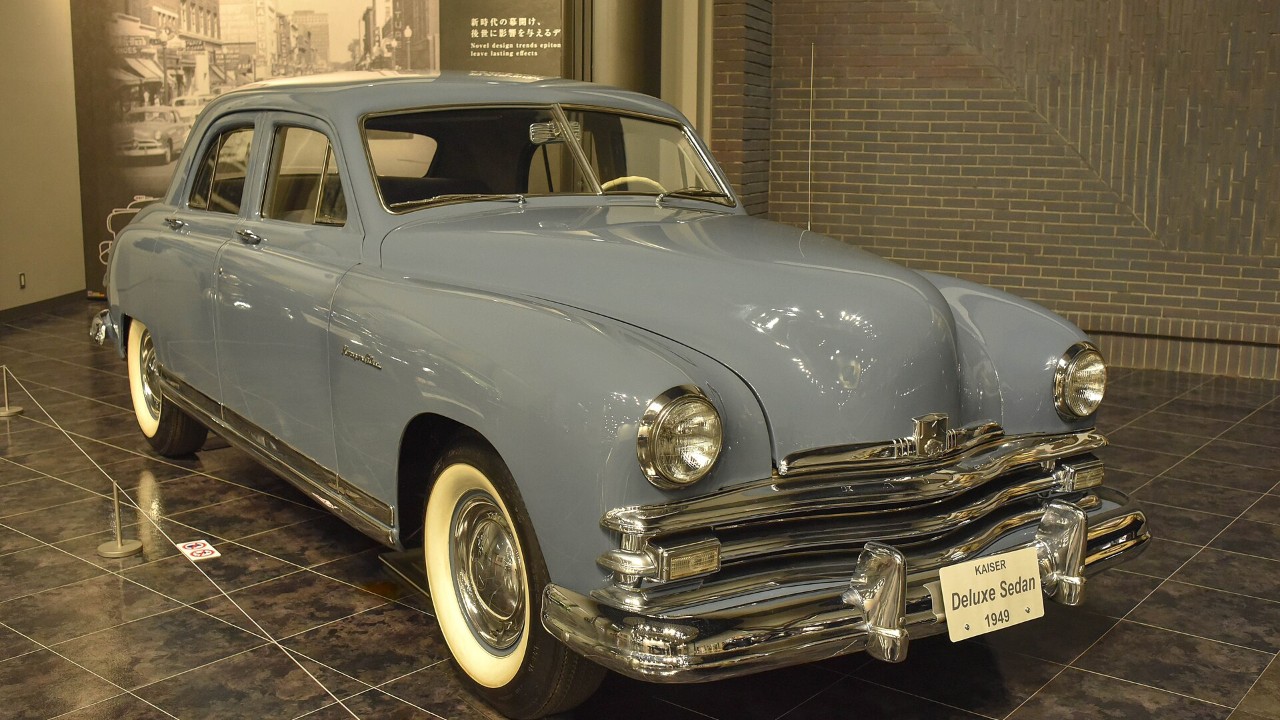
The 1949 Kaiser Deluxe was the company’s effort to look new without starting over. Kaiser-Frazer spent $10 million to revamp its 1949 models so they looked longer, lower and more modern, according to RM Sotheby’s. The Deluxe rode on a 123.5-inch wheelbase.
Power came from a 226-cubic-inch six making 112 horsepower. It drove through a three-speed manual with a column shifter. Kaiser aimed the four-door Deluxe at the upper end of the market.
The timing was bad. In 1949, the Big Three rolled out their new postwar models, and Kaiser-Frazer sales collapsed, Hagerty says. Kaiser still shipped about 100,000 cars for 1949 and 1950 combined, Hagerty says. Meanwhile, the company also shipped knock-down kits of the 1949 Kaiser to the Netherlands, where a local firm assembled about 6,000 of them.
Our take: the Deluxe is the everyday Kaiser, the one that tells you what the brand was really selling. For a sense of value, RM Sotheby’s estimated a mostly original example at $10,000 to $14,000 at its 2013 Auburn Fall sale, and it did not sell.
6. 1954 Kaiser Manhattan Club Sedan
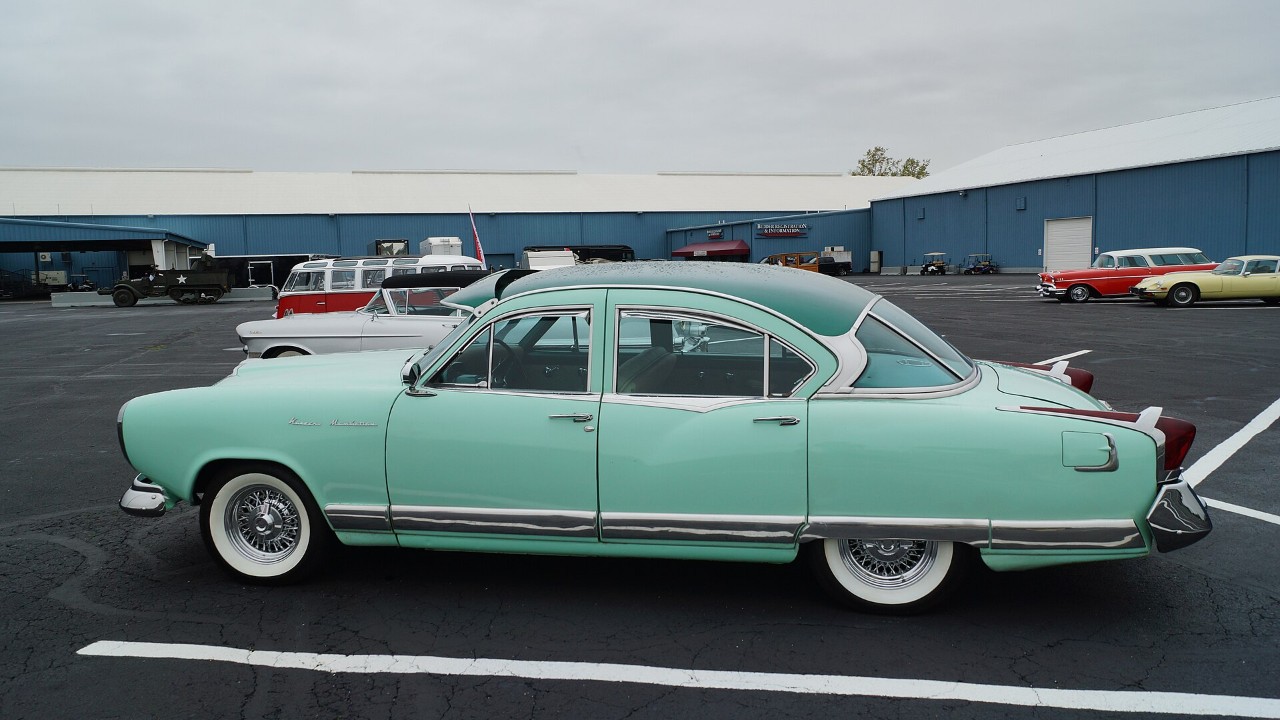
The Manhattan was Kaiser’s top sedan for 1954, and the two-door Club Sedan is the shape pictured here. That year, the four-door Manhattan cost $2,454, $50 more than the two-door, Old Cars Weekly reports. Kaiser built about 3,860 four-doors that year and sold only about 17,000 cars in total.
The 1954 Manhattan got a three-section wraparound rear window, ornate taillamp lenses and wide chrome trim along the fenders and doors. The engine was the 226-cubic-inch six. Buyers could add a McCulloch supercharger that lifted output from 118 to 140 horsepower. A three-speed manual came standard, while overdrive cost $107 and an automatic cost $178.
After that, the story moves south. In 1955, Kaiser-Willys built only about 210 cars for U.S. sale and another 1,021 reportedly for Argentina. Then the body dies went to Argentina, where the car lived on as the Carabela for seven more years.
We’d argue the Club Sedan is the best-looking Kaiser, thanks to that glassy rear end. It is also the last chapter of the Kaiser story in America, which makes it worth seeking out.
7. 1948 Frazer Standard
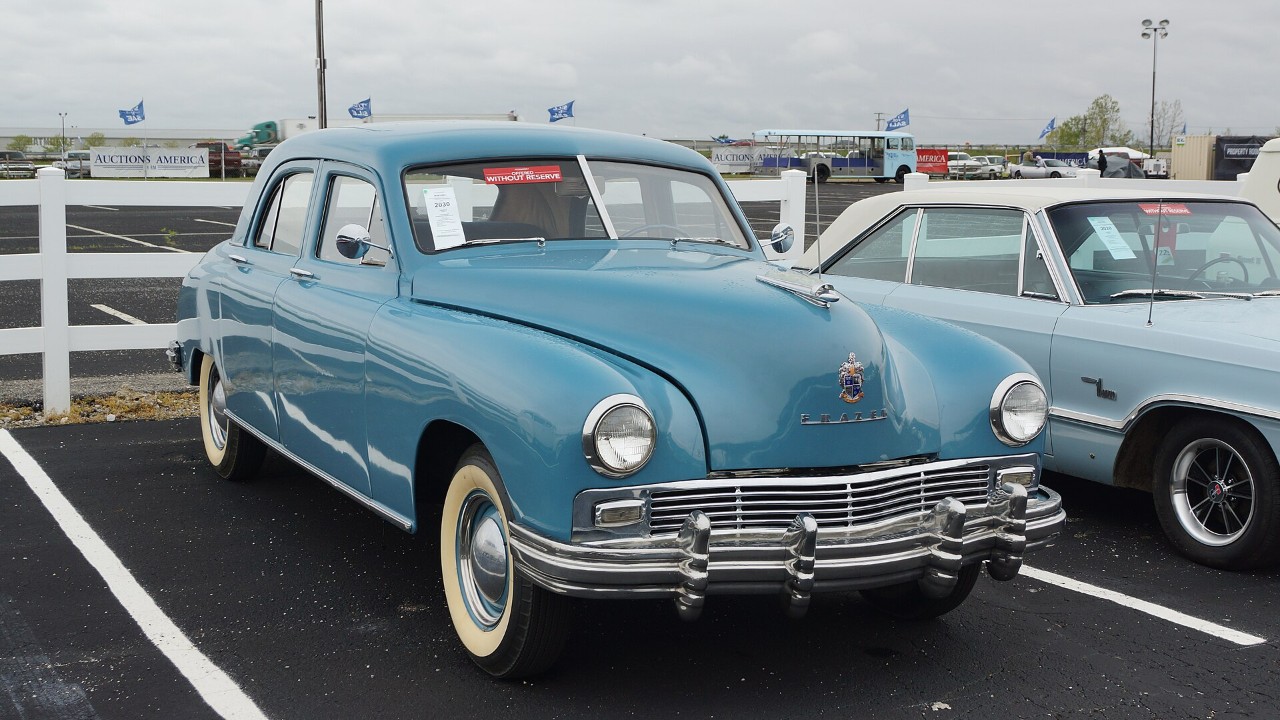
The Frazer Standard was where the whole company began. Kaiser-Frazer sold the same sedans under two brand names, with a six as the only engine, Hagerty notes. The Frazer was the more upscale of the pair, and the Standard was its entry-level trim. In March 1947, the plusher Frazer Manhattan arrived at a $500 premium over it.
The car’s exterior came from Dutch Darrin’s scale model, according to Ate Up With Motor. Darrin disliked the production version, though, even after the design won a Fashion Academy of New York gold medal. Early Frazers wore “Darrin Styled” badges, which the company soon removed.
Under the hood sat a Continental 226-cubic-inch L-head six, rated at 100 horsepower at 3,600 rpm at launch. That engine had overheating and vapor-lock problems that Kaiser-Frazer didn’t fully fix until 1953. When the Frazer arrived for 1947, the entry-level sedan cost $2,295, Old Cars Weekly says.
Our take: the Standard is the least flashy car on this list, and that is why we like it. It shows exactly what the new company was selling on day one. The Frazer name itself lasted only through 1951, when Kaiser-Frazer ran out of leftover 1950 bodies.
More from Fast Lane Only