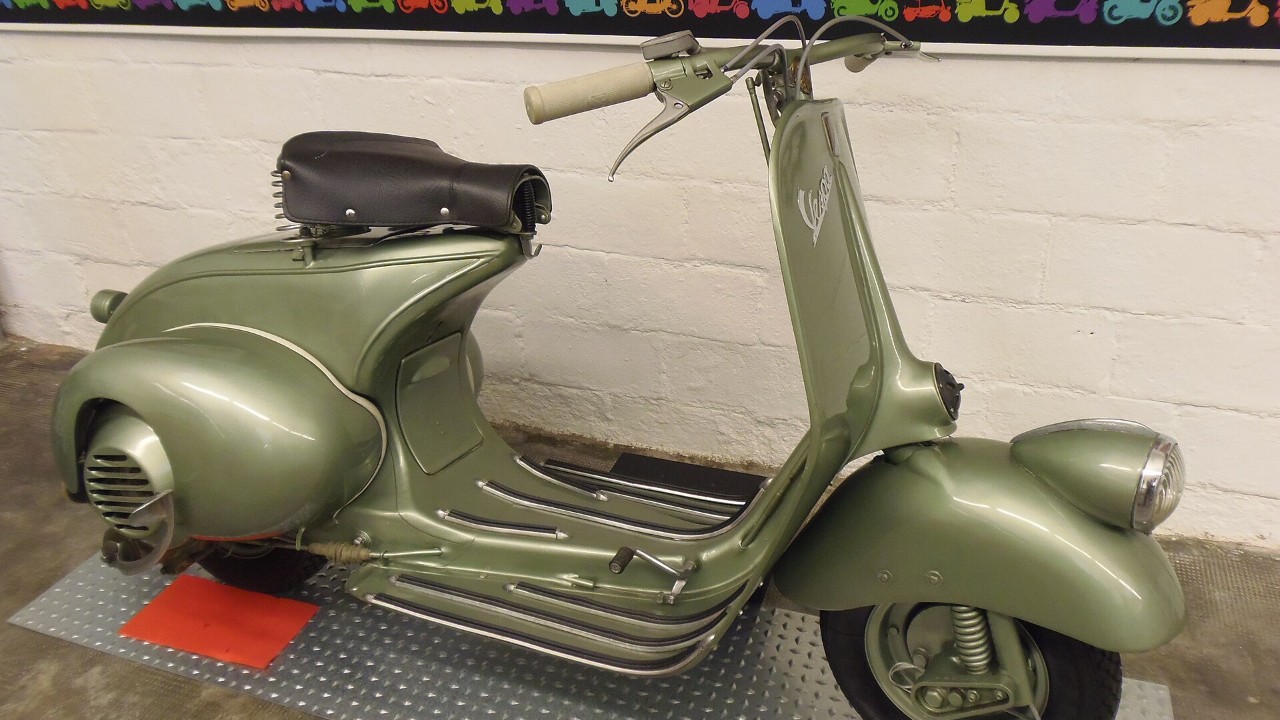
Piaggio sold about 2,500 Vespas in 1947, and the 1948 Vespa 125 helped push that past 10,000 the following year. By 1950, annual sales topped 60,000. Postwar Europe needed cheap, simple transport, and the scooter turned out to be the answer.
Dozens of makers jumped in, from Milan to Munich to Tokyo. Some built simple runabouts. Others tried bold ideas, like big wheels, four-stroke engines or a clutchless transmission. Plenty of those scooters vanished when cars got cheaper. However, the best of them feel special every time you thumb the starter.
These are our picks, seven scooters we would refuse to sell at any price. That verdict is our own opinion and our own taste. The production figures, specs and dates that back it up come from museum records, club data and period specifications.
1. 1948 Vespa 125
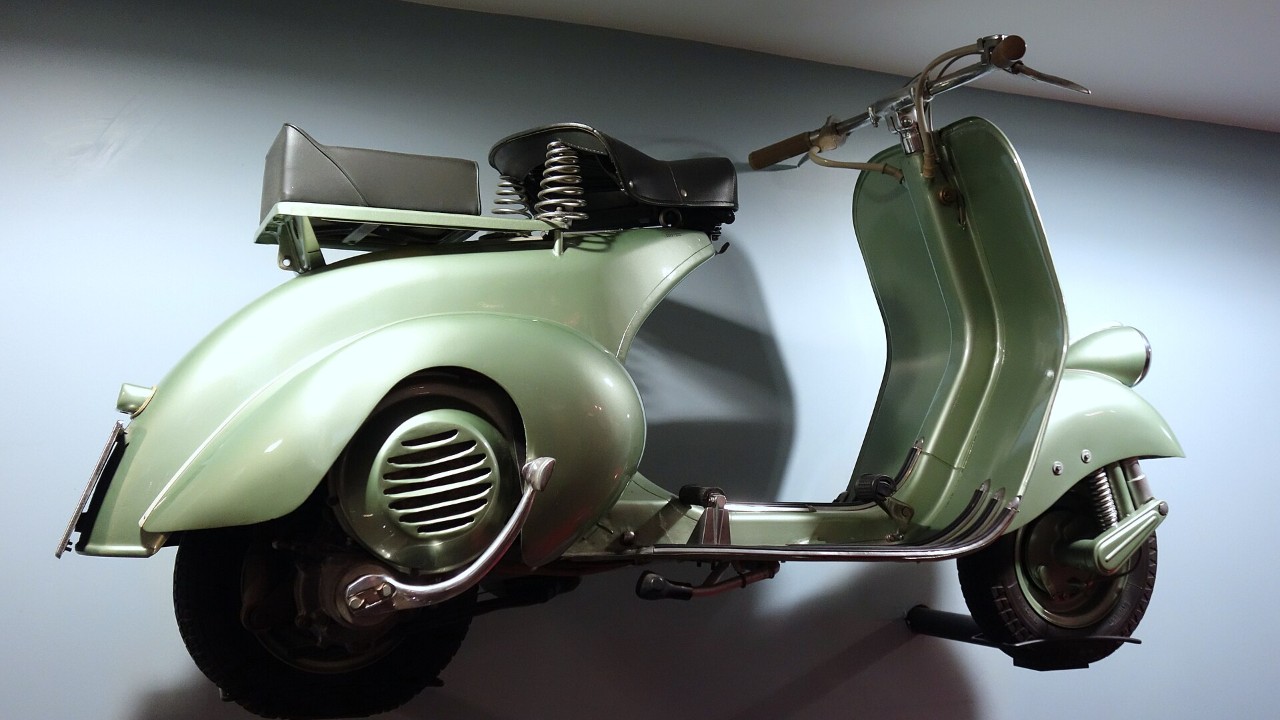
The Vespa began with a patent that Piaggio filed in Florence on April 23, 1946. Enrico Piaggio had asked aircraft engineer Corradino D’Ascanio to rework an earlier prototype. When Piaggio saw the result, he reportedly said “Sembra una vespa!” or “It looks like a wasp!” The name stuck.
The 1948 Vespa 125 took that first design and fixed its biggest gaps. It added rear suspension and a larger engine, and sales took off. In fact, Piaggio went from roughly 10,000 scooters in 1948 to 20,000 in 1949. By 1956, cumulative sales had passed one million.
This model also has a place in a national collection. The Science Museum Group lists a 1948 Vespa 125, credited to Piaggio & C., in the Making the Modern World gallery in London. That is a long way from a war-damaged factory in Pontedera.
Our take: a 1948 Vespa 125 is where modern scooter design starts. We would keep one for that history alone, and also because it looks right parked anywhere.
2. 1960 Lambretta TV175 Series 2
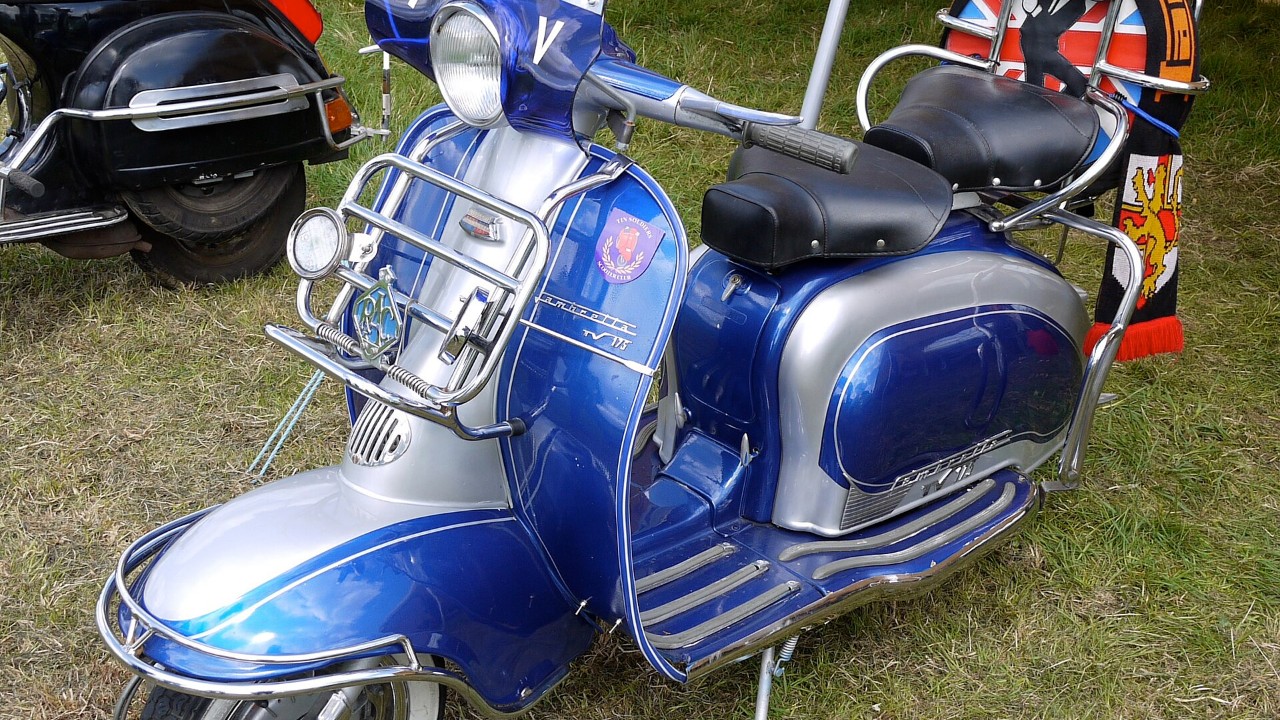
Innocenti started building Lambrettas in 1947, a year after Piaggio launched the Vespa. The TV range followed in 1957. Its Series 2 version ran from October 1959 to November 1961, with Italian production of 34,928.
The numbers explain its appeal. According to the iLambretta TV2 fact sheet, the 175 cc engine made 8.6 hp at 6,000 rpm. It could reach 65 mph and return 123 mpg. Meanwhile, the whole scooter weighed 115 kg. In Britain it cost £189 17s 6d when new.
That mix of speed and economy made the TV175 a serious road machine rather than a town toy. It came in ivory or blue, and early frames even had a reinforced frame tube.
In our view, the Series 2 is the sweet spot of classic Lambretta ownership. It is quicker than the small-engine models, and it keeps the clean lines of the late 1950s. If we owned one, nobody would get it off us, not even for a fair price.
3. 1982 Lambretta GP200
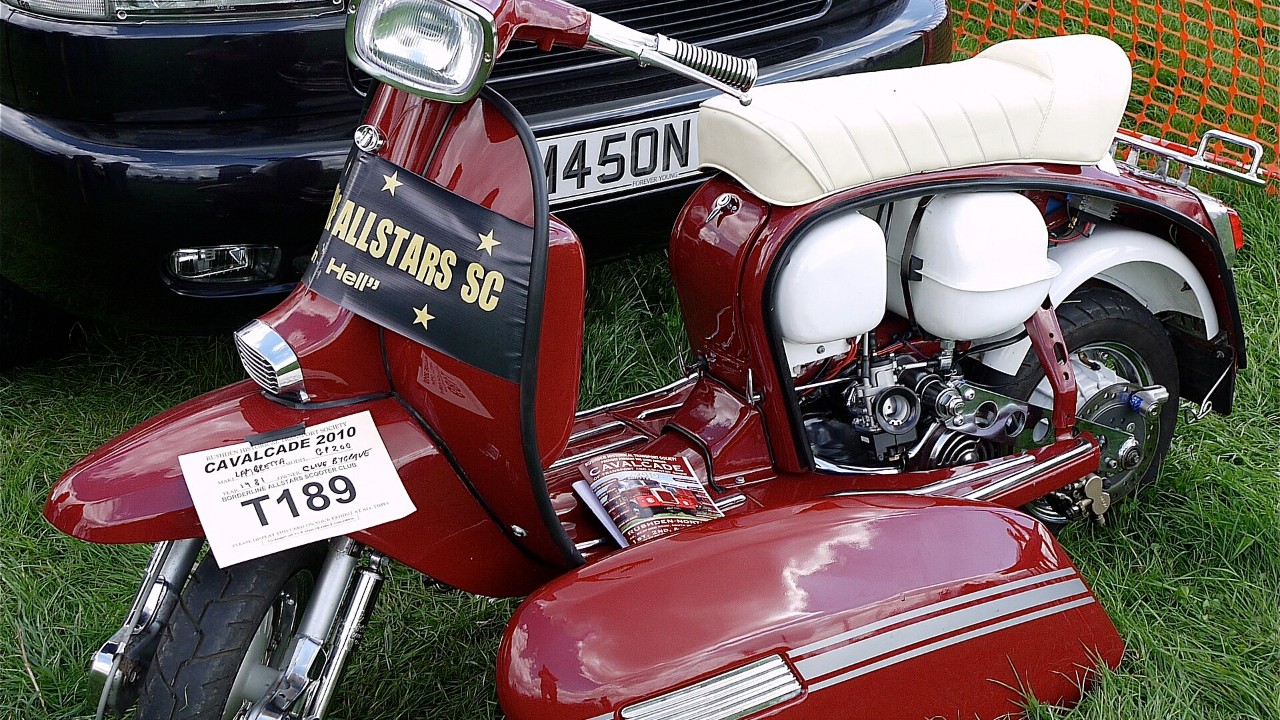
The GP range arrived in Innocenti’s final years in Milan. Bertone designed the shorter, sleeker body, with slimmer leg shields and a rectangular headset. Production ran from January 1969 to April 1971, when the factory closed.
The GP200 was the top model. As the iLambretta GP history explains, it gained a disc brake and front dampers. The brochures claimed it could do nearly 70 mph. Innocenti built 9,350 of the 200, compared with 15,300 of the 125 and 20,048 of the 150.
So how does a GP200 carry a 1982 date? The answer is India. The Indian government bought the production rights and tooling, and Scooters India Ltd went on building GP and DL scooters until 1996. That second life is why later GPs turn up today.
Our take: the GP200 is the Lambretta we would hand down to our kids. Its Bertone styling looks modern even now, and the disc brake makes it the most usable classic Lambretta in traffic.
4. 1962 Honda Juno M85
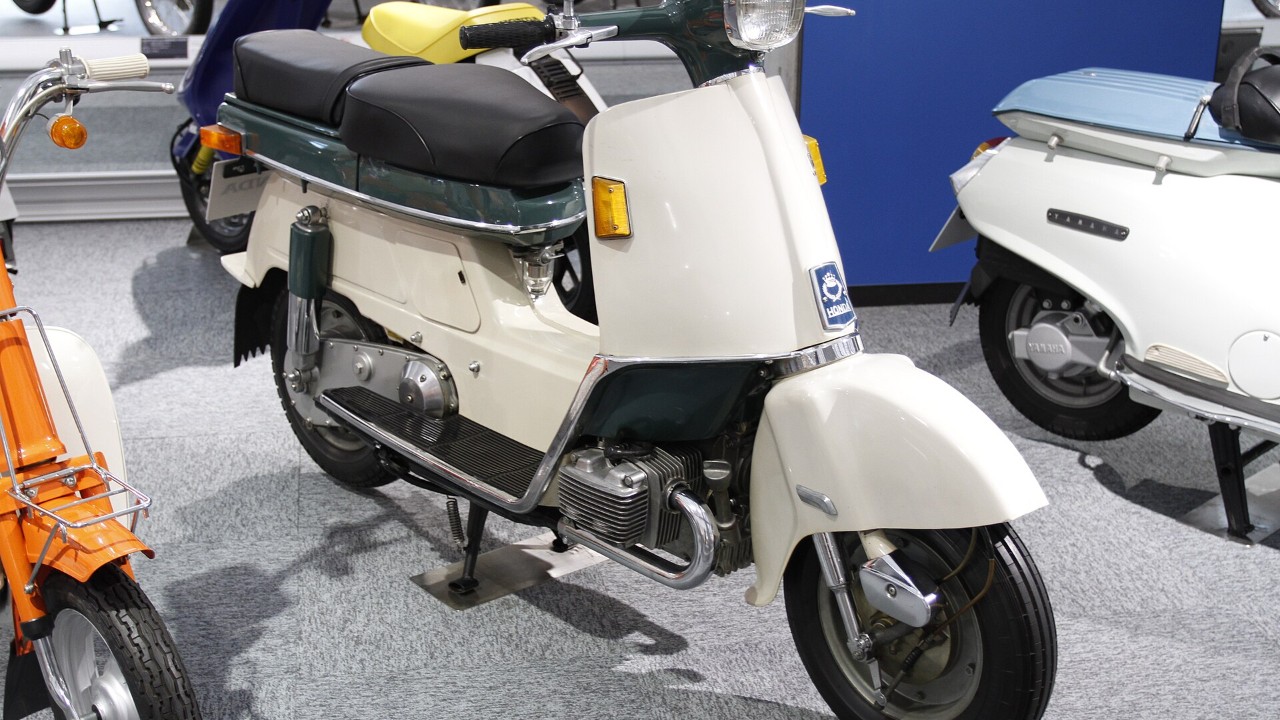
Honda’s first scooter, the 1954 Juno K, was a misstep. Kihachiro Kawashima later called it a “splendid failure,” citing its high cost and an engine that overheated. Honda built only 5,980 of them in a year and a half.
The M-series of late 1961 was a far bolder machine. The M85 used an air-cooled 169 cc boxer twin. According to RideApart, Honda claimed 12 hp at 7,600 rpm, and the scooter sold only in Japan for ¥169,000 in 1962. Its clutchless, Badalini-type hydraulic-mechanical transmission later served as the basis for Honda’s Hondamatic motorcycle transmissions.
Buyers did not warm to it. Honda produced just 5,880 M-series Junos before ending the line.
That makes the M85 a rare piece of Honda engineering history. In our opinion, a twin-cylinder Honda scooter with a forerunner of the Hondamatic is a keeper by definition. If one ever came our way, it would stay in the garage, under a cover, for good.
5. 1951 Moto Guzzi Galletto 160
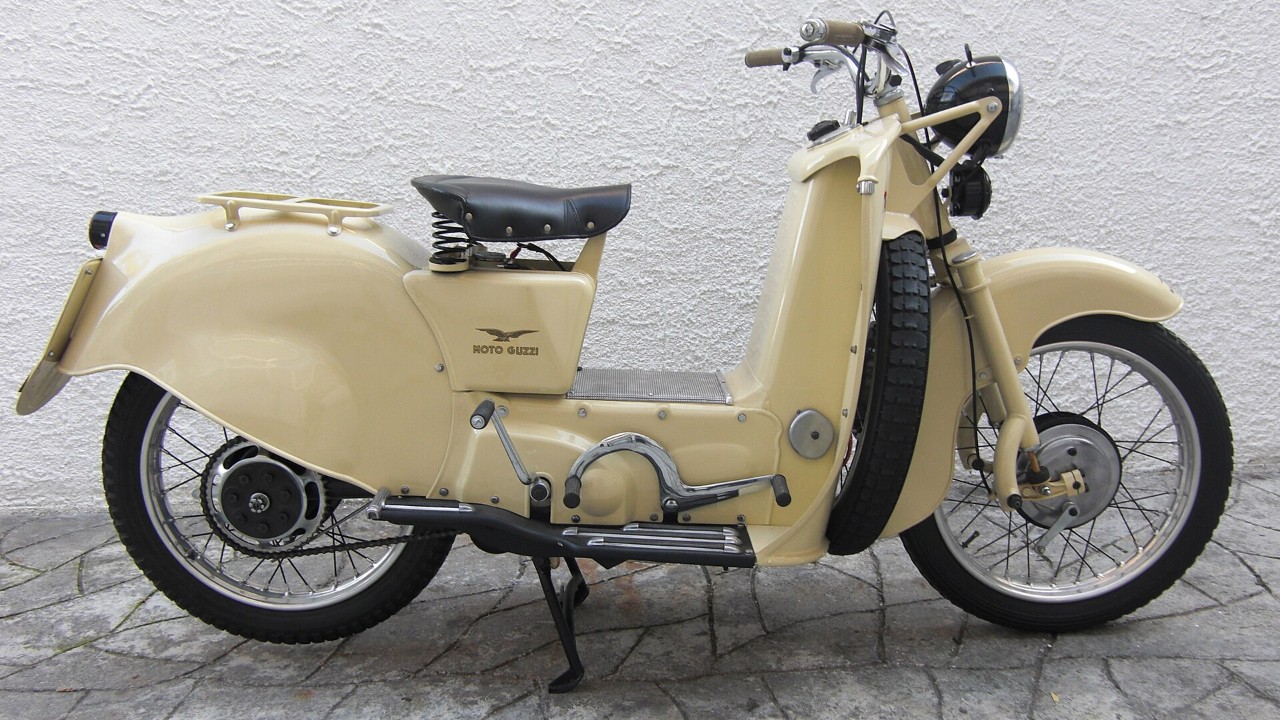
Moto Guzzi first showed the Galletto at the 1950 Geneva Motor Show as a 150. Before sales began, it grew to 160 cc. Unlike most scooters, it used an all-alloy, four-stroke OHV single with its cylinder lying flat.
The Galletto also broke the rules on wheels. It pioneered 17-inch wheels on a scooter, which in our view gives it steadier manners than small-wheeled rivals. Better yet, it carried a complete spare wheel and tire crossways under the steering head. According to Old Bike Australasia, the engine later grew to 175 cc and then 192 cc. The 192 cc version stayed in production from 1954 to 1966.
Buyers liked it, too. Total production reached an estimated 75,000 units over 16 years.
We would never sell an early 160 because it captures Guzzi’s first answer to the scooter. It is half scooter and half motorcycle. As a result, it rides like neither, in the best possible way. If that blend appeals, our list of classic bikes that pure riders still chase has more.
6. 1956 Heinkel Tourist 103 A0
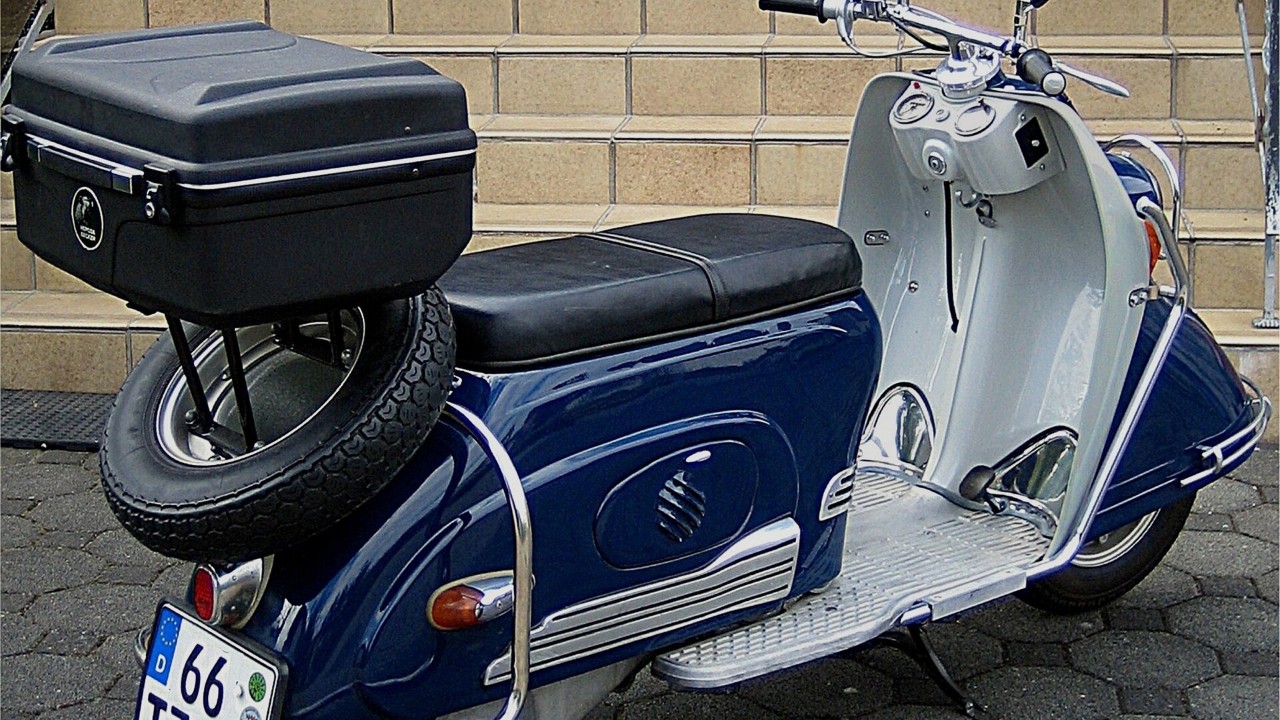
Heinkel’s Tourist took the scooter upmarket. Production ran from 1953 to the last day of 1965. In that time, Heinkel built and sold more than 100,000 Tourists.
The Tourist sat at the top of the market. It cost more than a Vespa or a Lambretta. It was also generally heavier, more comfortable and more stable. In England, people called it “The Rolls-Royce of Scooters.” Its engine was an overhead-valve, four-stroke single, which set it apart from the two-stroke crowd.
The 103 A0 series ran from August 1955 to September 1957. It used a four-speed gearbox and 10-inch wheels. Earlier, Heinkel had switched the Tourist to 12-volt electrics in June 1954 to add an electric starter.
Our take: the Tourist is the scooter for someone who wants a touring machine with good manners. We think it is the most grown-up scooter on this list, and that is exactly why we would keep it.
7. Zündapp Bella R 154
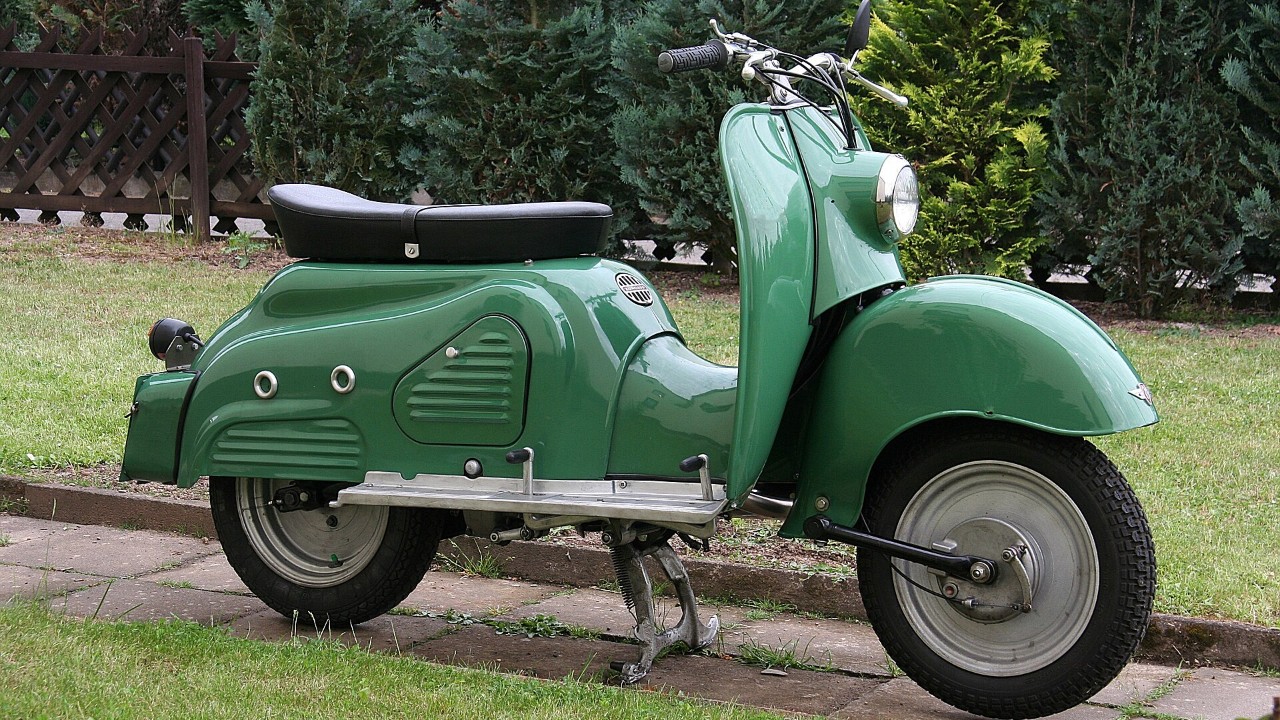
Zündapp’s Bella went on sale in 1953 and lasted until 1964. During that time, the company sold about 130,000 of them. The first Bella used a 146 cc two-stroke single and 12-inch wheels, with a four-speed gearbox and chain drive.
Its cooling was clever. Air tunnels along the centreline cooled the engine without a fan, an idea borrowed from the Parilla Levriere. The fuel tank also sat under the seat. Later, Zündapp moved from 6-volt to 12-volt electrics and offered an electric starter.
The R 154 was a 150 cc Bella. Its export twin, the R154K, went to the US in the later 1950s as the last 150 cc Bella. The “K” stood for kickstarter, and that bike had high buckhorn bars and no dynastarter. For more two-wheelers that rarely surface, see our list of classic bikes you’ve probably never seen in person.
We would refuse to sell a Bella because it rides more like a small motorcycle than a typical scooter. In other words, it is the German alternative to Italian style. By the time production ended in 1964, Zündapp had sold about 130,000 Bellas.
More from Fast Lane Only