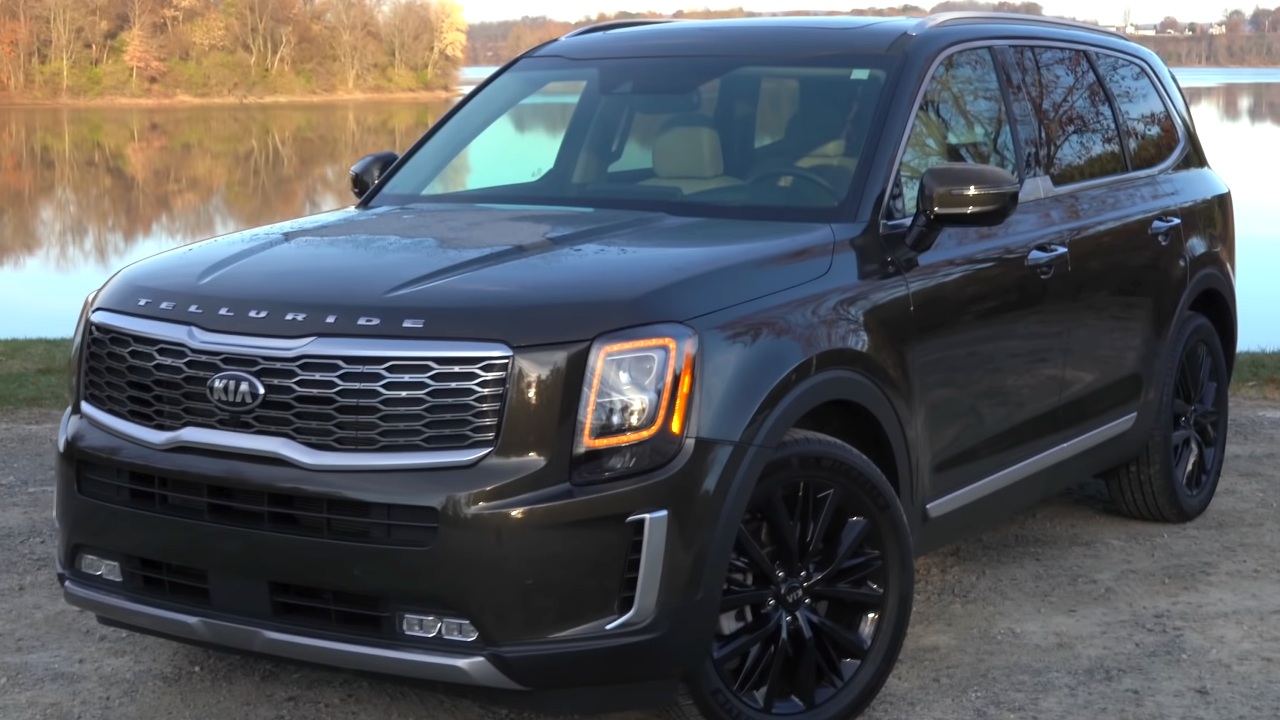
Kia’s biggest problem with the Telluride is no longer awareness or skepticism, it is simply building enough of them. After years of waitlists and dealer markups, the company has again retooled its U.S. production footprint so it can push more three-row SUVs out the door. The latest increase marks the fifth time Kia has dialed up Telluride output, a rare case in which a mainstream family hauler is being treated like a runaway performance hit.
The move reflects a broader shift inside Kia, which is leaning on its Georgia manufacturing hub to satisfy what executives have described as “insatiable” demand for the Telluride while also preparing for a future centered on electric models. The result is a delicate balancing act: keep feeding the appetite for a hot-selling gasoline SUV without starving the company’s push into EVs or overloading a single factory.
From surprise hit to production headache
When the Telluride arrived, it was intended to give Kia a credible entry in the crowded three-row SUV segment, not to become the brand’s defining product. Instead, the model quickly turned into a showroom magnet, with buyers drawn to its upright styling, spacious cabin, and value-focused packaging. That popularity has persisted long enough that Kia has now raised Telluride production capacity multiple times, culminating in a fifth expansion that underscores how far demand has outstripped the original business case.
Internal targets that once looked ambitious have been repeatedly revised upward. Kia initially planned to build about 60,000 Tellurides a year, then reconfigured operations to support 85,000, and has continued to search for incremental gains as order banks stayed full. The company has acknowledged that it grew tired of telling customers to wait as long as eight months for their vehicles, a frustration that helped justify yet another production bump highlighted in a recent Too Popular update on how it is ramping up Telluride output again.
Why demand for a family SUV went “insane”
The Telluride’s sustained momentum is not an accident of timing, it is the product of a carefully calibrated package that hits several American sweet spots at once. The SUV offers three usable rows, a straightforward control layout, and a design that reads as more rugged than many of its direct rivals, all at pricing that undercuts some established nameplates. For families cross-shopping minivans and crossovers, the Telluride has become a default recommendation, which helps explain why dealers have struggled to keep them on lots even as the broader market has cooled in some segments.
That dynamic has been amplified by word of mouth and neighborhood visibility. Once a few Tellurides landed in a community, more followed, creating a virtuous cycle in which existing owners effectively marketed the vehicle for Kia. The company itself has leaned into that reality, acknowledging in the Kia Ramps Up Telluride Production update that it is responding directly to “insatiable” demand from customers and their neighbors. The result is a rare scenario in which a mainstream SUV is constrained not by lack of interest but by the physical limits of a single manufacturing complex.
Kia Georgia’s central role in the Telluride surge
The heart of this story sits in West Point, Georgia, where Kia Georgia, Inc. operates the company’s first manufacturing site in North America for Kia Corporation based in Seoul. That facility has been the Telluride’s home from the start, and it has steadily evolved from a bold foreign investment into one of Kia’s most strategically important plants. According to About Kia Georgia, the company began investing in the site in 2006, framing it as one of the largest single foreign investments in the history of Georgia and positioning it as a showcase for the “best of the best” in its manufacturing system.
That long-term commitment is now paying off as Kia Georgia shoulders the burden of building more Tellurides while also preparing for a wave of electric products. The plant has already been tapped to add EV6 production to its lineup, and it is being positioned as a key hub for the all-electric EV9 SUV as well. That means every incremental Telluride that rolls off the line must be balanced against the need to allocate space, staffing, and tooling for battery-powered models that are central to Kia’s long-term strategy.
How Kia keeps squeezing more Tellurides out of one plant
Finding room for a fifth Telluride production increase inside a facility that is also adding EVs requires more than simply speeding up the assembly line. Kia has been methodically reconfiguring its operations, from stamping to final assembly, to eke out additional capacity without compromising quality. The company has described how it “figured out how to make more” of the SUV by revisiting its initial assumptions and rebalancing its mix of vehicles, a process that helped lift annual output from 60,000 to 85,000 units and beyond.
Those gains are supported by the broader manufacturing ecosystem Kia has built around West Point. The About Kia Georgia overview highlights how the company’s early investment attracted a network of suppliers and helped cultivate a skilled local workforce, both of which are essential when a plant needs to flex up production quickly. By leveraging that base, Kia can adjust shift patterns, refine logistics, and introduce targeted automation rather than resorting to the far more expensive option of building a new facility dedicated to the Telluride alone.
Balancing a blockbuster SUV with an electric future
The Telluride’s success presents Kia with a strategic tension that many automakers now face. On one hand, the SUV is a profit engine and a brand ambassador, drawing customers into showrooms and onto the company’s U.S. site where they encounter the rest of the lineup. On the other, Kia has publicly committed to a future in which electric models like the EV6 and EV9 play a central role, and those vehicles require their own dedicated production capacity, supply chains, and engineering focus. Every decision to prioritize more Tellurides in the short term must be weighed against the imperative to accelerate the transition to EVs.
Kia Georgia sits at the center of that balancing act. The plant’s plan to add EV6 production and support the all-electric EV9 SUV while continuing to ramp up Telluride output illustrates how the company is trying to have it both ways. The strategy relies on flexible manufacturing that can shift between powertrains as market demand evolves, rather than locking the facility into a single product. For now, that means building as many Tellurides as the line can handle, even as Kia prepares for a future in which the vehicles drawing “insane” demand may be electric rather than gasoline powered.
More from Fast Lane Only